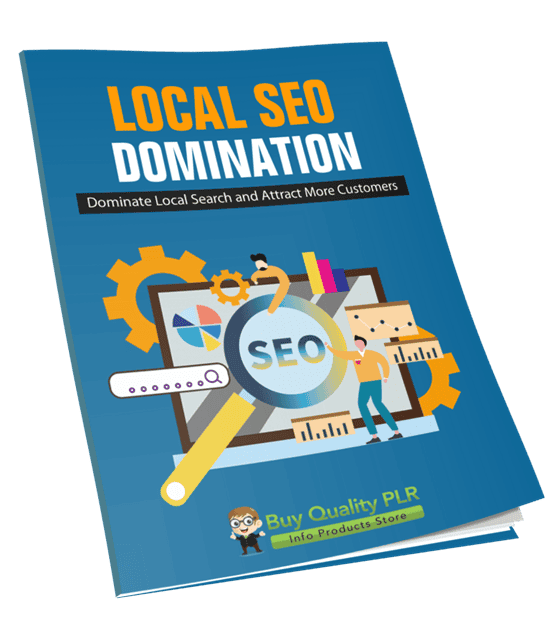
Local SEO Domination PLR Course 19k Words
in PLR eCourses , PLR List Building Reports , Premium PLR , Premium PLR Reports , Premium White Label Brandable PLR Coaching Courses , Private Label Rights Products , SEO PLRChoose Your Desired Option(s)
has been added to your cart!
have been added to your cart!
#localseodomination #plrcourse #seotips #localmarketing #businessgrowth #digitalmarketing #plrcontent #googlerankings #leadgeneration
Local SEO Domination PLR Course – Dominate Local Search and Attract More Customers
Do you want your business to show up in local searches, get more foot traffic, calls, and leads, and dominate your local market?
The Local SEO Domination PLR Course is your complete, step-by-step guide to mastering Local SEO and driving real results for any local business. With 19,000 words of beginner-to-intermediate content, this course is designed to help your audience understand, implement, and profit from local search strategies—all in a friendly, actionable, and easy-to-follow style.
Whether you’re a PLR reseller, entrepreneur, marketer, or local business coach, this course equips you with everything you need to teach, sell, or use Local SEO strategies immediately.
Introducing the…
Local SEO Domination
Why Local SEO Matters More Than Ever
Local SEO is no longer optional—it’s essential for small businesses that want to compete in today’s digital landscape.
Here’s why investing in Local SEO knowledge can transform a business:
- Attract Local Customers: Appear in searches when potential clients are looking for products or services nearby.
- Increase Calls and Visits: Convert online searches into real-world foot traffic, phone calls, and inquiries.
- Outrank Competitors: Target the right local keywords and outrank competitors in Google Maps and local packs.
- Build Trust and Authority: Consistent online visibility builds credibility and shows your business as reliable.
- Boost ROI: Local SEO is cost-effective and delivers measurable results compared to traditional advertising.
With this course, your students or clients will have the skills to optimize websites, directories, and Google listings to dominate their local search results.
What You Get in the Local SEO Domination PLR Course
The course is divided into five highly detailed modules, each packed with practical, actionable steps, examples, and exercises.
Module 1: Laying the Local SEO Foundation
Goal: Build a strong Local SEO foundation that sets you up for long-term success.
- Step 1: Understand What Local SEO Really Means
Learn how Local SEO differs from traditional SEO and why Google Maps, directories, and local search are critical to attracting local clients. - Step 2: Set Clear Local SEO Goals
Define measurable goals: more store visits, phone calls, online bookings, or website leads. Clear goals guide every action. - Step 3: Identify Your Local Competitors
Analyze competitors in your area to uncover opportunities and strategies that you can adapt to outrank them. - Step 4: Set Up Google Business Profile (GBP) the Right Way
Step-by-step guidance to create or optimize your Google Business Profile—your most powerful Local SEO asset. Includes choosing categories, writing descriptions, and adding visuals.
Outcome: Students will understand the Local SEO landscape, identify opportunities, and set up their Google Business Profile for maximum impact.
Module 2: Optimizing Your Website for Local Search
Goal: Make your website a powerful local search engine magnet.
- Step 1: Use Local Keywords the Smart Way
Discover the best local keywords and how to naturally integrate them into your homepage, service pages, and meta descriptions. - Step 2: Create Location-Specific Landing Pages
If you serve multiple areas, create separate pages targeting each location to dominate local searches. - Step 3: Add Local Schema Markup
Enhance search engines’ understanding of your business with simple structured data to boost visibility in local search results. - Step 4: Make Your Website Mobile-Friendly & Fast
Ensure your website loads quickly and looks perfect on smartphones since most local searches happen on mobile devices.
Outcome: Students will learn how to optimize websites for local relevance, increasing their chances of ranking high and attracting local customers.
Module 3: Building Local Authority & Trust
Goal: Establish credibility and trust with both Google and local customers.
- Step 1: NAP Consistency Across the Web
Ensure Name, Address, and Phone number are identical across all online platforms to boost search engine trust. - Step 2: Build and Manage Citations
Get listed on trusted directories like Yelp, JustDial, and other local business listings. Each citation strengthens your authority. - Step 3: Earn Local Backlinks
Learn simple outreach methods to get links from local websites, blogs, and news sources to boost rankings and visibility. - Step 4: Collect and Respond to Reviews
Master the art of gathering reviews and responding professionally, turning testimonials into a powerful marketing tool.
Outcome: Students will build authority in their local area, improve their rankings, and earn trust from both search engines and clients.
Module 4: Content Strategy That Attracts Locals
Goal: Create compelling content that draws attention and engages your local audience.
- Step 1: Blog About Local Topics
Share content that resonates with your community—events, guides, and news—while building relevance and engagement. - Step 2: Create Local Case Studies or Success Stories
Showcase real customer success stories and experiences to build relatability and trust. - Step 3: Use Location-Based FAQs
Answer common local questions directly on your website to improve voice search visibility and rich results. - Step 4: Leverage Local Visual Content
Use photos, videos, and behind-the-scenes content to engage your audience and increase local search performance.
Outcome: Students will be able to produce local-focused content that attracts, educates, and converts customers.
Module 5: Tracking Results & Staying Ahead
Goal: Measure progress, track results, and maintain Local SEO dominance.
- Step 1: Set Up Local SEO Tracking Tools
Learn to use Google Analytics, Search Console, and Google Business Insights to track traffic, calls, and engagement. - Step 2: Monitor Your Local Rankings Regularly
Keep tabs on your search rankings using free and paid tools to spot trends and opportunities. - Step 3: Audit Your Citations and Listings Monthly
Fix inconsistencies and duplicates with a simple monthly checkup to maintain strong local SEO signals. - Step 4: Keep Up with Local SEO Updates
Stay informed on Google’s changes without feeling overwhelmed—your local strategy will always stay ahead of competitors.
Outcome: Students will maintain a competitive edge in local searches, monitor success, and adjust strategies to dominate consistently.
Bonus Materials Included
- Local SEO Checklist (652 Words): Step-by-step actionable list to implement Local SEO strategies quickly.
- Local SEO FAQs (788 Words): Answers to common questions about optimization, tools, and strategies.
- Local SEO Salespage (636 Words): Ready-made sales copy to sell the course immediately.
Who Can Benefit from This PLR Course
- Local Business Owners: Restaurants, stores, clinics, service providers, and more.
- Entrepreneurs & Startups: Increase visibility in local markets and attract foot traffic.
- Digital Marketers & Consultants: Teach or implement Local SEO for clients.
- PLR Buyers & Resellers: Sell, bundle, or teach immediately with ready-made content.
Ways to Use and Profit from This PLR Course
- Sell as a Complete Course – Online workshop or membership for $297–$497.
- Break into Reports or Guides – Sell sections individually for $10–$20.
- Bundle with Other PLR Content – Combine to create premium packages for $47–$97.
- Create a Multi-Week E-Class – Teach a 3–6 week Local SEO course.
- Add to a Membership Site – Offer as exclusive content for recurring revenue.
- Convert into Physical Products – Workbooks, guides, or printables.
- Use as Lead Magnets – Offer excerpts to grow email lists.
- Flip a Site or Niche Business – Build a Local SEO-focused site, populate it, and sell for profit.
Why Buy This Course from Buy Quality PLR
- 19,000 Words of Actionable Content: Step-by-step lessons ready to teach or sell.
- Beginner-to-Intermediate Friendly: Conversational style makes Local SEO easy to understand.
- Bonus Checklist, FAQs, and Salespage: Save hours on marketing and prep.
- PLR Licensing: Brand it, sell it, or teach it with confidence.
- Monetization-Ready: Multiple ways to generate income from a single course.
Licensing Terms
Permissions:
- Sell as-is or make minor edits.
- Claim copyright if 75%+ is rewritten.
- Break into smaller guides, reports, or lessons.
- Bundle with other PLR content for upsells.
Restrictions:
- Cannot pass PLR rights to customers.
- Maximum affiliate commission: 75%.
- Cannot give the full course away for free.
- Cannot include in existing orders without an additional purchase.
Bottom Line
The Local SEO Domination PLR Course is a complete, ready-to-use resource for anyone looking to master Local SEO, attract local customers, and grow their business quickly.
Whether you’re teaching, selling, or repurposing the content, this course provides everything needed to deliver massive value while generating multiple income streams.
✅ Instant Access | Ready-to-Use | Fully Editable | Profitable PLR Content
Take control of your local search visibility and start dominating your local market today!
has been added to your cart!
have been added to your cart!
Here A Sample of the Local SEO Domination PLR Course
Help students understand and implement Local SEO strategies to dominate local search results and drive foot traffic, calls, and sales.
Module 1: Laying the Local SEO Foundation
Step 1: Understand What Local SEO Really Means
Welcome to the first step in mastering Local SEO—the foundation of everything you’ll do throughout this course. Before we dive into strategies, tools, or platforms, it’s essential that you clearly understand what Local SEO actually is, how it works, and why it matters to your business.
What is Local SEO?
Local SEO, or Local Search Engine Optimization, is a digital marketing strategy that helps businesses promote their products and services to local customers when they’re searching online. It’s specifically designed for brick-and-mortar businesses, service-area businesses, and professionals who serve a specific geographic location.
Think of it this way: if someone in London searches for “best Italian restaurant near me”, or someone in Toronto searches “emergency plumber in North York”, Local SEO is what determines which businesses show up at the top of those search results.
Local SEO helps your business appear in:
- Google’s Local Pack (the map and top three business listings)
- Google Maps
- Local organic search results
- Business directories like Yelp, Bing Places, JustDial, and Apple Maps
When done right, Local SEO increases your visibility, builds trust, and drives real traffic—online and offline.
Local SEO vs. Traditional (National) SEO
To truly understand Local SEO, it helps to see how it differs from traditional or national SEO.
| Feature | Local SEO | Traditional SEO |
| Audience | People in a specific geographic area | A broad or global audience |
| Search Intent | “Near me” or location-based searches | General or informational searches |
| Ranking Signals | Google Business Profile, reviews, local backlinks, citations | On-page SEO, backlinks, domain authority |
| Conversion Goals | Calls, store visits, bookings, foot traffic | Website traffic, leads, e-commerce sales |
| Examples | “Dentist in Manhattan” or “Bakery near me” | “How to fix a cavity” or “Best cake recipes” |
The key takeaway is this: Local SEO helps your business get discovered by customers who are ready to take action nearby—often within hours or minutes.
Why Local SEO Matters for Your Business
Local SEO is not just a “nice-to-have.” It’s essential—especially in an era where mobile usage is at an all-time high and people use voice search to find services near them.
Here are some compelling reasons why Local SEO matters:
- High Purchase Intent
Local searches typically signal strong buyer intent. When someone searches “best Thai restaurant in Melbourne,” they’re not browsing—they’re hungry and ready to dine. - Mobile and Voice Search Friendly
More than 50% of all mobile searches have a local intent. And with voice assistants like Google Assistant and Siri, people are increasingly asking for businesses “near me.” - Google Prioritizes Local Relevance
Even if your website is perfectly optimized, without local signals (like location info, reviews, and citations), you won’t appear in the Google Local Pack—which gets the most clicks. - It Builds Trust and Visibility
Showing up in Maps, reviews, and directories makes your business look reputable and easily accessible. For local consumers, visibility equals credibility.
Core Elements of Local SEO You’ll Learn in This Course
To dominate local search, you need to understand and implement several key components. Here are the foundational pillars of Local SEO that this course will break down for you later on:
- Google Business Profile Optimization
Your GBP (formerly known as Google My Business) is the most crucial piece in your local SEO strategy. It’s your digital storefront and must be complete, accurate, and engaging. - Citations and Listings
These are mentions of your business name, address, and phone number across online directories. We’ll show you how to make them consistent and powerful. - Local Keyword Targeting
This means using keywords that include your location + services. For example: “wedding photographer in Johannesburg” or “emergency locksmith Singapore.” - Online Reviews and Reputation
Reviews are both a ranking signal and a conversion factor. You’ll learn how to collect, respond, and manage reviews across platforms. - Localized Website Content
You need content that speaks to your local audience—not just in blog posts, but on your homepage, service pages, and landing pages. - Backlinks from Local Sources
Links from chambers of commerce, local newspapers, event pages, and nearby bloggers all contribute to your local authority.
Key Takeaway
Local SEO is about visibility, trust, and relevance in your local market. Whether you run a dental clinic in Dubai, a law office in Chicago, or a cleaning service in Sydney, Local SEO helps people near you find and choose your business.
The purpose of this first step is to shift your mindset—from thinking like a general SEO strategist to thinking like a local business leader. Because when people nearby need what you offer, you want to be the first business they see.
By the end of this course, you’ll not only know how Local SEO works, but you’ll have a fully implemented strategy customized for your business and location.
Now that you’ve got a solid understanding of what Local SEO really is, you’re ready to build upon this foundation throughout the rest of the course.
Let’s dominate your local market—one strategic step at a time.
Step 2: Set Clear Local SEO Goals
Before we dive into tools, tactics, and traffic—let’s pause and set your compass. If you don’t know where you’re going, any road will take you there. That’s why setting clear, specific goals is absolutely crucial before implementing any Local SEO strategies.
In this step, you’ll define what success means for your business. You’ll gain clarity on what outcomes you’re aiming for—whether that’s increased walk-ins, more phone calls, appointment bookings, or website conversions. This clarity ensures that every strategy you implement later aligns with your actual business objectives, not just vanity metrics.
Let’s break it down together.
Why You Must Set Clear Goals Before Starting Local SEO
Local SEO is a powerful tool, but it’s not magic. It works best when it’s laser-focused on the outcomes that matter to your business model and customer journey.
Ask yourself:
- Are you trying to get more foot traffic into your store?
- Do you want more phone inquiries for appointments or services?
- Are you hoping to increase bookings via a calendar system or third-party platform?
- Do you want to drive qualified website traffic that results in form submissions or e-commerce purchases?
When your goals are crystal clear, they become your decision filter for every tactic you implement.
Step-by-Step: How to Set Your Local SEO Goals
Let’s go through the four essential steps for setting meaningful and actionable Local SEO goals:
Step 1: Identify Your Primary Local SEO Objective
Start by choosing one core outcome you want to prioritize. You may have several desired results, but for now, pick the one that moves the needle the most for your business.
Here are some common primary goals to consider:
- Increase foot traffic to your physical location
Ideal for: Restaurants, salons, retail stores, local clinics - Drive more phone calls from local customers
Ideal for: Service-based businesses like plumbers, locksmiths, consultants - Get more bookings/appointments via an online platform
Ideal for: Doctors, coaches, fitness trainers, spas, event services - Generate qualified website leads
Ideal for: Agencies, real estate professionals, legal consultants, service providers with a form or quote request - Boost brand visibility and reviews in your local area
Ideal for: New businesses or rebranded businesses trying to establish trust
Decide which one of these aligns best with your immediate business priority. Don’t worry—you can expand later. But at this stage, focus is power.
Step 2: Translate the Goal into Measurable KPIs (Key Performance Indicators)
A goal is only useful if you can measure it. Now that you’ve chosen your main objective, break it down into specific metrics.
For example:
| Goal | KPI (What You Will Measure) |
| Increase foot traffic | Number of people walking in per day/week/month |
| Get more phone calls | Calls tracked through your Google Business Profile |
| Book more appointments | Number of appointments booked online or over the phone |
| Generate website leads | Number of form submissions or quote requests |
| Improve brand visibility | Ranking in Local Pack, number of reviews, views on your Google Business Profile |
Use tools like:
- Google Business Profile Insights (tracks calls, views, direction requests)
- Call tracking software like CallRail
- Google Analytics and Search Console for website goals
- Booking platforms (Calendly, Booksy, Fresha, etc.) for conversion tracking
The key is to assign numbers to your goals—so you’ll know exactly what success looks like.
Step 3: Set a Realistic Timeframe and Benchmark
Without a timeframe, a goal is just a wish. And without a starting point, you can’t measure improvement.
Here’s how to do it:
- Pick a baseline
What are your numbers now? (e.g., 50 calls per month, 10 bookings per week, 300 profile views in Maps) - Set a target
Where do you want to be in 3 months, 6 months, or 1 year? (e.g., increase to 100 calls per month in 3 months) - Break it down
What does that mean per week or per campaign cycle?
This step allows you to track your progress and make timely adjustments. It also helps you set expectations with your team, agency, or clients.
Step 4: Align Your Local SEO Strategy with Your Goal
Now that you’ve clarified your main goal, KPIs, and timeframes, your next job is to ensure everything you do points back to that objective.
For example:
- If your goal is more calls, optimize your Google Business Profile for mobile, make the phone number clickable, and use a strong CTA like “Call Now for Free Consultation.”
- If your goal is more bookings, your website should feature a clear booking button, with schema markup and local keywords targeting your city + service.
- If your goal is foot traffic, focus on optimizing for “near me” searches, Google Maps visibility, and local citations in city directories.
Think of it like this: Your Local SEO efforts should connect the dots between search intent and real-world action that benefits your business.
Quick Exercise: Write Your Local SEO Goal Statement
Take a few minutes to complete this sentence:
“My primary Local SEO goal is to [increase calls/bookings/foot traffic/website leads] by [specific number or percentage] within [timeframe], using strategies that target [location/service].”
Example:
“My primary Local SEO goal is to increase phone calls by 50% in the next 90 days by optimizing my Google Business Profile and local citations in Chicago for emergency plumbing services.”
Keep this statement visible as you go through the rest of the course. It will help you stay aligned and take purposeful action.
Key Takeaway
Clear, measurable goals are the difference between busy work and meaningful progress.
In Local SEO, there’s no one-size-fits-all strategy. Your goals determine what tools to use, what keywords to target, and which platforms to prioritize. Whether you’re a global course creator helping clients locally—or a local business looking to dominate your neighborhood—goal clarity is your strategic advantage.
This step ensures that every action you take from this point forward is not just SEO for the sake of it, but SEO that serves your business in real, tangible ways.
Stay focused, stay measurable, and let your goals drive your local success.
Step 3: Identify Your Local Competitors
Before you can outrank your competitors in local search, you first need to know who they are, where they’re showing up, and what they’re doing right. Think of this step as reconnaissance—it’s how you gather the intelligence needed to strategically position your business ahead of the pack.
In this step, you’ll learn how to spot the businesses currently dominating your local market online, how to analyze their presence on search engines, directories, and maps, and most importantly—how to identify the gaps and opportunities they’re missing that you can use to your advantage.
Whether you’re a course creator helping local clients in different regions or running your own location-based business, this step is essential for making informed decisions in your Local SEO strategy.
Why Competitor Analysis Matters in Local SEO
Local search results are highly competitive and location-sensitive. Two businesses offering the exact same service in two different parts of a city can rank completely differently depending on:
- Proximity to the searcher
- Number and quality of reviews
- Keyword optimization
- Google Business Profile activity
- Local citations and backlinks
Knowing your competitors helps you:
- Understand what searchers are seeing before they see you
- Find what’s working in your niche and location
- Identify weak spots in their strategy
- Build a stronger, smarter plan to stand out
Let’s get started.
Step-by-Step Guide: How to Identify and Analyze Your Local Competitors
Step 1: Search Like a Local Customer
The first step is to conduct searches just like your target customer would. This will give you an unfiltered view of who’s dominating the local search results in your industry.
Here’s how to do it:
- Open an incognito window or private browsing mode in your browser to avoid skewed results based on your own browsing history or location.
- Use local search phrases relevant to your business such as:
- “[your service] near me”
- “[your service] in [your city or neighborhood]”
- “[specific product or service] + [location]”
For example:
- “wedding photographer in Toronto”
- “emergency dentist near Covent Garden London”
- “digital marketing agency in Singapore”
- Review the top results that appear in:
- The Google Map Pack (the map + 3 local businesses at the top of the page)
- The organic search results (websites ranking below the map)
- Google Ads (even though they’re paid, it helps to know who’s investing in visibility)
- Document the businesses you see frequently. If they show up in multiple searches, they are clearly optimized well and are your key local competitors.
Tool Tip: If you work with international clients, use location simulation tools like BrightLocal’s Local Search Results Checker or I Search From to simulate searches in their local market.
Step 2: Analyze Their Google Business Profile (GBP)
Now that you have a list of 3–5 top local competitors, it’s time to evaluate their Google Business Profiles, as these play a major role in local rankings.
Visit their profiles and look at:
- Business name (Are they using keywords in the name?)
- Categories (Primary and secondary business categories)
- Reviews (How many do they have? What’s their rating?)
- Review keywords (What words are customers using?)
- Photos (Are they uploading regularly? What kind of images?)
- Posts (Are they publishing weekly updates or offers?)
- Q&A section (Are they engaging with customers here?)
- Business hours, location, and service area coverage
You’re not copying them—but you are learning from their strengths and spotting areas where you can do better.
Create a competitor GBP checklist to compare them against your own listing.
Step 3: Examine Their Website and SEO Tactics
Local SEO is not just about maps. The organic listings (websites) also play a huge part in visibility.
Visit your competitors’ websites and analyze the following:
- Homepage title tags and meta descriptions—are they optimized for local keywords?
- NAP (Name, Address, Phone Number) consistency—do they match what’s listed on their GBP?
- Local keywords used throughout the content
- Location pages—do they have separate pages for each city/neighborhood?
- Blog or article strategy—are they producing relevant, useful local content?
- Mobile friendliness and page speed
Use tools like:
- Ahrefs, SEMrush, or Ubersuggest to check their backlink profile
- Google PageSpeed Insights to test site speed
- Screaming Frog or SEO Meta in 1 Click to inspect on-page SEO elements
Make notes on what they’re doing better than you and what they’re missing.
Step 4: Spot the Gaps and Opportunities
This is where the real gold is.
You’ve gathered a lot of data. Now you’ll turn that data into actionable insight by asking:
- Where are they weak?
Do they lack high-quality images? Few or poor reviews? Are they missing key keywords? - What platforms are they not using?
Are they invisible on Yelp, TripAdvisor, Bing Places, or local directories? - Are they engaging with customers?
Do they respond to reviews, update their listings, or post content? - What content do they NOT have?
Maybe they don’t have FAQs, blogs, or location-specific landing pages. - How strong is their reputation?
Are there unanswered questions or negative reviews you can learn from?
Look for these gaps—they are your opportunities to stand out.
Example:
If your top competitor has 3.9 stars on Google with 40 reviews, and you have 4.6 stars with 80 reviews, that’s your edge. Highlight it in your content and call-to-actions.
Key Takeaway
Identifying your local competitors isn’t about copying them—it’s about understanding the landscape, learning what works, and finding space to shine.
With this analysis in hand, you now have a clearer picture of what your ideal customers are seeing when they search. You’ll also know what you need to improve, optimize, or amplify in your own Local SEO efforts.
Every market is different, and by getting familiar with the unique dynamics of your local competition, you’re already several steps ahead of businesses that are just guessing.
This research becomes your strategic advantage.
Keep your findings organized—preferably in a spreadsheet or competitive matrix—so you can refer back to them as you implement your Local SEO strategy.
We’re also giving these extra bonuses
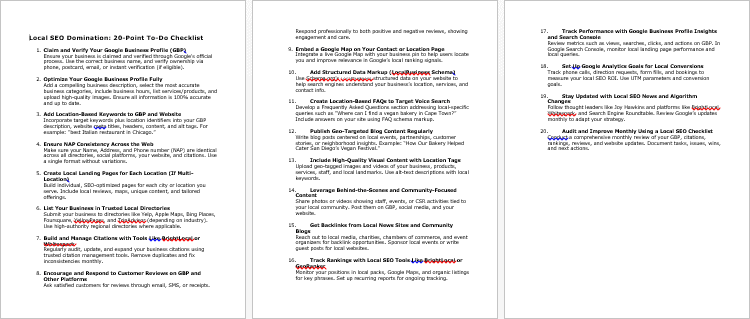
Local SEO Domination – Checklist
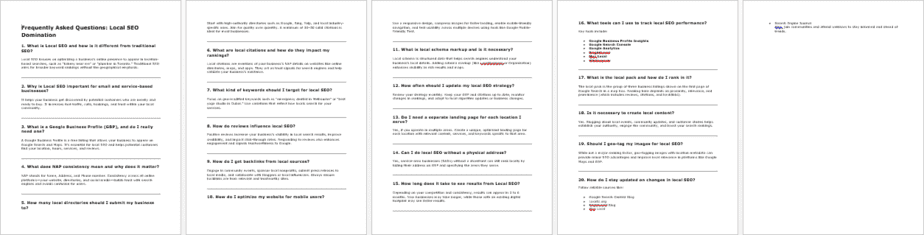
Local SEO Domination – FAQs
Local SEO Domination – Salespage Content
Package Details:
Word Count: 17 555 Words
Number of Pages: 86
Local SEO Domination – Bonus Content
Checklist
Word Count: 652 words
FAQs
Word Count: 788 words
Salespage Content
Word Count: 636 words
Total Word Count: 19 631 Words
Your PLR License Terms
PERMISSIONS: What Can You Do With These Materials?
Sell the content basically as it is (with some minor tweaks to make it “yours”).
If you are going to claim copyright to anything created with this content, then you must substantially change at 75% of the content to distinguish yourself from other licensees.
Break up the content into small portions to sell as individual reports for $10-$20 each.
Bundle the content with other existing content to create larger products for $47-$97 each.
Setup your own membership site with the content and generate monthly residual payments!
Take the content and convert it into a multiple-week “eclass” that you charge $297-$497 to access!
Use the content to create a “physical” product that you sell for premium prices!
Convert it to audios, videos, membership site content and more.
Excerpt and / or edit portions of the content to give away for free as blog posts, reports, etc. to use as lead magnets, incentives and more!
Create your own original product from it, set it up at a site and “flip” the site for megabucks!
RESTRICTIONS: What Can’t You Do With These Materials?
To protect the value of these products, you may not pass on the rights to your customers. This means that your customers may not have PLR rights or reprint / resell rights passed on to them.
You may not pass on any kind of licensing (PLR, reprint / resell, etc.) to ANY offer created from ANY PORTION OF this content that would allow additional people to sell or give away any portion of the content contained in this package.
You may not offer 100% commission to affiliates selling your version / copy of this product. The maximum affiliate commission you may pay out for offers created that include parts of this content is 75%.
You are not permitted to give the complete materials away in their current state for free – they must be sold. They must be excerpted and / or edited to be given away, unless otherwise noted. Example: You ARE permitted to excerpt portions of content for blog posts, lead magnets, etc.
You may not add this content to any part of an existing customer order that would not require them to make an additional purchase. (IE You cannot add it to a package, membership site, etc. that customers have ALREADY paid for.)
Share Now!
Latest Products





Free Sales Funnel Builder

Related Products
Popular & Trending



Featured Products