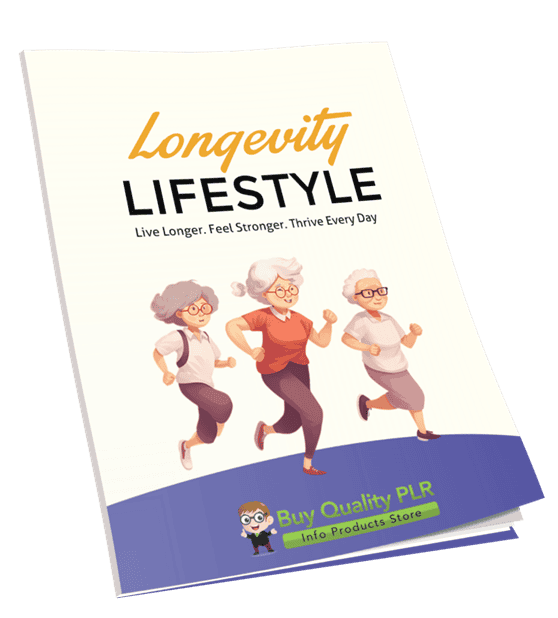
Longevity Lifestyle PLR Course 23k Words
in Lifestyle PLR , PLR eCourses , PLR List Building Reports , Premium PLR , Premium PLR Reports , Premium White Label Brandable PLR Coaching Courses , Private Label Rights Products , Wellness PLRChoose Your Desired Option(s)
has been added to your cart!
have been added to your cart!
#longevitylifestyle #plrcourse #healthyaging #wellnessmarketing #holistichealth #plrcontent #lifecoaching #healthyliving #mindbodywellness
Longevity Lifestyle PLR Course – Live Longer. Feel Stronger. Thrive Every Day
Do you want to look, feel, and perform your best every single day? Are you ready to adopt habits that promote a longer, healthier, and more vibrant life?
The Longevity Lifestyle PLR Course is a comprehensive, step-by-step training program designed to help anyone build lasting habits for wellness, vitality, and longevity. With 23,000 words of practical guidance, this course equips your audience to take control of their health, energy, and lifestyle choices—all in a friendly, easy-to-follow, and sustainable way.
Whether you’re a PLR reseller, wellness coach, health blogger, or entrepreneur, this course provides everything you need to teach, sell, or repurpose content that adds real value.
Introducing the…
Longevity Lifestyle
Why Longevity Lifestyle Matters
Longevity isn’t just about adding years to your life—it’s about adding life to your years.
Here’s why this course is a game-changer:
- Increase Your Healthspan: Learn strategies to stay energetic, mobile, and strong at any age.
- Reduce Stress and Improve Mental Clarity: Mental and emotional vitality are core to long-term wellness.
- Build Sustainable Habits: No fad diets or extreme routines—just practical, science-backed approaches.
- Enhance Daily Performance: Feel more energized, focused, and confident every day.
- Empower Others: Use the course content to guide your clients, students, or audience toward healthier lives.
With this course, your audience will not only understand what longevity really means, but also implement strategies that lead to visible, lasting results.
What You Get in the Longevity Lifestyle PLR Course
This course is divided into five comprehensive modules, each designed to build skills, knowledge, and habits for a longer, healthier life.
🧩 Module 1: Foundations of Longevity
Goal: Establish a strong base for a long, healthy, and meaningful life.
- Step 1: Understand What Longevity Really Means
Discover the difference between lifespan (how long you live) and healthspan (how well you live). Learn why the goal is quality years, not just quantity. - Step 2: Identify Your “Why” for Longevity
Clarify your personal motivations: family, travel, energy, or vitality. Knowing your “why” keeps you focused and committed. - Step 3: Bust Common Longevity Myths
We separate fact from fiction. Learn which old advice is outdated and what modern science actually supports. - Step 4: Take Your Longevity Self-Assessment
Evaluate your current lifestyle habits to identify areas of strength and opportunities for improvement.
Outcome: Students will have a solid foundation, clarity on their motivations, and a roadmap to begin their longevity journey.
🥗 Module 2: Longevity Through Nutrition
Goal: Fuel the body with nutrients that support cellular health, energy, and long-term vitality.
- Step 1: Embrace the Longevity Plate
Learn the perfect balance of whole foods, colorful vegetables, and nutrient-rich ingredients for daily health. - Step 2: Add (Don’t Just Subtract)
Focus on including superfoods, anti-inflammatory ingredients, and plant-based power rather than obsessing over restriction. - Step 3: Master the Art of Daily Hydration
Discover simple, practical ways to stay hydrated and how it supports digestion, cognition, skin, and energy levels. - Step 4: Create Your Longevity Meal Plan
Build a weekly plan with energizing breakfasts, satisfying lunches, and stress-free dinners that align with your goals.
Outcome: Students will have the tools and knowledge to nourish their bodies for longevity and sustained energy.
🏃♂️ Module 3: Movement for Life
Goal: Develop a joyful, sustainable approach to daily movement.
- Step 1: Learn Why Movement is Medicine
Understand how consistent movement benefits heart health, joint mobility, mood, and cognitive function. - Step 2: Build a Sustainable Daily Routine
Find movements you enjoy—walking, dancing, yoga, or light resistance—and learn how to make them consistent habits. - Step 3: Include Strength and Stretch
Strength training and flexibility exercises are essential for longevity. Learn how to integrate both into your weekly plan. - Step 4: Track Progress Without Obsession
Use simple tools, checklists, or journals to monitor progress without feeling pressured or overwhelmed.
Outcome: Students will move confidently, stay active, and maintain long-term physical health without extreme workouts.
🧘 Module 4: Mental & Emotional Vitality
Goal: Strengthen mental resilience, reduce stress, and build a vibrant emotional life.
- Step 1: Cultivate a Resilient Mindset
Learn how positive thinking, purpose, and mindset can support longer, healthier living. - Step 2: Practice Daily Stress Reduction
Simple, effective stress management tools: mindfulness, meditation, journaling, or mindful walking. - Step 3: Strengthen Emotional Connections
Meaningful relationships and social health are critical for longevity. Discover ways to nurture connections daily. - Step 4: Prioritize Rest and Recovery
Quality sleep, screen-free evenings, and a personalized wind-down routine support cognitive function and emotional balance.
Outcome: Students will enhance mental clarity, emotional resilience, and overall well-being—core pillars of long-term health.
🕰️ Module 5: Creating Your Longevity Lifestyle Plan
Goal: Bring everything together into a personalized, actionable longevity plan.
- Step 1: Design Your Personalized Longevity Routine
Combine nutrition, movement, and mental habits into a weekly schedule that fits your lifestyle. - Step 2: Set Realistic, Exciting Goals
Use our goal-setting framework to set micro and macro goals that are achievable and motivating. - Step 3: Prepare for Roadblocks (and Bounce Back)
Life happens! Learn strategies to stay on track even when challenges arise. - Step 4: Celebrate Wins and Commit to Progress
Reflect on accomplishments, celebrate milestones, and plan for continuous improvement.
Outcome: Students will step into their new lifestyle with confidence, clarity, and motivation to live longer, stronger, and healthier.
Bonus Materials Included
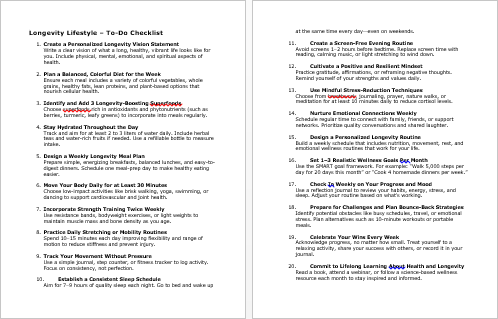
- Longevity Lifestyle Checklist (542 Words): Quick reference to implement key strategies immediately.
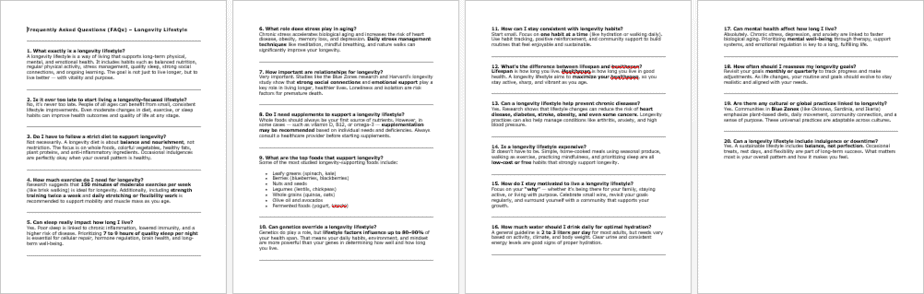
- Longevity Lifestyle FAQs (897 Words): Answers to the most common questions about habits, nutrition, movement, and mindset.
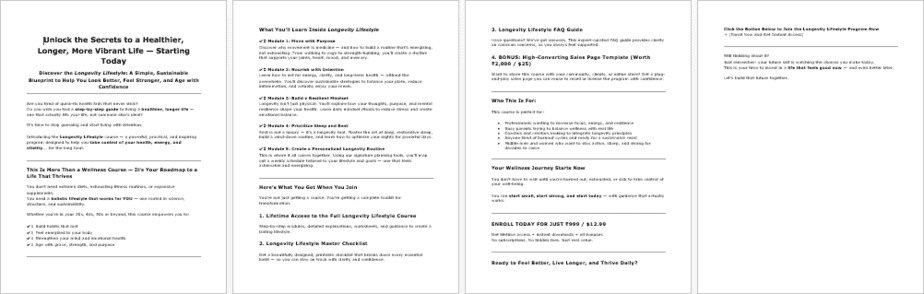
- Longevity Lifestyle Salespage (693 Words): Ready-made sales copy to promote or sell the course instantly.
Who Can Benefit from This PLR Course
- Health Coaches & Wellness Experts: Offer structured guidance to clients.
- PLR Buyers & Resellers: Sell, bundle, or repurpose content immediately.
- Entrepreneurs & Bloggers: Build email lists, create lead magnets, or monetize wellness content.
- Everyday Health Enthusiasts: Learn the tools and strategies to live longer, stronger, and more vibrant lives.
Ways to Use and Profit from This PLR Course
- Sell as a Full Course – Charge $297–$497 for online workshops, coaching programs, or membership access.
- Break into Reports or Guides – Sell sections individually for $10–$20 each.
- Bundle with Other Health PLR Products – Create premium packages for $47–$97.
- Develop Multi-Week E-Classes – Teach a 3–6 week “Longevity Lifestyle” course.
- Add to a Membership Site – Offer exclusive content for recurring revenue.
- Convert into Physical Products – Workbooks, journals, or meal plan guides.
- Use for Lead Magnets – Give away excerpts to grow email lists and attract clients.
- Flip a Site or Wellness Niche Business – Build a health-focused site with this content, then sell for profit.
Why Buy from Buy Quality PLR
- 23,000 Words of Ready-to-Use Content – No need to create from scratch.
- Action-Focused, Friendly Tone – Beginner to intermediate level, easy to teach or sell.
- Bonus Checklist, FAQs, and Salespage – Save hours on prep and marketing.
- PLR Licensing – Brand, sell, or teach with confidence.
- Multiple Profit Opportunities – E-courses, reports, bundles, memberships, and more.
Licensing Terms
Permissions:
- Sell as-is or with minor edits.
- Claim copyright if 75%+ of content is rewritten.
- Break into smaller guides or lessons for sale.
- Bundle with other PLR content for upsells.
Restrictions:
- Cannot pass PLR rights to customers.
- Maximum affiliate commission: 75%.
- Cannot give full course away for free.
- Cannot include in existing orders without additional purchase.
Bottom Line
The Longevity Lifestyle PLR Course is a complete, ready-to-use solution for anyone who wants to live longer, feel stronger, and thrive every day.
Whether you’re selling, teaching, or repurposing the content, this course gives you everything needed to deliver massive value and create multiple income streams.
✅ Instant Access | Fully Editable | Actionable, Science-Backed Content | Profitable PLR
Take control of your health, energy, and vitality today with Longevity Lifestyle PLR. Your longer, stronger, more vibrant life starts now!
has been added to your cart!
have been added to your cart!
Here A Sample of the Longevity Lifestyle PLR Course
Welcome to Longevity Lifestyle — a step-by-step training designed to help you create lasting habits that promote a longer, healthier, and more vibrant life. This course is packed with practical strategies, friendly guidance, and a sustainable approach to wellness. Whether you’re just getting started or looking to level up your health game, this course is your roadmap to vitality.
Module 1: Foundations of Longevity
Let’s build your base! In this module, we’ll set the groundwork for a long, healthy life.
Step 1: Understand What Longevity Really Means
Before you can build a lifestyle that promotes long-term health and vitality, it’s essential to understand what longevity truly means. Many people equate longevity with simply “living a long life.” However, in the context of modern wellness and scientific research, longevity is much more than that. It’s about the quality of your years — not just the quantity.
In this foundational step, we will walk you through the difference between lifespan and healthspan, examine global longevity trends, and help you reframe what it means to live a meaningful and vibrant life well into your later years.
Section 1: Lifespan vs. Healthspan – Defining the Difference
1.1 Lifespan – The Total Years You Live
Lifespan refers to the total number of years a person lives — from birth to death. This is a quantitative measure. Advances in medicine, sanitation, and living conditions have increased average lifespans worldwide. However, a longer life doesn’t necessarily equate to a healthy or enjoyable life.
Key facts:
- The global average lifespan today is around 73 years, with variation depending on region and country.
- Some countries (like Japan and Switzerland) report average lifespans nearing 85 years.
- While people are living longer, many spend their later years battling chronic diseases and physical limitations.
1.2 Healthspan – The Years You Live in Good Health
Healthspan, on the other hand, refers to the number of years you live without debilitating illness or loss of function — essentially, your vital years. It’s a qualitative measure.
A person may live to be 85 (lifespan), but if they spend their last 20 years struggling with mobility, pain, or serious illness, their healthspan might be only 65 years.
Key points:
- Healthspan is about feeling strong, independent, mobile, and mentally sharp for as long as possible.
- The goal of a longevity lifestyle is to close the gap between lifespan and healthspan — so that you live long and well.
1.3 Why This Distinction Matters for Course Participants
As a course creator or coach, helping people live longer and better must be your central mission. By introducing this concept early in your course, you lay the foundation for everything that follows — from nutrition and movement to mindset and rest.
Section 2: Exploring Global Longevity Patterns
Understanding longevity in a global context can offer valuable insights into what works. Let’s examine some worldwide patterns and communities that are known for their exceptional longevity.
2.1 The Blue Zones: Lessons from the World’s Longest-Living People
The term “Blue Zones” refers to five regions in the world where people live significantly longer and healthier lives. These include:
- Okinawa (Japan)
- Sardinia (Italy)
- Nicoya Peninsula (Costa Rica)
- Icaria (Greece)
- Loma Linda (California, USA)
Despite cultural differences, these populations share certain lifestyle habits:
- Plant-rich, whole-food diets
- Daily natural movement (like gardening, walking)
- Strong social bonds
- Purpose-driven lives
- Low levels of chronic stress
These areas exemplify a strong balance between lifespan and healthspan. Studying their habits provides practical models for developing longevity-oriented programs.
2.2 Trends in Industrialized Nations
In contrast, many industrialized nations have longer lifespans but increasingly shorter healthspans due to:
- Sedentary lifestyles
- Processed food consumption
- Chronic stress
- Environmental toxins
- Sleep deprivation
Understanding these challenges will help you craft content that speaks directly to modern health obstacles your learners may face.
Section 3: Rethinking What It Means to Age Well
3.1 Aging as a Natural but Modifiable Process
Aging is inevitable — but how you age can be influenced by your daily choices. Modern science shows that only about 20–30% of your longevity is determined by genetics, while the rest is shaped by lifestyle, behavior, and environment.
Key concepts to introduce:
- Biological age vs. chronological age: Someone may be 60 years old but have the body and brain function of a 45-year-old.
- Epigenetics: Lifestyle habits can switch certain genes “on” or “off,” affecting how you age.
- Inflammaging: Chronic inflammation accelerates aging and disease — reducing it can slow biological aging.
3.2 Why Prevention is the Best Medicine
Instead of focusing on treating disease, longevity strategies focus on preventing disease in the first place — through healthy eating, stress management, quality sleep, and purposeful living.
Section 4: Reflection & Application – Personalizing the Concept
4.1 Ask Reflective Questions
Invite learners to reflect with the following prompts:
- How do you define a “good life” as you age?
- What would you like your health and energy to look like at 70 or 80?
- Have you ever seen someone age gracefully? What stood out to you?
Encourage journaling or guided discussion using these prompts.
4.2 Learner Activity: Visualize Your Future Self
Ask participants to:
- Close their eyes and picture themselves at age 80.
- What are they doing? Who are they with?
- How does their body feel? What’s their daily routine like?
Then, have them write a short paragraph about that vision. This exercise helps connect emotionally with the deeper why behind lifestyle changes.
4.3 Worksheet: Lifespan vs. Healthspan Timeline
Provide a visual timeline where participants mark:
- Their current age
- Desired lifespan
- Ideal healthspan
- Any years they expect to need support (and what kind)
This makes the abstract idea of healthspan tangible and motivating.
Conclusion
Understanding the difference between lifespan and healthspan is more than a vocabulary lesson — it’s a mindset shift. True longevity isn’t just about adding years to your life, but about adding life to your years.
By redefining what it means to age well, and by learning from global health patterns, participants can begin to envision — and then build — a long, meaningful, and vibrant life.
This step sets the tone for the rest of the course: sustainable, holistic, and empowered.
Step 2: Identify Your “Why” for Longevity
Longevity isn’t just about science or lifestyle strategies — it starts with personal motivation. If you don’t know why you want to live a longer, healthier life, it becomes much harder to commit to the daily choices that support it. This step is about finding your deeper purpose and creating an emotional connection to your longevity journey.
As an international course creator, your job is to help participants reflect inward and bring clarity to their own motivations — motivations that can sustain their efforts for years to come.
Let’s explore how to guide your learners through this powerful step, with real-world examples, reflection exercises, and coaching strategies.
Section 1: Why Knowing Your “Why” Matters
1.1 The Role of Purpose in Long-Term Success
People don’t stay consistent with healthy habits just because they know they should. They stick to them when they’re emotionally connected to a reason that matters to them.
- Without a strong “why,” motivation fades.
- With a strong “why,” even tough days have meaning.
When someone knows that waking up early to walk means being strong enough to play with their grandchildren or having the energy to travel at age 75, it becomes easier to follow through.
As a course leader, this is your moment to shift participants from information consumption to emotional engagement.
1.2 Science Supports It: Purpose and Longevity Are Linked
Research consistently shows that people who have a clear purpose in life live longer and healthier lives. Studies from Japan (notably in Okinawa, one of the Blue Zones) refer to this purpose as “Ikigai” — your reason for waking up in the morning.
Highlights:
- Purpose has been linked to lower risks of heart disease, reduced inflammation, and better mental health.
- In a 2014 study published in Psychological Science, people with a strong sense of purpose were 15% less likely to die over a 14-year period.
- Even in later life, finding meaning dramatically improves quality of life and resilience.
Section 2: How to Help Learners Discover Their “Why”
This is a deeply personal step. You’ll want to create a safe, reflective space for learners to explore their internal motivations.
2.1 Use Open-Ended Prompts
Provide reflective questions that help participants dig deeper. Encourage journaling, voice recordings, or small-group discussion.
Here are some sample prompts:
- If you could add 10 healthy years to your life, what would you do with them?
- Who do you want to be healthy for?
- What makes life deeply meaningful to you?
- What would you regret not doing if your health declined?
- What is one thing you wish you had more energy or time for?
Encourage learners to write their answers down and revisit them often.
2.2 Visualization Exercise: The Future Self
Invite learners to close their eyes and imagine themselves 20–30 years from now:
- Where are you living?
- Who’s around you?
- What does your typical day look like?
- How does your body feel? What are you able to do?
This visualization helps connect their health decisions today with a desired future. Ask them to describe that version of themselves in writing — this becomes a powerful personal guide.
Section 3: Categories of Motivation – Help Learners Identify Theirs
People are driven by different kinds of motivation. Break these down into simple, relatable categories so learners can identify which resonates most:
3.1 Family-Focused
Many people want to live longer and stay healthier so they can:
- Watch their children grow up
- Be active grandparents
- Support aging partners or parents
- Be present during key life events like weddings, graduations, and births
If this is their “why,” help them anchor their motivation around relationships.
3.2 Adventure & Travel
For some, the goal is to:
- Explore new countries
- Try new experiences (like hiking, scuba diving, or sailing)
- Live independently and travel well into their 70s or 80s
This motivation is rooted in freedom and experiences.
3.3 Personal Fulfillment
Others are motivated by:
- Creative projects (writing a book, starting a nonprofit, building a business)
- Lifelong learning and education
- Spiritual or community contribution
If this is the case, their longevity journey is tied to legacy and self-actualization.
3.4 Energy & Daily Vitality
For many people, especially younger adults, their “why” may be more immediate:
- Waking up without fatigue
- Feeling confident in their body
- Being mentally clear and emotionally balanced
This is rooted in day-to-day quality of life, and it’s just as valid as long-term goals.
Encourage learners to reflect on which category — or blend — best fits them.
Section 4: Activities to Anchor Their “Why”
Once participants have reflected and identified their core motivation, they need a concrete reminder to return to when motivation fades.
4.1 Create a “Why” Statement
Ask learners to write a simple, direct sentence that summarizes their personal reason for pursuing longevity.
Examples:
- “I want to be healthy and strong so I can hike the Himalayas when I turn 70.”
- “I want to live long enough to dance at my granddaughter’s wedding.”
- “I want to age without pain so I can create art every day of my retirement.”
Encourage clarity and specificity. A vague goal (“I want to be healthy”) doesn’t have the same emotional impact as a vivid one.
4.2 Make it Visible
Suggest that learners:
- Print and post their “why” on their mirror, fridge, or workspace
- Set it as a reminder or lock screen on their phone
- Include it in their journal or planner
Having a daily reminder reinforces purpose and can reset their mindset during stressful or low-energy days.
4.3 Revisit and Revise Regularly
Explain that a “why” can evolve. A new grandchild, a new dream, or a new challenge might shift what matters most. Encourage learners to revisit their statement quarterly or yearly, and update it as needed.
Conclusion
Identifying your “why” for longevity is not just a motivational exercise — it’s a foundational mindset shift. It transforms the journey from a list of habits into a meaningful lifestyle choice anchored in what matters most.
Whether it’s love for family, hunger for adventure, a desire to leave a legacy, or simply wanting to wake up energized each day — purpose is the fuel that powers long-term well-being.
As an instructor, your role is to guide, inspire, and help participants uncover that purpose. When they connect emotionally to their future selves, everything else in their journey starts to make sense.
Step 3: Bust Common Longevity Myths
Overview: Clearing the Fog Around Longevity
When it comes to longevity, there’s a lot of misinformation floating around — from miracle supplements to extreme diets and rigid anti-aging routines. As course creators guiding a global audience, it’s your responsibility to empower learners by separating science from sensationalism. This module is about developing critical thinking skills, understanding what evidence-based longevity looks like, and helping participants make informed lifestyle choices without falling into the trap of trendy myths or outdated advice.
Through this step, we’ll identify some of the most common longevity myths, explore what science really says, and provide practical ways for learners to reframe their mindset around aging and wellness.
Section 1: Why Debunking Myths Matters
1.1 Myths Create Confusion and Fear
Most people begin their health and longevity journey with good intentions. But thanks to social media, pseudoscience, and sensational headlines, they’re often misled into wasting time, energy, and money on things that don’t work — or worse, cause harm.
Common consequences include:
- Taking unnecessary supplements
- Avoiding foods due to fear-based diet trends
- Feeling overwhelmed or discouraged when results don’t match the hype
By busting myths early in the course, you help learners gain clarity, build trust in real science, and make lasting changes with confidence.
1.2 The Science of Aging Is Evolving
Modern longevity research focuses on healthspan — not just how long we live, but how well we live. We now understand that aging is influenced by a blend of genetics, lifestyle, environment, and mindset. Course participants deserve to learn what science truly supports — and what is outdated or misleading.
Section 2: Common Longevity Myths and the Truth Behind Them
You can present this section in the form of interactive lectures, video explainers, or downloadable myth-busting PDFs. Each myth is followed by evidence-based clarification.
2.1 Myth #1: Aging Means Decline Is Inevitable
The belief: As you age, you’re destined to lose energy, become frail, and develop chronic illnesses.
The truth: Many signs of “aging” are actually signs of neglected health habits or treatable conditions.
Scientific insight:
- People can build muscle, improve brain function, and maintain independence well into their 70s, 80s, and beyond with the right support.
- Functional aging studies show that movement, diet, sleep, and mindset play a larger role in vitality than age alone.
Teach your learners: Aging doesn’t equal decline. It’s a shift — not a sentence.
2.2 Myth #2: Longevity Depends Mostly on Genetics
The belief: If your parents didn’t live long, you won’t either.
The truth: Genetics only account for approximately 20–30% of your longevity potential.
What really matters:
- Epigenetics — how lifestyle and environment turn genes “on” or “off”
- Daily habits around nutrition, exercise, sleep, social connection, and stress have a greater impact than DNA alone
Use this opportunity to empower learners: You have more control than you think.
2.3 Myth #3: Expensive Supplements and Anti-Aging Products Are Essential
The belief: You need a cabinet full of expensive pills, powders, or skincare products to look and feel young.
The truth: Most longevity benefits come from foundational lifestyle habits, not products.
Evidence:
- Regular exercise is the most powerful “anti-aging” intervention.
- A whole food-based diet, hydration, and sleep hygiene beat most costly solutions.
- The supplement industry is largely unregulated. Many popular products lack scientific backing.
Tip for your course delivery: Invite a certified nutritionist or health expert to explain which supplements (if any) may be useful under supervision — and which are just marketing gimmicks.
2.4 Myth #4: Extreme Dieting and Fasting Will Make You Live Longer
The belief: Drastic caloric restriction, skipping meals, or following rigid diets will extend your life.
The truth: While some animal studies support calorie restriction, the results in humans are mixed — and context matters.
What science really says:
- Consistent nutrient-dense meals, not starvation, lead to sustainable wellness.
- Intermittent fasting may offer benefits for some, but it’s not a universal solution.
- Mental stress around food choices often causes more harm than moderate eating habits.
What to teach: Balance is more sustainable than extremes. Quality of food and consistency outweigh trendy food rules.
Section 3: Practical Strategies to Teach Myth-Busting
3.1 Encourage Critical Thinking
Provide learners with tools to evaluate information:
- How to read scientific summaries (without needing a Ph.D.)
- What to look for in reliable health sources: peer-reviewed journals, medical institutions, expert panels
- How to spot red flags: miracle cures, urgent language (“must try now”), lack of evidence
Activity idea: Share 2–3 sample headlines or claims and ask learners to decide: “Fact or fiction?” Then walk through the reasoning together.
3.2 Use the “3C Framework”: Clarify, Correct, Contextualize
When presenting a myth:
- Clarify the myth clearly (without mocking it)
- Correct it using science or credible research
- Contextualize by showing how real people can apply the right information
This approach respects learners’ current beliefs while helping them shift without shame or confusion.
3.3 Guest Expert Video Interviews
Feature clips from medical doctors, gerontologists, health coaches, or fitness experts debunking common misconceptions. Make sure they represent diverse regions and backgrounds to support a global learning experience.
Section 4: Reframing Aging and Longevity with Empowerment
Once myths are addressed, help learners rebuild their understanding of what aging and longevity can truly look like.
4.1 Introduce the Concept of Proactive Aging
Teach that aging well involves:
- Living intentionally instead of reactively
- Focusing on prevention rather than only treatment
- Taking small, daily actions that build healthspan over time
Encourage learners to see their choices as powerful, not passive.
4.2 Reinforce Science-Based Practices That Do Work
Reiterate the real, effective strategies that consistently show results:
- Consistent physical activity
- Meaningful social connection
- Brain stimulation and learning
- Adequate, high-quality sleep
- Stress regulation techniques (e.g., mindfulness, breathing practices)
- Purposeful living
When learners understand that simple practices — not sensational trends — are the true keys to longevity, they’re far more likely to adopt them.
Conclusion: Replace Fear with Confidence
The longevity journey is not about fearing aging. It’s about understanding it and working with your body, not against it. By busting common myths, you help learners:
- Stop wasting time and energy on things that don’t serve them
- Reclaim their confidence with evidence-based knowledge
- Build a lifestyle that promotes lasting health, strength, and joy
This step gives your participants the clarity and control to continue their journey from an informed and empowered place.
We’re also giving these extra bonuses
Longevity Lifestyle – Checklist
Longevity Lifestyle – FAQs
Longevity Lifestyle – Salespage Content
Package Details:
Word Count: 21 126 Words
Number of Pages: 111
Longevity Lifestyle – Bonus Content
Checklist
Word Count: 542 words
FAQs
Word Count: 897 words
Salespage Content
Word Count: 693 words
Total Word Count: 23 258 Words
Your PLR License Terms
PERMISSIONS: What Can You Do With These Materials?
Sell the content basically as it is (with some minor tweaks to make it “yours”).
If you are going to claim copyright to anything created with this content, then you must substantially change at 75% of the content to distinguish yourself from other licensees.
Break up the content into small portions to sell as individual reports for $10-$20 each.
Bundle the content with other existing content to create larger products for $47-$97 each.
Setup your own membership site with the content and generate monthly residual payments!
Take the content and convert it into a multiple-week “eclass” that you charge $297-$497 to access!
Use the content to create a “physical” product that you sell for premium prices!
Convert it to audios, videos, membership site content and more.
Excerpt and / or edit portions of the content to give away for free as blog posts, reports, etc. to use as lead magnets, incentives and more!
Create your own original product from it, set it up at a site and “flip” the site for megabucks!
RESTRICTIONS: What Can’t You Do With These Materials?
To protect the value of these products, you may not pass on the rights to your customers. This means that your customers may not have PLR rights or reprint / resell rights passed on to them.
You may not pass on any kind of licensing (PLR, reprint / resell, etc.) to ANY offer created from ANY PORTION OF this content that would allow additional people to sell or give away any portion of the content contained in this package.
You may not offer 100% commission to affiliates selling your version / copy of this product. The maximum affiliate commission you may pay out for offers created that include parts of this content is 75%.
You are not permitted to give the complete materials away in their current state for free – they must be sold. They must be excerpted and / or edited to be given away, unless otherwise noted. Example: You ARE permitted to excerpt portions of content for blog posts, lead magnets, etc.
You may not add this content to any part of an existing customer order that would not require them to make an additional purchase. (IE You cannot add it to a package, membership site, etc. that customers have ALREADY paid for.)
Share Now!
Latest Products
Free Sales Funnel Builder

Related Products
Popular & Trending
Featured Products