How to Build Multiple Streams of Income PLR Course 35k Words
in Business Finance PLR , Business PLR , Entrepreneur PLR , Finance PLR , Passive Income PLR , PLR eCourses , PLR List Building Reports , Premium PLR , Premium PLR Reports , Premium White Label Brandable PLR Coaching Courses , Private Label Rights ProductsChoose Your Desired Option(s)
has been added to your cart!
have been added to your cart!
#multiplestreamsofincome #plrcourse #passiveincome #wealthbuilding #makemoneyonline #financialfreedom #plrcontent #entrepreneurmindset #onlinebusiness
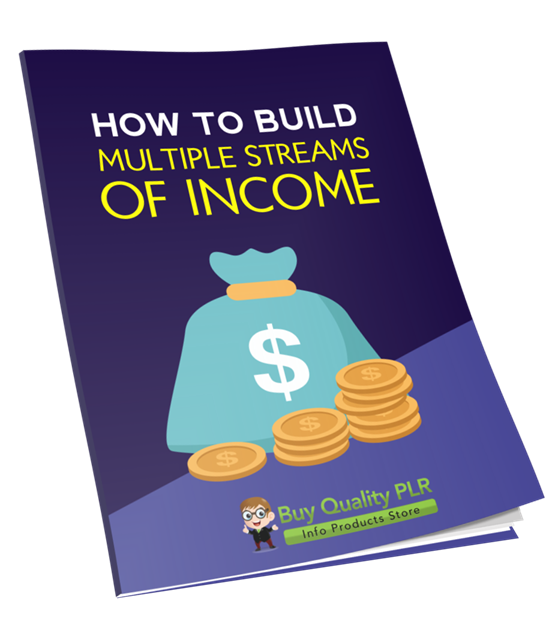
How to Build Multiple Streams of Income PLR Course – 35,000 Words
Unlock Financial Freedom, Grow Wealth, and Build a Life on Your Terms
In today’s unpredictable economy, relying on a single source of income is risky. Job layoffs, business fluctuations, and unexpected expenses can put your financial security at risk. The solution? Multiple streams of income.
The How to Build Multiple Streams of Income PLR Course is a comprehensive, 35,000-word training program designed to teach you—or your clients—how to create, manage, and scale multiple sources of income. From mindset to practical implementation, this course gives a step-by-step roadmap to financial freedom.
Whether your audience is entrepreneurs, freelancers, aspiring investors, or anyone seeking financial independence, this PLR course provides ready-to-use, high-value content that can be sold, repurposed, or used to build premium products.
Introducing the…
How to Build Multiple Streams of Income
Why Multiple Streams of Income Are Essential
Building multiple income sources isn’t just a strategy—it’s a lifestyle shift. Here’s why it matters:
- Financial Security: Protect yourself from unexpected income loss.
- Wealth Creation: Diversifying income allows for faster wealth growth.
- Flexibility & Freedom: Less dependence on a single paycheck, more control over your time.
- Scalability: Grow passive income streams to work for you around the clock.
- Peace of Mind: Reduce financial stress by spreading risk across multiple sources.
This course gives learners the knowledge, tools, and confidence to implement these strategies effectively.
Course Overview: Step-by-Step Blueprint
The course is divided into five in-depth modules, each designed to help learners progress from mindset shifts to actionable income strategies.
Module 1: Mindset & Foundation for Multiple Incomes
Objective: Build a solid mindset and understand the principles behind creating multiple income streams.
- Lesson 1: Understanding Financial Freedom
Learn what financial freedom truly means and why depending on one source of income limits your potential. - Lesson 2: Shifting Your Money Mindset
Identify limiting beliefs about money and success, and cultivate a mindset ready for wealth creation. - Lesson 3: Identifying Your Skills & Strengths
Discover your unique talents, experience, and passions that can become profitable income streams. - Lesson 4: Setting Clear Income Goals
Create actionable goals for multiple income streams aligned with your lifestyle and ambitions.
Module 2: Active Income Streams
Objective: Learn strategies to generate money through time, skills, and effort.
- Lesson 1: Freelancing & Consulting
Monetize your expertise by offering services online or offline. - Lesson 2: Part-Time Businesses & Side Hustles
Explore small-scale businesses that you can start immediately with minimal investment. - Lesson 3: Remote Work & Gig Economy Opportunities
Use platforms like Upwork, Fiverr, or TaskRabbit to earn additional income. - Lesson 4: Creating Products for Direct Sale
Develop and sell digital products, courses, or handmade goods for active revenue.
Module 3: Passive Income Streams
Objective: Build income that generates money without constant active work.
- Lesson 1: Investments for Passive Income
Understand the basics of stocks, bonds, mutual funds, and dividend income. - Lesson 2: Real Estate Income
Learn how rental properties, REITs, or short-term rentals can generate recurring income. - Lesson 3: Digital Assets & Royalties
Earn through intellectual property, books, music, or online content. - Lesson 4: Affiliate Marketing & Online Systems
Promote other people’s products online and earn commissions without handling inventory.
Module 4: Scaling Your Income Streams
Objective: Grow your income sources into sustainable, larger revenue streams.
- Lesson 1: Diversification Strategies
Spread income sources to reduce risk and increase financial security. - Lesson 2: Automating Income Processes
Use systems, AI tools, and software to automate repetitive tasks and maximize efficiency. - Lesson 3: Outsourcing & Delegation
Hire support or virtual assistants to manage parts of your business while you focus on growth. - Lesson 4: Tracking & Optimizing Income Streams
Monitor revenue, identify high-performing streams, and adjust strategies for maximum profit.
Module 5: Long-Term Wealth & Financial Freedom
Objective: Ensure your income streams contribute to lasting wealth and independence.
- Lesson 1: Building an Emergency & Investment Fund
Protect your finances from unexpected setbacks and secure your future. - Lesson 2: Tax Planning & Legal Structures
Legally optimize income streams to minimize taxes and protect assets. - Lesson 3: Mindful Spending & Reinvesting
Learn to spend wisely, save strategically, and reinvest profits for accelerated growth. - Lesson 4: Creating a Legacy & Generational Wealth
Build wealth that lasts beyond your lifetime and supports future generations.
Course Outcomes: What Learners Will Achieve
After completing this course, your audience will be able to:
- Understand the mindset required for financial freedom.
- Identify income streams that match their skills and lifestyle.
- Build both active and passive sources of income.
- Scale, automate, and optimize income streams.
- Secure long-term wealth and achieve financial independence.
This course empowers learners to take control of their financial future and live life on their terms.
Bonus Materials Included
To add extra value, this PLR course package includes ready-to-use resources:
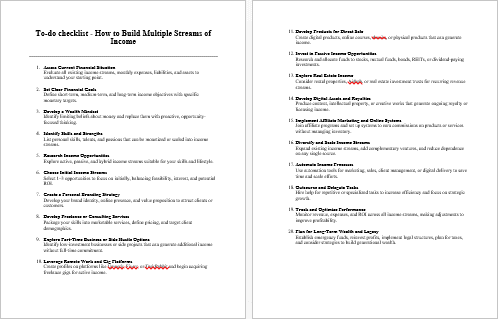
- How to Build Multiple Streams of Income – Checklist (408 Words)
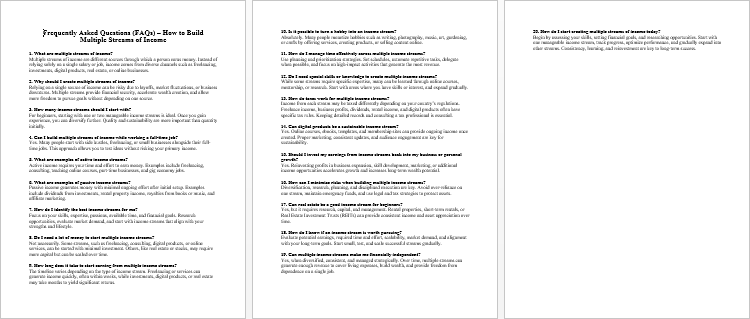
A practical step-by-step checklist to help learners implement all strategies quickly. - How to Build Multiple Streams of Income – FAQs (805 Words)
Answers to the most common questions about income diversification, investments, and financial freedom. - How to Build Multiple Streams of Income – Salespage (768 Words)
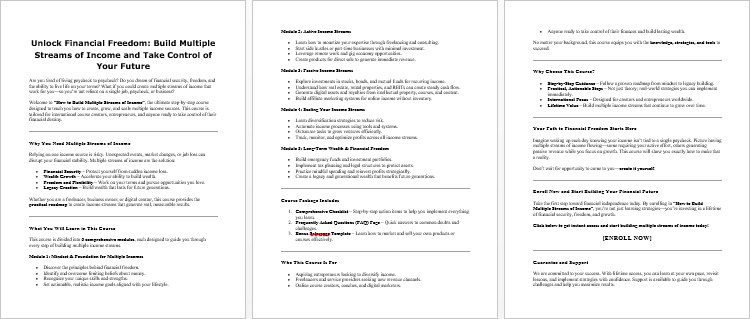
A professionally written sales page template ready to publish or use for marketing campaigns.
Who Can Benefit From This PLR Course?
This course is perfect for:
- Entrepreneurs seeking financial independence
- Freelancers and side-hustlers looking to scale income
- Business coaches and consultants
- Bloggers and digital marketers
- Membership site owners and course creators
- Anyone interested in building wealth and multiple income streams
The PLR package is fully editable, allowing you to brand, resell, or repurpose it for high-value products.
Multiple Ways to Monetize This PLR Course
The How to Build Multiple Streams of Income PLR Course is versatile and monetizable in multiple ways:
1. Sell the Course As-Is
Minor edits and branding, then launch as a complete digital course.
2. Create a Premium Online Program
Turn it into a 4–6 week online course and sell for $297–$497.
3. Break It Into Mini-Guides or Reports
Sell individual modules for $10–$20 each to attract a wider audience.
4. Bundle With Other Resources
Combine with marketing, finance, or productivity guides for $47–$97.
5. Membership Site Content
Deliver weekly lessons to generate recurring monthly revenue.
6. Convert to Audio or Video Content
Host webinars, workshops, or coaching sessions based on the course material.
7. Physical Products
Create planners, workbooks, or guides and sell as premium packages.
8. Lead Magnets
Use excerpts to grow email lists, generate leads, or attract traffic.
9. Build & Flip a Business Brand
Launch a site around financial freedom or income generation and sell it later for profit.
Licensing Terms: What You Can and Cannot Do
You CAN:
- Sell the content with minor branding tweaks
- Rewrite 75%+ of the content and claim copyright
- Break the course into smaller guides, reports, or modules
- Bundle with other PLR content
- Convert content into audio, video, or membership materials
- Use excerpts for blogs, lead magnets, or free resources
- Build a business around the content and sell it
You CANNOT:
- Pass PLR or resale rights to your customers
- Offer 100% affiliate commissions (max 75%)
- Give away the full course for free
- Add the course to an existing paid package without an additional purchase
Why Buy Quality PLR?
When you purchase this PLR course from Buy Quality PLR, you receive:
- Professionally written, high-value content
- A turnkey course ready to sell, brand, or repurpose
- Bonus resources to accelerate sales and engagement
- Content in a growing niche with high demand for financial education
- Flexible options for digital, audio, video, or physical product creation
The Bottom Line
Financial freedom is no longer a dream—it’s a strategic choice. With the How to Build Multiple Streams of Income PLR Course, you or your clients can:
- Create multiple revenue streams
- Scale active and passive income
- Automate and optimize wealth-building processes
- Gain long-term security and independence
This is a complete, plug-and-play product for anyone looking to generate revenue, empower learners, and build a strong business around financial freedom.
Get the How to Build Multiple Streams of Income PLR Course Today!
Available now at Buy Quality PLR – your shortcut to offering a high-demand financial education course without creating content from scratch.
Empower learners. Grow wealth. Create financial freedom.
has been added to your cart!
have been added to your cart!
Here A Sample of the How to Build Multiple Streams of Income PLR Course
Welcome! This course is designed to help you understand, plan, and create multiple streams of income so you can increase financial security, grow your wealth, and gain the freedom to live life on your terms. We’ll go step by step, from mindset shifts to practical implementation, in a friendly and actionable way.
Module 1: Mindset & Foundation for Multiple Incomes
Objective: Set a strong mindset and understand the core principles behind multiple income streams.
Lesson 1: Understanding Financial Freedom
Welcome to the first step of your journey toward building multiple streams of income. Before we dive into practical strategies and actionable steps for generating diverse income sources, it is critical to understand the concept of financial freedom. This lesson lays the foundation for everything you will learn in this course. A strong understanding of financial freedom will not only inspire you but also ensure that the decisions you make about money, work, and investments align with your long-term goals.
1. Defining Financial Freedom
Financial freedom is a term often used in personal finance, but its meaning can vary depending on the individual. At its core, financial freedom is the state in which you have sufficient income, assets, and investments to cover your living expenses without relying solely on a paycheck from a job. In simple terms, it is the ability to live life on your own terms without constant financial stress.
Financial freedom is not necessarily about being rich or having millions in the bank. It is about having control over your money, your time, and your choices. When you are financially free, you can decide how you spend your day, where you live, what work you do, and how much risk you are willing to take, without being constrained by financial obligations.
Key elements of financial freedom include:
- Sufficient income to cover expenses: You have enough cash flow from multiple sources to pay bills, invest, and save without relying on one income stream.
- Control over your finances: You make conscious decisions about spending, saving, and investing.
- Ability to plan for the future: You can invest in growth opportunities, retirement, or personal development without worrying about running out of money.
- Reduced stress and security: You feel secure knowing that unexpected expenses or emergencies will not disrupt your life.
2. Why Relying on a Single Income Is Risky
Many people rely entirely on one source of income, usually a full-time job, to cover their financial needs. While a stable salary can provide comfort, it comes with inherent risks. Understanding these risks is essential to appreciate why building multiple streams of income is crucial.
Risk 1: Job Loss
Even in the most stable industries, unexpected layoffs, company closures, or economic downturns can disrupt your income. Relying solely on one source means that any interruption can significantly impact your financial security.
Risk 2: Inflation and Rising Costs
The cost of living increases over time due to inflation. Relying on a single income may not allow you to keep pace with rising expenses, especially if your salary remains stagnant. Over time, this can erode your purchasing power and affect your lifestyle.
Risk 3: Limited Growth Potential
A single income stream, especially a salaried job, has a ceiling. Your income is capped by promotions, raises, or organizational limits. If you want to achieve financial freedom faster, relying solely on this source may restrict your growth potential.
Risk 4: Dependency on Others
Depending on a single source of income places your financial well-being in someone else’s hands—your employer, your clients, or even market conditions. Any disruption in their ability to pay you directly affects you.
Building multiple income streams mitigates these risks and provides a safety net. It ensures that if one source is affected, others can sustain you and maintain your financial stability.
3. The Benefits of Financial Freedom
Now that we understand the risks of relying on a single income, it is important to explore the benefits that financial freedom brings. These benefits are not only monetary but also psychological and emotional, creating a well-rounded sense of security and life satisfaction.
Benefit 1: Flexibility and Choice
Financial freedom allows you to make choices based on preference rather than necessity. You can decide where to work, which projects to pursue, or whether to take a break without worrying about income.
Benefit 2: Reduced Stress and Anxiety
Money-related stress is a leading cause of anxiety for many people. When you have multiple income streams, emergencies, unexpected expenses, and economic uncertainties have less impact, leading to a calmer and more focused life.
Benefit 3: Opportunities for Growth and Learning
With financial freedom, you can invest in personal development, acquire new skills, or explore business opportunities without being limited by finances. This creates a cycle where knowledge and financial security reinforce each other.
Benefit 4: Legacy and Long-Term Security
Financial freedom is not just about you. By building multiple income streams, you create wealth that can benefit your family, future generations, or charitable causes. It allows you to think long-term rather than living paycheck to paycheck.
Benefit 5: Personal Fulfillment
True financial freedom enables you to align your income with your passions. You can choose projects or ventures that excite you rather than those you are forced to do for survival. This alignment leads to greater satisfaction and happiness.
4. Different Paths to Financial Freedom
Financial freedom can be achieved through various avenues. It is important to understand that it is not a one-size-fits-all solution. Each individual’s journey will look different depending on their skills, resources, and goals.
Path 1: Active Income
Active income is earned through direct effort, such as employment, freelance work, or selling products. While it is important, active income alone may not achieve long-term financial freedom because it depends on continuous effort and time.
Path 2: Passive Income
Passive income refers to money earned with minimal ongoing effort after the initial work is done. Examples include rental income, dividends, royalties, or online businesses that generate revenue automatically. Building passive income is key to financial freedom because it decouples time from money.
Path 3: Investments
Investments are a powerful tool for achieving financial freedom. By putting money into stocks, bonds, real estate, or businesses, you allow your money to grow and work for you over time. Smart investing multiplies wealth and ensures long-term security.
Path 4: Entrepreneurship and Business Ownership
Owning a business creates the opportunity to generate significant income and eventually establish systems that run independently. Businesses, when scaled effectively, can become major sources of both active and passive income.
5. Understanding the Role of Multiple Streams of Income
Multiple streams of income are crucial for achieving true financial freedom. Instead of relying solely on a single salary or business, having several sources of income creates a balanced and resilient financial ecosystem.
Why multiple streams work:
- Risk Mitigation: If one stream is disrupted, others compensate.
- Increased Earnings Potential: Combining multiple streams multiplies total income beyond what a single source could provide.
- Financial Learning: Managing multiple streams teaches financial literacy, budgeting, and investment skills.
- Opportunities for Compound Growth: Combining active and passive income allows you to reinvest profits and accelerate wealth building.
Examples of income streams to consider:
- Salary or freelancing income
- E-commerce or online business revenue
- Real estate rental income
- Dividend and interest income from investments
- Affiliate marketing or digital products
- Royalties from intellectual property
Even a modest number of diversified income streams can significantly increase financial security and shorten the timeline to financial freedom.
6. Key Principles to Adopt for Financial Freedom
To successfully achieve financial freedom, it is not enough to understand it conceptually. You must adopt certain principles and habits that will guide your decisions and actions.
Principle 1: Live Below Your Means
Avoid lifestyle inflation. Prioritize saving and investing over unnecessary spending. Financial freedom is built when you control your expenses and maximize your savings potential.
Principle 2: Invest in Yourself
Your skills, knowledge, and mindset are your most valuable assets. Continuous learning and personal development enhance your ability to generate income across multiple streams.
Principle 3: Embrace Diversification
Don’t put all your eggs in one basket. Spread your income sources across different methods, industries, and risk levels to create a resilient financial structure.
Principle 4: Start Early and Be Consistent
The earlier you begin building multiple income streams, the more time you have for compounding growth. Consistency in effort, investment, and learning is more important than speed.
Principle 5: Focus on Long-Term Goals
Financial freedom is a journey, not a destination. Avoid get-rich-quick schemes. Focus on sustainable growth, strategic investments, and creating income streams that stand the test of time.
Principle 6: Maintain Financial Discipline
Track income, expenses, and investments meticulously. Make data-driven decisions, avoid impulsive spending, and remain disciplined in saving and reinvesting.
7. Developing a Financial Freedom Mindset
Understanding financial freedom conceptually is important, but to achieve it, you need the right mindset. This is particularly crucial for international course creators who may face varying economic environments, currencies, and opportunities.
Step 1: Believe in Possibility
Financial freedom is achievable for anyone willing to plan, learn, and execute. Replace self-doubt with belief in your ability to create multiple income streams.
Step 2: Embrace Responsibility
You are responsible for your financial future. Avoid blaming external factors and focus on actions within your control.
Step 3: Think Strategically, Not Reactively
Focus on creating long-term income rather than immediate gratification. Plan for sustainable growth and diversified income.
Step 4: View Money as a Tool
Understand that money is a tool for freedom, opportunity, and impact, not just consumption. Use it strategically to build more income and wealth.
Step 5: Adopt a Growth-Oriented Attitude
Challenges and setbacks are part of the journey. Treat every obstacle as a learning opportunity and remain adaptable to changing circumstances.
8. Reflection and Action Step
At the end of this lesson, take a moment to reflect on your current financial situation and mindset. Ask yourself:
- What does financial freedom mean to me personally?
- Which areas of my finances rely on a single income?
- What fears or limiting beliefs do I have about building multiple income streams?
- How can I start taking steps today to diversify my income?
Write down your reflections. This self-awareness will guide you as you progress through the course and begin building tangible income streams.
Conclusion
Understanding financial freedom is the foundation of your journey toward multiple streams of income. By internalizing what it truly means, recognizing the risks of relying on a single income, and adopting the mindset of strategic, disciplined wealth-building, you are laying the groundwork for success.
Financial freedom is not a distant dream; it is a practical goal that can be achieved with knowledge, persistence, and the right approach. In the next lessons, we will explore how to shift your money mindset, identify your strengths, and set actionable income goals—all essential steps to creating a diversified and resilient financial future.
Remember, financial freedom starts in the mind. When you think like a creator, entrepreneur, and investor, your actions will follow, and your income streams will grow.
Lesson 2: Shifting Your Money Mindset
Welcome to the second lesson of Module 1. Now that you understand what financial freedom is and why relying on a single income can limit your potential, the next crucial step is to shift your money mindset. Your mindset around money, wealth, and success plays a pivotal role in determining how effectively you can build multiple streams of income. Without the right mental framework, strategies and tactics alone will not lead to lasting results.
In this lesson, we will explore how to identify limiting beliefs, overcome financial blocks, and adopt a mindset that is primed for wealth creation, opportunity recognition, and long-term financial growth.
1. Understanding the Money Mindset
Your money mindset is essentially your collection of thoughts, beliefs, and attitudes about money and wealth. It shapes your financial decisions, your level of ambition, and your ability to take action toward creating multiple streams of income.
A strong, healthy money mindset allows you to:
- Recognize opportunities instead of fearing risk.
- Take proactive steps to grow your income and investments.
- Persist through financial challenges without being paralyzed by fear.
- Create a sense of abundance rather than constantly feeling scarcity or limitation.
On the other hand, a negative or limiting money mindset can create invisible barriers that prevent you from achieving financial freedom. These beliefs often stem from childhood experiences, cultural conditioning, societal norms, or past financial failures.
2. Identifying Limiting Beliefs About Money
Before you can shift your mindset, you must first identify the specific limiting beliefs that hold you back. Limiting beliefs are thoughts or assumptions that feel true but actually restrict your potential. They often manifest in the following forms:
Belief 1: Money is Hard to Earn
Many people believe that earning money requires extreme effort, luck, or sacrificing personal freedom. This mindset can prevent you from exploring new income opportunities or taking calculated risks necessary for wealth creation.
Belief 2: Wealth is Reserved for Others
Some individuals feel that becoming wealthy is only possible for a select few—celebrities, business owners, or people with privileged backgrounds. This belief can limit your ambition and keep you from pursuing higher-paying opportunities or entrepreneurial ventures.
Belief 3: I Don’t Deserve Financial Success
Feelings of guilt or unworthiness can interfere with your ability to earn more, invest, or charge appropriately for your services. Believing you do not deserve success creates self-sabotaging behaviors, such as avoiding opportunities or underpricing your work.
Belief 4: Risk Equals Danger
Fear of financial loss often prevents people from investing, starting a business, or diversifying income streams. A mindset that views risk as purely negative will make it difficult to grow wealth strategically.
Belief 5: Money is Evil or Greedy
Cultural or religious conditioning sometimes creates the perception that wanting wealth is morally wrong. This can lead to resistance toward earning more or feeling guilty about profiting from business ventures or investments.
Belief 6: I Have to Work Harder for More Money
While hard work is important, a mindset that equates income only with effort and time spent limits your ability to leverage passive income streams, investments, or scalable business models.
3. Recognizing the Origins of Limiting Beliefs
Limiting beliefs rarely appear in isolation; they are usually formed through repeated experiences, societal messaging, or family influences. Understanding their origin can help you challenge and reframe them.
Step 1: Reflect on Childhood and Early Experiences
- Consider how money was discussed in your household. Were finances a source of stress, secrecy, or conflict?
- Were you taught to value saving over earning, or to fear debt and risk?
Step 2: Examine Cultural and Societal Messages
- Observe the dominant messages about money in your country or community. Are people encouraged to accumulate wealth, or is financial ambition viewed negatively?
- Consider media influence: movies, books, and social narratives often shape perceptions about who can achieve wealth.
Step 3: Identify Past Financial Experiences
- Think about personal financial setbacks or failures. Did losing money or facing debt lead you to adopt limiting beliefs?
- Recognize patterns of fear, avoidance, or hesitation that have emerged from these experiences.
By identifying the origins of limiting beliefs, you can consciously choose to question and replace them with empowering alternatives.
4. Shifting Your Money Mindset: Step-by-Step
Now that you have identified your limiting beliefs, it is time to actively shift your mindset. This process is deliberate and requires consistent practice.
Step 1: Reframe Limiting Beliefs into Empowering Ones
- Transform “Money is hard to earn” into “Money flows to me through opportunity, skill, and creativity.”
- Change “I don’t deserve financial success” to “I am capable and deserving of financial freedom.”
- Replace “Risk equals danger” with “Calculated risks lead to growth and opportunity.”
Step 2: Practice Abundance Thinking
Abundance thinking focuses on possibilities rather than limitations. It encourages a mindset that resources, opportunities, and wealth are available for those who take initiative.
- Acknowledge opportunities rather than focusing on scarcity.
- Celebrate others’ financial success instead of feeling envy.
- Visualize yourself achieving financial goals to reinforce positive belief systems.
Step 3: Create Positive Affirmations and Habits
Affirmations are short, positive statements that reinforce your wealth-building mindset. Repeat them daily to strengthen your subconscious belief in your ability to generate multiple income streams.
Examples:
- “I attract opportunities that increase my wealth and freedom.”
- “I am capable of creating multiple streams of income.”
- “I embrace risk and make informed decisions for financial growth.”
Combine affirmations with consistent habits, such as journaling your financial goals, tracking income, and celebrating small wins.
Step 4: Surround Yourself with a Wealth-Oriented Environment
Your environment has a strong influence on your mindset. Surround yourself with people, content, and communities that support wealth creation.
- Engage with mentors, entrepreneurs, and investors who have achieved financial success.
- Consume educational content about business, investing, and personal finance.
- Distance yourself from negative influences that reinforce scarcity thinking.
Step 5: Take Action to Reinforce the Mindset
Beliefs are strengthened through action. To solidify a wealth-oriented mindset, take practical steps toward building income streams, even if small.
- Start a small side business or freelance project.
- Open an investment account or explore passive income opportunities.
- Commit to learning about money, taxes, and financial planning.
Every action that generates results, no matter how small, reinforces your belief in your ability to create wealth.
5. Understanding the Psychology of Money
It is important to recognize the psychological patterns that affect financial behavior. Research in behavioral economics and psychology shows that our relationship with money often determines our financial outcomes.
Psychological Factors to Address:
- Fear of Scarcity: Scarcity mindset limits risk-taking and prevents investment in growth opportunities.
- Instant Gratification: Prioritizing short-term pleasure over long-term goals can undermine wealth-building.
- Over-Attachment to Security: Avoiding all risk can prevent exposure to higher-income opportunities.
- Comparison Trap: Comparing your financial progress with others can lead to discouragement or poor decision-making.
By understanding these tendencies, you can consciously develop strategies to counteract them and cultivate a mindset that aligns with long-term financial success.
6. Building a Wealth Creation Mindset
A wealth creation mindset is characterized by confidence, curiosity, and a proactive approach to money. This mindset allows you to see money as a tool rather than a source of stress.
Characteristics of a Wealth-Oriented Mindset:
- Proactivity: Seeking opportunities rather than waiting for them.
- Learning-Oriented: Continuously acquiring knowledge about business, finance, and investment.
- Resilience: Seeing setbacks as temporary and learning experiences.
- Strategic Thinking: Making decisions based on goals, data, and long-term impact.
- Generosity: Understanding that sharing knowledge, time, or resources creates abundance rather than scarcity.
Adopting these characteristics empowers you to create multiple streams of income effectively and sustainably.
7. Practical Exercises to Shift Your Money Mindset
To internalize these concepts, consider engaging in the following exercises:
Exercise 1: Money Belief Inventory
- Write down all your thoughts and feelings about money. Identify which are empowering and which are limiting.
- For each limiting belief, write a positive, empowering alternative.
Exercise 2: Daily Wealth Visualization
- Spend 5–10 minutes each day visualizing your financial goals as if they are already achieved. Imagine income streams flowing, investments growing, and debts being managed effortlessly.
Exercise 3: Financial Journaling
- Track your income, expenses, investments, and progress toward financial goals daily or weekly. Reflect on successes and opportunities for improvement.
Exercise 4: Action-Oriented Steps
- Identify one small financial action each week to reinforce your wealth mindset, such as creating a side project, learning about investments, or reaching out to a mentor.
Consistency in these exercises will gradually reshape your subconscious beliefs and prepare you for practical wealth-building strategies in later lessons.
8. Conclusion
Shifting your money mindset is the foundation upon which all future financial success is built. By identifying and transforming limiting beliefs, practicing abundance thinking, and taking consistent action, you create the mental framework required for building multiple income streams.
Remember, mindset is not a one-time adjustment—it is a continuous practice. International course creators face diverse economic environments and opportunities, and cultivating a flexible, resilient, and proactive mindset is essential for navigating these conditions successfully.
In summary, a wealth-oriented mindset will allow you to:
- Recognize and seize income opportunities globally.
- Approach risk strategically rather than fearfully.
- Overcome psychological barriers to success.
- Align your actions with long-term financial freedom goals.
- Sustain motivation and focus in the pursuit of multiple streams of income.
By fully embracing this mindset shift, you are equipping yourself with the most powerful tool in wealth creation: the belief in your own ability to create financial freedom.
Lesson 3: Identifying Your Skills & Strengths
Welcome to Lesson 3. By this point, you have begun to understand what financial freedom means and have started shifting your money mindset toward abundance and wealth creation. The next essential step in your journey to building multiple streams of income is to identify your unique skills and strengths.
Understanding your skills, talents, and passions is the foundation for creating income streams that are not only profitable but also sustainable and aligned with your interests. When your income sources leverage your natural abilities and passions, you are more likely to succeed and enjoy the process.
In this lesson, we will explore practical steps, exercises, and strategies to help you uncover your core strengths, evaluate your marketable skills, and identify opportunities to monetize them effectively.
1. Understanding the Importance of Skills in Wealth Creation
Skills are the building blocks of income. Whether you are earning through employment, freelancing, entrepreneurship, or investments, your abilities determine the value you can provide to the marketplace. Identifying your skills and strengths allows you to:
- Focus on areas where you can excel and create competitive advantages.
- Build confidence in your ability to generate income.
- Identify opportunities for multiple income streams tailored to your expertise.
- Avoid wasting time on ventures that are outside your capabilities or interests.
Why skills matter more than luck:
While luck can play a role in financial success, skills create reliability, scalability, and sustainable growth. Individuals who understand and leverage their unique abilities can consistently generate income, regardless of market conditions.
2. Self-Reflection: Discovering Your Strengths
The first step in identifying your skills is introspection. This involves reflecting on your experiences, achievements, and areas of natural talent.
Step 1: List Your Professional and Personal Achievements
Write down your past accomplishments in both professional and personal life. Include:
- Jobs you have held, tasks you excelled at, and projects you led.
- Hobbies or activities where you consistently perform well or receive recognition.
- Challenges you have overcome successfully.
This exercise helps you recognize patterns of competence and success that can translate into income-generating opportunities.
Step 2: Identify Recurring Themes and Patterns
Review your list and look for common themes. For example:
- Do you consistently solve problems for others?
- Are you skilled at teaching, explaining concepts, or mentoring?
- Do you have a creative talent, such as writing, design, or music?
Recognizing these patterns highlights your strengths and reveals areas where you can create value.
Step 3: Reflect on Feedback from Others
Consider feedback from colleagues, mentors, friends, or family. People often recognize our strengths more clearly than we do. Ask yourself:
- What do people often come to me for help with?
- What compliments do I receive repeatedly?
- Are there skills others say I perform better than most?
This external perspective can validate your self-assessment and uncover hidden strengths.
3. Categorizing Skills and Strengths
Once you have identified your potential strengths, it is helpful to categorize them to understand which can be monetized effectively. Skills generally fall into three categories:
Category 1: Technical or Hard Skills
These are measurable, teachable abilities you have learned through education, training, or experience. Examples include:
- Digital marketing, coding, or graphic design
- Accounting, financial analysis, or project management
- Writing, content creation, or photography
Category 2: Soft Skills
Soft skills relate to how you interact with others and approach problems. They are often transferable across industries and highly valuable in entrepreneurship or consulting. Examples include:
- Communication, negotiation, and leadership
- Problem-solving, critical thinking, and creativity
- Time management, adaptability, and collaboration
Category 3: Personal Talents or Passions
These are innate abilities or interests that bring you joy and fulfillment. Leveraging them for income ensures sustainability and motivation. Examples include:
- Artistic talents such as painting, music, or design
- Teaching or coaching others in a subject you love
- Organizing events, planning projects, or providing guidance
By organizing your skills into these categories, you can assess which areas are most suitable for generating income streams.
4. Evaluating Marketable Skills
Not all skills have the same earning potential, so the next step is to evaluate which of your abilities can be monetized. Consider the following questions:
- Which of my skills solve a problem for others?
- Which skills are in high demand locally or globally?
- Can I teach, sell, or provide services based on this skill?
- Does this skill align with my long-term goals and lifestyle preferences?
- Can this skill be scaled to create passive or semi-passive income?
For example, if you have strong writing skills, you could:
- Freelance as a content writer or copywriter
- Create and sell online courses or eBooks
- Start a blog or YouTube channel monetized through ads or affiliate marketing
Evaluating skills through a market lens ensures that you focus your energy on opportunities with real income potential.
5. Discovering Passions That Can Become Income Streams
Skills alone are not enough. Passion fuels motivation and persistence. Many successful income streams originate from areas where personal interest meets market demand.
Step 1: Identify Activities You Enjoy
Write down activities that make you lose track of time or bring satisfaction. Examples include:
- Designing graphics, crafting, or painting
- Writing, blogging, or creating videos
- Teaching, coaching, or mentoring
Step 2: Assess Feasibility of Monetization
Not all passions translate directly into income. Consider whether your interest can be adapted into a product, service, or educational resource.
Step 3: Combine Skills with Passion
The most sustainable income streams often result from combining skills with passion. For instance:
- A person skilled in cooking and passionate about nutrition could start a meal prep service or nutrition coaching business.
- A talented writer with a passion for personal finance could create blogs, online courses, or ebooks.
This combination maximizes motivation while creating value for a paying audience.
6. Tools and Exercises to Identify Skills
Here are practical exercises to help you uncover skills and strengths in a structured manner:
Exercise 1: Skills Inventory Worksheet
- Create a table with three columns: Skills, Level of Expertise, and Monetization Potential.
- List all your skills, rank your proficiency, and assess if it can generate income.
Exercise 2: Passion-to-Income Mapping
- List your passions and hobbies.
- Brainstorm potential ways each could be monetized.
- Identify overlapping opportunities between your skills and passions.
Exercise 3: Strengths Assessment Tests
- Utilize international self-assessment tools such as personality tests or professional skill assessments. These can highlight strengths you may not consciously recognize.
Exercise 4: Market Research
- Look at trending products, services, or digital offerings globally.
- Identify gaps where your skills and passions could meet market demand.
Exercise 5: Feedback Loop
- Share your skill list with trusted colleagues or mentors.
- Ask which skills they see as your strongest and which could have income potential.
7. Turning Skills into Income Streams
Identifying skills and passions is only part of the process. To generate multiple streams of income, you must strategically convert these abilities into marketable offerings.
Step 1: Start with One Skill-Based Income Stream
Choose one skill with high demand and create a focused income stream. For example, if you are a graphic designer, start offering freelance design services online.
Step 2: Leverage Digital Platforms
Global platforms provide opportunities to reach international audiences. Examples:
- Freelancing sites for services
- E-commerce platforms for products
- Online education portals for courses and workshops
Step 3: Diversify Gradually
Once you establish one stream, explore additional ways to monetize other skills or expand the first stream. This could include:
- Creating digital products from services (e.g., a course teaching your skill)
- Offering consulting or coaching sessions
- Developing passive income options such as ebooks, templates, or subscription-based services
Step 4: Evaluate and Optimize
Regularly review your income streams to identify which are most profitable and scalable. Reallocate effort toward areas with higher growth potential.
8. Overcoming Challenges in Identifying Skills
Some learners may feel uncertain about their abilities or struggle to pinpoint strengths. Common challenges include:
- Self-Doubt: Lack of confidence may prevent recognition of your skills. Address this by seeking feedback and starting with small, low-risk projects.
- Overwhelm: The sheer number of potential skills can be daunting. Focus on areas where you already have a natural advantage.
- Fear of Monetization: Turning a passion or skill into income can feel uncomfortable. Start small and gradually expand to build confidence and market validation.
Remember, clarity comes through exploration and practice. Each step you take will reveal new insights about your strengths and marketable abilities.
9. Reflection and Action Step
To solidify this lesson, take time to reflect and act:
- Write down a list of your top 10 skills and strengths.
- Highlight three skills with the highest income potential.
- Identify one passion you could realistically monetize.
- Develop a simple plan to start converting one skill or passion into an income-generating opportunity.
This self-reflection ensures that your journey toward multiple streams of income is aligned with your strengths and interests.
Conclusion
Identifying your skills and strengths is a critical step toward financial freedom. By combining self-reflection, market evaluation, and passion mapping, you create a foundation for income streams that are not only profitable but sustainable and fulfilling.
For international course creators, understanding your abilities in a global context is especially important. Diverse markets offer numerous opportunities, but your success depends on knowing which skills you excel at and how to leverage them effectively.
By the end of this lesson, you should be able to:
- Recognize your professional, personal, and innate skills.
- Identify strengths that are marketable and in demand.
- Align passions with income-generating opportunities.
- Develop a clear plan for turning skills into profitable income streams.
Remember, the ability to monetize your skills is not just about knowledge—it is about strategy, creativity, and consistent action. Your unique combination of talents is your most powerful tool for building multiple sources of income and achieving long-term financial freedom.
We’re also giving these extra bonuses
How to Build Multiple Streams of Income – Checklist
How to Build Multiple Streams of Income – FAQs
How to Build Multiple Streams of Income – Salespage Content
Package Details:
Word Count: 33 062 Words
Number of Pages: 157
How to Build Multiple Streams of Income – Bonus Content
Checklist
Word Count: 408 words
FAQs
Word Count: 805 words
Salespage Content
Word Count: 768 words
Total Word Count: 35 043 Words
Your PLR License Terms
PERMISSIONS: What Can You Do With These Materials?
Sell the content basically as it is (with some minor tweaks to make it “yours”).
If you are going to claim copyright to anything created with this content, then you must substantially change at 75% of the content to distinguish yourself from other licensees.
Break up the content into small portions to sell as individual reports for $10-$20 each.
Bundle the content with other existing content to create larger products for $47-$97 each.
Setup your own membership site with the content and generate monthly residual payments!
Take the content and convert it into a multiple-week “eclass” that you charge $297-$497 to access!
Use the content to create a “physical” product that you sell for premium prices!
Convert it to audios, videos, membership site content and more.
Excerpt and / or edit portions of the content to give away for free as blog posts, reports, etc. to use as lead magnets, incentives and more!
Create your own original product from it, set it up at a site and “flip” the site for megabucks!
RESTRICTIONS: What Can’t You Do With These Materials?
To protect the value of these products, you may not pass on the rights to your customers. This means that your customers may not have PLR rights or reprint / resell rights passed on to them.
You may not pass on any kind of licensing (PLR, reprint / resell, etc.) to ANY offer created from ANY PORTION OF this content that would allow additional people to sell or give away any portion of the content contained in this package.
You may not offer 100% commission to affiliates selling your version / copy of this product. The maximum affiliate commission you may pay out for offers created that include parts of this content is 75%.
You are not permitted to give the complete materials away in their current state for free – they must be sold. They must be excerpted and / or edited to be given away, unless otherwise noted. Example: You ARE permitted to excerpt portions of content for blog posts, lead magnets, etc.
You may not add this content to any part of an existing customer order that would not require them to make an additional purchase. (IE You cannot add it to a package, membership site, etc. that customers have ALREADY paid for.)
Share Now!
Latest Products

Free Sales Funnel Builder

Related Products
Popular & Trending


Featured Products