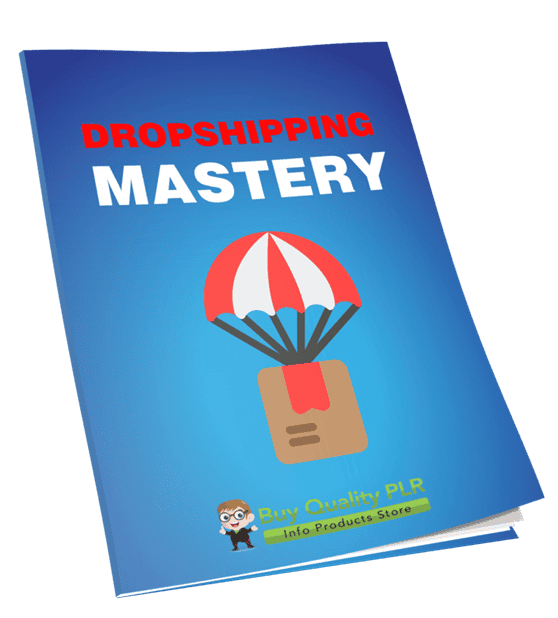
Dropshipping Mastery PLR Course 35k Words
in Dropshipping PLR , Dropshipping PLR eBooks , eCommerce , eCommerce PLR , eCommerce PLR eBooks , PLR Checklists , PLR eBooks , PLR eCourses , PLR List Building Reports , Premium PLR , Premium PLR eBooks , Premium PLR Reports , Premium White Label Brandable PLR Coaching Courses , Private Label Rights ProductsChoose Your Desired Option(s)
has been added to your cart!
have been added to your cart!
dropshippingmastery #ecommercebusiness #onlinestore #digitalentrepreneur #plrcontent #makemoneyonline #plrcourse #businessmarketing #passiveincome
Build a Profitable Online Store Without Holding Inventory – A Complete Done-For-You Dropshipping Training You Can Rebrand, Sell, or Monetize Instantly
Dropshipping remains one of the most attractive online business models in the world. It allows entrepreneurs to launch eCommerce stores without inventory, warehouses, or large upfront costs. Yet most beginners fail—not because dropshipping doesn’t work, but because they lack a clear system, the right mindset, and proven processes.
The Dropshipping Mastery PLR Course was created to solve this exact problem.
This professionally written 32,774-word PLR course delivers a complete, step-by-step dropshipping education system designed to guide learners from idea to launch, and from first sale to long-term growth. It removes confusion, eliminates guesswork, and replaces trial-and-error with a structured roadmap.
For PLR buyers, this course is a powerful done-for-you business asset that can be branded, sold, taught, or transformed into premium coaching and training offers.
Introducing the…
Dropshipping Mastery PLR Course 35k Words
What This Dropshipping Course Is Designed to Do
The goal of this course is simple:
To teach learners how to build, run, and scale a profitable dropshipping business—without holding inventory.
Rather than focusing on hype or shortcuts, the course emphasizes:
- Solid business foundations
- Smart niche and product selection
- Professional store setup
- Sustainable traffic and sales strategies
- Automation and long-term brand growth
It is suitable for:
- Complete beginners
- Side-hustle entrepreneurs
- Freelancers and digital nomads
- Coaches and educators
- Anyone wanting to start eCommerce with minimal risk
A Complete Business Training System — Not a Shortcut Guide
What sets this PLR course apart is its real-business approach.
This is not a “get rich quick” product. Instead, it teaches learners how to:
- Think like business owners
- Build trust with customers
- Make data-driven decisions
- Scale responsibly and sustainably
This makes the course ideal for resale to serious learners who want lasting results, not temporary wins.
Course Overview
Dropshipping Mastery PLR Course
Total Course Length: 32,774 Words
This is a full-length, premium dropshipping training program, not a short ebook or surface-level guide.
Module 1: Laying the Foundation for Success
This module sets the mindset and strategic foundation required for long-term success.
Lesson 1: What Dropshipping Really Is
Explains how dropshipping works, how it differs from traditional eCommerce, and why inventory is not required.
Lesson 2: Picking the Right Business Mindset
Teaches patience, realistic expectations, and long-term thinking—eliminating the “get rich quick” mentality.
Lesson 3: Choosing Your Niche Wisely
A step-by-step process for selecting profitable niches based on demand, competition, and interest.
Lesson 4: Understanding Your Target Audience
Shows how to identify ideal customers, understand their problems, and position products as solutions.
Module 2: Setting Up Your Dropshipping Store
This module focuses on building a professional, trustworthy store.
Lesson 1: Choosing the Right Platform
Breaks down Shopify, WooCommerce, and other platforms so learners can choose the best fit.
Lesson 2: Creating a Professional Store Design
Guides learners through building a clean, user-friendly store that converts visitors into buyers.
Lesson 3: Adding Essential Store Pages
Covers About, Contact, Policies, and FAQ pages to build credibility and protect the business.
Lesson 4: Installing Must-Have Apps & Tools
Explains which tools automate orders, track performance, and enhance customer experience.
Module 3: Finding Winning Products Without Guesswork
This module removes the uncertainty around product selection.
Lesson 1: Product Research Strategies
Teaches how to identify trending, high-demand products using reliable research methods.
Lesson 2: Evaluating Suppliers
Shows how to choose trustworthy suppliers with fast shipping and quality products.
Lesson 3: Testing Products the Smart Way
Explains how to test products efficiently without wasting time or money.
Lesson 4: Crafting Compelling Product Pages
Step-by-step guidance on writing product descriptions, setting prices, and optimizing conversions.
Module 4: Driving Traffic & Making Sales
This module focuses on marketing and revenue generation.
Lesson 1: Mastering Social Media Marketing
Covers organic traffic strategies using platforms like Instagram, TikTok, and Facebook.
Lesson 2: Paid Advertising Basics
Introduces beginner-friendly paid ads without overspending or complexity.
Lesson 3: Email Marketing for Repeat Buyers
Shows how to build an email list and increase customer lifetime value.
Lesson 4: Influencer Partnerships
Explains how to collaborate with influencers for affordable, effective promotion.
Module 5: Scaling & Automating for Long-Term Growth
This module helps learners move from startup to scalable business.
Lesson 1: Analyzing Data & Metrics
Teaches how to read reports, track performance, and make smarter decisions.
Lesson 2: Outsourcing & Virtual Assistants
Shows how to delegate tasks and free up time as the business grows.
Lesson 3: Expanding Product Lines
Explains how to scale by adding complementary products and upsells.
Lesson 4: Building a Brand Beyond Dropshipping
Guides learners toward turning their store into a recognizable, trusted brand.
What Learners Will Be Able to Do After Completing the Course
By the end of the course, learners will be able to:
- Launch a dropshipping store from scratch
- Choose profitable niches and products confidently
- Set up professional, high-converting stores
- Drive traffic and generate consistent sales
- Automate operations and scale sustainably
- Build a real brand beyond basic dropshipping
Additional High-Value Content Included
This PLR package includes more than just the main course.
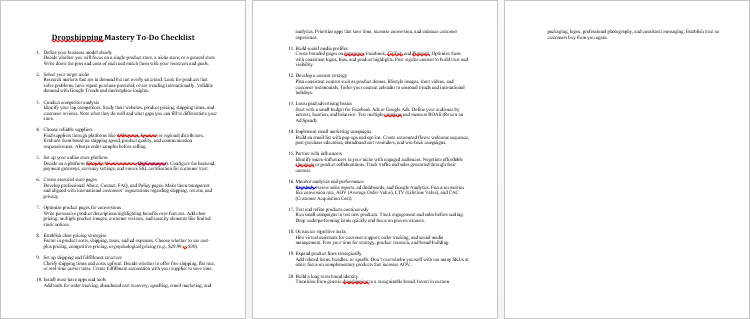
Dropshipping Mastery Checklist – 609 Words
A practical implementation checklist to help learners stay focused and organized.
Dropshipping Mastery FAQs – 875 Words
A ready-to-use FAQ resource that builds trust and answers common beginner questions.
Dropshipping Mastery Sales Page – 781 Words
A professionally written sales page buyers can rebrand, customize, or use as a base.
Total Content Value
Total Word Count: 32,774 Words
This is a complete, premium-level dropshipping business education system with strong resale and repurposing potential.
Who This PLR Course Is Ideal For
This course is perfect for:
- Online business coaches
- eCommerce educators
- Digital product creators
- Membership site owners
- Dropshipping mentors
- Marketing agencies
- Entrepreneurs serving beginners
It can be positioned as entry-level, intermediate, or premium depending on branding and delivery.
How to Use and Profit from This Dropshipping PLR Course
This course offers exceptional monetization flexibility.
Sell It as a Standalone Online Course
Rebrand and sell it as a complete dropshipping training program.
Create a Premium Coaching Program
Use it as the foundation for group or 1-on-1 coaching.
Turn It into a Multi-Week eClass
Drip the content weekly and charge $297–$497 for guided training.
Add It to a Membership Site
Use it as cornerstone content to generate recurring monthly revenue.
Break It into Smaller Products
Sell individual modules as mini-courses or reports priced $10–$20.
Convert It into Video or Audio Training
Increase perceived value and pricing potential with multimedia formats.
Create Physical Products
Turn the content into printed workbooks or training manuals.
Build Lead Magnets and Funnels
Use excerpts to grow email lists and upsell the full program.
Bundle with Other Business Products
Create higher-value bundles priced $47–$97.
License Terms – What Buyers Are Allowed to Do
Permissions
Buyers may:
- Sell the content with minor edits
- Claim copyright if 75% of the content is substantially modified
- Break the content into smaller paid products
- Bundle it with other content for higher-priced offers
- Create membership sites with recurring income
- Convert it into multi-week eClasses priced $297–$497
- Turn it into audio, video, or physical products
- Use excerpts as blog posts or lead magnets
- Build a branded product or website and flip it later
License Restrictions – What Buyers Cannot Do
To protect the value of this PLR product:
- PLR or resale rights may not be passed to customers
- No licensing rights may be transferred in any form
- Affiliate commissions may not exceed 75%
- The full content may not be given away for free in its current form
- The content may not be added to existing paid products without requiring a new purchase
Why Buy This Dropshipping PLR Course from Buy Quality PLR
Buy Quality PLR is trusted for delivering high-quality, business-ready PLR products designed for real monetization.
This course offers:
- Evergreen demand in the eCommerce niche
- Clear beginner-friendly structure
- Practical, real-world strategies
- Strong resale and repurposing potential
- Immediate usability
It saves months of content creation while opening the door to profitable online business offers.
Get Instant Access Today
The Dropshipping Mastery PLR Course is available for instant download.
This is a complete, done-for-you dropshipping education system that can be rebranded, sold, taught, or transformed into premium coaching and training offers immediately.
Add this powerful PLR course to your Buy Quality PLR library today and start turning dropshipping education into a profitable digital asset.
has been added to your cart!
have been added to your cart!
Here A Sample of the Dropshipping Mastery PLR Course
Module 1: Laying the Foundation for Success
Lesson 1: What Dropshipping Really Is
Introduction
Welcome to the very first lesson of Dropshipping Mastery. This lesson is all about creating a clear understanding of what dropshipping really means. Before you build a profitable business, you need to know exactly how this business model works, how it differs from traditional eCommerce, and why it allows you to sell products without ever holding inventory.
Think of this as laying the cornerstone of a building. If the foundation is strong, everything else you build on top of it will stand tall and firm. If the foundation is weak or misunderstood, your business may collapse at the first challenge. So, let’s make sure you understand dropshipping from the inside out.
Step 1: Defining Dropshipping
Dropshipping is a retail fulfillment method where you, the store owner, don’t keep the products you sell in stock. Instead, when a customer places an order, you purchase that item from a third-party supplier who ships it directly to your customer.
That means:
- You don’t handle physical inventory.
- You don’t need a warehouse.
- You don’t need to worry about packaging or shipping logistics.
Your role is to operate the online storefront, attract customers, and make sales. The supplier takes care of the back-end operations of storing, packing, and shipping.
Step 2: The Difference Between Traditional eCommerce and Dropshipping
To fully appreciate why dropshipping is unique, it’s important to compare it with the traditional eCommerce model. Let’s break it down:
- Traditional eCommerce
- You buy products in bulk upfront.
- You pay for storage (either at your home, office, or a warehouse).
- You manage inventory: keeping track of stock levels, restocking, and preventing overstocking.
- You handle packaging and shipping orders to customers.
- Higher upfront risk because you invest money before you know if products will sell.
- Dropshipping
- You list products in your online store without buying them first.
- No upfront stock investment.
- Your supplier holds the inventory.
- The supplier handles packaging and shipping once you forward them the order.
- Lower upfront risk since you only pay for a product when a customer has already paid you.
The key distinction: In dropshipping, you don’t pay for products until after you’ve already been paid by the customer. This makes it an extremely beginner-friendly and cash-flow-friendly business model.
Step 3: Why You Don’t Need to Hold Inventory
This part is often the most exciting for new entrepreneurs. Not holding inventory saves you from the biggest headaches in retail. Let’s break down the reasons:
- No upfront investment in stock
Traditional retailers often spend thousands of dollars buying inventory, hoping it sells. With dropshipping, you don’t need to take that gamble. You can test products with little to no upfront cost. - No storage costs
Warehouses, storage rooms, or even a garage full of boxes come with expenses. In dropshipping, your supplier handles storage for you. - No packing and shipping stress
Packaging products, printing shipping labels, waiting in line at the post office—none of these tasks are on your to-do list. Suppliers take care of the fulfillment process, freeing your time to focus on marketing and customer relationships. - Flexibility with product range
Because you’re not tied to physical stock, you can easily expand your store’s offerings. Want to add ten new products this week? You can do that without worrying about warehouse space or leftover stock. - Scalability
Imagine fulfilling hundreds of orders a day. If you were holding stock yourself, this would require enormous effort and resources. With dropshipping, your supplier’s systems handle this automatically, allowing you to scale quickly without adding complexity to your own operations.
Step 4: The Dropshipping Flow Explained Step by Step
Let’s map out what happens in a typical dropshipping transaction.
- A customer visits your store
They browse your products, read descriptions, and decide to purchase. - Customer places an order and pays you
Let’s say the product price in your store is USD 50. The customer pays you this amount through your online checkout system. - You forward the order to your supplier
You purchase the same product from your supplier for, let’s say, USD 25. You provide the supplier with the customer’s shipping details. - Supplier fulfills the order
The supplier packages and ships the product directly to your customer on your behalf. - You keep the profit
In this example, your profit is USD 25 (minus small transaction fees). You’ve earned money without ever touching the product.
This is the essence of dropshipping: you act as the middle bridge between the customer and the supplier, earning profits by marking up the supplier’s price.
Step 5: Advantages of Dropshipping
Dropshipping isn’t perfect, but it has very clear advantages, especially for those just starting out.
- Low financial barrier to entry
You don’t need thousands of dollars to get started. In fact, you can launch a store with minimal investment. - Location independence
As long as you have a laptop and internet connection, you can run your dropshipping store from anywhere in the world. - Wide product selection
You can offer hundreds or even thousands of products in your store without needing to purchase or store them. - Easy testing and flexibility
If one product doesn’t sell, you can quickly switch to another without losing money on unsold stock. - Scalable systems
Suppliers and fulfillment partners manage the heavy lifting, so you can handle a growing number of sales without significantly increasing your workload.
Step 6: Common Misunderstandings About Dropshipping
Because dropshipping has become a buzzword, many misconceptions circulate around it. Let’s clear some of them:
- “Dropshipping is free money.”
No, it requires effort, research, and marketing skills. It is a real business, not a shortcut to instant riches. - “You don’t need to do anything after launching.”
Wrong. While you don’t handle stock, you must focus on marketing, customer service, and supplier communication. - “Customers will always know it’s dropshipping and won’t trust the store.”
Not necessarily. If you choose good suppliers, offer quality products, and deliver excellent service, customers won’t care about how the logistics happen. - “Profit margins are too small to make money.”
Margins vary, but with smart niche selection and branding, dropshipping stores can achieve healthy profitability.
Step 7: The Role You Play as a Dropshipper
Since you’re not packing boxes, what exactly do you do? Your main responsibilities are:
- Product selection
Identifying products that are in demand and suitable for your audience. - Building and managing your store
Setting up a professional online storefront, writing compelling descriptions, and ensuring smooth checkout experiences. - Marketing and promotion
Driving traffic to your store using social media, paid ads, content, and influencer partnerships. - Customer service
Handling customer inquiries, resolving complaints, and making sure buyers are satisfied. - Maintaining supplier relationships
Ensuring suppliers remain reliable and deliver products on time.
Dropshipping is about managing the business side—marketing, branding, and customer experience—while outsourcing the operational side to suppliers.
Step 8: Why Dropshipping Works in the Global Market
One of the most exciting aspects of dropshipping is its international reach. Unlike traditional stores limited to local stock, dropshipping lets you sell to customers worldwide.
- Suppliers can ship globally, giving you access to massive markets.
- Customers from different countries can shop in your store at any time.
- Payment gateways allow you to accept international transactions.
This makes dropshipping a truly global opportunity. Whether you live in Europe, Asia, North America, Africa, or Australia, you can create a store that serves international customers.
Step 9: Realistic Expectations
While dropshipping is powerful, it’s not without challenges. Setting realistic expectations is critical.
- It takes time to learn. You must learn about platforms, marketing strategies, and supplier management.
- Competition exists. You need to differentiate your store with branding, customer service, or unique product selections.
- Profit margins vary. Some products may only give you USD 5 per sale, while others may give USD 50. You’ll need to manage volume and margins smartly.
- Shipping times matter. Depending on your supplier, customers may wait longer for products compared to local stores. Setting clear expectations is essential.
When you understand both the strengths and limitations of dropshipping, you’ll be much better prepared to run a successful store.
Conclusion
Dropshipping is a business model that removes the burden of inventory management, warehousing, and fulfillment. Instead, it allows you to focus on what truly matters: selecting the right products, building a professional store, attracting customers, and providing excellent service.
The magic of dropshipping lies in its simplicity: you don’t pay for a product until after a customer has paid you. This low-risk approach makes it accessible to people around the world, whether you’re a seasoned entrepreneur or just getting started.
By now, you should have a crystal-clear understanding of what dropshipping is, how it differs from traditional eCommerce, why you don’t need inventory, and the role you’ll play in this business. With this knowledge as your foundation, you’re ready to build forward with confidence.
Lesson 2: Picking the Right Business Mindset
Learn how to think like an entrepreneur, stay patient, and focus on long-term profit rather than “get rich quick” schemes.
Why mindset comes before mechanics
Tools, platforms, and tactics change quickly. Your mindset is the operating system that makes those tools work for you. In dropshipping—where margins are earned by judgment, not by storing inventory—the way you think will decide the results you get. This lesson gives you a practical, step-by-step mental framework to build a profitable store without inventory, while avoiding short-term traps.
Step 1 — Shift from “hustler” to owner
Owner thinking asks: What decisions increase the enterprise’s value over the next 12–36 months?
Hustler thinking asks: What can I do today to make a quick sale?
Adopt the owner lens:
- Define value clearly: a durable customer base, repeat purchases, reliable suppliers, and positive cash flow.
- Choose levers, not chores: pricing, positioning, offers, and supplier terms move profit more than tweaking colors on your storefront.
- Document decisions: record why you chose a niche, a supplier, or a price point. Owners build decision logs to refine judgment.
Owner’s checkpoint: If a task won’t matter 90 days from now, it should not consume the best hour of your day.
Step 2 — Set a realistic time horizon
Dropshipping rewards those who plan for compounding. Replace “fast” with “steady and repeatable.”
- Vision (1 year): a store with consistent monthly revenue, positive reviews, and 3–5 reliable suppliers covering your top products.
- Milestones (12 weeks): one profitable product line, a break-even or better ad channel, a basic email pipeline, and on-time fulfillment ≥ 95%.
- Daily inputs: 60–90 minutes on activities tied to revenue (offer testing, ad iteration, supplier communication, customer responses).
Why this works: When you optimize inputs that you control—creative tests, product pages, supplier SLAs—results compound even if any single day feels slow.
Step 3 — Build profit-first thinking
A common trap is chasing revenue while ignoring contribution margin. Since you don’t hold stock, your main levers are price, shipping options, and ad efficiency.
- Know your math (per order):
Selling price (e.g., USD 50)
− Cost of goods from supplier (e.g., USD 25)
− Payment processing fees (e.g., 2.9% + fixed fee)
− Advertising cost per acquisition (target CPA)
− Shipping you cover (if any)
= Contribution margin - Set guardrails:
Minimum acceptable margin, e.g., ≥ 20% after ad costs and fees.
Maximum CPA, e.g., ≤ USD 12 for a USD 50 item. - Cash over accounting: Profit on paper is not cash in bank. Track cash conversion from order date to payout date. Aim to reduce the gap with faster payment gateways or higher-velocity products.
- Regional awareness: If you sell to multiple countries, price using ISO currency codes (USD, EUR, GBP, AUD, INR) and include taxes where required (VAT/GST). Example: show EUR 39,00 (VAT included) vs USD 39.00 (tax at checkout if applicable).
Profit principle: If a product can’t hit your minimum margin at realistic CPA, don’t scale it—replace it.
Step 4 — Embrace the experimentation loop
Entrepreneurs learn with controlled experiments.
- Hypothesis: “A product page with social proof and a 30-day guarantee will increase conversion by +0.8 percentage points.”
- Test design: Run variant A (current) vs variant B (with those elements). Keep all else equal.
- Sample size: Wait for a meaningful number of sessions before judging.
- Decision rule (pre-committed): If B outperforms A by ≥ X% for ≥ Y sessions, keep B; otherwise revert.
Apply the same loop to pricing (USD 39 vs USD 49), shipping thresholds (free shipping ≥ USD 60), and creative angles (problem-solution vs lifestyle focus).
Kill-switch: Write down the condition that stops a test (e.g., CPA > target by +25% for 3 consecutive days). This protects you from emotional spending.
Step 5 — Practice delayed gratification
“Get rich quick” collapses under two realities: ad costs fluctuate and learning takes time.
- Trade now for later: re-invest the first months of profit into better creatives, faster shipping options, and stronger supplier terms.
- Compounding moves:
- An improved product page that raises conversion rate from 2.0% to 2.6% (+30%).
- A supplier negotiation that lowers COGS by −5%.
- An email flow that lifts repeat purchases by +10%.
Each small gain multiplies. Patience is not waiting passively; it’s choosing compounding actions over distractions.
Step 6 — Build systems, not dependence on luck
Systems produce results regardless of mood or daily motivation.
- Prospecting system: a weekly routine to discover 10 product candidates, filter by margin and supplier rating, and shortlist 2 for testing.
- Creative system: schedule ad creative production (angles, hooks, formats). Track winners/losers in a single sheet.
- Customer service system: templates for pre-shipment questions, delay notifications, and refund handling. Response time target ≤ 24 h.
- Supplier system: maintain a scorecard: average dispatch time, defect rate %, communication speed, and negotiated benefits (bulk price tiers, sample availability).
A simple rule: If a task repeats ≥ 3 times, write the process once and follow it.
Step 7 — Decide under uncertainty with clear rules
Entrepreneurship is probabilistic. Use simple decision tools.
- Expected value (EV):
If a product has a 40% chance to succeed with an average profit of USD 800/month and a 60% chance to lose USD 150 in testing, the EV of testing is:
(0.40 × 800) − (0.60 × 150) = 320 − 90 = USD 230. Positive EV justifies the test. - 80/20 focus: Identify the 20% of products, creatives, or audiences generating 80% of profit; put most resources there.
- Regret minimization: Ask, “In 12 months, which choice will I wish I had made?” Often the answer is to build assets (email list, reviews, supplier trust) rather than chase a fad.
- Stop-loss for time: If a product hasn’t shown a path to target CPA within a defined spend, stop and redeploy. Time is capital.
Step 8 — Manage emotions with pre-commitments
The two biggest mindset threats are over-excitement after a few wins and discouragement after a few losses.
- Pre-mortem: Before launching, list everything that could fail (supplier delay, ad rejection, chargebacks). Write your response plan for each.
- Failure budget: Allocate a fixed monthly amount for tests (e.g., USD 600). Once it’s spent, you evaluate, not extend.
- Detachment ritual: Separate self-worth from campaign results. You’re judging hypotheses, not your identity.
Professional calm is an advantage. Customers feel it when issues arise; suppliers trust it in negotiations.
Step 9 — Choose reputation over shortcuts
Short-term schemes burn brands. Dropshipping without inventory means your reputation is the product.
- Honest timelines: Display realistic shipping windows in ISO dates (e.g., 2025-09-20 to 2025-09-26). Under-promise and over-deliver.
- Clear guarantees: Simple, fair policies reduce disputes and increase conversion.
- Quality control without a warehouse: Order samples to your address, inspect, and photograph them. Ask suppliers for batch photos and packing standards.
- Compliance mindset: Respect regional rules (VAT/GST, customs declarations). Transparent practices protect payment gateway health and ad account longevity.
Reputation compounds like capital. Protect it.
Step 10 — Think in customer lifetime value (LTV), not one-time wins
Long-term profit is fueled by repeat buyers.
- Deliver post-purchase value: helpful tips, how-to guides, and timely updates.
- Bundle strategically: complementary items increase average order value (AOV) without new ad spend.
- Email flows that matter: order confirmation, shipping update, product education, review request, and a thoughtful second-purchase offer.
- Measure LTV by cohort: e.g., customers acquired in 2025-07, average spend by 2025-09. If LTV ≥ 1.5 × CAC by day 60, you can scale confidently.
Mindset shift: you are building a sequence of positive experiences, not a one-click transaction.
Step 11 — Prioritize velocity of learning
Speed of learning beats speed of revenue in the early phase.
- One variable at a time: change either headline, price, or image—never all at once—so you know what caused the movement.
- Feedback sources: ad metrics, onsite behavior, supplier feedback, customer messages. Patterns there are your roadmap.
- Post-mortems: when something fails, write the key lesson and how you’ll prevent recurrence. Repeated lessons become your playbook.
What you learn this month reduces waste next month. That is compounding.
Step 12 — Use identity-based habits
Sustainable behavior comes from identity, not willpower.
- Adopt the identity: “I am the kind of owner who makes data-informed decisions and communicates clearly.”
- Daily proof: a 60-minute “money hour” focused on revenue levers—pricing tests, supplier negotiations, and messaging improvements.
- Weekly proof: a simple review of KPIs: conversion rate, AOV, CPA, fulfillment time, refund rate. Update your decision log.
These proofs make the identity true through action.
Step 13 — Calibrate patience with concrete metrics
Patience is not waiting indefinitely; it is waiting for the right signals.
- Creative test patience: let each ad creative reach a minimum number of impressions or link clicks before judging.
- Supplier patience: allow a realistic onboarding window. First 30 days focus on communication speed and accuracy; then negotiate terms.
- Page changes patience: wait for adequate traffic volume; small sample sizes mislead.
Pair patience with thresholds so you’re calm without being passive.
Step 14 — Navigate international complexity confidently
Operating without inventory lets you reach customers across borders. A mindset tuned for international trade reduces friction.
- Time zones: set response-time promises in UTC or local buyer time and honor them.
- Currencies: present prices in local currency where possible (USD, EUR, GBP, AUD, INR) and match punctuation conventions (e.g., EUR 39,00 vs USD 39.00).
- Shipping clarity: show ranges using ISO dates and communicate dispatch-time SLAs you agree with suppliers.
- Cultural alignment: adjust product imagery and sizing charts for regional expectations. Respectful localization increases trust.
International thinking is a profit multiplier when managed with clarity.
Step 15 — Strengthen negotiation posture
You don’t hold inventory, but you do hold leverage: consistent orders, low-drama communication, and clear data.
- What suppliers value: predictable volume, clean order files, few returns, and respectful requests.
- What to ask for (after proving reliability): price breaks at volume tiers, faster dispatch windows, branded inserts, or improved packaging.
- How to ask: present your numbers (orders/month, refund %, defect %) and the mutual benefit. Professionals respond to data and reliability.
Negotiation is ongoing, not one-time. Long-term partners grow your margins without changing your storefront.
Step 16 — Guard attention like capital
“Get rich quick” feeds on distraction. Protect your decision quality.
- Single source of truth: keep one metrics dashboard. Avoid hopping between conflicting reports.
- Batching: handle support in defined blocks; handle creative work in separate blocks. Context switching drains accuracy.
- Input diet: limit content that promises unrealistic outcomes. Consume case studies that show process, not just screenshots.
Attention management is a profit lever—quiet minds see opportunities.
Step 17 — Adopt a simple risk framework
Without inventory, your risks cluster around demand, delivery, and disputes.
- Demand risk: products may not convert as expected. Mitigation: small-budget tests and clear kill-switches.
- Delivery risk: delays or defects. Mitigation: supplier scorecards, backup suppliers, and proactive customer communication.
- Dispute risk: chargebacks and refunds. Mitigation: accurate product pages, visible policies, traceable shipping, and swift support.
A written risk register keeps emotions out of crisis handling.
Step 18 — Track the few metrics that matter
Avoid vanity numbers. Focus on the drivers.
- Conversion Rate (CR) %
- Average Order Value (AOV)
- Cost per Acquisition (CPA)
- Contribution Margin %
- Fulfillment Lead Time (order → dispatch)
- Refund/Return Rate %
- Customer Lifetime Value (LTV)
Mindset rule: if a metric does not influence a decision you will make this week, it is noise.
Step 19 — Build credibility through clarity
Trust is the most scalable asset in a store without inventory.
- Product truth: accurate photos, realistic materials descriptions, and size details.
- Policy clarity: concise returns and guarantees, written in plain language.
- Update discipline: if a delay occurs, notify customers before they ask. Include the new ISO date range and a clear remedy.
Clarity lowers support volume, increases repeat purchases, and makes your brand referable.
Step 20 — Internal scripts for resilient thinking
Keep these brief lines visible where you work.
- “I trade speed for signal.”
- “I scale what is proven, not what is loud.”
- “I earn trust every day.”
- “I am building assets, not chasing screenshots.”
- “Small improvements × time = durable profit.”
These scripts steer behavior when pressure rises.
Summary
The right business mindset is practical, not mystical. Think like an owner who optimizes for the next 12–36 months, not the next 12 hours. Protect margins with clear math. Learn through structured experiments. Choose reputation and customer value over shortcuts. Build systems that operate regardless of mood, and measure only what changes decisions. International awareness—time zones, currencies, and cultural fit—turns complexity into competitive advantage.
When you hold this mindset, “no inventory” is not a limitation; it is freedom to focus on the levers that compound: better offers, tighter operations, and consistent customer trust. Over time, these choices create the kind of store that lasts—and the profits that follow.
Lesson 3: Choosing Your Niche Wisely
Step-by-step process to select a profitable niche that matches your interests and market demand.
Introduction — why a careful niche choice matters
Choosing the right niche is the single decision that most strongly predicts whether your dropshipping store will struggle or thrive. A good niche is not just “something that sells.” It’s a product category where demand exists, margins are healthy, suppliers are reliable, and you can create a clear message that resonates with buyers. This lesson walks you through a repeatable, step-by-step process for picking a niche that fits both the market and your strengths — with practical checks you can act on today.
Step 1 — Start with a personal inventory
Begin where you have advantage: knowledge, connections, and genuine interest.
Action tasks
- Write a list of 10 topics you understand or enjoy (examples: outdoor cooking, baby care, ergonomic office equipment, pet travel accessories).
- Next to each topic note: 1) one concrete product idea, 2) one audience (age, location, hobby), 3) one supplier source you might reach (local wholesaler, marketplace, manufacturer).
- Rank the items by how confident you are to explain the product to a friend — confidence often equals credibility.
Why this matters
Passion helps but credibility and knowledge convert faster. If you can speak specifically about a product’s benefits, customers sense expertise and trust increases.
Step 2 — Test for real demand using multiple signals
You need converging evidence that people want to buy in your niche.
Practical demand signals to check (no single signal is decisive):
- Consistent search interest over time (seasonal spikes are okay; permanent decline is not).
- A steady stream of product reviews on major marketplaces.
- Active social conversations (posts, videos, influencers) around product use and problems.
- Multiple sellers already advertising similar items — this shows buyers exist, but don’t confuse presence with saturation.
Action tasks
- For each of your top 5 niche ideas, write a short paragraph summarising three demand signals you observed.
- Mark each niche as High / Medium / Low demand based on how many signals are positive.
Step 3 — Run a basic profitability check (the numbers that matter)
You must know whether price minus cost leaves you enough room for advertising, fees, and profit.
Core formula per order:
Selling Price − Supplier Cost − Shipping You Cover − Payment Fees − Advertising Cost (CPA) = Contribution per Order
Example (step-by-step):
Selling price = USD 49.99
Supplier cost = USD 18.00
Shipping you cover = USD 6.00
Payment fee = 2.9% of 49.99 + USD 0.30. Calculate payment fee:
49.99 × 0.029 = 1.44971 → round to USD 1.45; + 0.30 = USD 1.75 (payment fee).
Contribution = 49.99 − 18.00 − 6.00 − 1.75 = USD 24.24.
If you target an advertising cost (CPA) of USD 12.00, profit after ads = 24.24 − 12.00 = USD 12.24. Contribution margin as a percentage = 24.24 ÷ 49.99 ≈ 48.5%.
Action tasks
- Create a short spreadsheet with columns: Selling Price, Supplier Cost, Shipping, Payment Fee, Contribution, Target CPA, Net Profit.
- Fill it for 3 product ideas in your shortlist using realistic numbers from suppliers or similar listings.
Guardrails
- Aim for a minimum contribution margin target (example: ≥ 25–30% before ads).
- If necessary, test pricing in multiple currencies: USD 49.99 vs EUR 44,99 vs GBP 39.99, using regional formatting where appropriate.
Step 4 — Check supplier availability and reliability
Without reliable suppliers, even the best niche fails.
Supplier evaluation checklist
- Can they dropship to your primary markets?
- Typical dispatch time (in business days).
- Evidence of quality (reviews, product photos).
- Returns and warranty policy.
- Minimum order requirements and price at dropship quantities.
- Communication speed and language clarity.
Action tasks
- Contact two potential suppliers for your top product and request: sample pricing, dispatch SLA, and sample order availability.
- Order at least one sample to inspect product, packaging, and shipping time.
Red flag: suppliers who refuse to ship without a corporate VAT/Tax ID unless you’re set up to operate B2B in that region.
Step 5 — Evaluate competition and differentiation opportunities
Competition validates demand; your job is to find a position where you can win.
Competition checks
- List 5 direct competitors selling the same product.
- Note their price, USPs (unique selling points), shipping promise, and number of reviews.
- Identify gaps: slow shipping, poor photos, weak guarantees, confusing copy.
Differentiation ideas
- Value-adds: bundling accessories, extended warranty, digital guides.
- Branding: better photography, clearer sizing, compelling storytelling.
- Customer experience: faster responses, tracking updates, regionalised returns.
Action tasks
- Create a short table of competitor strengths and weaknesses.
- For your niche, write one sentence that explains how your store will be different and why a buyer would choose you.
Step 6 — Define your customer avatar
A small, precise avatar makes marketing far easier and cheaper.
Avatar template (fill in):
- Name, age range, country/region.
- Occupation and income band.
- Hobbies and values.
- Biggest pain related to the product.
- Primary benefit they seek (convenience, status, safety, savings).
Action tasks
- Create 2 avatars: primary buyer and secondary buyer.
- Note where they spend time online (platforms, forums, communities) — this guides ad targeting and organic outreach.
Step 7 — Consider seasonality and repeat purchase potential
Ask if demand is year-round and whether customers return.
Checklist
- Is the product seasonal? (e.g., summer gear) — plan for off-season cashflow.
- Is there a logical repeat cycle (consumables, replacements, upgrades)?
- Can you offer related products for cross-sell or upsell?
Action tasks
- For each candidate niche, mark Seasonality: Year-Round / Seasonal (peak months).
- Estimate Repeat Purchase Window (e.g., 30 days, 6 months, 12+ months).
Step 8 — Legal, regulatory and logistical checks
Some products face restrictions that complicate international dropshipping.
Key checks
- Are there import restrictions or required certifications (electronics, cosmetics, toys)?
- Does the product trigger customs duties or special documentation?
- Is the product restricted by platforms or payment gateways?
Action tasks
- Note any likely regulatory issues in your target market(s).
- If regulatory risk exists, either avoid that niche or plan for compliant suppliers and documentation.
Step 9 — Quick validation test (low-cost, high-speed)
Before scaling, validate demand with a small experiment.
Two simple validation methods
A. Product page test: build a single product page with clear benefits, price, and shipping terms. Drive small, targeted traffic (e.g., USD 50–150) and measure clicks → add-to-cart → checkouts.
B. Social proof test: post product content to relevant groups, small ads, or short video content and measure engagement and direct messages.
Action tasks
- Run one validation test per shortlisted product with a pre-defined budget and stop-loss.
- Record performance: CTR, add-to-cart rate, checkout rate, and cost per initiated checkout.
Decision rule example
If you can get add-to-cart events at a CPA lower than 50% of your target CPA, the product is worth a larger test.
Step 10 — Use a simple decision checklist to choose a niche
Finalize with a clean yes/no checklist:
Decision checklist
- Demand signals: Yes / No
- Healthy initial margin (before ads): Yes / No
- Reliable supplier available: Yes / No
- Differentiation path: Yes / No
- Low regulatory risk: Yes / No
- Year-round or manageable seasonality: Yes / No
If you have at least four “Yes” answers including supplier and margin, the niche is viable to pilot.
International considerations to include now
- Display prices in local formats (USD 49.99, EUR 39,99, GBP 39.99).
- Present shipping windows in ISO date ranges where useful (example: dispatch ETA 2025-09-10 to 2025-09-17).
- Adjust imagery and sizing for regional differences (measurements in cm/in, EU/US sizes).
- Consider localized marketing messages — what persuades buyers in one market may not in another.
Final notes — treat niche selection as an iterative process
The first niche you pick may not be the one you scale long term. The aim is to choose a focused, testable niche that gives you a fair shot at repeatable sales while you learn the mechanics of marketing, supplier management, and customer care. Every validated win is an asset: a product page that converts, suppliers who deliver, and an audience that buys again.
When you combine personal expertise with data-driven checks — demand signals, margin math, reliable suppliers, and a real differentiation — you convert an idea into a business you can scale internationally.
Lesson 4: Understanding Your Target Audience
Identify who your ideal buyers are, what problems they face, and how your store can solve them.
Why knowing your audience matters
When you run a dropshipping store without inventory, your main differentiators are clarity of message, reliability, and the experience you deliver. Understanding your audience is how you design persuasive product pages, choose the right marketing channels, predict objections, and price for the market. This lesson gives a step-by-step framework you can apply internationally — from Nairobi to New York to New Delhi — using concrete templates, interview scripts, and testing playbooks.
Step 1 — Start with a clear buyer-avatar template
Create a repeatable template to capture who your ideal buyer is.
Avatar template (fill this in for each persona):
- Name: (give them a realistic name)
- Region / Time zone: (for example: Europe, UTC+01:00)
- Age range: (e.g., 25–34)
- Gender (if relevant):
- Occupation & income band: (e.g., graphic designer, USD 30k–50k/year)
- Household & lifestyle: (single, family of four, student)
- Primary goals / desires: (what success looks like for them)
- Top frustrations / pain points: (the problems they face now)
- Where they spend time online: (platforms, forums, apps)
- Typical buying behaviour: (impulse buyer, research-heavy, price-sensitive)
- Decision drivers: (speed, price, brand, guarantee)
Action task: create 2–3 avatars and store them in a single document. Label them Primary, Secondary, and Tertiary.
Step 2 — Use qualitative methods to learn motivation and pain
Numbers tell you what; conversations tell you why.
Qualitative channels to use: customer interviews, product review mining, support transcripts, community listening (forums, groups), and short open-ended surveys.
Interview structure (15–20 minutes):
- Quick rapport (2 minutes) — “Tell me a bit about where you live and what you do.”
- Problem discovery (6 minutes) — “What frustrates you about [problem area]? Give me a recent example.”
- Solution discovery (4 minutes) — “How have you tried to fix that? What worked, what didn’t?”
- Buying context (3 minutes) — “What would make you decide to buy today?”
- Close and permission to follow up (up to 1 minute)
Sample interview questions:
- “Describe the last time you searched for this product.”
- “What was your biggest worry before you ordered?”
- “What would make you recommend a product like this to a friend?”
- “How important is shipping speed vs. price?”
Action task: run 8–12 interviews across your target regions. Record (with permission) and summarise themes.
Step 3 — Use quantitative signals to validate and prioritise
Combine analytics with tests to know which audiences matter.
Key sources and metrics:
- Google Analytics / store analytics: top countries, device mix, bounce rate, pages/session.
- Ad platforms: CTR, CPC, add-to-cart rate, purchase conversion.
- Search trends & marketplace data: volume and competition.
- Customer data: average order value (AOV), refund rate, repeat purchase rate.
Quick example to visualise: if 1,000 visitors at 2.0% conversion = 20 sales; with AOV USD 49.99, revenue ≈ USD 999.80. Use these kinds of small calculations to set targets and test budgets (example numbers: conversion 2.0%, AOV USD 49.99 → sales 20 → revenue USD 999.80). Track these in a simple spreadsheet per market.
Action task: export one month of store traffic and create a short dashboard with top 5 countries and corresponding CR, AOV, and ROAS.
Step 4 — Map problems to product-benefits (the Problem→Solution grid)
Turn raw pain into clear product messaging.
Create a two-column grid: Problem | Product Benefit | Proof element
Example row:
- Problem: “Torn straps on travel bags after a single trip.”
- Product Benefit: “Reinforced stitching and lifetime stitching warranty.”
- Proof Element: “Photo of reinforced seam + written warranty statement.”
Use this grid to write hero copy and bullet points on product pages: every bullet maps to a real, stated pain.
Action task: for your flagship product, write 5 bullets where each bullet begins with the customer pain and then states the feature and benefit.
Step 5 — Build empathy maps for emotional clarity
Empathy maps help you understand context beyond rational reasons.
Empathy map quadrants: Says | Thinks | Does | Feels
Example for a buyer:
- Says: “I just don’t have time to shop.”
- Thinks: “Am I getting the best deal?”
- Does: Compares two stores, reads reviews, abandons slow checkouts.
- Feels: Frustrated, anxious about wasting time.
Action task: complete an empathy map for each persona and use the language verbatim in your product copy to sound natural (avoid invented phrases).
Step 6 — Segment your audience for targeted offers
Not every audience wants the same message.
Common segmentation axes:
- Purchase intent (browsers, research, ready-to-buy)
- Demographics (age, income)
- Geography (country, language, shipping preferences)
- Behaviour (new visitor, repeat buyer, cart abandoner)
Example micro-offers:
- For price-sensitive buyers: emphasize guaranteed lowest price and clear return policy.
- For convenience-focused buyers: highlight fast dispatch, local returns, and tracking.
- For gift shoppers: add gift wrapping and scheduled delivery.
Action task: design one micro-offer for each segment and draft the headline for the ad/landing page.
Step 7 — Anticipate objections and script responses
Great stores remove friction before it happens.
Common objections (and short scripts):
- Objection: “Shipping takes too long.” → Response: “Standard dispatch 2–5 business days; tracked delivery and proactive updates.”
- Objection: “What if it’s low quality?” → Response: “Try it risk-free for 30 days — full refund and free return label.”
- Objection: “Price seems high vs. competitors.” → Response: “Our product includes X and Y benefits not found elsewhere; see comparison table below.”
Action task: list the top 5 objections from interviews and draft a short FAQ answer for each.
Step 8 — Localize messaging and offer formats
International audiences react differently to visual cues, punctuation, and formats.
Localization checklist:
- Currency & formatting: USD 49.99, EUR 39,99, GBP 39.99.
- Dates: use ISO: 2025-09-04 for clarity in dispatch ranges.
- Units: show both cm and inches where sizing matters.
- Images: reflect local clothing styles, skin tones, and product usage contexts.
- Claims & compliance: adapt warranty and legal language per market.
Action task: choose one market and create a localized product page with currency, date format, measurement units, and images tailored to that market.
Step 9 — Design simple tests to validate messaging
Use A/B tests and micro-experiments to learn quickly.
Testing ideas:
- Headline test: benefit-first vs feature-first.
- Price framing: USD 49.99 vs “3 payments of USD 17.00.”
- Social proof type: customer photo vs star rating.
- Shipping promise: “Ships in 24–48h” vs “Free shipping”.
Decision rules: run each test until you reach a minimum sample (e.g., 500 unique visitors) or a pre-defined spending cap. Use the winner to inform creatives and scale.
Action task: pick one hypothesis and set up an A/B test. Define the sample size and stop conditions before launching.
Step 10 — Create lifecycle messaging for retention
Understanding buyers is not only about the first purchase — plan the post-purchase sequence.
Core lifecycle emails/messages:
- Order confirmation (immediately) — clear ETA in ISO dates.
- Shipping update (on dispatch) — tracking link and local contact hours.
- Product education (2–5 days after delivery) — tips for use and care.
- Review request (10–14 days) — incentivise with small discount for next purchase.
- Replenishment or cross-sell (timed to expected repeat window).
Action task: draft the content of these five messages for one persona and one region (e.g., Europe, UTC+01:00).
Final checklist — how to know you truly understand your audience
- You can describe your primary buyer in one short paragraph with specific words they use.
- You have 8–12 qualitative interviews and a short summary of themes.
- You have a data sheet with top markets, CR, AOV, and bounce rates.
- You have a Problem→Benefit grid with proof for your top product.
- You can name the top 5 objections and have scripted answers.
- You have run at least one validation test on messaging or price.
Understanding your target audience is an iterative practice, not a one-time task. Treat each sale, support ticket, and ad result as data that refines your avatar, objection scripts, and messaging. When you speak directly to a real, well-understood buyer — in their currency, in their time zone, with their primary pain clearly stated and solved — your dropshipping store becomes a trusted choice rather than a faceless option. That clarity is what turns first-time buyers into repeat customers and browsers into advocates.
We’re also giving these extra bonuses
Dropshipping Mastery – Checklist
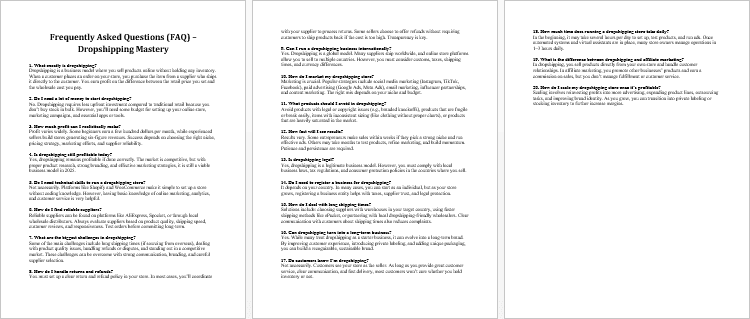
Dropshipping Mastery – FAQs
Dropshipping Mastery – Salespage Content

Package Details:
Word Count: 32 774 Words
Number of Pages: 142
Dropshipping Mastery – Bonus Content
Checklist
Word Count: 609 words
FAQs
Word Count: 875 words
Salespage Content
Word Count: 781 words
Total Word Count: 26 116 Words
Your PLR License Terms
PERMISSIONS: What Can You Do With These Materials?
Sell the content basically as it is (with some minor tweaks to make it “yours”).
If you are going to claim copyright to anything created with this content, then you must substantially change at 75% of the content to distinguish yourself from other licensees.
Break up the content into small portions to sell as individual reports for $10-$20 each.
Bundle the content with other existing content to create larger products for $47-$97 each.
Setup your own membership site with the content and generate monthly residual payments!
Take the content and convert it into a multiple-week “eclass” that you charge $297-$497 to access!
Use the content to create a “physical” product that you sell for premium prices!
Convert it to audios, videos, membership site content and more.
Excerpt and / or edit portions of the content to give away for free as blog posts, reports, etc. to use as lead magnets, incentives and more!
Create your own original product from it, set it up at a site and “flip” the site for megabucks!
RESTRICTIONS: What Can’t You Do With These Materials?
To protect the value of these products, you may not pass on the rights to your customers. This means that your customers may not have PLR rights or reprint / resell rights passed on to them.
You may not pass on any kind of licensing (PLR, reprint / resell, etc.) to ANY offer created from ANY PORTION OF this content that would allow additional people to sell or give away any portion of the content contained in this package.
You may not offer 100% commission to affiliates selling your version / copy of this product. The maximum affiliate commission you may pay out for offers created that include parts of this content is 75%.
You are not permitted to give the complete materials away in their current state for free – they must be sold. They must be excerpted and / or edited to be given away, unless otherwise noted. Example: You ARE permitted to excerpt portions of content for blog posts, lead magnets, etc.
You may not add this content to any part of an existing customer order that would not require them to make an additional purchase. (IE You cannot add it to a package, membership site, etc. that customers have ALREADY paid for.)
Share Now!
Latest Products




Free Sales Funnel Builder

Related Products
Popular & Trending

Featured Products