

Dog and Puppy Training for Beginners PLR Course 27k Words
in Dogs PLR Ebooks , Pets PLR , Pets PLR Ebooks , PLR Checklists , PLR eBooks , PLR eCourses , PLR List Building Reports , Premium PLR , Premium PLR eBooks , Premium PLR Reports , Premium White Label Brandable PLR Coaching Courses , Private Label Rights ProductsChoose Your Desired Option(s)
has been added to your cart!
have been added to your cart!
A Complete Positive Dog Training Program You Can Rebrand, Sell, or Monetize Instantly
Dog ownership is growing worldwide, and so is the demand for simple, kind, and effective dog training guidance. New puppy owners and dog parents alike are actively searching for training solutions that work without harsh methods, confusing techniques, or professional-level complexity.
The Dog and Puppy Training for Beginners PLR Course was created to meet this demand.
This professionally written 25,525-word PLR course delivers a complete, beginner-friendly dog training education program focused on positive reinforcement, trust-building, and long-term success. It is designed to help dog owners train their puppies or adult dogs using gentle, proven methods that strengthen the human–dog bond.
For PLR buyers, this course represents a done-for-you dog training business asset that can be branded, sold, taught, or transformed into high-value digital or physical products.
Introducing the…
Dog and Puppy Training for Beginners PLR Course 27k Words
What This Dog Training Course Is Designed to Do
This course has one clear purpose:
To help beginners confidently train dogs and puppies using positive, reward-based techniques that create lifelong good behavior.
Instead of outdated or force-based training methods, the course focuses on:
- Understanding how dogs learn
- Clear communication and consistency
- Positive reinforcement and trust
- Preventing and correcting common behavior issues
- Building daily habits that support long-term success
The course is suitable for:
- New puppy owners
- First-time dog owners
- Families with dogs
- Rescue dog adopters
- Dog trainers serving beginner clients
A Gentle, Positive Training Approach That Sells
Modern dog owners are actively seeking positive dog training methods. They want solutions that are:
- Humane and ethical
- Easy to understand
- Fun for both dog and owner
- Safe for puppies and adult dogs
- Backed by consistency, not punishment
This PLR course is positioned perfectly for today’s dog training market, making it highly attractive for resale and repurposing.
Course Overview
Dog and Puppy Training for Beginners PLR Course
Total Course Length: 25,525 Words
This is a full-length, premium training program, not a short guide or surface-level ebook.
Module 1: Laying the Foundation – Understanding Your Dog
This foundational module helps learners understand how dogs think, learn, and communicate.
Step 1: Discover How Dogs Learn
Explains how dogs learn through positive reinforcement, repetition, timing, and rewards.
Step 2: Create a Positive Learning Environment
Guides owners in setting up their home and routine to support successful training.
Step 3: Learn to Read Dog Body Language
Teaches how to recognize stress, excitement, relaxation, and confusion in dogs.
Step 4: Build Trust and Connection
Focuses on bonding, gentle handling, play, and ending training sessions on a positive note.
This module ensures training starts with understanding—not frustration.
Module 2: Essential Commands Every Dog Should Know
This module teaches core obedience commands using reward-based methods.
Step 1: Teaching “Sit”
Introduces impulse control and basic obedience in a simple, achievable way.
Step 2: Teaching “Stay”
Builds patience and focus through gradual progress.
Step 3: Teaching “Come”
Shows how to create a reliable recall, even with distractions.
Step 4: Teaching “Leave It”
Helps dogs learn self-control around tempting or unsafe items.
These commands form the backbone of everyday good manners.
Module 3: Solving Common Puppy & Dog Challenges
This module addresses real-life behavior issues dog owners face daily.
Step 1: House Training & Crate Basics
Covers consistent house training routines and stress-free crate introduction.
Step 2: Nipping and Biting
Explains how to redirect playful nipping and teething using positive alternatives.
Step 3: Barking and Jumping
Breaks down why dogs bark or jump and how to correct these behaviors calmly.
Step 4: Dealing with Chewing & Digging
Provides practical strategies to prevent destructive habits through management and enrichment.
Module 4: Socialization and Positive Exposure
This module sets dogs up for confidence in real-world environments.
Step 1: Socializing with People and Dogs
Introduces safe, positive social experiences.
Step 2: Exposure to Sounds, Objects & Environments
Helps dogs feel comfortable with everyday stimuli.
Step 3: Handling and Grooming Prep
Prepares dogs for vet visits and grooming through gentle handling.
Step 4: Practicing Positive Outings
Encourages confidence-building adventures with positive reinforcement.
Module 5: Creating Long-Term Success
This final module turns training into a lifestyle.
Step 1: Building Daily Training Habits
Shows how to integrate training into everyday routines.
Step 2: Reinforcing Learned Behaviors
Teaches how to maintain reliability over time.
Step 3: Adding Fun Tricks and Games
Keeps dogs mentally stimulated and engaged.
Step 4: Staying Patient and Consistent
Encourages realistic expectations and joyful training.
What Learners Will Be Able to Do After Completing the Course
By the end of the course, learners will be able to:
- Train dogs using positive, humane methods
- Teach essential obedience commands confidently
- Solve common puppy and dog behavior problems
- Build trust and strengthen their bond with their dog
- Maintain good behavior long-term
Additional High-Value Content Included
This PLR package includes more than just the main course.
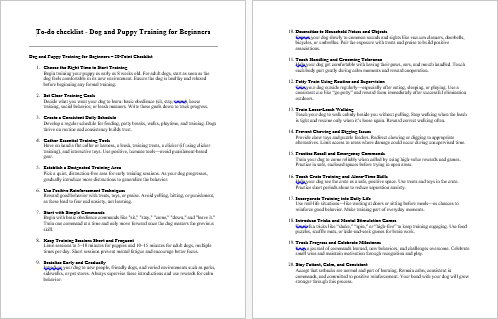
Dog and Puppy Training Checklist – 654 Words
A practical implementation checklist that helps learners stay consistent and focused.
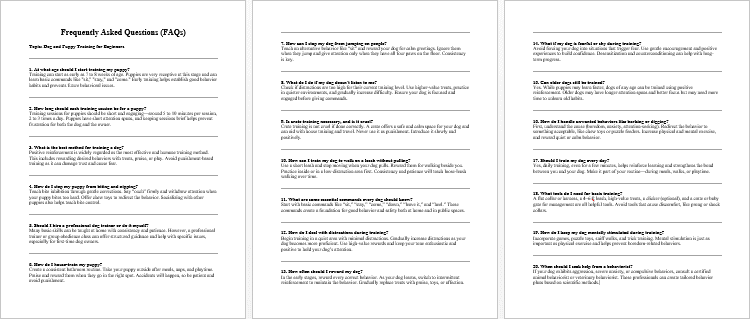
Dog and Puppy Training FAQs – 868 Words
A ready-made FAQ resource that answers common training questions and builds credibility.
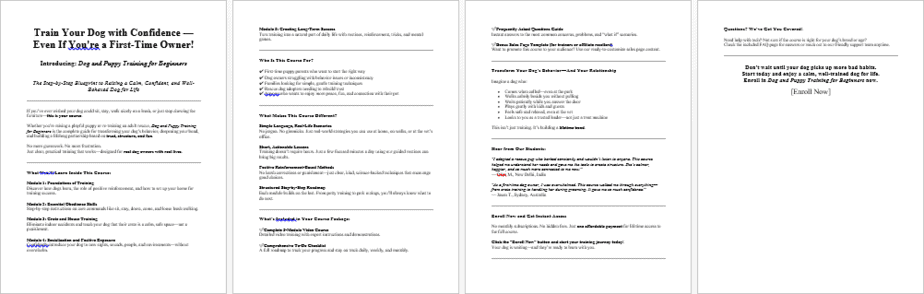
Dog and Puppy Training Sales Page – 717 Words
A professionally written sales page buyers can rebrand or customize for their own offers.
Total Content Value
Total Word Count: 25,525 Words
This is a complete, premium-level dog training education system with strong resale and repurposing potential.
Who This PLR Course Is Ideal For
This course is perfect for:
- Dog trainers and pet coaches
- Animal behavior educators
- Pet bloggers and content creators
- Membership site owners
- Course creators in the pet niche
- Online entrepreneurs
- Rescue organizations offering training resources
How to Use and Profit from This Dog Training PLR Course
This course offers exceptional flexibility for monetization.
Sell It as a Standalone Online Course
Rebrand it as a beginner dog training program for new dog owners.
Create a Premium Coaching Program
Use it as the foundation for 1-on-1 or group dog training coaching.
Turn It into a Multi-Week eClass
Drip the content weekly and charge $297–$497 for guided access.
Add It to a Membership Site
Use it as cornerstone content to generate recurring monthly income.
Break It into Smaller Products
Sell individual modules or lessons as mini-courses or reports priced $10–$20.
Convert It into Video or Audio Training
Increase perceived value by offering video lessons or audio guides.
Create Physical Products
Turn the content into printed guides, workbooks, or training manuals.
Build Lead Magnets and Funnels
Use excerpts as free content to grow email lists and upsell the full course.
Bundle with Other Pet Products
Increase cart value with bundles priced $47–$97.
License Terms – What Buyers Are Allowed to Do
Permissions
Buyers may:
- Sell the content with minor edits
- Claim copyright if 75% of the content is substantially modified
- Break the content into smaller paid products
- Bundle it with other content for higher-value offers
- Create membership sites with recurring income
- Convert it into multi-week eClasses priced $297–$497
- Turn it into audio, video, or physical products
- Use excerpts as blog posts, reports, or lead magnets
- Build a branded site or product and flip it later
License Restrictions – What Buyers Cannot Do
To protect the value of this PLR product:
- PLR or resale rights may not be passed to customers
- No licensing rights may be transferred in any form
- Affiliate commissions may not exceed 75%
- The full content may not be given away for free in its current state
- The content may not be added to existing paid products without requiring a new purchase
Why Buy This PLR Course from Buy Quality PLR
Buy Quality PLR is trusted for delivering high-quality, business-ready PLR products designed for real-world monetization.
This course offers:
- Evergreen demand in the pet niche
- Positive, modern training methods
- Beginner-friendly positioning
- Strong emotional appeal
- High resale and repurposing potential
It saves months of content creation while opening the door to profitable pet-related offers.
Get Instant Access Today
The Dog and Puppy Training for Beginners PLR Course is available for instant download.
This is a complete, done-for-you dog training education system that can be rebranded, sold, taught, or transformed into premium coaching and training offers immediately.
Add this powerful PLR course to your Buy Quality PLR library today and start turning dog training education into a profitable digital asset.
has been added to your cart!
have been added to your cart!
Here A Sample of the Dog and Puppy Training for Beginners PLR Course
Module 1: Laying the Foundation – Understanding Your Dog
Let’s begin by learning how your dog thinks, learns, and communicates with you.
Step 1: Discover How Dogs Learn
Learn how dogs pick up new behaviors using positive reinforcement and repetition. We’ll talk about how timing, tone, and rewards shape behavior.
Introduction: Why Understanding Learning Matters
Before we can train a dog or puppy effectively, we must understand how they actually learn. Training is not just about teaching commands; it’s about communicating in a language your dog understands and building a trusting relationship through that communication. This step is about laying the psychological foundation of training by diving into the how and why of canine learning.
Dogs do not learn through reason or logic in the way that humans do. They learn primarily through association. If a particular behavior leads to something positive, they are more likely to repeat it. Likewise, if a behavior results in something unpleasant, they are less likely to do it again. This basic learning model is known as operant conditioning, and we’ll focus specifically on the most effective and ethical aspect of it: positive reinforcement.
Understanding the Four Quadrants of Operant Conditioning (Brief Overview)
To understand how dogs learn, let’s briefly introduce the four basic ways behavior is affected:
- Positive Reinforcement (+R) – Adding something pleasant to increase a behavior.
Example: Giving a treat when the dog sits. - Negative Reinforcement (-R) – Removing something unpleasant to increase a behavior.
Example: Releasing leash pressure when the dog stops pulling. - Positive Punishment (+P) – Adding something unpleasant to reduce a behavior.
Example: Using a loud noise or leash jerk to stop barking. - Negative Punishment (-P) – Removing something pleasant to reduce a behavior.
Example: Taking away attention when a dog jumps up.
In this course, our focus is exclusively on Positive Reinforcement because it is the most humane, scientifically supported, and relationship-building method available.
What is Positive Reinforcement Training?
Positive reinforcement means that when your dog does something you want—like sitting, lying down, walking calmly, or coming when called—you immediately reward them with something they find valuable. This could be a treat, verbal praise, affection, or playtime.
Here’s why it works:
- Dogs are motivated by outcomes. If sitting means a tasty treat or fun game, they’ll be eager to sit again.
- Reinforcement strengthens the neural connections associated with the behavior.
- It boosts your dog’s confidence because they understand what earns them good things.
Positive reinforcement training is effective across all ages and breeds, and it encourages dogs to choose the desired behavior instead of complying out of fear.
Timing: Why It’s Critical in Dog Learning
When it comes to dog training, timing is everything. Dogs live in the moment, and they make associations based on what is happening at the exact second they receive a consequence.
- If you reward your dog for sitting three seconds too late, they may associate the reward with standing up instead of sitting.
- If you scold your dog for chewing a shoe ten minutes after the act, they won’t understand what the punishment is for.
That’s why it’s crucial to deliver rewards immediately (within one second) after the desired behavior. This is how your dog connects the dots and learns effectively.
Use of a Marker Word or Clicker
To improve timing, many trainers use a marker—a specific word like “Yes!” or a clicker sound—to signal to the dog that they’ve done the correct behavior. The marker is always followed by a reward.
Example:
- Dog sits
- You say “Yes!” or click
- You immediately give a treat
This precise marker tells the dog, “That’s the behavior I like.”
Repetition and Consistency: The Building Blocks of Habit
Dogs don’t generalize behaviors right away. This means just because your dog learns to “sit” in the kitchen doesn’t mean they’ll automatically know to sit in the park or when guests arrive.
Repetition builds understanding. You’ll need to practice new behaviors in multiple locations and scenarios to build true understanding and consistency.
Consistency means:
- Using the same word or cue each time (e.g., always saying “sit,” not sometimes saying “down”).
- Rewarding the same way every time the behavior is done correctly.
- Training regularly, in short, fun sessions rather than randomly or once a week.
Aim for 3–5 minute sessions several times a day, especially with puppies or dogs who are just learning. Frequent repetition helps strengthen memory without overwhelming your dog.
Understanding Your Dog’s Motivation
No two dogs are the same. What motivates one dog may not work for another. Part of positive reinforcement is figuring out what your dog truly loves.
Some common motivators:
- Food Rewards: Most dogs are food-driven, especially with small, soft, high-value treats like boiled chicken, cheese, or training treats.
- Toys/Play: Some dogs respond better to tug toys, fetch games, or a squeaky toy.
- Praise: Verbal encouragement like “Good dog!” works best when paired with physical affection or other rewards.
- Access to Activities: For some dogs, being let off-leash or being allowed to sniff something can be a reward.
Take note of your dog’s favorite things and rotate rewards to keep your dog excited and engaged.
Pro Tip: Use high-value treats for new or difficult tasks, and lower-value rewards (like kibble) for easy or already-learned behaviors.
Using Rewards to Shape Behavior
Let’s look at a step-by-step example of how we’d teach a simple command using positive reinforcement:
Teaching “Sit”
- Get your dog’s attention with a treat in your hand.
- Lure the dog’s head up and back by slowly moving the treat above their nose.
- As their head goes up, their bottom will naturally go down. The moment their bum touches the floor, mark the behavior (say “Yes!” or click).
- Give the treat immediately after the marker.
- Repeat this 5–10 times per session.
- Once your dog is reliably sitting with the lure, begin adding the verbal cue “Sit” just before you lure.
- Eventually, fade the lure and just use the cue.
This process can be applied to any behavior, adjusting for complexity and distractions.
Shaping vs. Luring vs. Capturing
In positive reinforcement training, there are a few ways to teach new behaviors:
- Luring – Using a treat to guide your dog into the desired position. Great for beginners and foundational commands like sit and down.
- Shaping – Rewarding small steps toward a final behavior. For example, rewarding a dog for moving toward a mat, then for touching it, then for lying on it. This is good for complex tasks.
- Capturing – Waiting for your dog to do the behavior naturally and rewarding it. For example, if your dog lies down on their own, you say “Yes!” and reward, helping them associate the action with the cue you’ll add later.
Each method is valid, and the best trainers use a mix depending on the dog’s personality and the task at hand.
The Role of Tone and Body Language
Dogs are extremely sensitive to tone of voice and body language. They may not understand your words, but they absolutely pick up on:
- The emotional tone in your voice (calm, excited, angry)
- Your posture (upright, crouched, threatening)
- Your movements (slow, fast, erratic)
When training:
- Use a calm, friendly tone for regular cues
- Use a cheerful, high-pitched tone for praise and rewards
- Avoid shouting or aggressive postures—it creates fear and confusion
Your dog is always watching and responding, even when you’re not training. By being mindful of how you carry yourself, you’ll improve communication and trust.
Avoiding Common Mistakes
Many beginners unintentionally slow their dog’s learning by making some common errors. Let’s look at a few and how to avoid them:
- Rewarding too late – Always mark and treat immediately after the behavior.
- Repeating the cue – Saying “Sit, sit, sit…” teaches your dog to wait until the third cue. Say it once, then wait.
- Punishing mistakes – If your dog gets it wrong, simply ignore and try again. Never scold or use physical correction.
- Training too long – Sessions should be short, fun, and end on a success. Stop before your dog gets bored or frustrated.
- Changing cues – Stick with one word per command. Don’t switch from “Come” to “Here” randomly.
Conclusion: Your Dog Is Always Learning
This step is not just the first module—it’s the foundation of everything to come. When you understand how your dog learns, you’re better equipped to teach, lead, and enjoy the training process together.
By using positive reinforcement, paying attention to timing, choosing the right rewards, and keeping your training consistent and fun, you’ll begin to see real results—and build a bond with your dog that will last a lifetime.
In the next step, we’ll set up your training environment for success—but for now, practice observing your dog, reward good behavior, and start building your relationship based on communication and trust.
Step 2: Create a Positive Learning Environment
Set up your home and routines to support training. This includes choosing quiet spaces, removing distractions, and building a predictable schedule.
Introduction: Why Environment Shapes Success
A well-structured learning environment is critical for your dog’s training success. Just like children learn better in calm, focused spaces, dogs also need the right atmosphere to stay engaged, confident, and stress-free. A chaotic or overstimulating environment can hinder your dog’s ability to absorb new information or respond to cues, while a calm, organized setup helps create clarity, consistency, and comfort.
This step focuses on how to structure your dog’s daily world—your home, your schedule, and your interactions—to set the stage for positive reinforcement training to thrive. The ultimate goal is to create an environment that encourages learning, builds confidence, and supports long-term behavior development.
Section 1: Choosing the Right Training Space
Dogs, especially puppies and beginners, are highly distractible. If you’re trying to teach a new skill in a noisy, unpredictable, or unfamiliar environment, your dog may become confused or overwhelmed. The best way to set them up for success is by choosing a dedicated, low-distraction space for training.
Key Elements of an Ideal Training Space
- Quiet and Calm
Choose a room or area in your home where noise is minimal—away from TVs, children, other pets, or outside distractions. - Safe and Contained
Use baby gates or closed doors to keep your dog contained in the training space. This limits wandering and helps keep your dog focused. - Clutter-Free
Remove toys, shoes, food bowls, and anything else that could divert your dog’s attention. - Comfortable Flooring
Slippery floors can distract or worry dogs. Use area rugs, yoga mats, or rubber flooring for stability, especially for puppies or senior dogs. - Lighting and Temperature
Ensure the space is well-lit and at a comfortable temperature. Avoid training in extremely hot or cold environments.
Training Indoors vs. Outdoors
- Start Indoors when teaching a new behavior. Indoor spaces give you control over noise, distractions, and safety.
- Move Outdoors Gradually once the behavior is understood. Slowly introduce distractions like birds, wind, people, and smells to generalize the command.
Section 2: Reducing Distractions During Training
Even in a quiet room, distractions can arise—both from the environment and from your dog’s own energy or needs.
Common Distractions to Watch For:
- Other pets in the room
- Loud noises from nearby rooms or traffic
- Food smells or people moving around
- Toys or chews nearby
- Your own phone ringing or beeping
- Your dog being tired, hungry, or overstimulated
How to Minimize Distractions Effectively:
- Train When Your Dog Is Calm but Alert
Avoid training right after a meal or during extreme excitement. Choose a moment when your dog is relaxed and attentive. - Turn Off Background Noise
Switch off TVs, music, or noisy appliances to help your dog stay tuned into you. - Use a Leash Indoors
A short leash can help keep your dog focused and gently prevent wandering, especially during early stages of training. - Put Other Pets Away
If you have multiple dogs or pets, train them separately to avoid competition, jealousy, or distraction. - Silence Your Phone
Training time is bonding time. Give your dog your full attention for 5–10 minutes without interruption.
Section 3: Build a Predictable Daily Routine
Dogs thrive on structure and predictability. When your dog knows what to expect throughout the day, it reduces anxiety, increases trust, and improves their ability to focus during training sessions.
Basic Routine Categories to Establish:
- Feeding Schedule
Stick to consistent mealtimes (usually 2–3 times daily depending on age). This also helps predict bathroom needs for housetraining. - Potty Breaks
Puppies need breaks every 1–2 hours; adult dogs may need breaks every 4–6 hours. Set a regular potty schedule, especially before and after training. - Training Time Slots
Choose 2–3 short, dedicated sessions a day. Keep each session between 5–10 minutes, and always end on a positive note. - Exercise and Play
Ensure your dog gets regular physical activity. A dog with pent-up energy will find it hard to focus on commands. - Rest and Nap Time
Avoid overtraining. Dogs need ample rest, especially puppies, to process what they’ve learned and recharge. - Grooming or Handling Practice
Work handling exercises into your routine—such as brushing, paw touching, or gentle mouth checks—to normalize everyday care.
Sample Daily Puppy Routine (8–12 Weeks):
- 7:00 AM – Wake, potty break, breakfast
- 8:00 AM – Short walk or play session
- 9:00 AM – First training session (5–7 min)
- 10:00 AM – Nap time
- 12:00 PM – Potty, lunch, short play
- 1:00 PM – Socialization or grooming exposure
- 3:00 PM – Second training session (5–10 min)
- 6:00 PM – Dinner
- 7:00 PM – Short walk, calm indoor games
- 8:00 PM – Last training session (if energy allows)
- 9:00 PM – Wind down and final potty break
This type of structure helps your dog understand that learning is a regular part of the day—not a stressful or unusual experience.
Section 4: Create a Reward-Ready Environment
Training is powered by positive reinforcement, so you need to have the right rewards within reach. A good training space always includes:
- Training Treats: Keep small, soft, high-value treats in a pouch or container nearby.
- Clicker or Marker Word: Be consistent with your timing. If using a clicker, have it in hand. If using a verbal marker (like “Yes!”), say it clearly and consistently.
- Tug or Fetch Toy: For dogs motivated by play, have a toy available as an occasional reward.
- Water Bowl: Especially for longer sessions or training outdoors.
- Mat or Target Spot: Use a small mat or towel to teach behaviors like “go to place” or “settle.”
Make this setup easy to access so you don’t interrupt your flow during sessions.
Section 5: Manage Your Dog’s Emotional State
Learning doesn’t happen when a dog is overly excited, fearful, or stressed. Before you begin any training session, assess your dog’s emotional state. A relaxed, curious, and slightly alert dog is in the perfect zone for learning.
Signs Your Dog Is Ready to Learn:
- Tail is neutral or wagging gently
- Eyes are soft, with focused attention on you
- Body posture is relaxed
- Ears are perked but not pinned or flat
- Responds to their name and follows your movements
Signs to Pause or Adjust:
- Excessive panting or drooling
- Barking or whining
- Trembling or hiding
- Hyperactivity (zoomies, jumping, barking)
- Ignoring cues or staring off into the distance
If your dog is stressed, end the session early or adjust your environment. Training should always feel safe and positive—not pressured or rushed.
Section 6: The Human Environment Matters Too
The way you show up to training has a huge impact. Dogs pick up on your body language, tone, and even your mood. To maintain a calm and focused learning space, try to embody:
- Patience: Learning is not linear. Mistakes will happen. Stay calm and encouraging.
- Clarity: Use the same cues, gestures, and reward patterns.
- Neutral Energy: Avoid overly high or low energy. Speak clearly and move with purpose.
- Positivity: Smile, praise, and celebrate small wins.
Remember: You’re not just training your dog—you’re building a shared language.
Conclusion: Setting the Stage for Lifelong Learning
Creating a positive learning environment is about more than where you train—it’s about how you prepare, communicate, and connect with your dog every day. When your home and routines are structured, calm, and predictable, you’ll find that your dog learns faster, listens better, and enjoys the process.
By selecting a quiet training area, removing distractions, creating consistency through a daily routine, and preparing emotionally and practically, you’re setting your dog (and yourself) up for success—not just in obedience training, but in your lifelong bond.
Every session becomes easier and more enjoyable when the environment supports learning. This step lays the groundwork for everything else to come.
Let this space be your dog’s classroom—and yours as well.
Step 3: Learn to Read Dog Body Language
Understand signs of stress, excitement, relaxation, and confusion in your dog so you can better communicate and respond during training.
Introduction: Why Body Language is the Key to Training
Dogs are constantly communicating—but not in words. Their primary language is body language, which includes posture, facial expressions, tail movement, and overall behavior. As a dog trainer or caregiver, learning to accurately interpret these signals is essential to:
- Prevent and de-escalate stressful situations
- Reward behaviors when the dog is in a receptive state
- Build a deeper, more responsive relationship
- Avoid miscommunication or accidentally reinforcing fear or anxiety
When you can recognize signs of stress, excitement, confusion, and calmness, you can better time your rewards, adjust your environment, or offer reassurance. This not only makes training more effective, it strengthens your dog’s trust in you as a calm, responsive leader.
In this step, we’ll walk you through the visual and behavioral cues dogs use and explain what each one means—so you can “listen” even when no sound is being made.
Section 1: The Canine Communication System
Dogs communicate using a full-body system. Every movement and position contributes to what they’re trying to express.
Key body parts to observe:
- Eyes and eyelids
- Ears
- Mouth and lips
- Tail
- Fur or hackles (the raised hair on the back/neck)
- Overall body posture
- Movement speed and orientation (e.g., leaning forward or backing away)
Each of these areas provides clues about your dog’s emotional state. When read in combination, they provide a clear picture of how your dog is feeling and how they’re processing the situation.
Let’s break it down by emotional state.
Section 2: Signs of Relaxation and Comfort
When your dog is relaxed, it means they feel safe and are open to learning or resting. This is the ideal emotional state for training sessions and social interactions.
Typical Relaxed Body Language Includes:
- Soft eyes: The eyes appear almond-shaped and may blink slowly. No intense staring or darting glances.
- Neutral ears: Ears are neither pinned back nor overly forward, just comfortably at rest.
- Open mouth: A slightly open mouth, often with a gentle pant, indicates relaxation.
- Loose body: Muscles appear soft, and the dog may lie on one side, stretch out, or sit with a curved back.
- Wagging tail: Tail is wagging gently in a wide, sweeping motion at mid-height. This should not be confused with tense, fast wagging, which can signal stress.
- Normal breathing: No rapid panting or holding of breath.
Dogs in this state are ready to engage in training, play, or simply enjoy your company.
Section 3: Signs of Excitement or High Arousal
Excitement is not always a bad thing, but overly excited dogs may struggle to focus or learn new tasks. High arousal can also escalate into frustration or unwanted behavior like jumping, nipping, or barking.
Typical Excited or Hyper-Aroused Body Language:
- Bright, wide eyes: Often with dilated pupils.
- Perked or forward ears: Ears sharply angled toward the sound or object of interest.
- Fast tail wagging: Tail may wag high and rapidly; the faster it wags, the more aroused the dog is.
- Bounding or jumping: Fast movements, difficulty staying still, spinning in circles.
- Excessive panting: Not related to heat or exercise.
- Whining or barking: Vocalizations to release built-up energy or demand something.
This state can be managed by using calming techniques before resuming training—like redirecting with a chew toy, taking a short walk, or using a calming cue like “settle.”
Section 4: Signs of Confusion or Uncertainty
Recognizing when a dog is confused helps you slow down, clarify your cues, and avoid pushing too hard. Confusion is part of the learning process, but it needs to be handled with patience.
Typical Signs of Confusion:
- Head tilt: A classic sign your dog is trying to understand but doesn’t quite get it yet.
- Slowed response time: Dog hesitates or freezes when given a cue they usually know.
- Lip licking: Especially when no food is present.
- Yawning: Can be a stress signal when out of context.
- Looking away: The dog glances away from you, often avoiding direct eye contact.
- Paw lift: One front paw lifted slightly off the ground, often indicating uncertainty.
In training, confusion means your dog may need:
- More repetition
- Smaller steps (break the task down)
- A clearer cue or gesture
- Less distraction in the environment
Respond by rewarding attempts, even if imperfect, and adjusting your session to stay in the learning zone.
Section 5: Signs of Stress or Anxiety
Dogs often show subtle signs of discomfort or stress long before they growl or bark. Being able to catch these early signals prevents escalation and allows you to intervene kindly.
Early Stress Signals:
- Whale eye: The whites of the eyes are visible as the dog glances sideways.
- Tense mouth: Mouth is closed tightly, with lips drawn back or trembling.
- Excessive lip licking: Especially in the absence of food or treats.
- Yawning repeatedly: More than one or two times during training.
- Low or tucked tail: Tail may be completely under the belly or just lowered.
- Flattened ears: Pulled back tightly against the head.
- Shaking off: Like they’re drying off from a bath, even when not wet.
- Freezing or cowering: The dog stops moving and appears stiff or hunched.
- Pacing: Repeated back-and-forth movement, often showing nervous energy.
When you see these signs, stop the training session, offer comfort, and assess the situation:
- Is the task too difficult or overwhelming?
- Is the environment too noisy or crowded?
- Is your energy too intense?
Use positive reinforcement to reassure your dog and possibly end on a simple success like a “sit” or “touch” before giving a reward and a break.
Section 6: Signs of Aggression or Fear-Based Defense
Aggressive displays often come after stress signals have been ignored. Dogs rarely go straight to aggression without trying other communication methods first. These behaviors should never be punished but instead seen as a warning to adjust your approach.
Typical Signs of Defensive Aggression:
- Growling: A clear signal that the dog is uncomfortable or fearful.
- Snarling or showing teeth: Often a response to being cornered or threatened.
- Lunging or air snapping: Especially if the dog feels trapped or challenged.
- Stiff body with direct stare: This is a high-alert position and should be taken seriously.
- Raised hackles: Hair standing up along the spine, a sign of fear or arousal.
Always respond by:
- Backing off and giving space
- Avoiding eye contact
- Staying calm and non-reactive
If these behaviors are frequent, consult a professional behaviorist or trainer experienced in fear-based behaviors. The goal is always to rebuild trust through counter-conditioning and desensitization.
Section 7: The Role of Context and Breed Differences
Not every dog displays body language in the same way. Breed, size, age, and individual personality all influence how signals are shown.
Breed-Specific Considerations:
- Huskies may vocalize more than other breeds, using howls or yips even when not distressed.
- Greyhounds often carry their tails low even when happy.
- Bulldogs may pant heavily due to their short snouts, not always from stress.
- Border Collies tend to have intense eye contact as part of their herding instinct.
Context also matters. A wagging tail does not always mean a dog is friendly—it depends on the tail’s height, speed, and the rest of the body posture. Always interpret signals as part of the whole picture.
Section 8: Becoming Fluent in Your Dog’s Language
The more time you spend observing your dog, the better you’ll understand their unique body language vocabulary. Keep a behavior journal or take mental notes during training sessions to track what triggers stress, what cues lead to confusion, and what states result in the best learning.
Daily Practice Tips:
- Observe your dog’s posture and expression when greeting people, playing, eating, resting, and walking.
- Note which situations lead to stress (new environments, loud noises, certain people).
- Adjust your training based on your dog’s signals—not your schedule or expectations.
The best trainers aren’t just skilled with commands—they’re good listeners. And listening starts with watching.
Conclusion: Listen With Your Eyes
Learning to read your dog’s body language is one of the most powerful tools you can develop. It allows you to communicate clearly, train compassionately, and respond to emotional shifts before they escalate.
When you recognize that a yawn can be a sign of stress, that a soft tail wag signals contentment, or that whale eye indicates discomfort, you become your dog’s advocate and best friend.
Remember, behavior is communication. The more fluent you become in your dog’s silent language, the stronger your bond will grow—and the smoother your training journey will be.
Step 4: Build Trust and Connection
Course Training Instructions and Descriptions
(For International Course Creators | Friendly Tone | Step-by-Step Approach | 1500+ words)
Welcome to Step 4 of our first module: “Build Trust and Connection.” If you’ve ever heard the saying, “A dog is a man’s best friend,” this is where that relationship truly begins to take shape. Without trust, training becomes a mechanical process. But when your dog feels safe, loved, and bonded with you, training turns into a joyful collaboration. In this step, we’ll walk through how to build that meaningful connection, using play, positive interaction, and consistent kindness. Whether you’re working with a playful puppy or an adult rescue dog, trust is the foundation of all success.
Why Trust Matters in Dog Training
Training doesn’t start with commands. It starts with the relationship. Dogs learn best when they feel secure and emotionally connected to their human. Just like children, dogs thrive when they know they are safe, understood, and appreciated. Without trust, your dog may be fearful, shut down, or even resistant to learning.
Building trust:
- Increases your dog’s willingness to follow your lead
- Reduces anxiety and reactivity
- Strengthens recall and responsiveness
- Makes your dog feel safe in your presence
- Encourages deeper eye contact and focus
Let’s break it down into four specific areas that help build this vital trust and connection: gentle handling, interactive play, reading your dog’s comfort cues, and ending training sessions on a positive note.
Step 1: Practice Gentle Handling from Day One
One of the most powerful ways to build trust is through touch. Dogs are highly sensitive to the way we use our hands. If your touch is calm, respectful, and consistent, your dog will begin to see you as a safe space.
What Gentle Handling Looks Like:
- Start Slowly: Especially with puppies or rescue dogs, start with short periods of touch. Begin by simply placing your hand near them without touching, allowing them to sniff and approach.
- Use Open Hands: Avoid grabbing or sudden movements. Instead, use open palms, slow strokes, and gentle pressure. Touch under the chin or on the chest instead of reaching over the head, which can be intimidating.
- Be Consistent: Always handle your dog with the same level of calm energy. This consistency builds emotional predictability, which helps the dog relax.
- Touch All Areas Respectfully: Gently handle their ears, paws, tail, and collar areas. This helps desensitize them and makes vet visits or grooming easier. Always pair it with treats or praise.
- Watch Their Reaction: If your dog pulls away, flattens their ears, yawns repeatedly, or shows the whites of their eyes, stop and give them space. Respect builds trust.
Over time, gentle handling becomes not just a routine but a bonding experience. Your dog learns that your hands mean comfort, not control.
Step 2: Engage in Interactive Play Daily
Play is one of the most powerful trust-building tools. It helps release energy, deepens connection, and teaches valuable lessons in cooperation. But not all play is equal. The kind of play you choose should involve both you and your dog — think teamwork over toys.
Ideas for Positive Interactive Play:
- Tug-of-War (with Rules): Use a tug toy and play short rounds of tug. Teach a clear “drop it” cue and pause every few seconds to maintain control. Letting your dog “win” sometimes boosts confidence.
- Fetch with Structure: Teach your dog to wait, retrieve, and return a toy. Reward for bringing it back and for dropping it at your feet.
- Puzzle Toys Together: Use food-dispensing toys and help your dog figure them out. This cooperative solving builds their trust in your guidance.
- Chase Me (Gently): In a safe, enclosed area, you can run a few steps away, encouraging your dog to follow you. Praise them warmly when they catch up.
- Hide-and-Seek: Hide treats or hide yourself and call your dog. This game builds recall and reinforces that staying close to you is rewarding.
Playing together isn’t just fun — it shows your dog that you’re someone worth paying attention to. It strengthens your role as both a leader and a partner in fun.
Step 3: Respect Your Dog’s Comfort Zones
Building trust isn’t just about interaction — it’s also about knowing when not to push. Every dog has different comfort zones. Some love hugs, others hate being cuddled. Some are social butterflies, others are shy. Your job is to learn and respect these boundaries.
How to Identify Comfort vs. Discomfort:
- Tail Position: A neutral wag usually means comfort, while a low, tucked tail signals fear.
- Ears and Eyes: Relaxed ears and soft eyes show trust. Ears back, wide eyes, or hard staring suggest stress.
- Body Language: A dog leaning into you is usually happy; a dog leaning away needs space.
- Vocalization: Whining, barking, or growling may indicate discomfort. Never punish these — they’re communication.
What to Do When Your Dog is Uncomfortable:
- Give Space: Step back and let your dog come to you when ready.
- Rebuild Slowly: If a specific situation (like nail trimming) caused stress, go back a step and reintroduce it positively with treats.
- Avoid Over-Correction: Corrections and harsh tones break trust quickly. Instead, redirect or remove the dog from the situation gently.
When your dog sees that you listen to their signals, they begin to see you as trustworthy. You’re not just in control — you’re a compassionate leader.
Step 4: Always End Sessions on a Happy Note
This simple but often overlooked principle can make or break your training success. How a session ends leaves a lasting emotional impression on your dog. If training ends with stress, confusion, or punishment, your dog may become resistant to future sessions. If it ends with joy and success, your dog will be excited to learn again.
Ending on a Positive Note Means:
- Ending Before Frustration Sets In: Stop the session while your dog is still engaged and having fun. Don’t wait for them to get tired, distracted, or irritable.
- Celebrate the Small Wins: Even if your dog only made one small improvement, praise them enthusiastically and give a favorite treat or toy.
- Keep Final Moments Fun: After a training drill, do something playful — toss a toy, rub their belly, or go for a walk.
- Stick to a Time Limit: Especially for puppies, keep training sessions short and sweet. Around 5–10 minutes is plenty early on.
- Use a “Finished” Cue: Teach a word like “All done!” and pair it with petting or release from the training space. This helps your dog understand when training is over.
Ending on a high note reinforces that being around you is a source of joy. Your dog will look forward to every session, which sets the tone for long-term success.
Putting It All Together
Let’s revisit what we’ve covered in this step:
- Gentle Handling: Builds physical trust and emotional safety.
- Interactive Play: Strengthens your bond while teaching cooperative behaviors.
- Comfort Zone Awareness: Helps your dog feel respected and secure.
- Happy Endings: Leaves your dog with a positive emotional memory after training.
Together, these four practices create a relationship built not on fear or dominance, but on mutual respect, trust, and companionship. And remember, dogs are emotional beings. They don’t just learn “sit” or “stay” — they learn how they feel around you. When you consistently nurture this emotional connection, every training challenge becomes easier to tackle.
Final Thought
You are your dog’s whole world. Every moment you spend building trust pays off tenfold in the form of better behavior, deeper connection, and a happier life together. So, don’t rush it. Take time to play, cuddle, observe, and simply enjoy your dog. This is the real heart of dog training — the love between a human and their best friend.
We’re also giving these extra bonuses
Dog and Puppy Training for Beginners – Checklist
Dog and Puppy Training for Beginners – FAQs
Dog and Puppy Training for Beginners – Salespage Content
Package Details:
Word Count: 25 525 Words
Number of Pages: 104
Diabetes Reversal – Bonus Content
Checklist
Word Count: 654 words
FAQs
Word Count: 868 words
Salespage Content
Word Count: 717 words
Total Word Count: 27 764 Words
Your PLR License Terms
PERMISSIONS: What Can You Do With These Materials?
Sell the content basically as it is (with some minor tweaks to make it “yours”).
If you are going to claim copyright to anything created with this content, then you must substantially change at 75% of the content to distinguish yourself from other licensees.
Break up the content into small portions to sell as individual reports for $10-$20 each.
Bundle the content with other existing content to create larger products for $47-$97 each.
Setup your own membership site with the content and generate monthly residual payments!
Take the content and convert it into a multiple-week “eclass” that you charge $297-$497 to access!
Use the content to create a “physical” product that you sell for premium prices!
Convert it to audios, videos, membership site content and more.
Excerpt and / or edit portions of the content to give away for free as blog posts, reports, etc. to use as lead magnets, incentives and more!
Create your own original product from it, set it up at a site and “flip” the site for megabucks!
RESTRICTIONS: What Can’t You Do With These Materials?
To protect the value of these products, you may not pass on the rights to your customers. This means that your customers may not have PLR rights or reprint / resell rights passed on to them.
You may not pass on any kind of licensing (PLR, reprint / resell, etc.) to ANY offer created from ANY PORTION OF this content that would allow additional people to sell or give away any portion of the content contained in this package.
You may not offer 100% commission to affiliates selling your version / copy of this product. The maximum affiliate commission you may pay out for offers created that include parts of this content is 75%.
You are not permitted to give the complete materials away in their current state for free – they must be sold. They must be excerpted and / or edited to be given away, unless otherwise noted. Example: You ARE permitted to excerpt portions of content for blog posts, lead magnets, etc.
You may not add this content to any part of an existing customer order that would not require them to make an additional purchase. (IE You cannot add it to a package, membership site, etc. that customers have ALREADY paid for.)
Share Now!
Latest Products





Free Sales Funnel Builder

Related Products
Popular & Trending



Featured Products