
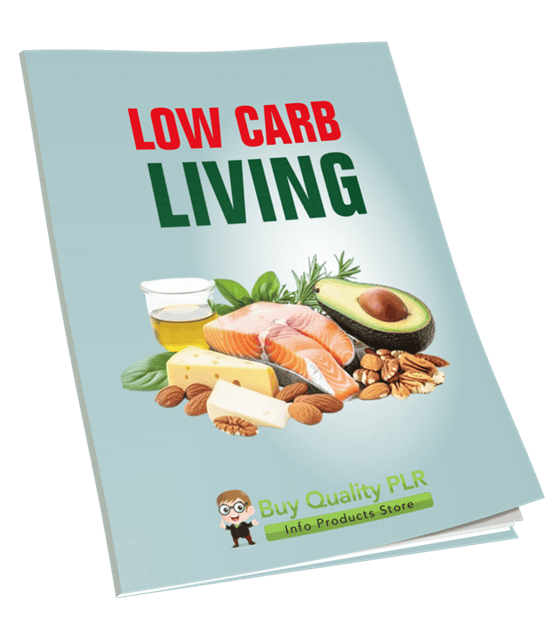
Low-Carb Living PLR Course 32k Words
in Diet PLR , Dieting PLR Ebooks , Health PLR , Health PLR eBooks , Healthy Eating PLR Ebooks , PLR Checklists , PLR eBooks , PLR eCourses , Premium PLR , Premium PLR eBooks , Premium White Label Brandable PLR Coaching Courses , Private Label Rights ProductsChoose Your Desired Option(s)
has been added to your cart!
have been added to your cart!
#lowcarbliving #plrcourse #plrcontent #plrproducts #healthyeating #lowcarbdiet #mealplanning #lowcarbrecipes #nutrition #healthylifestyle #diettips #wellness
Low-Carb Living PLR Course – Your Complete Guide to Health, Energy, and Weight Management
Do you want to eat delicious food, feel energized, and manage your weight without starving or complicated diets?
The Low-Carb Living PLR Course is a 32,000-word, step-by-step program designed to help anyone adopt a low-carb lifestyle successfully. It provides everything needed to educate, sell, or repurpose a complete course on low-carb living.
Whether you’re a health coach, blogger, PLR reseller, or entrepreneur, this course gives you ready-made content to help your audience transform their eating habits and improve their health.
Presenting…
Low-Carb Living PLR Course 32k Words
Why Low-Carb Living Works
Many people struggle with diets that are restrictive, confusing, or unsustainable.
Low-Carb Living is different because it focuses on:
- Sustainable Nutrition: Eat satisfying meals without endless calorie counting.
- Real-Life Flexibility: Learn how to shop, cook, and eat out without stress.
- Balanced Lifestyle: Combines nutrition, habits, and mindset for long-term results.
- Science-Backed Approach: Reduces carbs in a way that supports weight management, energy, and overall health.
With this course, students will gain confidence, enjoy their meals, and stick to a low-carb lifestyle without guilt or overwhelm.
What’s Inside the Low-Carb Living PLR Course
The course is divided into five comprehensive modules, each with actionable lessons that guide learners from beginner to low-carb expert.
Module 1: Getting Started with Low-Carb Living
Goal: Build a solid foundation before diving into meal plans and recipes.
- Lesson 1: What is Low-Carb, Really?
Understand the principles of low-carb eating, how it differs from other diets, and why it works for many people. - Lesson 2: Benefits You Can Expect
Learn how reducing carbs can increase energy, support weight loss, and improve overall health. - Lesson 3: Common Myths Busted
Clear up misconceptions like “all carbs are bad” or “low-carb food is boring.” - Lesson 4: Getting Your Mindset Ready
Shift focus from quick fixes to long-term healthy habits that stick.
Outcome: Students will enter the low-carb lifestyle prepared and motivated, avoiding common pitfalls.
Module 2: Building Your Low-Carb Plate
Goal: Teach learners how to choose, combine, and enjoy foods that fit their low-carb lifestyle.
- Lesson 1: Low-Carb Staples to Stock Up On
Pantry essentials: meats, eggs, dairy, nuts, vegetables, and healthy fats. - Lesson 2: Smart Carbs vs. Hidden Carbs
Learn the difference between acceptable carbs and hidden sugars that can derail progress. - Lesson 3: Planning Simple Meals
Structure breakfast, lunch, dinner, and snacks without overcomplicating your routine. - Lesson 4: Drinks That Fit the Lifestyle
Hydrating choices: water, tea, and coffee. Limit sugary drinks and alcohol.
Outcome: Students will confidently assemble balanced low-carb meals without confusion or frustration.
Module 3: Everyday Low-Carb Strategies
Goal: Show learners how to navigate real-life situations like shopping, cooking, and dining out.
- Lesson 1: Grocery Shopping Made Easy
Step-by-step guidance to avoid high-carb pitfalls in the supermarket. - Lesson 2: Quick & Easy Cooking Tips
Simple, tasty recipes and hacks for busy lifestyles. - Lesson 3: Eating Out the Low-Carb Way
Order smartly at restaurants, fast food spots, and social events without breaking your plan. - Lesson 4: Handling Cravings & Temptations
Practical strategies to combat sugar cravings and stay on track.
Outcome: Students will manage their lifestyle confidently, even in challenging situations.
Module 4: Fine-Tuning Your Low-Carb Lifestyle
Goal: Help learners optimize their routine for lasting results.
- Lesson 1: Understanding Macros & Portion Sizes
Learn how carbs, fats, and proteins work together without obsessing over numbers. - Lesson 2: Tracking Progress Without Obsession
Stress-free methods to measure success beyond the scale. - Lesson 3: When to Adjust Your Plan
Know when to tweak carb intake, meal timing, or activity levels for better results. - Lesson 4: Adding Exercise into the Mix
Incorporate movement—walking, lifting, yoga—to complement low-carb nutrition.
Outcome: Students will personalize their low-carb lifestyle, making it effective and enjoyable.
Module 5: Making Low-Carb a Lifelong Lifestyle
Goal: Ensure learners stay consistent, confident, and motivated long-term.
- Lesson 1: Overcoming Roadblocks & Setbacks
Strategies for holidays, stress eating, or slip-ups—without guilt. - Lesson 2: Keeping Meals Fun & Exciting
Tips to spice up meals so low-carb never feels boring. - Lesson 3: Staying Motivated Long-Term
Tools and techniques for accountability, journaling, and self-motivation. - Lesson 4: Living Low-Carb with Confidence
Wrap up with mindset strategies to make this a sustainable lifestyle, not just a temporary diet.
Outcome: Students will embrace low-carb living confidently, maintaining results for life.
Bonus Materials Included
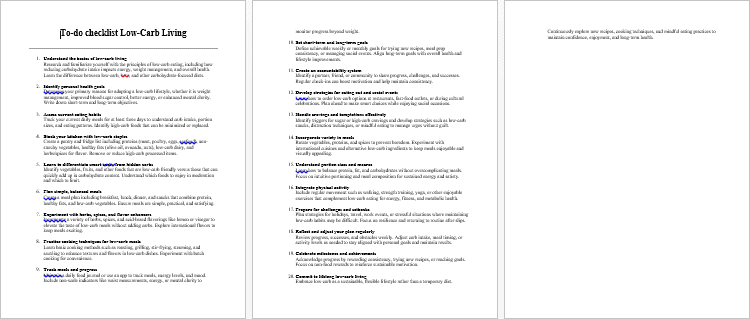
- Low-Carb Living – Checklist (655 Words)
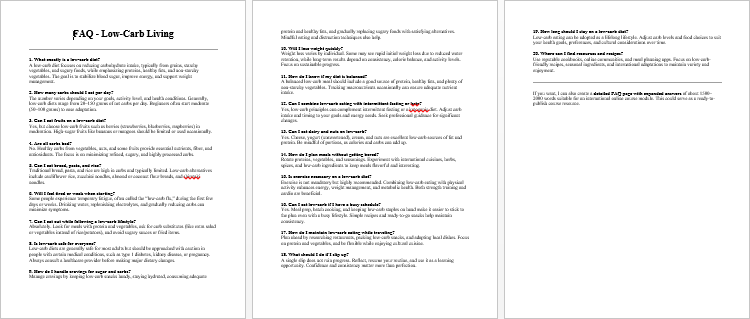
Quick reference guide for students to implement key strategies immediately. - Low-Carb Living – FAQs (774 Words)
Answers to common questions about nutrition, cravings, meal planning, and more. - Low-Carb Living – Salespage (747 Words)
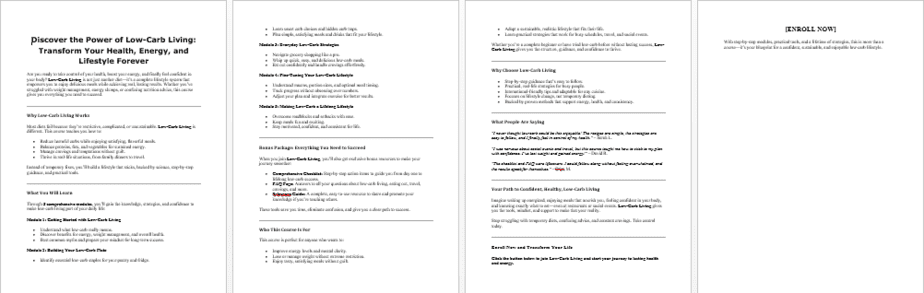
Ready-made sales copy for promotion or resale—perfect for marketing your course immediately.
Who Can Benefit from This PLR Course
- Health & Nutrition Coaches: Offer structured programs for clients.
- Fitness Bloggers & Entrepreneurs: Use content to grow email lists or create premium courses.
- PLR Buyers & Resellers: Sell the course as-is or repurpose for multiple formats.
- Individuals Seeking Health Improvement: Learn a proven, practical low-carb approach without confusion.
Ways to Use and Profit from This PLR Course
- Sell as a Full Course – Charge $297–$497 for online courses or coaching programs.
- Break into Smaller Guides or Reports – Sell individual sections for $10–$20.
- Bundle with Other Health PLR Products – Offer premium packages for $47–$97.
- Develop Multi-Week E-Classes – Teach a 4–12 week program using the content.
- Add to a Membership Site – Generate recurring revenue through exclusive content.
- Convert into Physical Products – Workbooks, meal planners, or recipe journals.
- Use as Lead Magnets – Excerpts to grow email lists or attract clients.
- Flip a Niche Site – Build a low-carb website and sell it for profit.
Licensing Terms
Permissions:
- Sell as-is or with minor edits.
- Claim copyright if 75%+ is rewritten.
- Break into smaller reports or lessons for sale.
- Bundle with other PLR content for upsells.
Restrictions:
- Cannot pass PLR rights to customers.
- Maximum affiliate commission: 75%.
- Cannot give full course away for free.
- Cannot include in existing orders without an additional purchase.
Why Buy from Buy Quality PLR
- 32,000 Words of Ready-to-Use Content – Save time and effort creating a full course.
- Step-by-Step, Science-Based Program – Perfect for beginners and intermediates.
- Action-Oriented & Practical – Students can start seeing results immediately.
- Bonus Checklist, FAQs, and Salespage – Everything needed for marketing and delivery.
- PLR Licensing – Brand, sell, or teach with confidence.
- Multiple Profit Opportunities – E-courses, reports, bundles, memberships, and more.
Bottom Line
The Low-Carb Living PLR Course is a complete, ready-to-use solution for anyone looking to embrace low-carb living, manage weight, and improve energy and health.
Whether you’re selling, teaching, or repurposing content, this course gives you everything you need to deliver value, attract customers, and generate multiple income streams.
✅ Instant Access | Fully Editable | Practical & Profitable | Science-Based PLR
Start helping your audience eat better, feel better, and live better today with Low-Carb Living.
has been added to your cart!
have been added to your cart!
Here A Sample of Low-Carb Living PLR Course
Module 1: Getting Started with Low-Carb Living
Let’s build the foundation before diving deeper. This module sets the stage for a smooth start.
Lesson 1: What is Low-Carb, Really?
1. Introduction: Why Define “Low-Carb” Properly?
Before we jump into food lists, meal plans, or practical tips, it’s important to answer a very basic—but often misunderstood—question: What does low-carb actually mean?
Many people hear the term “low-carb” and immediately think it’s about cutting out bread and pasta completely, or eating nothing but meat and eggs. Others confuse it with popular branded diets, assuming that all low-carb lifestyles are exactly the same. But the truth is, “low-carb” is a flexible approach to nutrition with a range of options, depending on your health goals, lifestyle, and cultural food habits.
To understand it well, let’s break down what carbohydrates are, why they matter, and how reducing them affects the body.
2. Understanding Carbohydrates in Simple Terms
Carbohydrates (often shortened to carbs) are one of the three main macronutrients in food, along with protein and fat. They are the body’s primary source of quick energy. When you eat carbs, your digestive system breaks them down into glucose (sugar), which then enters your bloodstream.
- Examples of carbohydrate-rich foods: bread, rice, pasta, potatoes, beans, lentils, fruits, milk, sugary snacks, and soft drinks.
- Carbohydrates have different types:
- Simple carbs: Found in foods like white sugar, candies, sodas, and white bread. These are quickly digested and can cause blood sugar spikes.
- Complex carbs: Found in foods like whole grains, vegetables, legumes, and fruits. These digest more slowly and release energy steadily.
So when we talk about “low-carb,” we are talking about reducing the total amount of carbohydrates consumed each day—especially the processed, high-sugar kind—while balancing with more protein, healthy fats, and nutrient-dense vegetables.
3. How Low-Carb Differs from Other Diet Approaches
It’s helpful to understand where low-carb fits compared to other popular diet patterns.
- Balanced diet (traditional guidelines): Often recommends that 45–65% of daily calories come from carbohydrates. That means, in a 2,000-calorie diet, you might be eating between 225–325 grams of carbs each day.
- Low-fat diet: Instead of reducing carbs, these focus on cutting down fats. Low-carb flips this around—allowing more fats while reducing carbs.
- Keto diet: A very strict form of low-carb, typically limiting carbs to about 20–50 grams per day, to trigger a state called ketosis.
- Mediterranean diet: Emphasizes whole grains, fruits, vegetables, and healthy fats. It’s not low-carb by default but can be adapted into a lower-carb style.
So, while keto is one extreme and traditional guidelines lean high-carb, low-carb living sits in the middle, offering flexibility. You are not forced to completely eliminate foods, but you do become much more intentional about how many carbs you eat and from which sources.
4. Different Levels of Low-Carb
Low-carb isn’t a single number; it’s a spectrum. Here’s a breakdown:
- Liberal Low-Carb (100–150 grams/day)
Suitable for people who want general health improvements or modest weight management. Allows for fruits, dairy, and some whole grains in moderation. - Moderate Low-Carb (50–100 grams/day)
Often chosen by people wanting noticeable fat loss, steady energy, and better blood sugar control. This range usually means limiting bread, pasta, rice, and sugary foods but keeping vegetables and some fruit. - Strict Low-Carb or Keto (20–50 grams/day)
Very low intake designed to push the body into ketosis, where fat is burned for energy instead of glucose. Requires careful planning and may not be necessary for everyone.
This flexibility is what makes low-carb living adaptable across cultures, regions, and personal preferences.
5. Why Low-Carb Works for Many People
Now that we’ve defined it, let’s talk about why reducing carbs can be so effective.
1. Blood Sugar Control
When you eat fewer carbs, especially refined ones, your blood sugar levels remain more stable. This can reduce energy crashes, sugar cravings, and mood swings.
2. Improved Satiety (Feeling Full)
Protein and fats are more filling than quick-digesting carbs. Many people naturally eat fewer calories on a low-carb plan because they’re simply less hungry.
3. Potential Weight Loss
By reducing carbs, the body first sheds water weight (since stored carbs hold water). Over time, lower insulin levels encourage the body to burn stored fat.
4. Better Energy Balance
Instead of relying on constant glucose spikes, the body learns to burn fat more efficiently, leading to steadier energy without mid-afternoon slumps.
5. Flexibility Across Lifestyles
Whether you’re a busy professional, a parent, or someone traveling often, low-carb doesn’t require complicated meal prep. It can be applied in a simple, sustainable way.
6. Common Misunderstandings About Low-Carb
It’s just as important to clear up the myths as it is to explain the facts.
- Myth 1: Low-carb means no carbs at all.
Not true. Most low-carb lifestyles still include vegetables, some fruits, nuts, and seeds. It’s about choosing carbs wisely. - Myth 2: Low-carb is only for weight loss.
While many people use it for fat loss, it can also be helpful for energy balance, blood sugar management, and even mental clarity. - Myth 3: You can eat unlimited meat and cheese.
Low-carb isn’t a free pass to overload on unhealthy foods. Quality matters: lean proteins, healthy fats, and nutrient-rich veggies are key. - Myth 4: It’s just another fad diet.
Low-carb has been around for decades and has a strong base of scientific research. Many traditional diets in history have naturally been low in carbs.
7. How Low-Carb Feels in Real Life
To bring this closer to daily living, let’s imagine a few scenarios.
- Breakfast: Instead of cereal and orange juice (high-carb), you might have scrambled eggs with spinach and avocado.
- Lunch: Instead of a sandwich and chips, you could enjoy a grilled chicken salad with olive oil dressing.
- Dinner: Instead of rice or pasta as the main base, you might have roasted salmon with steamed broccoli and butter.
- Snacks: Instead of cookies or candy, you might reach for almonds, cheese cubes, or a handful of berries.
Notice that these swaps don’t feel like “going without”—they feel satisfying and enjoyable.
8. Cultural and International Flexibility
Because this course is designed for an international audience, let’s look at how low-carb can adapt to different cultural food traditions:
- Asian cuisines: Instead of a full bowl of rice or noodles, try smaller portions alongside stir-fried vegetables and protein.
- European cuisines: Swap heavy bread portions for extra cheese, vegetables, or meats.
- Middle Eastern cuisines: Focus on grilled meats, hummus, salads, and olives while reducing pita and rice.
- Latin American cuisines: Enjoy meats, beans in moderation, guacamole, and salads while reducing tortillas and sweet drinks.
- African cuisines: Balance traditional starches like cassava or plantains with more leafy greens, beans, and grilled proteins.
This adaptability ensures that low-carb is not just a Western concept—it can be personalized to almost any cuisine.
9. Practical First Steps to Understand Your Current Carb Intake
Before even cutting carbs, it’s useful to become aware of how many you currently consume.
- Track for a few days: Write down or use an app to log what you eat.
- Notice patterns: Are carbs the center of every meal? Are snacks mostly bread, chips, or sweets?
- Identify easy swaps: For example, swapping soda for water or bread for extra veggies can already lower carb intake.
Awareness is the first step to making informed choices.
10. Summary of Key Lessons
By now, you should clearly understand:
- Low-carb means reducing daily carbohydrate intake, especially refined and sugary sources.
- It is different from keto, low-fat, or balanced diets—it offers flexibility.
- There are levels: liberal, moderate, and strict.
- Benefits include stable energy, appetite control, and potential fat loss.
- Myths—like “no carbs allowed” or “it’s only for weight loss”—are not true.
- Low-carb can be adapted to any culture or food tradition worldwide.
The big takeaway? Low-carb is not about strict rules or deprivation. It’s about creating a sustainable eating pattern where carbs no longer dominate the plate, and nutrient-dense, satisfying foods take center stage.
Lesson 2 — Benefits You Can Expect
Discover how reducing carbs may boost energy, support weight management, and improve overall health.
1. Introduction — what this lesson will do for your learners
In this lesson we’ll walk learners through the concrete benefits many people notice when they adopt a low-carb approach. We’ll describe what changes frequently occur, why they happen in simple physiological terms, and how to measure and reinforce those benefits in real life. The goal is to set realistic expectations, reduce confusion, and give practical, international-friendly ways to track progress (kg / lb, cm / in, mmol/L / mg/dL).
This lesson is written for course creators delivering to a global audience, so examples and measurement units are provided with international signs and conversions.
2. Quick overview — the main benefits at a glance
When people cut down on carbohydrates—especially refined and high-sugar ones—these are the benefits they most commonly report:
- More stable energy and fewer mid-day crashes.
- Easier weight management and reduced appetite.
- Better blood sugar control and reduced insulin spikes.
- Improved mental clarity and focus.
- Favorable shifts in markers of metabolic health (waist size, blood pressure, blood lipids).
- Reduced inflammation and fewer digestive complaints for some people.
- Greater dietary satisfaction — meals feel filling and sustainable.
We’ll unpack each of these, explain the mechanism in plain language, and provide step-by-step actions learners can take to accelerate and monitor the benefit.
3. Stable energy throughout the day — what to expect and how to support it
Why it happens (simple): carbohydrates are quickly converted to glucose, which can cause blood sugar to spike then drop. Lowering carb intake reduces these big peaks and valleys, so energy becomes steadier.
What learners might feel:
• Less mid-morning and mid-afternoon “crash.”
• Fewer urgent sugar cravings.
• More consistent concentration and mood.
Step-by-step actions to accelerate stable energy:
- Start the day with protein + fat + non-starchy vegetables (for example, eggs with spinach and avocado).
- Replace sugary beverages with water, unsweetened tea or coffee (if culturally appropriate).
- If you feel a brief dip in the first few days, drink water and add a small amount of healthy fat (nuts, cheese, olive oil) — this often reduces the crash.
- Track energy levels for 7–14 days in a simple diary: rate morning, midday and evening energy on a 1–5 scale. Compare the average before and after reducing carbs.
Practical measurement: energy diary (qualitative) and fewer caffeine or sugar “rescue” episodes per week.
4. Weight management — appetite control and fat loss
Why it happens: lowering carbs usually reduces insulin secretion. Lower insulin helps the body access stored fat more easily. Additionally, higher protein and fat increase satiety, so total calorie intake often drops naturally.
Common patterns:
• Initial rapid weight loss in the first 1–2 weeks (mostly water weight).
• Steady, sustainable fat loss in subsequent weeks and months when calorie intake is modestly reduced.
• Appetite often falls, so meals feel satisfying.
Step-by-step actions for weight management:
- Choose a realistic low-carb target: liberal (≈100–150 g carbs/day), moderate (≈50–100 g/day), or strict/keto (≈20–50 g/day). Select the level that fits the learner’s goals and lifestyle.
- Emphasize whole foods: lean proteins, eggs, fatty fish, healthy oils, non-starchy vegetables, nuts, and moderate berries.
- Measure progress: weigh weekly at the same time (kg or lb), and measure waist circumference in cm or inches. Record values and trends.
- Adjust: if weight loss stalls for several weeks, review portion sizes, protein intake, and activity rather than immediately tightening carbs further.
Practical measurement: weekly weight (kg / lb) + waist circumference (cm / in). A loss of 0.25–1.0 kg (0.5–2.0 lb) per week is a reasonable, sustainable pace for many people.
5. Blood sugar and insulin — improved metabolic control
Why it happens: fewer dietary carbs means less glucose entering the bloodstream after meals and smaller insulin responses. This reduces large fluctuations in blood glucose and, over time, can improve markers like fasting glucose and HbA1c (for people who monitor clinically).
What learners might notice:
• Fewer symptoms of hyperglycaemia or hypoglycaemia (for those who experienced those before).
• More even appetite and less reactive hunger after sweet or starchy meals.
Step-by-step actions to monitor and improve blood sugar:
- If the learner has diabetes or prediabetes, advise them to work with a healthcare provider before changing medications. (Important safety note: do not adjust insulin or other drugs without medical supervision.)
- For those who measure at home: use fasting glucose (mmol/L or mg/dL) and, if available, post-meal readings at 1–2 hours. Remember that units vary by country: mmol/L is used widely internationally, mg/dL is used in the USA. Example conversions or local lab ranges may be necessary for learners.
- Track changes over weeks to months. Clinical improvements often appear within 4–12 weeks but differ individually.
- Combine low-carb changes with regular movement after meals (a short walk of 10–20 minutes can reduce post-meal glucose spikes).
Practical measurement: fasting glucose, post-meal glucose, and HbA1c (if under clinical supervision). Always include a medical disclaimer and encourage professional oversight for those on medications.
6. Mental clarity and cognitive benefits
Why it happens: large swings in blood sugar can cause brain fog, irritability and poor concentration. Stabilizing blood sugar and providing steady energy from fats and proteins often improves focus.
What learners might notice:
• Better concentration at work or study.
• Fewer mood swings linked to food.
• Improved ability to sustain attention during tasks.
Step-by-step actions to support cognitive benefits:
- Ensure breakfast includes protein + fat to lower the chance of a morning fog.
- Keep hydration steady; dehydration worsens mental focus.
- Encourage regular breaks and movement in the workday—simple habits amplify dietary improvements.
Practical measurement: journaling cognitive performance (e.g., “I was able to focus for X minutes without distraction”), or using simple productivity metrics (tasks completed).
7. Cardiometabolic markers — blood pressure, lipids, inflammation
Why it happens: many people experience favorable shifts in triglycerides, HDL cholesterol, and markers of inflammation when refined carbs are reduced. Blood pressure can also fall modestly as weight and insulin levels improve.
What to expect:
• Lower triglycerides and higher HDL are common. LDL responses vary by person.
• Small decreases in blood pressure in those with hypertension.
• Reduced inflammatory symptoms for some—less joint stiffness or fewer digestive complaints.
Step-by-step actions for cardiometabolic health:
- Organize baseline labs where possible: fasting lipid panel, blood pressure reading, and inflammatory markers if indicated (CRP, etc.). Use international units provided by local labs.
- Repeat tests after 3 months to assess change. Encourage learners to discuss results with their clinician to interpret any changes, especially LDL shifts.
- Pair dietary change with regular physical activity and improved sleep to maximize benefits.
Practical measurement: lipid panel, blood pressure (mmHg), and symptom journals.
8. Digestive comfort and reduced inflammation for some people
Why it happens: reducing refined carbs and processed foods often lowers dietary irritants (e.g., certain additives, excess sugars) and can improve gut health for some individuals.
Potential outcomes:
• Fewer bloating episodes.
• Reduced gas or reflux in some people.
• Better stool consistency when fibre from vegetables is preserved.
Step-by-step actions:
- Keep fibre high by prioritizing non-starchy vegetables and some seeds or nuts.
- If digestive symptoms worsen initially, check for rapid increases in certain fats or dairy and adjust slowly.
- Consider a basic food-symptom diary to identify triggers (gluten, lactose, fermentable carbs) and work with a professional if symptoms persist.
Practical measurement: symptom tracking and food diaries.
9. Timelines — when learners are likely to notice each benefit
Set clear expectations—this helps learners stay motivated.
• Immediate (1–7 days): More stable energy for many; less bloating for some; initial water weight loss.
• Short term (2–6 weeks): Appetite often drops; eating patterns feel easier; measurable weight loss for many.
• Mid term (6–12 weeks): Noticeable improvements in fasting glucose, triglycerides, and endurance.
• Long term (3–12 months): Sustained weight loss, improved metabolic markers and lifestyle consolidation.
Remind learners that individual responses vary; genetics, baseline health, medication, and activity level all influence timing.
10. Practical coaching tips for international course creators
- Use both metric and imperial units when giving examples (e.g., “lose 0.5–1.0 kg / 1–2 lb per week” or “waist reduction by 1–3 cm / 0.4–1.2 in”).
- Explain lab units: provide both mmol/L and mg/dL for glucose and lipids if you reference them.
- Use culturally relevant food swaps—replace rice examples with local staples where necessary.
- Add safety caveats for learners with diabetes, pregnancy, breastfeeding, or other medical conditions—always advise consultation with local healthcare providers.
- Encourage simple self-monitoring tools: energy diary, weekly weigh-ins, tape measure for waist, and symptom journals.
11. Summary — the big picture for learners
Reducing carbs is not a magic pill, but it is a powerful, flexible strategy that frequently leads to improved energy, appetite control, blood sugar stability, and measurable improvements in metabolic health. The benefits are achievable across cultures because the approach focuses on whole foods, portion awareness, and sustainable swaps rather than rigid rules.
As course creators, emphasize realistic timelines, measurement strategies, and safety. Teach learners to expect early changes in energy, steady improvements in weight and appetite, and clinical markers that improve over weeks to months. Provide supportive tools—diaries, measurement checklists, and culturally tailored meal ideas—to help learners translate the science into daily practice.
This lesson equips learners with a clear understanding of what benefits are likely, why they occur, and how to measure and encourage those benefits in real life. Keep the tone encouraging: progress is often gradual and highly individual, but the changes are meaningful and well within reach with consistent, sensible steps.
Lesson 3: Common Myths Busted
Clear up misunderstandings like “all carbs are bad” and “you can’t eat tasty food on low-carb.”
Introduction — why myth-busting matters for your learners
Misinformation about diets spreads fast everywhere: social media, word of mouth, and old habits. As an international course creator, your job is to replace confusion with clear thinking. This lesson arms learners with accurate, practical perspectives so they make informed choices and avoid unnecessary fear or restriction. We’ll move step-by-step through the most common myths, explain why they’re misleading, and give teaching cues and simple classroom activities you can use to help learners internalize the truth.
Learning objectives for this lesson
- Recognize the top myths about low-carb eating and why they persist.
- Explain, in plain terms, the evidence or logic that counters each myth.
- Provide culturally flexible examples and practical swaps learners can apply immediately.
- Use at least two short in-class activities to help learners test and disprove myths themselves.
Myth 1 — “All carbs are bad”
The claim: Any food that contains carbohydrate is automatically unhealthy.
Why it’s misleading: Carbohydrates are a category of macronutrient that includes both refined sugars and nutrient-dense foods like vegetables, legumes and whole grains. The quality and context of the carb matter more than the word “carb” itself.
Key teaching points
- Differentiate simple vs complex carbs in one sentence: “Simple = fast sugar; Complex = slower release.”
- Emphasize nutrient density: a sweet potato provides vitamins and fibre; a sugar candy provides energy only.
Practical example (international): Replace “rice is bad” with “refined white rice in large portions gives rapid glucose; pair smaller rice portions with vegetables and protein.” Use local staples—cassava, yam, plantain—when illustrating.
Short activity: Ask learners to list three local carb foods. For each, write one nutrient benefit and one high-risk way it’s often eaten (e.g., fried, sugared, huge portion).
Myth 2 — “Low-carb means no fruit or vegetables”
The claim: If you go low-carb you must eliminate all fruit and many vegetables.
Why it’s misleading: Non-starchy vegetables are low in net carbs and high in fibre and micronutrients; many fruits can fit into a low-carb plan in moderation. Low-carb is about portion and choice, not blanket prohibition.
Key teaching points
- Teach the difference between non-starchy vegetables (leafy greens, broccoli) and starchy ones (potato, plantain).
- Show examples of low-carb fruits (berries) and how portion sizes matter.
Practical example: Illustrate a dinner plate swap: instead of a plate dominated by mashed potato, serve the same protein with a large mixed salad plus a small portion of sweet potato.
Short activity: Give a “what fits” quick quiz: show images of 10 foods, learners vote yes/no whether they fit a moderate low-carb day, then reveal rationale.
Myth 3 — “Low-carb is only for weight loss”
The claim: The only reason to follow low-carb is to lose weight.
Why it’s misleading: Weight loss is a common and visible benefit, but low-carb can also improve blood sugar control, reduce cravings, stabilize energy, and support some people’s digestive comfort. Goals can be medical (blood sugar), lifestyle (sustained energy), or performance-related.
Key teaching points
- Encourage learners to set personal goals (energy, medication reduction with physician oversight, improved sleep, etc.).
- Use measurable metrics beyond the scale: waist circumference (cm/in), mood diary, energy ratings.
Practical example: Show an international example of someone monitoring fasting glucose in mmol/L or mg/dL alongside weekly waist measures in cm/in.
Short activity: Learners write one non-weight goal and three actionable steps to measure it over 4 weeks (e.g., “reduce midday crashes” → energy diary).
Myth 4 — “You’ll live on bacon and butter”
The claim: Low-carb means unlimited animal fats and processed meats.
Why it’s misleading: Some people interpret low-carb as a license to eat any high-fat food. Healthy low-carb focuses on whole foods: fatty fish, olive oil, nuts, seeds, vegetables and reasonable amounts of animal protein—not processed meat or endless saturated-fat combinations.
Key teaching points
- Distinguish whole foods from ultra-processed options.
- Discuss balance: include a variety of fats (monounsaturated, polyunsaturated) and adequate vegetables.
Practical example: Compare two lunches: (A) fried processed sausage + buttered coffee; (B) grilled salmon, mixed salad, olive oil. Ask learners which is more nutrient-dense.
Short activity: Provide food labels (realistic mockups). Learners identify which choices are whole-food based versus heavily processed.
Myth 5 — “Low-carb causes nutrient deficiencies”
The claim: Cutting carbs will make you miss essential vitamins and minerals.
Why it’s misleading: When low-carb is poorly planned (few vegetables, little variety), deficiencies are possible. However, a well-designed low-carb diet emphasizes vegetables, nuts, seeds, and some fruit—foods rich in micronutrients.
Key teaching points
- Show how to build variety in a low-carb meal plan.
- Explain common nutrients to watch (fibre, potassium, magnesium) and how to obtain them through low-carb vegetables, nuts, and seeds.
Practical example: Suggest simple low-carb sources of potassium (spinach, avocado) and fibre (broccoli, chia).
Short activity: Learners build one day of meals that meets fibre and vegetable goals while staying within a chosen carb target.
Myth 6 — “Low-carb wrecks athletic performance”
The claim: Athletes need high carbs; low-carb makes you slow or weak.
Why it’s misleading: Performance depends on sport type, intensity, and adaptation. Endurance athletes sometimes adapt successfully to lower carbs; high-intensity athletes may need more carbs around training for optimal performance. Low-carb can be periodized—higher carbs on hard training days, lower on rest days.
Key teaching points
- Teach periodization and the idea of targeted carb intake around workouts.
- Encourage athletes to trial gradual changes and monitor performance metrics.
Practical example: For a soccer player: normal low-carb on light days, add a moderate carbohydrate serving (e.g., local grain portion) before high-intensity matches.
Short activity: Have learners design a 3-day training meal plan with carb targets for light, moderate, and hard days.
Myth 7 — “Low-carb always raises cholesterol dangerously”
The claim: Low-carb diets automatically spike cholesterol and cause heart disease.
Why it’s misleading: Individual lipid responses vary. Many people see improvements in triglycerides and HDL; LDL may increase in some. The important teaching point is context: look at the full lipid profile, inflammation markers, and overall diet quality rather than a single number.
Key teaching points
- Explain common lipid markers and units (mmol/L and mg/dL).
- Advise learners to interpret labs with healthcare professionals; lifestyle factors and food quality matter.
Practical example: Show how replacing ultra-processed fats with olive oil, nuts, and fatty fish tends to be more heart-healthy than loading on processed meats, even on low-carb.
Short activity: Role-play: student A is a clinician explaining lab results to student B, emphasizing overall risk rather than panic over a single LDL reading.
Myth 8 — “Low-carb is the same as keto”
The claim: Low-carb and ketogenic diets are identical.
Why it’s misleading: Keto is a specific, strict sub-category of low-carb designed to induce ketosis (often 20–50 g carbs/day). Low-carb is a broader term that ranges from conservative to strict and can be customized to lifestyle and goals.
Key teaching points
- Clarify definitions and carb ranges for liberal, moderate, and strict low-carb.
- Emphasize that most people do not need to reach ketosis to gain benefits.
Practical example: Provide examples of a moderate-low carb day (≈75 g carbs) versus a keto day (≈25 g carbs) and show typical foods for each.
Short activity: Learners pick a carb level and create a sample day’s meals that match it.
Myth 9 — “Low-carb is bland, boring, or culturally incompatible”
The claim: You can’t enjoy traditional, tasty food on a low-carb plan.
Why it’s misleading: Low-carb is highly adaptable. Every cuisine has low-carb friendly elements: kebabs, curries without rice, stir-fries with extra vegetables, salads with local cheeses and legumes in moderation.
Key teaching points
- Encourage localization: adapt recipes rather than discarding traditions.
- Teach simple swaps: smaller portions of starchy staples + bigger portions of veg/protein.
Practical example: For an Indian menu: small portion of rice or roti paired with a larger serving of paneer and vegetable curry; for an Italian menu: zucchini noodles or a big salad alongside grilled protein.
Short activity: Cultural swap workshop: each learner presents one traditional dish and then offers a low-carb adaptation.
Myth 10 — “Short-term fixes are the same as long-term change”
The claim: Quick diet trends equal sustainable lifestyle.
Why it’s misleading: Crash approaches may give short results but are hard to maintain. Low-carb living is most successful when framed as a sustainable, flexible pattern—adaptable to travel, celebrations, and life changes.
Key teaching points
- Teach gradual change and habit formation: small doable swaps build into a lifestyle.
- Reinforce relapse management: one day off doesn’t equal failure; plan and return.
Short activity: Create a “real life” scenario (holiday, wedding) and have learners draft a low-carb strategy to navigate it.
How to teach myth-busting effectively — a step-by-step instructor guide
- Introduce the myth quickly (one slide or one sentence).
- Explain briefly why it sounds plausible—acknowledge the reason people believe it.
- Deliver the evidence-based counterpoint in plain language.
- Demonstrate with local food examples so learners can immediately relate.
- Run a 5–10 minute activity that lets learners test the myth (quiz, label reading, plate swap).
- Close with a practical takeaway—one sentence the learner can repeat later.
Final summary — help learners leave confident and curious
Myth-busting isn’t about arguing; it’s about equipping people with clear criteria to judge claims: look at context, quality of food, personal goals and reliable measurements (weight in kg/lb, waist in cm/in, blood glucose in mmol/L or mg/dL). Teach learners to test new ideas in small, measurable steps and to seek qualified advice for medical conditions. When myths are cleared away, learners can adopt low-carb habits that are flexible, enjoyable, and aligned with their culture and goals.
Use the activities in this lesson to help learners practice spotting and correcting myths—this builds lasting understanding, not just short-term agreement.
We’re also giving these extra bonuses
Low-Carb Living – Checklist
Low-Carb Living – FAQs
Low-Carb Living – Salespage Content
Package Details:
Word Count: 29 828 Words
Number of Pages: 138
Low-Carb Living – Bonus Content
Checklist
Word Count: 367 words
FAQs
Word Count: 600 words
Salespage Content
Word Count: 747 words
Total Word Count: 23 466 Words
Your PLR License Terms
PERMISSIONS: What Can You Do With These Materials?
Sell the content basically as it is (with some minor tweaks to make it “yours”).
If you are going to claim copyright to anything created with this content, then you must substantially change at 75% of the content to distinguish yourself from other licensees.
Break up the content into small portions to sell as individual reports for $10-$20 each.
Bundle the content with other existing content to create larger products for $47-$97 each.
Setup your own membership site with the content and generate monthly residual payments!
Take the content and convert it into a multiple-week “eclass” that you charge $297-$497 to access!
Use the content to create a “physical” product that you sell for premium prices!
Convert it to audios, videos, membership site content and more.
Excerpt and / or edit portions of the content to give away for free as blog posts, reports, etc. to use as lead magnets, incentives and more!
Create your own original product from it, set it up at a site and “flip” the site for megabucks!
RESTRICTIONS: What Can’t You Do With These Materials?
To protect the value of these products, you may not pass on the rights to your customers. This means that your customers may not have PLR rights or reprint / resell rights passed on to them.
You may not pass on any kind of licensing (PLR, reprint / resell, etc.) to ANY offer created from ANY PORTION OF this content that would allow additional people to sell or give away any portion of the content contained in this package.
You may not offer 100% commission to affiliates selling your version / copy of this product. The maximum affiliate commission you may pay out for offers created that include parts of this content is 75%.
You are not permitted to give the complete materials away in their current state for free – they must be sold. They must be excerpted and / or edited to be given away, unless otherwise noted. Example: You ARE permitted to excerpt portions of content for blog posts, lead magnets, etc.
You may not add this content to any part of an existing customer order that would not require them to make an additional purchase. (IE You cannot add it to a package, membership site, etc. that customers have ALREADY paid for.)
Share Now!
Latest Products





Free Sales Funnel Builder

Related Products

Popular & Trending


Featured Products