
How to Reconcile a Broken Relationship PLR Course 32k Words
in PLR eCourses , PLR List Building Reports , Premium PLR , Premium PLR Reports , Premium White Label Brandable PLR Coaching Courses , Private Label Rights Products , Relationships , Relationships PLRChoose Your Desired Option(s)
has been added to your cart!
have been added to your cart!
#rebuildrelationships #relationshiphealing #plrcourse #loveandtrust #relationshipadvice #personalgrowth #plrcontent #healthyrelationships
How to Reconcile a Broken Relationship PLR Course – 32,000 Words
Heal, Nourish & Thrive: A Step-by-Step Guide to Restoring Connection
Relationships are one of the most rewarding aspects of life—but they can also be fragile. Conflicts, misunderstandings, and unhealed wounds can lead to broken bonds, leaving partners feeling disconnected, hurt, or unsure if reconciliation is possible.
The How to Reconcile a Broken Relationship PLR Course is a 32,000-word comprehensive program designed to help individuals, coaches, therapists, and wellness educators guide their clients or audiences toward healing, rebuilding trust, and thriving in a loving relationship.
With a structured, empathetic approach, this course empowers learners to heal themselves, communicate mindfully, restore trust, and create a sustainable, joyful partnership.
Whether your audience is struggling to mend a romantic relationship, a friendship, or a family bond, this ready-to-use PLR course provides all the tools they need.
Introducing the…
How to Reconcile a Broken Relationship
Why Healing and Reconciliation Matter
Broken relationships can impact emotional wellbeing, self-esteem, and overall life satisfaction. Left unresolved, conflicts may resurface repeatedly, creating stress, resentment, and disconnection.
This course empowers participants to:
- Understand the root causes of conflict and relational breakdown
- Heal personal wounds to approach reconciliation from a balanced place
- Reconnect with empathy, compassion, and effective communication
- Strengthen bonds through nurturing, trust-building practices
- Move forward into a relationship that grows, nourishes, and supports both partners
By offering this course through your platform, you provide a high-value resource while monetizing a timeless and in-demand topic that appeals to individuals, couples, and coaching clients.
Course Overview: A Step-by-Step Journey to Reconciliation
The course is divided into five key modules, each carefully structured to guide learners through emotional, mental, and relational growth.
Module 1: Understanding the Roots of the Rift
Objective: Gain clarity about the issues, emotions, and patterns that caused the relationship breakdown.
- Lesson 1: Identifying the Core Issues
Discover the underlying problems—big and small—that contributed to conflict. Understanding the “why” is the first step toward meaningful change. - Lesson 2: Recognizing Emotional Patterns
Learn to identify recurring behaviors, communication habits, and emotional triggers that escalated disagreements. - Lesson 3: Taking Responsibility Without Blame
Explore the power of self-reflection: own your part in the breakdown without guilt or self-condemnation. - Lesson 4: Assessing Readiness to Reconcile
Evaluate your emotional readiness and that of the other person to ensure a safe and productive reconnection.
Module 2: Healing Yourself First
Objective: Cultivate inner clarity and balance to approach the relationship from a place of strength.
- Lesson 1: Processing Emotions Safely
Techniques for releasing hurt, anger, resentment, and disappointment without harming yourself or others. - Lesson 2: Forgiveness for Personal Freedom
Learn how forgiving—even if the other hasn’t—frees your mind, heart, and energy, creating space for healthy reconnection. - Lesson 3: Rebuilding Self-Worth and Confidence
Restore self-respect and confidence to prevent repeating past patterns and attract healthier relational dynamics. - Lesson 4: Mindfulness and Emotional Awareness
Practice grounding exercises and mindfulness techniques to respond thoughtfully rather than react impulsively in interactions.
Module 3: Reconnecting with Compassion
Objective: Build a safe, empathetic foundation to restore trust, understanding, and communication.
- Lesson 1: Initiating Contact Carefully
Discover when and how to approach the other person with sincerity, respect, and clarity of purpose. - Lesson 2: Effective Listening and Communication
Master conversational techniques that promote active listening, reduce defensiveness, and encourage honest dialogue. - Lesson 3: Expressing Needs and Boundaries Clearly
Learn to communicate feelings, expectations, and personal boundaries with kindness and assertiveness. - Lesson 4: Recognizing and Acknowledging Their Perspective
Cultivate empathy by understanding the other person’s emotions, experiences, and perceptions.
Module 4: Nourishing the Relationship
Objective: Strengthen the bond through trust-building, shared experiences, and consistent positive interactions.
- Lesson 1: Building Trust Step by Step
Implement actionable strategies to restore trust through transparency, reliability, and consistency. - Lesson 2: Creating Shared Positive Experiences
Explore activities, rituals, and gestures that foster connection, joy, and emotional closeness. - Lesson 3: Celebrating Progress Together
Recognize small wins and improvements, reinforcing positive change and relational growth. - Lesson 4: Maintaining Healthy Communication Habits
Establish routines for open, honest, and respectful conversations to prevent misunderstandings and conflict.
Module 5: Thriving Together
Objective: Move beyond reconciliation to create a relationship that nurtures both partners and supports long-term happiness.
- Lesson 1: Setting Long-Term Goals for the Relationship
Co-create shared visions, values, and plans that strengthen commitment and provide direction. - Lesson 2: Practicing Gratitude and Appreciation Daily
Discover the power of expressing gratitude to nurture emotional intimacy and deepen connection. - Lesson 3: Navigating Conflicts Constructively
Equip yourself with tools to manage disagreements respectfully, without falling into old patterns. - Lesson 4: Embracing Growth and Joy Together
Foster mutual support, encouragement, and celebration to create a thriving, resilient partnership.
✅ Course Completion Outcome
By the end of this course, participants will:
- Understand the roots of relational breakdown and emotional patterns
- Heal personal wounds and rebuild self-worth
- Approach reconciliation mindfully, empathetically, and effectively
- Strengthen relationships through trust, communication, and shared experiences
- Thrive in a supportive, healthy, and joyful partnership
Bonus Materials Included
This PLR package also includes:
- How to Reconcile a Broken Relationship – Checklist (501 Words)
Step-by-step actionable guidance for learners to implement immediately. - How to Reconcile a Broken Relationship – FAQs (753 Words)
Answers common questions about reconciliation, conflict resolution, and emotional healing. - How to Reconcile a Broken Relationship – Salespage (771 Words)
Professionally written copy ready to launch and sell your course.
Who Can Benefit From This PLR Course?
This course is perfect for:
- Relationship coaches, therapists, and counselors
- Wellness educators, content creators, and bloggers
- Individuals seeking tools for personal growth and relationship repair
- Support groups and programs focused on relationship healing
With PLR rights, you can rebrand, sell, or repurpose this course to provide high-value content and generate revenue.
Ways to Monetize and Profit From This Course
The How to Reconcile a Broken Relationship PLR Course is highly versatile for monetization:
1. Sell the Full Course As-Is
Brand, tweak slightly, and sell as a complete digital course.
2. Multi-Week Guided eClass
Turn modules into a 4–6 week course priced $297–$497.
3. Break Into Smaller Reports or Guides
Offer individual lessons or modules for $10–$20 each.
4. Bundle With Other PLR Content
Combine with relationship, communication, or self-development products for $47–$97 bundles.
5. Membership Site Content
Deliver lessons weekly to generate recurring income and engagement.
6. Audio, Video, or Webinar Conversion
Repurpose content into guided audio, webinars, or live sessions.
7. Physical Products
Convert lessons into workbooks, journals, or self-help guides for premium pricing.
8. Lead Magnets
Use excerpts to attract subscribers, clients, or coaching prospects.
9. Build & Flip a Business
Create a relationship coaching site and sell it as a ready-made online business.
Licensing Terms: What You Can and Cannot Do
You CAN:
- Sell the course with minor edits or rebranding
- Rewrite 75%+ and claim copyright
- Break content into smaller guides or modules
- Bundle with other PLR products
- Convert into audio, video, or membership content
- Use excerpts for blogs, lead magnets, or marketing
You CANNOT:
- Pass PLR rights to your customers
- Offer 100% affiliate commissions (max 75%)
- Give away the full course for free
- Include the course in packages without requiring an additional purchase
Why Buy Quality PLR?
When you purchase from Buy Quality PLR, you get:
- Professionally written, high-value content
- Ready-to-sell, turnkey PLR course
- Bonus resources for instant implementation
- Ethical, compassionate content in a highly-demanded niche
- Flexible formats for digital, audio, video, or physical products
The Bottom Line
Broken relationships don’t have to remain that way. The How to Reconcile a Broken Relationship PLR Course equips learners to:
- Heal themselves emotionally and mentally
- Reconnect with empathy, communication, and understanding
- Restore trust and strengthen relational bonds
- Thrive in a supportive, loving partnership
This complete PLR package is a high-demand resource for coaches, educators, and content creators in relationships, self-development, and wellness.
Take Action Today!
Offer your audience or clients a structured, compassionate path to healing and reconciliation while monetizing a turnkey, high-value PLR course.
Available now at Buy Quality PLR – start transforming lives and building your online business today.
Heal. Reconnect. Thrive.
has been added to your cart!
have been added to your cart!
Here A Sample of the How to Reconcile a Broken Relationship PLR Course
Module 1: Understanding the Roots of the Rift
Goal: Gain clarity about the issues, emotions, and patterns that led to the breakdown.
Lesson 1: Identifying the Core Issues
Objective: Learn how to recognize the underlying problems, both big and small, that caused friction.
Introduction: Why Identifying Core Issues is Crucial
When a relationship faces difficulties, it is natural to focus on surface conflicts or immediate arguments. However, these outward disagreements are often just symptoms of deeper, unresolved issues. If these core problems are not identified and addressed, any attempt at reconciliation may result in repeated patterns of hurt, disappointment, or miscommunication.
The first step in reconciling a broken relationship is to create a comprehensive understanding of the real challenges that exist beneath the surface. This lesson is designed to guide you through a careful, reflective process that allows you to uncover and acknowledge these underlying issues in a structured and thoughtful way.
Step 1: Preparing for Self-Reflection
Before diving into analysis, it is essential to create a mindset and environment conducive to self-reflection. This involves both internal and external preparation.
- Find a Quiet, Comfortable Space
Choose a place where you can be alone with your thoughts without distractions. This could be a quiet room at home, a park, or any space where you feel safe and undisturbed. Ensure that your environment supports introspection. - Set Aside Time Without Pressure
Dedicate at least 60–90 minutes to this exercise. Avoid rushing through the process, as self-reflection requires patience and attention to detail. - Adopt a Neutral, Non-Judgmental Mindset
Approach the process without assigning blame immediately. The purpose is not to dwell on guilt or criticize yourself or the other person, but to identify patterns and situations honestly. - Gather Tools for Reflection
Have a notebook, journal, or digital document ready. Prepare to write freely, without censoring thoughts or emotions. Writing allows patterns to emerge and provides clarity that mental analysis alone often cannot achieve.
Step 2: Revisiting the Relationship Timeline
Understanding the evolution of the relationship is a key step in identifying core issues. Relationships develop over time, and conflicts rarely arise spontaneously. A chronological review helps pinpoint moments where tension began to build.
- Create a Timeline
Begin by plotting significant events in the relationship. Include milestones such as:- The start of the relationship
- Moments of strong connection and positive experiences
- Early signs of conflict or misunderstanding
- Major disagreements, betrayals, or disappointments
- Identify Patterns and Recurrent Issues
As you chart the timeline, look for recurring themes or triggers. For example, arguments may repeatedly arise around communication styles, financial decisions, family dynamics, or emotional availability. - Recognize the Emotional Impact of Events
Note not just what happened, but how each event made you feel. Pay attention to emotions such as hurt, frustration, resentment, or neglect. Understanding the emotional weight of events can reveal which issues are most critical to address. - Include Both Partners’ Perspectives
Even if the other person is not present, try to objectively consider how they might have experienced each event. This step is not about excusing harmful behavior but understanding the dynamics of the relationship more completely.
Step 3: Distinguishing Symptoms from Core Issues
It is easy to confuse surface conflicts with the deeper problems driving them. In order to reconcile effectively, you need to differentiate between what is immediately visible and what lies beneath.
- List Surface Conflicts
Write down arguments or disagreements that frequently occur. Examples could include:- Disagreements about household responsibilities
- Financial disputes
- Miscommunication about plans or commitments
- Ask “Why” Repeatedly
For each surface conflict, ask yourself why it occurs. For example:- If arguments arise about household chores, ask, “Why does this cause conflict?”
- The answer may lead to feelings of disrespect, imbalance, or lack of appreciation.
- Identify Root Causes
Continue to probe deeper until you reach the underlying emotional or psychological issue. Examples of common core issues include:- Trust issues from past experiences
- Unmet emotional needs
- Differences in values or priorities
- Patterns of avoidance or defensiveness
- Document Insights Clearly
Create a separate section in your journal for “Core Issues.” Writing them down ensures that you are addressing the real problems, not just symptoms.
Step 4: Exploring Emotional Triggers
Core issues are often closely tied to emotional triggers—situations or behaviors that elicit strong emotional responses. Recognizing these triggers helps prevent future conflicts and promotes empathy.
- Identify Situations that Trigger Strong Reactions
Reflect on moments when you reacted more intensely than expected. These reactions often indicate unresolved issues. - Analyze Your Emotional Responses
Ask yourself:- What exactly did I feel in that moment?
- Why did I feel this way?
- How much of my reaction was influenced by past experiences versus the present situation?
- Notice Patterns Across Situations
Often, similar triggers provoke repeated emotional responses. These patterns reveal the areas that need attention in reconciliation efforts. - Consider the Other Person’s Triggers
Understanding what may trigger the other person can help in approaching discussions with sensitivity and empathy, reducing the likelihood of escalation.
Step 5: Understanding Communication Breakdowns
Many relationship conflicts stem from miscommunication rather than the absence of love or care. Examining communication patterns is essential to identifying core issues.
- Reflect on Past Conversations
Think about recent disagreements. How were messages conveyed? Were feelings expressed clearly? Was there room for misunderstanding? - Identify Communication Styles
Notice whether your style tends toward avoidance, aggression, passive-aggressiveness, or openness. Understanding your style and that of your partner highlights gaps that contribute to tension. - Pinpoint Misalignments in Expectations
Many conflicts arise when expectations are unspoken or mismatched. For example, one partner may expect frequent check-ins, while the other values independence. Identifying these differences helps in addressing the core issues directly. - Document Key Learnings
Maintain a record of insights about communication, noting patterns that need improvement and areas where understanding each other can strengthen the relationship.
Step 6: Acknowledging Personal Contributions
Identifying core issues requires honest self-reflection, including recognizing your own contributions to the breakdown. This step is essential for creating a balanced and fair reconciliation approach.
- Reflect on Your Actions and Reactions
Consider times when you may have:- Overreacted or underreacted
- Avoided difficult conversations
- Held grudges or withheld feelings
- Avoid Self-Blame
While recognizing your contributions, it is important not to fall into guilt or self-criticism. The goal is awareness and growth, not punishment. - Identify Behavioral Patterns
Look for recurring habits that may have negatively impacted the relationship, such as impatience, defensiveness, or reluctance to compromise. - Document Personal Insights
Write down reflections and specific examples of how your behavior may have contributed to conflicts. This helps create a roadmap for personal growth.
Step 7: Organizing Core Issues into Themes
Once you have identified the various underlying problems, it is helpful to organize them into themes for clarity and actionable planning.
- Group Related Issues
Categorize core issues under broader headings such as:- Emotional needs (e.g., feeling valued or respected)
- Trust and reliability
- Communication and understanding
- Personal growth and boundaries
- Prioritize Issues
Determine which issues are most critical to address first. Prioritization helps in structuring reconciliation steps and ensures focus on what matters most. - Create a Core Issues Map
Draw a visual map linking surface conflicts to deeper issues. This visual representation helps in seeing the relationship’s challenges holistically. - Review for Completeness
Go over your notes and reflections. Ensure that no recurring conflict or emotional pattern is overlooked.
Step 8: Reflection and Journaling Exercise
To reinforce learning, engage in a guided reflection exercise. This consolidates insights and prepares you for future reconciliation steps.
- Answer Reflective Questions
In your journal, respond to prompts such as:- What are the top three recurring conflicts in this relationship?
- Which emotional triggers do I experience most frequently?
- What patterns in communication or behavior need attention?
- How have I contributed to the breakdown, and what can I do differently?
- Summarize Key Learnings
Write a summary of the main core issues identified and your reflections on how they have impacted the relationship. - Set Intentions for Healing
Note down intentions for how you plan to approach reconciliation with awareness, empathy, and a focus on positive change.
Conclusion
Identifying the core issues in a broken relationship is not a quick process. It requires patience, honesty, and a willingness to look deeply at emotions, behaviors, and patterns. By carefully preparing, reviewing the relationship timeline, distinguishing symptoms from root causes, exploring emotional triggers, examining communication, acknowledging personal contributions, and organizing insights, you create a solid foundation for healing.
This foundational understanding allows you to approach the relationship with clarity, empathy, and focus. By knowing the real problems at play, you are no longer reacting blindly to surface conflicts, but addressing the heart of the matter. This prepares both you and the relationship for the next stages of reconciliation, where healing, nourishing, and thriving become possible.
Lesson 2: Recognizing Emotional Patterns
Goal: Discover recurring patterns in communication, behavior, and reactions that escalated conflicts.
Introduction: The Importance of Recognizing Emotional Patterns
Conflict in relationships is rarely random. Arguments, misunderstandings, and emotional outbursts often follow predictable cycles. These cycles, when left unexamined, can intensify over time, creating entrenched resentment and emotional distance.
Recognizing emotional patterns is an essential step toward reconciliation. When you understand how emotions, behaviors, and reactions repeat, you gain insight into the mechanics of your conflicts. This awareness empowers you to break destructive cycles, respond more thoughtfully, and cultivate healthier ways of interacting.
In this lesson, you will learn to identify, analyze, and understand recurring emotional patterns in yourself and your partner. By doing so, you can develop strategies that prevent past mistakes from repeating and foster a more stable, empathetic relationship.
Step 1: Preparing for Pattern Recognition
Before diving into analysis, it is critical to prepare your mindset and environment to observe patterns objectively.
- Create a Calm, Focused Space
Find a location where you can reflect without interruptions. This could be a quiet room at home, a study space, or even a peaceful outdoor setting. Comfort and tranquility are important to think clearly. - Set Aside Uninterrupted Time
Allocate at least one hour for this exercise. Pattern recognition requires concentrated focus and cannot be rushed. - Adopt an Observer Mindset
Approach the process as a researcher examining evidence rather than a participant reacting emotionally. This neutral perspective allows you to notice subtle but significant patterns. - Prepare Tools for Recording Observations
Have a notebook, journal, or digital document ready. Recording your observations helps identify recurring themes that may not be immediately obvious.
Step 2: Reviewing Past Conflicts
Understanding patterns begins with reviewing past conflicts in detail. This step involves reflecting on both minor disagreements and major arguments.
- List Conflicts Chronologically
Write down each significant disagreement you remember. Include dates, locations, and circumstances. Be specific about what was happening at the time. - Describe Emotional Responses
For each conflict, note how you felt and how your partner likely felt. Include emotions such as anger, frustration, disappointment, fear, or sadness. This helps reveal recurring emotional triggers. - Identify Common Themes
As you review the list, look for patterns in the types of disagreements. For example, conflicts may repeatedly arise around:- Communication misunderstandings
- Decision-making or control
- Emotional availability or support
- Past unresolved grievances
- Highlight Escalation Points
Notice where arguments tend to escalate. Did a particular comment, tone, or behavior often trigger heightened emotional responses? Recognizing these points helps pinpoint recurring triggers.
Step 3: Identifying Your Emotional Patterns
Your own emotional responses often follow predictable patterns. Becoming aware of these is crucial to understanding how conflicts escalate.
- Observe Emotional Triggers
Reflect on moments when you react strongly. Ask yourself:- What specific words, actions, or situations provoke this response?
- Are these reactions tied to past experiences or current circumstances?
- Categorize Your Responses
Break down your emotional reactions into categories such as:- Overreacting or exploding in anger
- Withdrawing or avoiding conflict
- Defensive responses or deflection
- Overcompensating or people-pleasing
- Trace Patterns Over Time
Look for recurring cycles. For example, do you tend to withdraw after criticism, only to become frustrated when the other person does not understand your silence? These repeating sequences reveal your default emotional patterns. - Document Insights
Write down observations about your emotional patterns, including triggers, typical responses, and outcomes. This record is essential for identifying how you contribute to cycles of conflict.
Step 4: Recognizing Your Partner’s Emotional Patterns
Understanding the other person’s emotional patterns is equally important. While you cannot control their reactions, recognizing their tendencies helps you respond more empathetically and strategically.
- Reflect on Observed Reactions
Think about how your partner typically reacts in conflict. Consider their tone, body language, and emotional expression. - Identify Recurring Behaviors
Look for repeated responses such as:- Shutting down or withdrawing
- Escalating arguments or raising their voice
- Sarcasm or passive-aggressiveness
- Expressing distress through criticism or blame
- Consider Contextual Triggers
Observe if certain situations consistently provoke their reactions. These triggers may include stress at work, unmet expectations, or unresolved past grievances. - Maintain Objectivity
Avoid labeling or judging. The goal is to understand patterns, not assign blame. Document your observations in a factual, descriptive manner.
Step 5: Mapping Interaction Patterns
Once you have identified emotional patterns in yourself and your partner, the next step is to map how these interact during conflicts.
- Create a Visual Diagram
Use a flowchart or simple mapping technique to illustrate interactions. Include:- Your emotional triggers and typical responses
- Your partner’s triggers and responses
- Points where interactions escalate or break down
- Identify Recurring Cycles
Look for loops or repeated sequences. Common cycles include:- Criticism → Defensiveness → Withdrawal → Escalation
- Avoidance → Frustration → Accusations → Conflict
- Overdependence → Resentment → Emotional distance → Repetition
- Analyze the Impact of Patterns
Reflect on how these cycles affect the relationship. Consider questions like:- Do these patterns create emotional distance?
- Are there repeated misunderstandings that could be prevented?
- Which behaviors intensify conflict rather than resolve it?
- Document the Interaction Map
Writing or drawing the map provides a clear visual of recurring dynamics, making patterns easier to recognize and address in future interactions.
Step 6: Exploring Underlying Emotions
Recurring patterns are often driven by deeper, underlying emotions that are not immediately visible. Understanding these emotions is key to breaking cycles of conflict.
- Identify Core Emotions
Look beyond surface reactions to uncover emotions such as:- Fear of rejection or abandonment
- Feelings of inadequacy or low self-worth
- Desire for control or validation
- Frustration or unresolved anger from past experiences
- Distinguish Between Trigger Emotions and Root Emotions
A trigger emotion is the immediate response to a situation, while the root emotion is the underlying cause. For example, anger over a missed appointment may actually stem from feelings of neglect or invisibility. - Reflect on Emotional Patterns in Both Partners
Recognize how underlying emotions influence both your reactions and your partner’s. Understanding these can reduce misinterpretation and increase empathy. - Document Emotional Insights
Record the emotional drivers you discover, linking them to specific patterns and conflicts identified earlier. This provides a deeper understanding of recurring behaviors.
Step 7: Recognizing Escalation Triggers
To break cycles of conflict, you must understand what triggers escalation and how it unfolds.
- Identify Points of Heightened Tension
Review past conflicts and mark the exact moments when arguments intensified. Note what words, actions, or attitudes triggered escalation. - Observe Behavioral Amplifiers
Look for behaviors that increase tension, such as:- Interrupting or talking over the other person
- Using sarcasm or belittling language
- Stonewalling or silent treatment
- Defensive or accusatory postures
- Notice Emotional Escalation Sequences
Record how emotions intensified, for example: irritation → frustration → anger → shouting → withdrawal. Understanding this progression highlights where intervention is needed. - Document Escalation Patterns
Write down triggers and sequences in detail. This documentation is essential for anticipating conflicts and practicing alternative responses.
Step 8: Reflective Exercise for Pattern Awareness
To consolidate learning, engage in a structured reflective exercise. This helps identify recurring patterns consciously and prepares you to address them.
- Answer Key Questions
In your journal, reflect on questions such as:- What are my recurring emotional reactions in conflicts?
- How does my partner typically respond, and what triggers them?
- Which patterns escalate conflict repeatedly?
- How do underlying emotions contribute to these patterns?
- Summarize Patterns
Create a summary table or chart of the key emotional patterns, triggers, and outcomes. Include insights about both your behaviors and your partner’s. - Set Intentions for Mindful Responses
Based on your observations, note intentions for how to respond differently. For example, if you tend to withdraw when criticized, you may commit to expressing feelings calmly instead of shutting down. - Maintain Ongoing Awareness
Recognize that pattern awareness is an ongoing process. Continue to observe interactions daily, updating your reflections as new patterns emerge.
Conclusion
Recognizing emotional patterns is a critical step in understanding the dynamics of a broken relationship. By preparing for reflection, reviewing past conflicts, identifying your own and your partner’s emotional tendencies, mapping interactions, exploring underlying emotions, and observing escalation triggers, you gain powerful insights into recurring cycles.
This awareness allows you to respond more thoughtfully, anticipate conflict, and take meaningful steps toward reconciliation. Recognizing emotional patterns transforms reactive behaviors into informed, intentional actions, creating the foundation for healing, nurturing, and thriving together.
Lesson 3: Taking Responsibility Without Blame
Goal: Understand the importance of self-reflection and owning your part in the breakdown without guilt.
Introduction: The Power of Responsible Reflection
In any broken relationship, it is common to focus on the actions of the other person. While examining their behavior is valid, true reconciliation begins with self-awareness. Taking responsibility for your own actions, decisions, and reactions is a cornerstone of healthy relationships.
It is essential to understand that taking responsibility does not mean assuming all the blame or feeling guilty for every problem. Instead, it involves honest self-reflection, acknowledging your role in conflicts, and committing to growth. By practicing responsibility without blame, you create a foundation for authentic repair, mutual understanding, and sustainable change.
In this lesson, we will guide you through a structured process to reflect on your contributions, recognize areas for improvement, and embrace personal accountability while maintaining self-compassion.
Step 1: Preparing for Honest Self-Reflection
Before analyzing your role in the relationship, it is important to establish the right mindset and environment.
- Choose a Calm, Private Space
Find a location free from distractions. Your focus should be entirely on your thoughts and feelings without interruption. - Set Aside Adequate Time
Allocate at least one hour for reflection. Self-reflection requires patience and cannot be rushed. - Adopt a Non-Judgmental Perspective
Approach this process as an objective observer of your behavior rather than a self-critical judge. Your goal is insight, not self-punishment. - Prepare Recording Tools
Have a notebook or digital document ready. Documenting your reflections allows you to notice patterns and track growth over time.
Step 2: Differentiating Responsibility from Blame
Many people confuse taking responsibility with accepting blame. Clarifying this distinction is crucial.
- Define Responsibility
Responsibility involves recognizing your role in events, decisions, and patterns of behavior. It is about acknowledging your contributions to challenges in the relationship. - Define Blame
Blame implies fault, guilt, or moral failure. It focuses on self-punishment or externalizing judgment onto others. - Understand the Difference
Taking responsibility is constructive and empowering. Blame is destructive and leads to defensiveness or shame. For example:- Responsibility: “I reacted with frustration when I felt unheard, and I can work on expressing myself calmly.”
- Blame: “I am a terrible person for making my partner angry.”
- Commit to Responsibility Without Blame
Set the intention to embrace your contributions objectively, without guilt or self-condemnation. This mindset allows growth and encourages healthier interactions.
Step 3: Reviewing Past Conflicts Objectively
To take responsibility, you must examine past conflicts in detail, focusing on your actions, decisions, and reactions.
- List Significant Conflicts
Write down moments of disagreement, hurt, or tension. Include dates, context, and the main points of contention. - Describe Your Actions and Reactions
Document how you responded emotionally, verbally, and behaviorally during each conflict. Be honest but neutral. Include moments of frustration, withdrawal, defensiveness, or overreaction. - Identify Patterns of Behavior
Look for recurring responses, such as:- Reacting impulsively
- Avoiding difficult conversations
- Criticizing or overcorrecting
- Holding grudges or withdrawing affection
- Observe Consequences
Note how your behaviors affected the situation and your partner’s reactions. Understanding consequences highlights where responsibility lies and where change is needed.
Step 4: Exploring Underlying Motivations
Behaviors are often driven by underlying needs, fears, or beliefs. Recognizing these motivations helps you understand why you acted a certain way.
- Identify Emotional Drivers
Consider what emotions influenced your actions, such as:- Fear of rejection or abandonment
- Desire for control or validation
- Anxiety or insecurity
- Resentment from past experiences
- Examine Beliefs and Assumptions
Reflect on whether certain beliefs shaped your responses. For example:- Belief that expressing needs is selfish
- Assumption that your partner should always understand you without explanation
- Belief that conflict is dangerous and must be avoided
- Document Insights
Writing down your emotional drivers and beliefs allows you to see the root of recurring behaviors and take ownership of your patterns.
Step 5: Acknowledging Mistakes Without Self-Criticism
Acknowledging mistakes is a critical step in taking responsibility, but it must be done constructively.
- List Specific Mistakes
Identify moments where your actions or words contributed to conflict or hurt. Be detailed and precise. - Avoid Generalizations
Focus on specific incidents rather than labeling yourself as “always wrong” or “a bad person.” Precision helps maintain objectivity. - Separate Behavior from Identity
Understand that mistakes reflect behavior, not character. For example:- Behavior: “I raised my voice during an argument.”
- Identity: “I am an angry person.”
Focusing on behavior allows for growth without self-condemnation.
- Reflect on the Impact
Consider how each mistake affected your partner and the relationship dynamic. Understanding impact encourages empathy and accountability.
Step 6: Accepting Your Role in Conflict Cycles
Relationships often involve recurring cycles where both partners contribute to escalation. Recognizing your role in these cycles is key to breaking patterns.
- Identify Contribution Patterns
Reflect on how your behaviors may unintentionally escalate conflicts. Examples include:- Withdrawal leading to frustration and further argument
- Defensive responses that amplify tension
- Overreacting to perceived criticism
- Understand Mutual Influence
Recognize that conflict is rarely one-sided. Your responses may influence your partner’s behavior, just as theirs influence yours. - Document Interaction Loops
Create a visual or written representation of cycles showing how your actions and your partner’s responses interact. This highlights opportunities for change. - Commit to Changing Your Role
Identify behaviors you can modify to reduce escalation and foster healthier communication. Ownership of your role empowers proactive change.
Step 7: Practicing Self-Compassion
Taking responsibility can feel uncomfortable. It is important to balance accountability with self-compassion.
- Recognize Human Fallibility
Accept that everyone makes mistakes and that imperfection is natural. Being responsible does not require perfection. - Use Compassionate Language
When reflecting, use phrases such as:- “I acted in a way that contributed to conflict, and I can respond differently next time.”
- “I recognize my mistake and will learn from it.”
- Avoid Self-Punishment
Do not dwell on guilt or shame. These emotions are counterproductive and hinder growth. - Encourage Self-Reflection as a Positive Tool
View reflection as an opportunity to grow, improve, and strengthen your relationship rather than as a source of criticism.
Step 8: Integrating Lessons into Daily Life
Awareness alone is not enough; responsibility must translate into action.
- Identify Specific Changes
Based on your reflections, list behaviors you want to change. Examples include:- Listening fully before responding
- Expressing needs calmly rather than with frustration
- Taking breaks when emotions run high instead of escalating
- Practice Mindful Responses
In daily interactions, pause to reflect before reacting. Ask yourself:- “Is this response constructive?”
- “Am I taking responsibility for my part without blaming my partner?”
- Monitor Progress
Keep a journal or log of situations where you applied responsible behavior. Note successes and areas for improvement. - Reinforce Positive Change
Celebrate instances where you successfully took responsibility without blame. Recognizing progress reinforces behavioral change and strengthens self-awareness.
Step 9: Reflective Exercise for Responsibility Awareness
To consolidate learning, engage in a structured reflective exercise designed to deepen your understanding of your role in the relationship.
- Answer Guided Questions
- What are three key ways I contributed to conflict in this relationship?
- How did my actions or reactions affect my partner?
- Which behaviors am I ready to take responsibility for?
- How can I take action differently in the future without blaming myself or my partner?
- Write an Action Plan
Summarize insights and identify actionable steps for applying responsible behavior in daily interactions. - Set Intentions for Growth
Create a commitment statement such as: “I will acknowledge my role in conflicts, communicate with clarity, and act responsibly without self-blame.” - Review Regularly
Revisit your reflections weekly to monitor growth and refine your approach to accountability.
Conclusion
Taking responsibility without blame is a transformative skill that strengthens both self-awareness and relationship resilience. By preparing for reflection, distinguishing responsibility from blame, reviewing conflicts objectively, exploring motivations, acknowledging mistakes, accepting your role in cycles, practicing self-compassion, and integrating lessons into daily life, you develop the foundation for meaningful reconciliation.
This approach empowers you to own your contributions honestly, respond thoughtfully, and foster healthier interactions without guilt or defensiveness. It is an essential step toward healing, nurturing, and thriving together in any relationship.
We’re also giving these extra bonuses
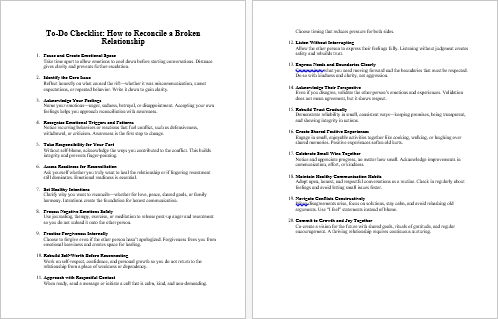
How to Reconcile a Broken Relationship – Checklist
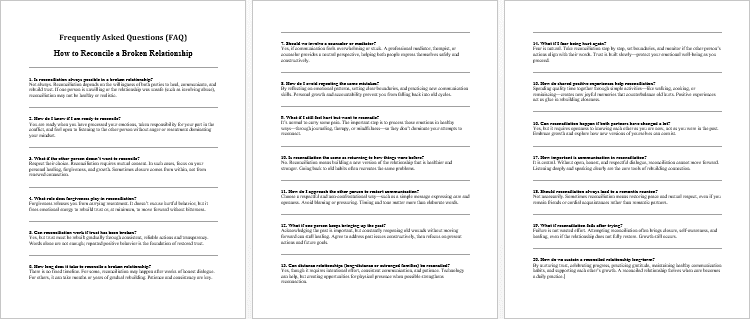
How to Reconcile a Broken Relationship – FAQs
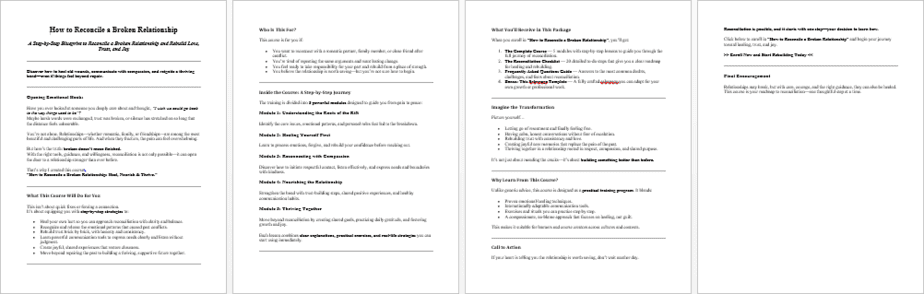
How to Reconcile a Broken Relationship – Salespage Content
Package Details:
Word Count: 30 489 Words
Number of Pages: 128
How to Build Multiple Streams of Income – Bonus Content
Checklist
Word Count: 501 words
FAQs
Word Count: 753 words
Salespage Content
Word Count: 771 words
Total Word Count: 32 514 Words
Your PLR License Terms
PERMISSIONS: What Can You Do With These Materials?
Sell the content basically as it is (with some minor tweaks to make it “yours”).
If you are going to claim copyright to anything created with this content, then you must substantially change at 75% of the content to distinguish yourself from other licensees.
Break up the content into small portions to sell as individual reports for $10-$20 each.
Bundle the content with other existing content to create larger products for $47-$97 each.
Setup your own membership site with the content and generate monthly residual payments!
Take the content and convert it into a multiple-week “eclass” that you charge $297-$497 to access!
Use the content to create a “physical” product that you sell for premium prices!
Convert it to audios, videos, membership site content and more.
Excerpt and / or edit portions of the content to give away for free as blog posts, reports, etc. to use as lead magnets, incentives and more!
Create your own original product from it, set it up at a site and “flip” the site for megabucks!
RESTRICTIONS: What Can’t You Do With These Materials?
To protect the value of these products, you may not pass on the rights to your customers. This means that your customers may not have PLR rights or reprint / resell rights passed on to them.
You may not pass on any kind of licensing (PLR, reprint / resell, etc.) to ANY offer created from ANY PORTION OF this content that would allow additional people to sell or give away any portion of the content contained in this package.
You may not offer 100% commission to affiliates selling your version / copy of this product. The maximum affiliate commission you may pay out for offers created that include parts of this content is 75%.
You are not permitted to give the complete materials away in their current state for free – they must be sold. They must be excerpted and / or edited to be given away, unless otherwise noted. Example: You ARE permitted to excerpt portions of content for blog posts, lead magnets, etc.
You may not add this content to any part of an existing customer order that would not require them to make an additional purchase. (IE You cannot add it to a package, membership site, etc. that customers have ALREADY paid for.)
Share Now!
Latest Products





Free Sales Funnel Builder

Related Products

Popular & Trending



Featured Products