Holistic Healing for Body, Mind, and Spirit PLR Course 33k Words
in Healing PLR , Holistic Healing and Alternative Medicine PLR , PLR eCourses , PLR List Building Reports , Premium PLR , Premium PLR Reports , Premium White Label Brandable PLR Coaching Courses , Private Label Rights Products , Wellness PLRChoose Your Desired Option(s)
has been added to your cart!
have been added to your cart!
#holistichealing #plrcourse #mindbodyspirit #wellnessmarketing #naturalhealth #personalgrowth #plrcontent #spiritualwellness #healthyliving
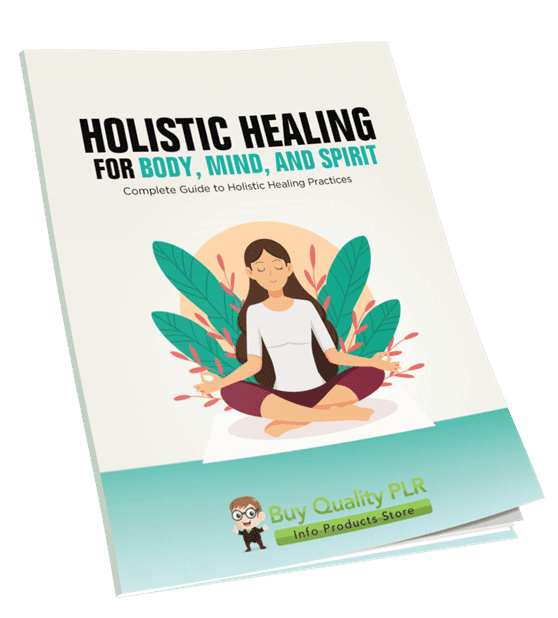
Holistic Healing for Body, Mind, and Spirit PLR Course (33,000 Words)
Complete Guide to Holistic Healing Practices
Are you ready to offer your audience a transformational wellness product that speaks to the growing demand for natural, balanced living?
The Holistic Healing for Body, Mind, and Spirit PLR Course is a powerful, in-depth 33,000-word training program designed to guide learners through a complete journey of holistic wellness. This professionally structured course gives you everything you need to tap into the booming health, self-care, mindfulness, and spiritual growth markets — without starting from scratch.
Whether your audience is seeking stress relief, physical vitality, emotional balance, spiritual connection, or a complete lifestyle transformation, this course delivers practical, easy-to-follow guidance that fits into modern daily life.
If you’re looking for high-value PLR content that positions you as an authority in holistic health while creating powerful income opportunities, this is the product you’ve been waiting for.
Introducing the…
Holistic Healing for Body, Mind, and Spirit
Why Holistic Healing Is a Massive Opportunity
Today’s consumers are overwhelmed, overworked, and overstimulated. They’re looking beyond quick fixes and temporary solutions. They want:
- Natural approaches to wellness
- Sustainable lifestyle practices
- Mind-body balance
- Emotional clarity
- Spiritual connection
- Freedom from constant stress
Holistic health is no longer a niche — it’s a mainstream movement.
From mindfulness apps to yoga studios to organic food brands, the wellness industry continues to grow rapidly. And people are actively searching for structured, step-by-step guidance they can trust.
This course gives you a complete, professionally written framework to meet that demand.
What’s Included in the Holistic Healing for Body, Mind, and Spirit PLR Course?
This is not a short report or surface-level guide.
You receive a 33,000-word, fully developed course organized into five comprehensive modules, each broken into actionable lessons that create a complete transformation experience.
Let’s explore what your customers will receive.
Module 1: Foundations of Holistic Healing
Before healing begins, understanding is essential. This foundational module lays the groundwork for lasting transformation.
Lesson 1: Understanding Holistic Healing
Students learn what holistic healing truly means — integrating body, mind, and spirit rather than treating isolated symptoms. This lesson explains how holistic practices differ from conventional symptom-focused approaches and why addressing the whole person creates sustainable results.
Lesson 2: Core Principles of Holistic Health
Balance. Energy. Self-healing. Personal responsibility.
This lesson teaches the core principles that drive holistic wellness, helping learners understand how natural healing systems support the body’s innate ability to restore itself.
Lesson 3: Creating Your Healing Space
Healing begins with environment.
Students are guided step-by-step to create a calming home space for meditation, relaxation, journaling, or reflection — even in small apartments or busy homes.
Lesson 4: Building a Daily Healing Routine
Consistency creates results.
This lesson walks learners through building simple morning-to-evening rituals that support body, mind, and spirit — without overwhelm.
This module ensures learners feel grounded, confident, and prepared before diving deeper.
Module 2: Healing the Body Naturally
Physical health is the foundation of energy and vitality. This module focuses on nourishing and strengthening the body through natural methods.
Lesson 1: Nourishment with Whole Foods
Students discover how unprocessed, natural foods support healing. The lesson provides practical guidance for creating a personalized nutrition approach based on balance rather than restriction.
Lesson 2: Movement as Medicine
Movement is essential to energy flow.
This lesson introduces yoga, tai chi, stretching, and mindful movement practices that improve flexibility, circulation, and overall vitality.
Lesson 3: Natural Therapies for the Body
Massage. Aromatherapy. Hydrotherapy.
Learners are introduced to simple, beginner-friendly natural therapies they can practice at home safely and effectively.
Lesson 4: Detox and Cleansing Rituals
Gentle detox practices are explained in a balanced, responsible way. Students learn safe methods for supporting the body’s natural detox systems without extreme or dangerous approaches.
This module empowers learners to take charge of their physical wellness naturally.
Module 3: Nurturing the Mind
Mental clarity and emotional balance are essential for complete wellness.
Lesson 1: The Mind-Body Connection
Students explore how thoughts and emotions influence physical health. This lesson bridges science and holistic principles in a way beginners can understand.
Lesson 2: Mindfulness and Meditation Practices
Step-by-step instruction for breathing exercises, meditation basics, and mindfulness techniques that reduce stress and improve focus.
Lesson 3: Stress Release Techniques
Practical tools such as journaling, grounding exercises, and visualization techniques are introduced for everyday stress management.
Lesson 4: Cultivating Positive Thinking
Students learn how to shift limiting beliefs, practice gratitude, and develop empowering thought patterns that support healing and resilience.
This module builds emotional strength and mental calm — key pillars of holistic health.
Module 4: Awakening the Spirit
Spiritual wellness adds depth and meaning to the healing journey.
Lesson 1: Spiritual Healing Principles
Explores how spirituality — regardless of religious background — contributes to overall balance and fulfillment.
Lesson 2: Energy Healing Basics
An introduction to Reiki, chakra balancing, and beginner-friendly energy flow concepts explained in simple, accessible language.
Lesson 3: Connecting with Nature
Grounding practices, outdoor mindfulness, and nature therapy techniques that reconnect learners to the natural world.
Lesson 4: Discovering Your Inner Purpose
Guided exercises to help learners align with their values, discover meaning, and live intentionally.
This module helps learners experience inner peace and deeper purpose.
Module 5: Integrating Holistic Healing into Daily Life
Transformation only lasts if it becomes a lifestyle.
Lesson 1: Designing Your Holistic Lifestyle
Combines body, mind, and spirit practices into a cohesive daily system.
Lesson 2: Building Sustainable Habits
Teaches habit formation strategies to ensure long-term consistency.
Lesson 3: Overcoming Common Challenges
Addresses obstacles such as time constraints, motivation dips, and self-doubt.
Lesson 4: Your Personal Healing Plan
Students create a customized, flexible blueprint for lifelong wellness.
By the end of this course, learners have a practical toolkit they can use for years to come.
Bonus Materials Included
In addition to the 33,000-word course, you also receive:
- Holistic Healing Checklist (719 Words)
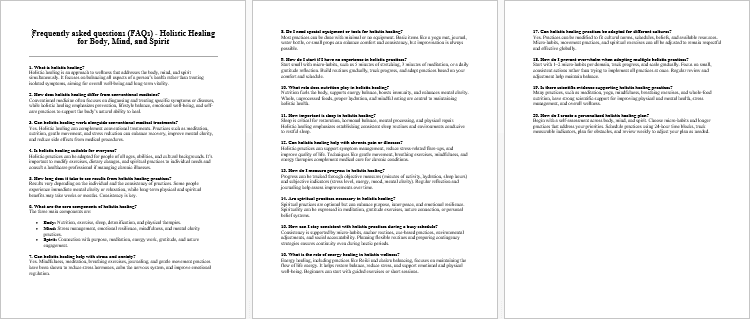
- Holistic Healing FAQs (834 Words)
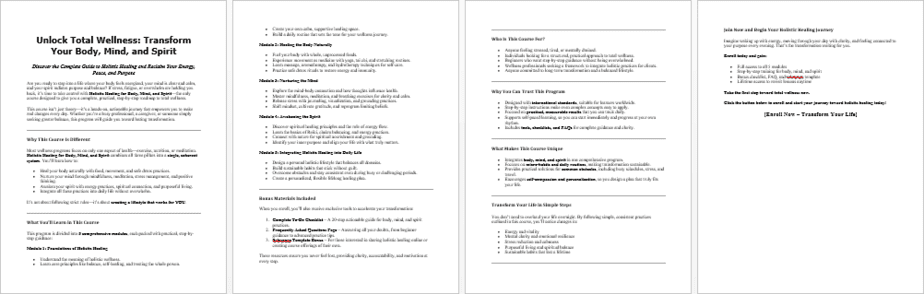
- Holistic Healing Salespage (873 Words)
These assets help you market and position the product quickly and professionally.
Who Is This PLR Course Perfect For?
This content is ideal for:
- Wellness bloggers
- Life coaches
- Yoga instructors
- Spiritual mentors
- Mindfulness educators
- Health influencers
- Self-care brands
- Personal development entrepreneurs
- Membership site owners
- Course creators
If your audience values balance, natural living, emotional wellness, or spiritual growth — this course fits perfectly.
How You Can Use and Profit From This Course
The flexibility of this PLR package opens up numerous income streams.
1. Sell It As-Is (With Minor Branding Tweaks)
Add your branding, edit the introduction, adjust formatting, and launch quickly.
2. Create a Premium Online Course
Break it into weekly modules and turn it into a structured 6–8 week eClass priced at $297–$497.
3. Build a Membership Site
Use each module as monthly content and generate recurring income.
4. Break It Into Mini Products
Divide modules into standalone guides and sell each for $10–$20.
5. Bundle With Other Wellness Content
Combine with yoga guides, meditation programs, or nutrition content to create $47–$97 premium bundles.
6. Convert Into Video or Audio
Record lessons as guided meditations, workshops, or audio courses.
7. Create Physical Products
Turn it into a printed workbook, planner, or self-care journal and sell at premium pricing.
8. Use As Lead Magnets
Excerpt sections to create blog posts, downloadable guides, or webinar content to grow your list.
9. Build and Flip a Wellness Brand
Turn the course into a niche wellness authority site and sell the business for profit.
The opportunities are extensive — limited only by your creativity.
Important Licensing Overview
What You CAN Do:
- Sell the content (with minor tweaks).
- Substantially rewrite (75%+) and claim copyright.
- Break into smaller reports.
- Bundle with other content.
- Create courses, memberships, audio/video products.
- Use excerpts for lead magnets and marketing.
- Sell physical versions.
- Build and flip a brand around it.
What You CANNOT Do:
- Pass PLR or resale rights to customers.
- Transfer licensing rights of any kind.
- Offer 100% affiliate commissions (max 75%).
- Give away the complete materials in current form.
- Add it to existing paid packages without additional purchase.
These restrictions protect product value and ensure long-term profitability.
Why Buy From Buy Quality PLR?
When you purchase from Buy Quality PLR, you receive:
- Professionally structured content
- Logical, engaging lesson flow
- Beginner-friendly explanations
- Market-relevant topics
- Flexible monetization potential
- High word count and depth
- Content ready to customize and launch
This isn’t thin content. It’s substantial, premium material designed to build authority and income.
The Bottom Line
The demand for holistic wellness continues to grow. People are seeking balance. They’re searching for clarity. They want natural solutions that address the whole person.
With the Holistic Healing for Body, Mind, and Spirit PLR Course, you can step confidently into this market with a complete, ready-to-deploy system.
Instead of spending months writing and structuring a course from scratch, you can focus on branding, marketing, and growing your business.
If you’re ready to expand your wellness product line, serve your audience with high-value content, and create new income streams — this course is your next smart investment.
Get the Holistic Healing for Body, Mind, and Spirit PLR Course Today Only at Buy Quality PLR
Build authority. Serve your audience. Create impact.
And turn holistic wellness into a profitable part of your business.
has been added to your cart!
have been added to your cart!
Here A Sample of the Holistic Healing for Body, Mind, and Spirit PLR Course
Module 1: Foundations of Holistic Healing
Start by laying the groundwork—what holistic healing truly means and how to create the right environment for it.
Lesson 1: Understanding Holistic Healing
Topic Focus: Discover the meaning of holistic healing and how it integrates body, mind, and spirit for total well-being.
Introduction to the Lesson
Welcome to the very first lesson of our course, Holistic Healing for Body, Mind, and Spirit. This lesson is designed to help you clearly understand what holistic healing is, why it matters, and how it works as a complete approach to health and wellness.
Most people today are familiar with the idea of physical health: eating well, exercising, and avoiding illness. Some may even practice mindfulness or meditation for mental health. Others may explore spiritual practices for inner peace. But holistic healing goes further—it does not treat these areas as separate. Instead, it sees them as interconnected parts of a whole.
In this lesson, we will:
- Define holistic healing in clear terms.
- Explore its origins and historical context.
- Understand how it integrates body, mind, and spirit.
- Look at key principles that guide holistic health.
- Discuss why holistic healing is important in today’s world.
- Provide step-by-step examples of how to apply holistic thinking in everyday life.
By the end of this session, you will have a strong foundation to build upon as we progress through the course.
Step 1: Defining Holistic Healing
At its core, holistic healing is about viewing a human being as a complete system—a physical body, a thinking mind, and a spiritual essence—each of which is deeply interconnected.
- The physical body represents our structure, organs, cells, and energy systems.
- The mind refers to our thoughts, emotions, and psychological well-being.
- The spirit represents our deeper purpose, values, beliefs, and connection to something beyond ourselves—whether that is community, nature, or the universe.
Holistic healing does not isolate a symptom or focus only on disease. Instead, it asks:
- What is happening in the person’s body?
- What is happening in their thoughts and emotions?
- What is happening in their inner life or sense of purpose?
For example: if someone is suffering from constant headaches, a conventional approach might provide medication for pain relief. A holistic approach, however, goes further. It considers whether the headache is linked to diet, posture, stress, emotional tension, or even an inner conflict in life. By looking at all these aspects together, the healing process becomes more complete and lasting.
Step 2: The Origins of Holistic Healing
Holistic healing is not a new concept. It is rooted in many ancient traditions:
- In Traditional Chinese Medicine (TCM), health is seen as a balance of energy (Qi) flowing through meridians. Acupuncture, herbal remedies, and Tai Chi are used to restore balance.
- In Ayurveda, an ancient Indian system, health is understood as a balance of mind, body, and spirit. Diet, meditation, herbs, and lifestyle adjustments are prescribed based on individual constitution.
- In Greek medicine, Hippocrates—the father of modern medicine—emphasized treating the whole person, not just the disease.
- Indigenous cultures worldwide have also embraced holistic practices, using rituals, herbal medicine, and community support for healing.
What makes holistic healing relevant today is that modern science increasingly supports these ancient ideas. Research now shows how stress affects the immune system, how mindfulness changes brain chemistry, and how social connection improves health outcomes.
Step 3: Integration of Body, Mind, and Spirit
To truly understand holistic healing, we must explore the connection between the three pillars of health.
1. The Body
The body is our foundation. Nutrition, sleep, movement, and physical care are central. When the body is nourished and energized, the mind and spirit also function better.
- Poor diet can affect mood and cause fatigue.
- Lack of sleep can weaken immunity and increase anxiety.
- Regular exercise improves not just muscles but also mental clarity.
2. The Mind
The mind influences how we perceive health and illness. Stress, anxiety, and negative thinking patterns can create physical symptoms, such as high blood pressure, digestive issues, or chronic pain.
Practices like meditation, journaling, and positive affirmations help regulate the mind and improve resilience.
3. The Spirit
The spiritual dimension does not necessarily mean religion. It is about meaning, purpose, values, and a sense of belonging. A strong spiritual foundation can reduce fear, increase inner peace, and provide strength during difficult times.
When body, mind, and spirit are aligned, a person experiences not just the absence of disease, but a state of vitality, clarity, and fulfillment.
Step 4: The Principles of Holistic Healing
Holistic healing is guided by a set of principles. Here are the most important ones:
- The Whole Person is Treated, Not Just Symptoms
A headache is not just about pain in the head; it could be connected to diet, stress, posture, or emotional strain. - Prevention is Better than Cure
Holistic healing emphasizes maintaining balance and preventing illness before it arises, through lifestyle and self-care practices. - The Body Has Natural Healing Abilities
Given the right environment—rest, nutrition, emotional support—the body can often heal itself. - Healing Requires Active Participation
Patients are not passive. They are partners in the healing process, making choices in diet, lifestyle, and mindset. - Balance is Key
Health is not about perfection, but about balance in physical, emotional, mental, and spiritual areas.
Step 5: Why Holistic Healing Matters Today
We live in a world where chronic illness, stress, and mental health issues are widespread. Many people feel disconnected from themselves and overwhelmed by the pace of modern life.
- Rising stress levels: Long working hours, financial pressures, and digital overload increase stress and anxiety.
- Lifestyle-related illnesses: Obesity, diabetes, and heart disease are often linked to lifestyle choices.
- Emotional disconnection: Many people feel isolated or without purpose.
Holistic healing offers solutions by bringing individuals back into alignment. Instead of relying only on medication, it encourages practices like meditation, movement, natural nutrition, and spiritual reflection. It empowers people to take responsibility for their well-being.
Step 6: Practical Applications of Holistic Healing
Now let’s put this into step-by-step practical examples. These examples show how holistic thinking can be applied to everyday situations.
Example 1: Stress Management
- Conventional approach: Prescribe medication for anxiety.
- Holistic approach: Combine breathing exercises, physical activity, herbal teas, journaling, and connecting with supportive friends.
Example 2: Digestive Issues
- Conventional approach: Provide antacids or medications.
- Holistic approach: Evaluate diet, hydration, stress levels, and emotional state. Recommend mindful eating, probiotic-rich foods, and relaxation techniques.
Example 3: Low Energy
- Conventional approach: Caffeine or supplements.
- Holistic approach: Check sleep quality, daily movement, emotional load, and purpose in life. Suggest balanced meals, better sleep hygiene, and uplifting activities.
These applications demonstrate how holistic healing looks beyond symptoms and creates complete solutions.
Step 7: Step-by-Step Guide for Learners
Here is a simple guide learners can follow to begin applying holistic healing in their own lives:
- Self-Observation
Spend a few minutes each day noticing your physical state (energy, tension, pain), mental state (thoughts, stress, focus), and spiritual state (sense of peace, clarity, connection). - Identify Imbalances
Ask yourself: Where do I feel most out of balance—body, mind, or spirit? - Choose One Area to Support
Instead of trying to fix everything, start with one area. For example, if you feel physically drained, focus on improving sleep and nutrition. - Introduce a Gentle Practice
Add one simple practice, such as a short morning meditation, a glass of water before meals, or a five-minute walk outdoors. - Evaluate and Adjust
After a week, notice how the change affects you. Adjust and continue building small steps.
This method is simple yet powerful, because small consistent actions create lasting transformation.
Step 8: Reflection Questions for Learners
To deepen understanding, here are some reflective questions learners can journal about:
- What does “healing” mean to me beyond just physical health?
- Which area of my life feels most in balance right now: body, mind, or spirit?
- Which area feels least in balance?
- What small daily practice can I begin to restore harmony?
Conclusion of Lesson 1
In this first lesson, we have laid the foundation for our journey into holistic healing. You now understand that holistic healing is more than just treating symptoms—it is about nurturing the body, calming the mind, and awakening the spirit in a connected and balanced way.
The key takeaway is this: healing is a journey of integration, not separation. When we honor all parts of ourselves, we create true well-being that lasts.
This foundational understanding will support everything we explore in the coming lessons, from practical healing techniques to spiritual practices and lifestyle integration.
Lesson 2: Core Principles of Holistic Health
Focus: Balance, natural energy, self-healing, and treating the whole person rather than isolated symptoms.
Learning Outcomes
By the end of this lesson, learners will be able to:
- Define balance in a holistic context and identify imbalances across physical, mental, emotional, social, and spiritual domains.
- Explain the concept of natural energy and demonstrate at least two safe, accessible practices to support healthy energy flow.
- Describe self-healing as the body–mind’s innate capacity for regulation and repair, and outline conditions that support it.
- Apply a whole-person lens to simple case scenarios, moving beyond symptom-only thinking to root-pattern exploration.
Instructor Preparation
- A whiteboard or digital board.
- Printable or slide versions of a Balance Wheel (five segments: Body, Mind, Emotions, Relationships/Community, Spirit/Meaning).
- A timer or clock visible to all.
- Quiet space for short experiential practices.
- Optional: yoga mats or chairs for seated practices.
Suggested Timing (60–90 minutes total)
- Orientation and context: 10 minutes
- Principle 1 — Balance: 15–20 minutes
- Principle 2 — Natural Energy: 15–20 minutes
- Principle 3 — Self-Healing: 15–20 minutes
- Principle 4 — Whole-Person Approach: 15–20 minutes
- Review and assessment: 5–10 minutes
Orientation and Context (10 minutes)
Trainer script:
“Welcome back. In this lesson, we are going to establish four core principles that guide holistic practice everywhere: balance, natural energy, self-healing, and the whole-person approach. Think of these as the compass points that help us choose safe, effective, and person-centred practices.”
Activity — Baseline reflection (3 minutes):
Invite learners to write one sentence for each domain: Body, Mind, Emotions, Relationships/Community, Spirit/Meaning. Prompt questions:
- Body: How do you feel physically right now.
- Mind: What is the quality of your attention.
- Emotions: What emotion is most present.
- Relationships/Community: Do you feel connected or isolated today.
- Spirit/Meaning: What gives you a sense of purpose this week.
This short reflection establishes a reference point for later.
Principle 1 — Balance (15–20 minutes)
Definition:
In holistic health, balance is a dynamic state in which the person’s systems interact smoothly. It is not a fixed point. It shifts with the day, season, age, and life context. Balance is assessed across domains rather than judged from a single metric.
Key teaching points:
- Balance is relational. An intense work period may require compensatory rest and social support.
- A person can be physically fit yet emotionally depleted or spiritually disconnected. Holistic practice recognises mixed patterns.
- Restoring balance is incremental. Small, steady adjustments are more sustainable than drastic changes.
Tool — The Balance Wheel (7–10 minutes):
- Present a five-segment wheel: Body, Mind, Emotions, Relationships/Community, Spirit/Meaning.
- Ask learners to rate each segment from 0 to 10 for the last 48 hours.
- Invite them to connect their points to form a shape.
- Discussion prompt: If your wheel were a real wheel, would it roll smoothly. Which segments require gentle support first.
Micro-practice — Two-minute rebalancer:
- 4 cycles of slow nasal breathing (inhale 4 counts, exhale 6 counts).
- Shoulder roll, neck lengthening, and jaw softening.
- Reassess how attention and breathing feel.
Trainer note:
Avoid imposing a standard of perfection. Encourage learners to choose one segment to support for the next 24 hours with a small action, such as hydrating adequately, a 10-minute walk, or a five-minute quiet check-in.
Common misconceptions to address:
- Misconception: Balance means doing everything equally.
Clarification: Balance means appropriate proportion for current circumstances, not equal time or effort. - Misconception: Balance is achieved once and then maintained without change.
Clarification: Life changes; so do needs. Periodic reassessment is expected.
Principle 2 — Natural Energy (15–20 minutes)
Definition:
Natural energy refers to the body–mind’s subtle vitality and functional capacity. Cultural traditions name it differently, but practical focus is universal: posture, breath, circulation, nervous system tone, and attentive presence. The goal is to reduce friction in the system so energy is available for life activities and healing.
Key teaching points:
- Energy is influenced by sleep quality, light exposure, movement, nutrition, hydration, breathing patterns, and emotional climate.
- Over-stimulation and under-recovery reduce available energy.
- Gentle regulation practices are appropriate for most people and can be taught safely with clear boundaries.
Safety boundaries:
- Offer seated options for all practices.
- Avoid holding the breath.
- Encourage self-pacing and consent.
- Remind participants that holistic education complements, not replaces, medical care.
Practice 1 — Posture and breath reset (3–5 minutes):
- Sit or stand with feet grounded, pelvis neutral, spine long, shoulders relaxed.
- Place one hand on the lower ribs and one hand over the upper chest.
- Inhale through the nose as the lower ribs expand slightly in all directions.
- Exhale gently through the nose or relaxed lips; allow the abdomen to soften.
- Complete 6 to 8 slow breaths.
Observation: Many notice warmer hands, calmer thought flow, and improved focus.
Practice 2 — Three-point energy check (3–5 minutes):
- Breath check: Are breaths shallow or smooth.
- Tension scan: Forehead, jaw, shoulders, abdomen, hands. Release unnecessary gripping.
- Attention check: Where is your focus. Return attention to one concrete anchor, such as the feeling of the feet on the floor.
Mini-debrief:
Ask what changed in 2–3 sentences. Link subjective changes to a practical definition of energy: fewer internal obstacles, more coordinated function.
Common misconceptions to address:
- Misconception: Energy work is mystical only.
Clarification: While cultural language varies, practical methods consistently influence breathing mechanics, vagal tone, and attention regulation. - Misconception: More intensity creates more energy.
Clarification: Sustainable energy comes from balanced cycles of activation and recovery.
Principle 3 — Self-Healing (15–20 minutes)
Definition:
Self-healing is the organism’s intrinsic capacity to maintain equilibrium and repair when conditions permit. It is observable in wound healing, immune responses, neuroplastic adaptation, and emotional integration. Holistic practice focuses on creating conditions that allow self-healing to proceed.
Conditions that support self-healing:
- Consistent sleep timing and duration suited to the individual.
- Adequate hydration and nutrient-dense meals.
- Gentle, regular movement to support circulation and lymphatic flow.
- Emotional literacy and safe expression.
- Social connection and supportive relationships.
- Quiet periods for down-regulation of the nervous system.
- Appropriate professional care when indicated.
Guided body scan for self-healing awareness (5–7 minutes):
- Seated or lying down, eyes open or softly closed.
- Scan from crown to feet in segments: head, face, neck, shoulders, arms, chest, abdomen, pelvis, thighs, lower legs, feet.
- At each segment, notice contact with support, temperature, pressure, and any neutral or pleasant sensations.
- If discomfort arises, widen attention to include surrounding areas and the breath rhythm.
- Finish by sensing the whole body as one field.
Debrief:
Ask learners to name one area that surprised them. Emphasise that noticing ease and neutrality is as important as noticing discomfort, because attention to ease helps the nervous system recognise safety, which promotes repair.
Self-healing plan template (4 steps):
- Identify one system needing support this week, for example, sleep.
- Choose one enabling condition, for example, consistent lights-out time.
- Choose one micro-action, for example, reduce bright screen exposure 60 minutes before bed.
- Choose one indicator, for example, waking refreshed, fewer night awakenings.
Common misconceptions to address:
- Misconception: Self-healing means never using modern medicine.
Clarification: Holistic practice is integrative. Professional medical care is welcomed whenever needed. - Misconception: If self-healing is real, results should be immediate.
Clarification: The body–mind often changes gradually. Consistency matters more than intensity.
Principle 4 — Treat the Whole Person, Not Just Symptoms (15–20 minutes)
Definition:
A whole-person approach views health challenges as patterns arising in a context. It considers physical factors, mental narratives, emotional patterns, social conditions, and meaning or purpose. The aim is not to chase each symptom but to understand relationships between factors and support the person’s capacity as a whole.
Framework — The Biopsychosocial-Spiritual Map:
- Biological: sleep, movement, nutrition, medical history.
- Psychological: thoughts, attention style, stress perception.
- Social: relationships, work conditions, housing, community.
- Spiritual/Meaning: values, purpose, practices that foster inner steadiness.
Tool — The Five Whys for root patterns (6–8 minutes):
Select a manageable complaint such as afternoon fatigue. Ask “Why might this be occurring” five times, each answer guiding the next question. Example:
- Why fatigued. Irregular sleep.
- Why irregular sleep. Late screen use.
- Why late screen use. Overwork and evening catch-up.
- Why overwork. Boundary issues with workload.
- Why boundary issues. Fear of disappointing colleagues.
Now you see a pattern that crosses biology, psychology, and social context. Solutions can be layered: sleep hygiene, workload discussion, and a short daily boundary-setting practice.
Case vignette and facilitated mapping (8–10 minutes):
- Vignette: An adult reports frequent tension headaches.
- Small-group task: Map plausible contributing factors in each quadrant, then choose two low-risk, high-benefit supports.
Possible outputs: - Biological: hydration schedule, posture micro-breaks.
- Psychological: 2-minute breathing reset every 90 minutes.
- Social: clearer meeting agendas and shorter sessions.
- Spiritual/Meaning: five minutes of quiet before starting work to set intention.
Common misconceptions to address:
- Misconception: Whole-person means doing everything at once.
Clarification: It means seeing the full picture, then choosing the smallest effective step with the best safety-benefit ratio. - Misconception: If a symptom reduces, the work is complete.
Clarification: Sustained well-being depends on supporting the pattern change and the person’s capacity, not only symptom removal.
Integration Exercise — The Four-Doorway Check-In (8–10 minutes)
Purpose:
Help learners practise moving through all four principles in a single structured check-in.
Steps:
- Balance: Rate Body, Mind, Emotions, Relationships/Community, Spirit/Meaning for today. Identify the lowest domain.
- Natural energy: Perform the three-point energy check and posture-breath reset. Note changes.
- Self-healing: Select one enabling condition to support in the next 24 hours, linked to the lowest domain.
- Whole-person view: Write one sentence that includes biology, psychology, social context, and meaning, for example, “My afternoon fatigue relates to late meals (biology), task switching without breaks (psychology), back-to-back meetings (social), and loss of intention setting (meaning).”
Encourage concise, compassionate language. Emphasise that accurate observation is more useful than self-criticism.
Assessment and Demonstration of Learning (5–10 minutes)
Formative checks during the lesson:
- Ask for one-sentence definitions of each principle in the learners’ own words.
- Observe posture-breath practice for safe pacing and understanding.
- During vignette mapping, circulate and note whether groups identify at least three quadrants.
Quick written quiz (sample items):
- Define balance in a holistic framework and give one reason it changes over time.
- List two everyday factors that influence natural energy.
- Describe self-healing and name two conditions that enable it.
- In one sentence, explain what is meant by treating the whole person.
- Using a simple complaint such as difficulty falling asleep, name one factor in each quadrant that could be explored.
Competency indicators:
- Clear, concise definitions.
- Ability to demonstrate or guide the posture-breath reset safely.
- A self-healing plan that is realistic, measurable, and gentle.
- Case mapping that moves beyond symptom control to context-aware supports.
Inclusive and International Delivery Notes
Language:
- Use plain, concrete terms. Avoid idioms that do not translate directly.
- When introducing cultural terms for energy, present them respectfully and offer functional descriptions in neutral language.
Accessibility:
- Offer seated and standing options for all practices.
- Describe movements verbally and visually.
- Encourage learners to stop immediately if they experience dizziness, pain, or distress.
Cultural sensitivity:
- Avoid assuming religious or spiritual frameworks. Invite learners to define “spirit” or “meaning” in ways that fit their values.
- Recognise that attitudes toward rest, work, and help-seeking vary across cultures. Frame strategies as options, not rules.
Measurement units and signs:
- Use internationally recognised SI units when discussing hydration or environmental factors, for example, litres (L), kilograms (kg), degrees Celsius (°C).
- Use 24-hour time where schedules are mentioned, for example, 22:00 for lights-out.
Scope and ethics:
- This training is educational and not a substitute for professional diagnosis or treatment.
- Encourage participants to consult licensed healthcare professionals for medical concerns.
- Maintain confidentiality in group discussions. Do not solicit private health details in public settings.
Troubleshooting Guide
Issue: Learners report no noticeable change after short practices.
Response: Normalise variability. Emphasise consistency over intensity. Suggest repeating the posture-breath reset 2–3 times a day for one week and tracking subtle indicators such as warmth in hands, ease of attention, or slightly slower breathing rate.
Issue: Learners want a single, definitive cause for complex symptoms.
Response: Reinforce pattern thinking. Use the Five Whys to uncover layers and show how small changes at multiple points create meaningful improvement.
Issue: Time constraints limit practice.
Response: Offer micro-practices of 60–120 seconds that fit between tasks: one slow breath cycle, a brief tension release, a glance away from screens to a distant point to relax eye muscles.
Issue: Skepticism about concepts of energy.
Response: Invite learners to focus on observable functions: breath mechanics, posture alignment, warmth, and attention regulation. Emphasise practical outcomes rather than terminology.
Issue: Over-enthusiasm leading to over-commitment.
Response: Advocate for one change at a time. Ask learners to choose a single enabling condition and one micro-action for 7 days, then reassess.
Lesson Recap
- Balance is dynamic and domain-specific. The Balance Wheel helps visualise where gentle support is most needed.
- Natural energy is practical and influenced by breath, posture, sleep, movement, light, nutrition, and the emotional environment. Simple resets reduce internal friction.
- Self-healing is innate but requires conditions that allow regulation and repair. Small, consistent actions are powerful.
- Whole-person care looks beyond symptoms to patterns across biology, psychology, social context, and meaning, guiding targeted, compassionate support.
Invite learners to keep their Balance Wheel and Four-Doorway Check-In notes for personal reference. Emphasise that these principles are meant to be lived in everyday choices, approached gently, and adapted to each individual’s context.
Lesson 3: Creating Your Healing Space
Focus: Step-by-step guidance to set up a calm, supportive space at home for meditation, relaxation, and self-care.
Learning Outcomes
By the end of this lesson, learners will be able to:
- Understand why a dedicated healing space is essential for holistic well-being.
- Identify the environmental elements—light, sound, air, scent, and order—that influence inner calm.
- Apply practical, step-by-step methods to design a home-based healing space using resources available worldwide.
- Integrate personal meaning and cultural values into the space to enhance comfort and sustainability.
- Establish basic safety, accessibility, and inclusivity considerations in the design of a healing space.
Introduction
The environment in which we live and practice self-care has a profound effect on our ability to rest, focus, and heal. A healing space does not need to be large, expensive, or filled with elaborate objects. It is more about intention and arrangement. When the body senses a consistent, calm environment, it naturally begins to relax. The nervous system quiets, breathing slows, and the mind becomes more receptive to meditation and restorative practices.
This lesson offers step-by-step guidance for creating such a space at home, regardless of budget, culture, or geographic region.
Step 1: Define the Purpose of the Space
Trainer script:
“Before moving furniture or buying objects, it is important to be clear on purpose. Why are you creating this space? Is it primarily for meditation? For journaling? For gentle movement or yoga? Or for simple relaxation at the end of the day?”
Instructions for learners:
- Write a single sentence that defines the primary function of your healing space.
- Add one or two secondary purposes. For example:
- Primary: Daily meditation.
- Secondary: Journaling and short breathing practices.
Rationale:
Clarity of purpose helps avoid clutter and ensures that the space supports the practice consistently rather than becoming a storage corner.
Step 2: Choose the Location
Factors to consider:
- Privacy: A corner where interruptions are minimal.
- Consistency: A place that can remain dedicated rather than being constantly rearranged.
- Accessibility: Easy to reach so that practice becomes a daily habit.
- Safety: Well-ventilated, structurally sound, with safe electrical and fire conditions.
Options for different homes:
- A separate room if available.
- A defined corner of a bedroom or living room.
- A balcony, porch, or sheltered outdoor area if climate permits.
- A portable setup such as a mat and small basket of items, stored and retrieved as needed.
Trainer activity:
Invite learners to draw a simple sketch of their chosen location. Mark basic dimensions in metres or centimetres (SI units).
Step 3: Clear and Prepare the Area
Instructions:
- Remove unnecessary items that do not serve the healing purpose.
- Clean surfaces with water and mild soap or natural cleaners available locally.
- Vacuum or sweep the floor to create a fresh foundation.
Rationale:
Physical clutter often mirrors mental clutter. A clear space supports focus and relaxation.
Reflection question:
“How does the space feel after clearing, even before adding any healing objects?”
Step 4: Light
Light strongly influences mood, circadian rhythms, and the ability to relax.
Options to consider:
- Natural light: Position near a window to benefit from daylight, but add curtains or blinds to soften brightness when needed.
- Artificial light: Use warm-coloured lamps (around 2700–3000 Kelvin) rather than harsh white light.
- Candlelight: Safe, supervised use can create softness, but always consider fire safety and cultural appropriateness.
- Outdoor spaces: Consider time of day when sunlight is gentle, such as early morning or late afternoon.
Trainer demonstration:
Show two pictures: one of a bright overhead light, another of a soft lamp. Ask learners which image they associate with healing.
Step 5: Sound
Sound can either enhance or disturb the healing environment.
Guidelines:
- Reduce noise: Choose a space away from traffic or television.
- Add calming sound: Use soft instrumental music, recordings of nature (water, birds, wind), or simple silence.
- Voice consideration: If chanting, prayer, or affirmations are part of the practice, ensure the space allows comfortable speaking or singing without disturbance.
Micro-practice:
Invite learners to sit quietly for 2 minutes, noticing sounds around them. Ask: Which sounds support calmness, and which distract?
Step 6: Air and Ventilation
Fresh, clean air is essential for relaxation and concentration.
Tips:
- Open windows when possible to allow natural airflow.
- In high-pollution areas, consider an indoor plant that is easy to maintain and suited to the climate.
- Use a simple fan for circulation if the air feels stagnant.
- Maintain a comfortable temperature, around 18–24 °C, adjusted for cultural and personal preferences.
Safety reminder: Avoid burning incense or candles in poorly ventilated spaces.
Step 7: Scent
Scent has a direct impact on the nervous system and emotional states.
Options:
- Natural essential oils in a diffuser.
- Fresh flowers or herbs.
- Mild incense where culturally appropriate.
- Simply the clean scent of fresh air after ventilation.
Trainer note: Emphasise moderation. Overly strong scents can cause headaches or allergies. Always check personal sensitivities and avoid open flames without supervision.
Step 8: Surfaces and Seating
Comfortable, supportive seating encourages longer practice.
Options:
- A yoga mat with cushions.
- A straight-backed chair for those unable to sit on the floor.
- A low stool or meditation bench for spinal alignment.
- A blanket for warmth and softness.
Step-by-step setup:
- Place the mat or rug as the base.
- Add one firm cushion for support.
- Keep a blanket folded nearby.
- Ensure that knees and hips are comfortable if seated on the floor.
Trainer demonstration:
Demonstrate correct alignment of spine, neck, and shoulders when seated.
Step 9: Objects of Meaning
Healing spaces become more powerful when infused with personal or cultural meaning.
Examples:
- A small table or shelf for meaningful objects.
- Photographs, artworks, or symbols that inspire calm or spiritual connection.
- A journal, pen, or book for reflection.
- A plant, stone, or natural object that connects to nature.
Instructions:
Select only a few items to avoid clutter. Each item should serve either functional or symbolic value.
Reflection:
Ask learners: “Which object in your life immediately brings you a sense of peace when you see it? Could it belong in your healing space?”
Step 10: Colour
Colour influences mood and mental focus.
Guidelines:
- Soft, neutral colours such as beige, light blue, green, or earth tones support relaxation.
- Bright accents (for example, a single red cushion) can add vitality but should not dominate.
- Use materials available locally, such as cloth, paint, or even coloured paper to create accents.
Activity:
Provide learners with a colour wheel diagram. Ask them to select two colours they associate with calm and one colour they associate with energy. Invite them to integrate these choices into their healing space.
Step 11: Establish Rituals of Use
The effectiveness of a healing space increases with consistency.
Suggestions for rituals:
- Begin each session by lighting a candle, switching on a soft lamp, or taking three slow breaths.
- End each session by expressing gratitude or closing with a gentle bow.
- Keep a small cloth or cover for the space when not in use, symbolising respect and care.
Trainer explanation: Rituals help signal to the mind and body that the space is for restoration, making the transition smoother each time.
Step 12: Safety and Accessibility
Checklist:
- No loose wires or tripping hazards.
- Fire safety measures in place for candles or incense.
- Accessibility for different body needs: chair option, stable surfaces, good lighting.
- Clear pathways for entry and exit.
- Storage for items to avoid clutter.
Trainer emphasis: A healing space should never create stress due to discomfort or safety risks.
Step 13: Cultural and Personal Adaptation
Healing spaces are deeply personal and must respect cultural values.
Considerations:
- Religious or spiritual objects should align with personal belief and not be imposed.
- Some learners may prefer minimal spaces without symbols.
- Climate influences choices: in hot regions, airy fabrics; in cold regions, insulating materials.
- Financial accessibility: emphasise creativity with local, low-cost items.
Step 14: Daily Maintenance
Instructions:
- Dedicate 2–3 minutes at the end of each use to tidy the space.
- Shake out cushions, fold blankets, wipe surfaces.
- Replace items to original positions.
Rationale: Consistent care keeps the space welcoming and signals self-respect.
Step 15: Reflection and Personalisation
Invite learners to sit in their completed space for 5 minutes. Ask:
- How does my breathing feel here compared to elsewhere in the home?
- Which sensory elements are most supportive?
- What would I like to add or remove after one week of use?
Encourage keeping a short journal to record impressions after each session.
Integration Exercise
The Five-Sense Scan in the Healing Space (5 minutes):
- Sight: Notice colours, shapes, and light. Ask: Do they support calm?
- Sound: Listen for supportive or distracting sounds. Adjust as needed.
- Smell: Notice any scent. Is it subtle and pleasant?
- Touch: Feel the texture of the seat, cushion, or blanket. Is it comfortable?
- Air/Space: Sense the openness or closeness of the area. Does it feel safe?
This scan helps learners fine-tune their environment with awareness.
Assessment and Demonstration of Learning
Formative activities:
- Sketch of proposed space with notes on purpose, light, and seating.
- Written reflection: “What object will I place in my space, and why?”
- Group sharing: Each learner describes one sensory adjustment they will make.
Competency indicators:
- Ability to define purpose clearly.
- Demonstrated knowledge of environmental factors (light, sound, air, scent, colour).
- Safe, accessible arrangement suited to personal and cultural context.
Lesson Recap
- A healing space is less about luxury and more about intention, simplicity, and consistency.
- Clear purpose guides design.
- Elements of environment—light, sound, air, scent, colour—shape mood and nervous system response.
- Seating, meaningful objects, and rituals add comfort and depth.
- Safety, accessibility, and cultural sensitivity ensure the space is welcoming for all.
- Daily care and personal reflection strengthen the healing energy of the space.
We’re also giving these extra bonuses
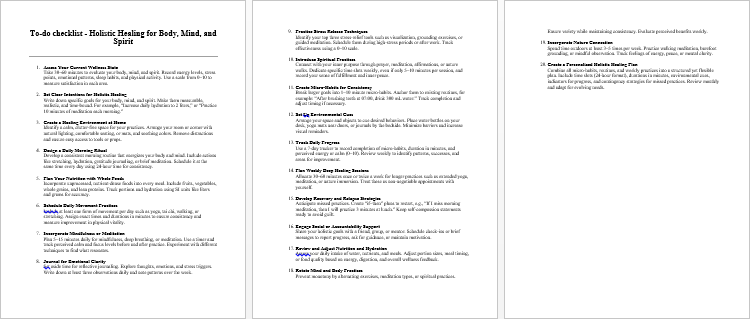
Holistic Healing for Body, Mind, and Spirit – Checklist
Holistic Healing for Body, Mind, and Spirit – FAQs
Holistic Healing for Body, Mind, and Spirit – Salespage Content
Package Details:
Word Count: 31 056 Words
Number of Pages: 136
Holistic Healing for Body, Mind, and Spirit – Bonus Content
Checklist
Word Count: 719 words
FAQs
Word Count: 834 words
Salespage Content
Word Count: 873 words
Total Word Count: 33 482 Words
Your PLR License Terms
PERMISSIONS: What Can You Do With These Materials?
Sell the content basically as it is (with some minor tweaks to make it “yours”).
If you are going to claim copyright to anything created with this content, then you must substantially change at 75% of the content to distinguish yourself from other licensees.
Break up the content into small portions to sell as individual reports for $10-$20 each.
Bundle the content with other existing content to create larger products for $47-$97 each.
Setup your own membership site with the content and generate monthly residual payments!
Take the content and convert it into a multiple-week “eclass” that you charge $297-$497 to access!
Use the content to create a “physical” product that you sell for premium prices!
Convert it to audios, videos, membership site content and more.
Excerpt and / or edit portions of the content to give away for free as blog posts, reports, etc. to use as lead magnets, incentives and more!
Create your own original product from it, set it up at a site and “flip” the site for megabucks!
RESTRICTIONS: What Can’t You Do With These Materials?
To protect the value of these products, you may not pass on the rights to your customers. This means that your customers may not have PLR rights or reprint / resell rights passed on to them.
You may not pass on any kind of licensing (PLR, reprint / resell, etc.) to ANY offer created from ANY PORTION OF this content that would allow additional people to sell or give away any portion of the content contained in this package.
You may not offer 100% commission to affiliates selling your version / copy of this product. The maximum affiliate commission you may pay out for offers created that include parts of this content is 75%.
You are not permitted to give the complete materials away in their current state for free – they must be sold. They must be excerpted and / or edited to be given away, unless otherwise noted. Example: You ARE permitted to excerpt portions of content for blog posts, lead magnets, etc.
You may not add this content to any part of an existing customer order that would not require them to make an additional purchase. (IE You cannot add it to a package, membership site, etc. that customers have ALREADY paid for.)
Share Now!
Latest Products

Free Sales Funnel Builder

Related Products

Popular & Trending

Featured Products