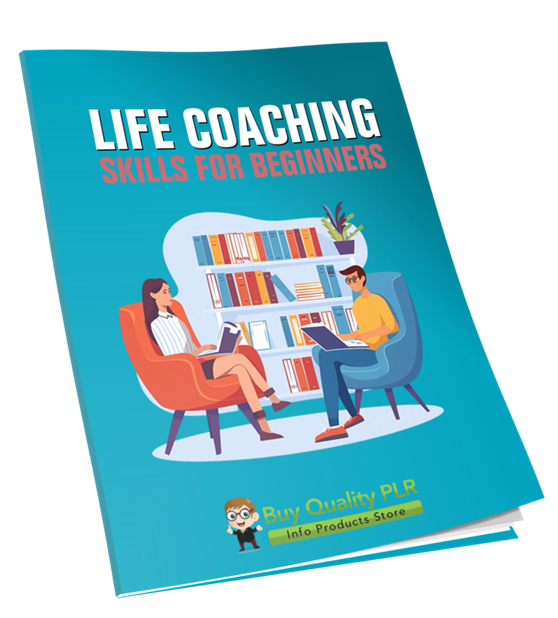
Life Coaching Skills for Beginners PLR Course 34k Words
in Business Coaching PLR , Life Coaching PLR , PLR eCourses , PLR List Building Reports , Premium PLR , Premium PLR Reports , Premium White Label Brandable PLR Coaching Courses , Private Label Rights Products , Self Improvement PLRChoose Your Desired Option(s)
has been added to your cart!
have been added to your cart!
lifecoaching #plrcourse #coachingskills #personaldevelopment #mindsetgrowth #wellnessmarketing #plrcontent #coachingbusiness #selfimprovement
Life Coaching Skills for Beginners PLR Course – 34,000 Words
Start Your Life Coaching Journey Today and Transform Lives
Are you ready to become a confident life coach?
The Life Coaching Skills for Beginners PLR Course is designed for anyone who wants to learn the fundamentals of life coaching, develop essential skills, and start helping others achieve their goals.
With 34,000 words of professionally written, ready-to-use content, this course is perfect for coaches, trainers, educators, and PLR resellers who want to offer high-value training in the life coaching niche.
Whether your audience is new to coaching or looking for a structured path to start their journey, this course provides step-by-step guidance, practical exercises, and real-world examples to ensure success.
Introducing the…
Life Coaching Skills for Beginners
Why Life Coaching Skills for Beginners is a Must-Have
Many beginners struggle with:
- Understanding what life coaching is and how it differs from therapy
- Building core coaching skills like listening, questioning, and goal setting
- Guiding clients effectively using practical tools and techniques
- Starting and managing a life coaching practice
- Growing as a coach with confidence and professionalism
This course solves all these challenges, giving learners a complete roadmap to start their life coaching career today.
What’s Inside the Course
The course is structured into five comprehensive modules, each with four detailed lessons, gradually taking learners from beginner concepts to professional coaching practice.
Module 1: Introduction to Life Coaching
Objective: Understand what life coaching is, who can benefit, and how to set yourself up for success.
- Lesson 1: What is Life Coaching?
Learn how life coaching differs from therapy, mentoring, and consulting. - Lesson 2: The Role of a Life Coach
Understand the mindset, responsibilities, and skills needed to guide clients effectively. - Lesson 3: Benefits of Life Coaching
Discover how coaching positively transforms clients’ lives and helps them achieve goals. - Lesson 4: Getting Started as a Beginner
Explore initial steps to enter life coaching and set realistic expectations for your journey.
Module 2: Core Life Coaching Skills
Objective: Build essential skills every coach needs to succeed.
- Lesson 1: Active Listening
Master the art of listening deeply and noticing verbal and non-verbal cues. - Lesson 2: Powerful Questioning
Learn to ask questions that inspire reflection and uncover insights. - Lesson 3: Effective Communication
Develop empathetic and clear communication to connect with clients. - Lesson 4: Goal Setting and Action Planning
Help clients define meaningful goals and create actionable plans for success.
Module 3: Coaching Techniques and Tools
Objective: Familiarize learners with practical coaching methods for real-life sessions.
- Lesson 1: The GROW Model
Guide sessions using the Goal, Reality, Options, Way forward framework. - Lesson 2: Visualization and Mind Mapping
Use visual tools to clarify goals, inspire action, and make decisions. - Lesson 3: Motivational Techniques
Learn strategies to empower clients and maintain consistent progress. - Lesson 4: Overcoming Obstacles
Support clients in managing challenges and staying on track toward their goals.
Module 4: Building Your Coaching Practice
Objective: Set up your practice confidently, ethically, and successfully.
- Lesson 1: Defining Your Niche
Identify your ideal clients and create a niche that aligns with your strengths. - Lesson 2: Structuring Your Coaching Sessions
Design organized, productive, and engaging coaching sessions. - Lesson 3: Ethical Guidelines and Boundaries
Maintain ethics, confidentiality, and professional boundaries in your practice. - Lesson 4: Starting Your Coaching Business
Learn marketing, client management, and practical steps to launch your practice.
Module 5: Practicing and Growing as a Life Coach
Objective: Gain confidence, practice your skills, and plan for ongoing growth.
- Lesson 1: Practicing with Real Clients
Tips for finding clients, receiving feedback, and gaining hands-on experience. - Lesson 2: Handling Challenging Situations
Strategies for managing difficult clients and unexpected scenarios. - Lesson 3: Reflecting and Improving Your Skills
Self-assessment, mentorship, and continuous improvement techniques. - Lesson 4: Planning Your Next Steps
Create a personal roadmap to grow your coaching career and set long-term goals.
Bonus Materials
This PLR course includes ready-to-use bonuses to simplify marketing, teaching, and selling:
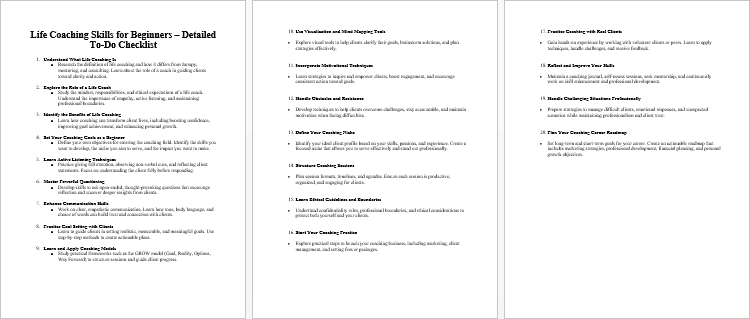
- Checklist – 528 Words: Step-by-step summary to reinforce learning.
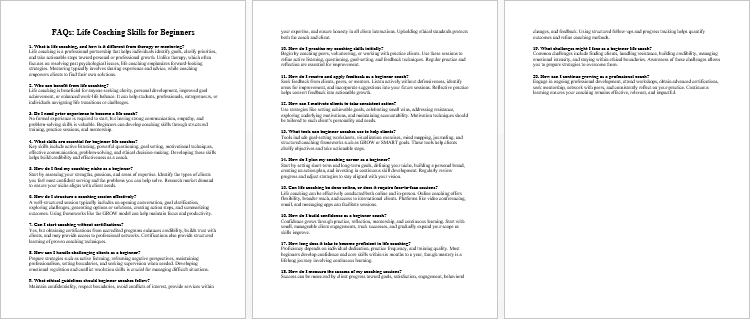
- FAQs – 842 Words: Answers to common questions about life coaching for beginners.
- Salespage – 853 Words: Ready-made, high-converting sales copy for your website or promotions.
Who Can Benefit from This PLR Course
- Aspiring Life Coaches: Learn the fundamentals and get practical coaching skills.
- Coaching Mentors: Provide structured training to new coaches or clients.
- Corporate Trainers & Educators: Add life coaching skills to personal development programs.
- PLR Resellers: Rebrand, sell, or bundle for immediate profit.
- Personal Development Enthusiasts: Gain skills to help yourself and others achieve goals.
How to Use and Profit from This Course
- Sell as a Complete Course: Offer the full program online for $297–$497.
- Break Into Reports or Guides: Sell individual modules or lessons for $10–$20 each.
- Create Bundles: Combine with other coaching or personal development PLR content for $47–$97.
- Launch Multi-Week E-Classes: Build a 4–6 week coaching program using the course.
- Membership Sites: Provide weekly coaching lessons or exercises to paying members.
- Convert to Physical Products: Turn it into workbooks, journals, or guides.
- Lead Magnets & Email Campaigns: Use excerpts for blog posts, free guides, or opt-ins.
- Flip a Coaching Website: Build a niche site around the course and sell it as a complete package.
Licensing Terms
Permissions – What You Can Do:
- Sell as-is or with minor edits.
- Claim copyright if 75%+ of content is rewritten.
- Split content into smaller guides, modules, or reports.
- Bundle with other PLR products.
- Use excerpts for blogs, emails, or lead magnets.
Restrictions – What You Cannot Do:
- Pass PLR rights to your customers.
- Offer 100% affiliate commissions (max 75%).
- Give away the full course for free.
- Add to existing customer orders without requiring additional purchase.
Why Buy This PLR Course from Buy Quality PLR?
- Professionally written 34,000-word course ready for resale or teaching.
- Step-by-step modules covering all essential life coaching skills.
- Includes checklist, FAQs, and sales page for fast marketing and sales.
- Save months of research, writing, and content creation.
- Monetize immediately via digital products, workshops, e-classes, membership sites, or physical products.
- Evergreen niche: life coaching and personal development with high demand.
Bottom Line
The Life Coaching Skills for Beginners PLR Course is a turnkey solution for:
- Helping beginners gain confidence as life coaches
- Teaching practical coaching techniques and tools
- Launching or expanding a coaching business
- Monetizing high-value, ready-to-use content quickly and effectively
Give your audience the skills they need to start coaching confidently—and give yourself a ready-made product that sells in a thriving niche.
has been added to your cart!
have been added to your cart!
Here A Sample of the Life Coaching Skills for Beginners PLR Course
Welcome to your first step toward becoming a confident life coach! This course is designed for beginners who want to understand the fundamentals of life coaching, develop essential skills, and start helping others achieve their goals. By the end of this course, you’ll have a clear roadmap, practical skills, and the confidence to start your life coaching journey today.
Module 1: Introduction to Life Coaching
Objective: Understand what life coaching is, who can benefit from it, and how to set yourself up for success.
Lesson 1: What is Life Coaching?
Introduction
Welcome to the first lesson of your life coaching journey. At this stage, your goal is to gain a thorough understanding of what life coaching really is. Life coaching is often misunderstood because it is a relatively new profession compared to fields like therapy, consulting, or mentoring. To become an effective life coach, it is essential to understand not only the definition of life coaching but also the principles that distinguish it from other helping professions.
Life coaching is a structured, goal-oriented process where a trained professional partners with clients to help them achieve personal or professional goals. Unlike therapy, which focuses on healing emotional wounds, or consulting, which provides expert solutions, life coaching is a collaborative process where the client is guided to find their own answers and strategies for success.
This lesson will provide you with an in-depth understanding of life coaching, explain its unique features, and guide you to start thinking like a professional life coach.
Step 1: Understanding the Definition of Life Coaching
To begin, let’s define life coaching. A simple definition is:
Life coaching is a professional partnership that helps individuals clarify their goals, identify obstacles, and take actionable steps to achieve desired outcomes in their personal or professional lives.
Breaking this down, life coaching includes:
- Partnership: Life coaching is a collaborative relationship. You are not dictating or advising; instead, you are working alongside your client. Your role is to facilitate their growth, ask powerful questions, and help them uncover solutions.
- Goal Clarification: People often come to coaching with a desire to improve some aspect of their life but may not know exactly what they want. Life coaching helps clients gain clarity and define specific, actionable goals.
- Action-Oriented Process: Life coaching is not just about talking; it is about taking action. Coaches guide clients to create realistic plans, track progress, and hold themselves accountable for achieving outcomes.
- Personal Growth and Transformation: The ultimate purpose of life coaching is to empower clients to transform their lives, develop self-awareness, and build confidence to navigate challenges independently.
At this stage, reflect on this definition and consider how it aligns with your own vision as a future life coach. Ask yourself: How do you want to help people? What aspects of personal or professional growth are most important to you?
Step 2: Differentiating Life Coaching from Therapy, Mentoring, and Consulting
One of the most important aspects of being a successful life coach is understanding what life coaching is not. Many beginners confuse life coaching with therapy, mentoring, or consulting. Let’s explore the differences:
a) Life Coaching vs Therapy
- Therapy focuses on healing past emotional trauma, addressing mental health issues, and resolving psychological problems.
- Life Coaching focuses on moving forward, setting goals, and achieving growth in various life areas.
- While therapy is often retrospective, examining past experiences to heal wounds, coaching is future-oriented, emphasizing action and results.
- Coaches do not diagnose mental health conditions or provide clinical interventions.
Example:
- A client struggling with low confidence due to past experiences may see a therapist for emotional healing, but they may seek a life coach to develop strategies to pursue a new career confidently.
b) Life Coaching vs Mentoring
- Mentoring involves sharing experience, knowledge, or guidance from someone who has already achieved success in a specific field.
- Life Coaching does not require the coach to have lived the exact experiences of the client. Instead, it focuses on guiding the client to find their own path.
- Mentoring is advice-driven, whereas coaching is question-driven and client-centered.
Example:
- A mentor might say, “Here’s how I built my business,” whereas a life coach would ask, “What steps can you take to build a business that aligns with your strengths and values?”
c) Life Coaching vs Consulting
- Consulting involves offering professional advice and solutions based on expertise.
- Life Coaching facilitates the client’s own problem-solving and decision-making process rather than giving direct solutions.
- Coaches empower clients to develop critical thinking, resilience, and self-motivation.
Example:
- A consultant may design a marketing plan for a client, but a life coach would help the client identify goals and explore strategies for personal growth, accountability, and confidence in executing their plan.
Understanding these distinctions is crucial. It ensures you maintain professional boundaries and clarity about your role, which builds trust and credibility with clients.
Step 3: Exploring Who Can Benefit from Life Coaching
Life coaching is versatile and can benefit a wide range of individuals, including those who want to improve their personal life, professional career, health, relationships, or overall well-being. Some typical categories include:
- Individuals Seeking Personal Development:
- People who want to gain self-awareness, confidence, or emotional resilience.
- Career-Oriented Clients:
- Professionals looking for career advancement, leadership growth, or transition guidance.
- Entrepreneurs and Business Owners:
- Individuals wanting to set goals, enhance productivity, and achieve business growth.
- People Facing Life Transitions:
- Individuals experiencing major life changes, such as relocation, retirement, or relationship changes.
- Goal-Oriented Individuals:
- Clients who have dreams and aspirations but struggle with planning, accountability, or motivation.
By understanding the types of clients who can benefit from coaching, you can start thinking about your target audience, which is an important step in establishing your practice later on.
Step 4: The Core Principles of Life Coaching
To be an effective life coach, it is important to embrace some foundational principles that guide the coaching process:
- Client-Centered Approach:
- Focus on the client’s goals, experiences, and perspective. The client is the expert on their own life.
- Non-Judgmental Mindset:
- Create a safe, supportive environment where clients feel comfortable sharing their thoughts and aspirations.
- Empowerment Over Advice:
- Encourage clients to take ownership of their decisions rather than telling them what to do.
- Action and Accountability:
- Coaching is effective when clients take actionable steps and are held accountable in a supportive manner.
- Confidentiality and Trust:
- Maintain confidentiality to build a trusting relationship essential for open and honest communication.
Step 5: Starting Your Life Coaching Journey Today
Even as a beginner, you can begin practicing the mindset and skills of a life coach immediately. Here is a step-by-step approach:
- Reflect on Your Purpose:
- Identify why you want to become a life coach and what areas you feel passionate about helping others.
- Learn Actively:
- Explore resources, courses, and case studies about life coaching. Observe how experienced coaches interact with clients.
- Practice Self-Awareness:
- Cultivate awareness of your own thoughts, emotions, and behaviors. A coach’s ability to guide others is enhanced by their own self-awareness.
- Engage in Observational Practice:
- Watch recorded coaching sessions or participate in peer coaching exercises. Note the techniques, questions, and structures used.
- Start Small:
- Begin with friends, colleagues, or volunteer clients to practice listening, questioning, and goal-setting skills.
- Set Personal Goals:
- Treat your coaching journey like your own personal development project. Define what success looks like for you as a beginner coach.
By following these steps, you begin to embody the mindset of a life coach while still learning the craft. Remember, coaching is a journey, and confidence grows with consistent practice.
Step 6: Practical Exercises for This Lesson
To internalize the concepts of life coaching, try the following exercises:
- Define Life Coaching in Your Own Words:
- Write a paragraph summarizing your understanding of life coaching and how it differs from therapy, mentoring, or consulting.
- Identify Potential Clients:
- List five types of people who could benefit from life coaching. For each, note a goal or challenge they might have.
- Self-Reflection Exercise:
- Reflect on your motivations for becoming a life coach. Write down your top three reasons and how they align with your values.
- Observation Exercise:
- Watch a recorded coaching session online. Take notes on the questions asked, the structure of the session, and how the coach engages the client.
- Practice Active Listening:
- Have a conversation with a friend or family member about a goal they have. Practice listening fully without interrupting and summarize their goals back to them.
These exercises will help you start thinking like a coach while developing foundational skills that are essential for success.
Conclusion
By completing this lesson, you now have a clear understanding of:
- What life coaching is and what it is not
- How life coaching differs from therapy, mentoring, and consulting
- Who can benefit from life coaching
- The foundational principles that guide coaching practice
- Initial steps to start your own life coaching journey today
This understanding is the first building block in your coaching journey. The clarity you gain here will set the tone for the practical skills and techniques you will learn in the upcoming lessons.
Remember, the journey of becoming a life coach is about continuous learning, practice, and personal growth. With the right mindset, dedication, and consistency, you can begin helping others create meaningful change in their lives, starting today.
Lesson 2: The Role of a Life Coach
Introduction
Welcome to the second lesson in Module 1 of your life coaching course. Now that you have a solid understanding of what life coaching is and how it differs from therapy, mentoring, or consulting, it’s time to dive deeper into the role of a life coach.
The role of a life coach is multi-faceted and extends far beyond simply giving advice. A life coach is a facilitator, motivator, accountability partner, and guide who empowers clients to achieve their goals, unlock their potential, and create meaningful change in their lives. Understanding the responsibilities and mindset of a life coach is critical for developing the confidence and competence required to start your coaching practice successfully.
This lesson will provide step-by-step guidance on the core responsibilities, the mindset required, and the practical actions you need to take to fulfill your role effectively. By the end of this lesson, you will have a clear understanding of what it truly means to be a life coach.
Step 1: Understanding the Core Purpose of a Life Coach
The first step in understanding your role as a life coach is recognizing your primary purpose. Your role is not to solve your client’s problems, tell them what to do, or provide ready-made solutions. Instead, your purpose is to empower clients to discover their own solutions.
Key aspects of this purpose include:
- Facilitating Self-Discovery:
- Life coaches help clients gain clarity about their goals, values, strengths, and challenges. By asking powerful questions and listening actively, you guide clients to understand themselves better.
- Encouraging Action:
- Coaches help clients bridge the gap between insight and action. Your role involves helping clients create actionable steps toward their goals and holding them accountable for follow-through.
- Fostering Growth:
- Life coaching supports personal and professional growth. You encourage clients to step out of their comfort zones, embrace challenges, and build confidence.
- Supporting Mindset Transformation:
- A critical function of a coach is to help clients develop empowering beliefs, overcome limiting thoughts, and maintain a positive, solution-focused mindset.
By focusing on empowerment rather than instruction, you ensure clients feel ownership of their decisions, which increases motivation and long-term success.
Step 2: Key Responsibilities of a Life Coach
Life coaching involves a range of responsibilities that go beyond a single session. Let’s break these down into actionable areas:
a) Active Listening and Observation
- One of the most important responsibilities of a life coach is to listen attentively. This goes beyond hearing words; it involves noticing tone, body language, and emotional cues.
- Active listening allows you to understand clients’ unspoken concerns and identify patterns that may be holding them back.
- Practical approach: During sessions, focus entirely on the client without distractions. Reflect back what you hear to confirm understanding.
b) Asking Powerful Questions
- Asking the right questions is a core responsibility of a life coach. Powerful questions inspire reflection, encourage new perspectives, and help clients uncover insights themselves.
- Examples of powerful coaching questions include:
- “What would your ideal life look like in five years?”
- “What’s preventing you from taking the next step?”
- “How would achieving this goal change your life?”
- Effective questioning creates awareness, encourages exploration, and supports decision-making.
c) Providing Accountability and Support
- Clients often struggle to follow through on their goals. Your role includes helping clients create action plans and holding them accountable in a supportive, non-judgmental way.
- Accountability involves: setting clear milestones, reviewing progress regularly, celebrating achievements, and helping clients overcome obstacles.
d) Maintaining Professional Boundaries
- Life coaches are partners, not friends or therapists. Maintaining professional boundaries ensures that coaching remains effective and ethical.
- Boundaries include: keeping sessions structured, avoiding giving personal advice, respecting client confidentiality, and not diagnosing mental health issues.
e) Encouraging Self-Reflection and Insight
- Life coaches guide clients to explore their thoughts, emotions, and behaviors. Encouraging self-reflection allows clients to develop self-awareness and recognize patterns that may be limiting their growth.
- Techniques may include journaling exercises, visualization practices, or guided questioning during sessions.
f) Continuous Learning and Self-Improvement
- Life coaches must model lifelong learning and personal growth. To guide clients effectively, you should continue developing your coaching skills, emotional intelligence, and knowledge of coaching tools and methodologies.
Step 3: The Mindset of a Life Coach
Having the right mindset is as critical as having technical coaching skills. A successful life coach embodies certain qualities and attitudes that empower clients and maintain professional integrity.
1. Client-Centered Mindset
- Focus on the client’s goals and experiences rather than your own opinions or solutions.
- Understand that each client is unique; there is no one-size-fits-all approach.
2. Empathy and Compassion
- A good life coach genuinely cares about clients’ well-being and demonstrates understanding without judgment.
- Empathy allows clients to feel heard and supported, which builds trust and encourages open communication.
3. Patience and Persistence
- Change takes time. Clients may experience setbacks, doubts, or resistance. As a coach, patience and persistence are vital to guide them consistently without frustration or judgment.
4. Curiosity and Open-Mindedness
- Life coaches maintain a curious mindset, asking questions and exploring possibilities rather than making assumptions.
- Open-mindedness helps you adapt to each client’s unique situation and encourages creative problem-solving.
5. Confidence and Integrity
- Confidence in your skills and knowledge instills trust, while integrity ensures that your coaching practice remains ethical and professional.
- This mindset allows you to navigate challenging conversations and maintain professionalism even when clients face difficult issues.
Step 4: Core Skills That Define Your Role
The following skills are essential for fulfilling your role effectively:
- Active Listening Skills:
- Fully concentrate, understand, and respond thoughtfully. Avoid interrupting and focus on understanding the client’s perspective.
- Questioning Skills:
- Master the art of asking open-ended, thought-provoking questions that guide clients toward self-discovery.
- Communication Skills:
- Speak clearly, empathetically, and confidently. Use language that empowers rather than criticizes.
- Observation and Perception:
- Notice verbal and non-verbal cues, emotions, and patterns in behavior that may indicate underlying challenges or beliefs.
- Goal-Setting and Planning Skills:
- Help clients set SMART (Specific, Measurable, Achievable, Relevant, Time-bound) goals and create actionable steps toward achievement.
- Accountability Skills:
- Monitor client progress and provide constructive feedback in a supportive, motivating way.
Developing these skills ensures that you can guide clients effectively while maintaining trust, respect, and motivation.
Step 5: How Life Coaches Support Transformation
Life coaching is transformational because it helps clients move from awareness to action. Your role is to:
- Identify Limiting Beliefs:
- Help clients uncover mental blocks, fears, or self-doubt that may be preventing progress.
- Facilitate Clarity and Focus:
- Assist clients in prioritizing goals and understanding what matters most to them.
- Encourage Action and Accountability:
- Support clients in taking tangible steps toward achieving their goals, tracking progress, and adjusting strategies as needed.
- Celebrate Achievements:
- Recognize and celebrate small and big wins, reinforcing motivation and confidence.
- Build Resilience and Confidence:
- Equip clients with tools to manage challenges, overcome setbacks, and maintain momentum toward long-term goals.
Through these methods, clients experience meaningful growth while gaining skills, confidence, and clarity to navigate their personal and professional lives.
Step 6: Practical Exercises for Understanding Your Role
To internalize your understanding of the life coach’s role, complete the following exercises:
- Self-Reflection:
- Write down your personal motivations for becoming a life coach. Consider how your skills and experiences align with this purpose.
- Role Analysis:
- List the responsibilities of a life coach in your own words. Include at least five key functions you think are most important.
- Mindset Practice:
- Reflect on the qualities you currently have and those you need to develop (e.g., patience, empathy, curiosity). Create a personal growth plan to strengthen these qualities.
- Observation Exercise:
- Watch a coaching session online or in person. Take notes on how the coach demonstrates active listening, questioning, and accountability. Identify at least three techniques you can apply in your practice.
- Simulation Exercise:
- Pair up with a peer or friend. Take turns being the coach and the client. Practice asking open-ended questions, listening actively, and summarizing insights.
These exercises help you internalize the role of a life coach while building confidence and practical experience.
Conclusion
By completing this lesson, you now understand:
- The primary purpose of a life coach and the empowerment-focused approach
- Key responsibilities, including active listening, questioning, accountability, and professional boundaries
- The mindset qualities essential for effective coaching, such as empathy, patience, curiosity, and integrity
- Core skills that support your role as a life coach
- How life coaches facilitate transformation and growth for clients
- Practical exercises to strengthen understanding and prepare for real-life coaching
Understanding the role of a life coach lays the foundation for your journey. With clarity on your responsibilities and the mindset required, you are better equipped to guide clients effectively and confidently. Remember, coaching is not about providing answers but about facilitating insight, action, and growth.
Lesson 3: Benefits of Life Coaching
Introduction
Welcome to Lesson 3 of Module 1. Now that you understand what life coaching is and the role a life coach plays, it is time to explore the benefits of life coaching. Understanding the positive impact of coaching is critical for both your professional development and your ability to communicate its value to prospective clients.
Life coaching is a transformative process. It empowers individuals to achieve their goals, improve self-awareness, and unlock potential in ways that can profoundly enhance personal and professional life. The benefits extend far beyond completing specific objectives—they encompass long-term growth, resilience, confidence, and fulfillment.
In this lesson, you will learn about the multifaceted benefits of life coaching, why individuals seek coaching, and how these benefits translate into lasting change.
Step 1: Understanding the Transformational Nature of Life Coaching
Life coaching is fundamentally about transformation. Unlike consulting or mentoring, which often focus on external guidance, coaching emphasizes internal growth. A skilled life coach helps clients uncover their strengths, recognize limiting beliefs, and develop actionable strategies for success.
Key aspects of transformational coaching include:
- Self-Awareness:
- Coaching helps clients gain a deeper understanding of themselves—their values, motivations, emotions, and behavioral patterns. Increased self-awareness is the foundation for personal growth and meaningful change.
- Goal Achievement:
- Clients learn to set realistic, meaningful goals and take consistent steps toward achieving them. Life coaching provides accountability, structure, and encouragement to turn aspirations into reality.
- Empowerment:
- Through coaching, clients develop confidence in their abilities and decisions. They move from dependency on external advice to self-reliance and empowered problem-solving.
- Long-Term Behavior Change:
- Coaching encourages clients to adopt new habits, perspectives, and strategies that have a lasting positive impact on their personal and professional lives.
By understanding these elements, you can clearly articulate to clients and stakeholders the value that life coaching provides, not just as a short-term solution, but as a tool for long-term growth.
Step 2: Personal Benefits of Life Coaching
Life coaching benefits individuals in many areas of life. Let’s explore these in detail:
a) Clarity and Focus
- Many clients seek coaching because they feel stuck or uncertain. A life coach helps them define their goals, prioritize tasks, and focus on what truly matters.
- Practical example: A client unsure about career direction may discover through coaching that their strengths align with entrepreneurship rather than corporate roles.
b) Increased Confidence
- Coaching helps clients recognize their strengths and achievements, which builds self-esteem and confidence.
- Clients learn to trust their decisions and take action without excessive fear of failure.
c) Enhanced Decision-Making
- Coaching improves problem-solving and decision-making skills by encouraging reflection, weighing options, and considering long-term consequences.
- Clients learn to make choices aligned with their values and goals.
d) Improved Relationships
- Through self-awareness and emotional intelligence developed in coaching, clients can communicate more effectively, set boundaries, and build healthier relationships personally and professionally.
e) Stress Management and Wellbeing
- Life coaching helps clients manage stress by setting realistic goals, developing coping strategies, and fostering a balanced approach to life and work.
These benefits show that coaching is not limited to professional or career goals—it impacts overall life satisfaction and personal growth.
Step 3: Professional and Career Benefits of Life Coaching
In addition to personal benefits, life coaching offers substantial professional advantages:
a) Career Advancement and Goal Achievement
- Coaching helps professionals identify career aspirations, develop strategies for promotion, and navigate career transitions.
- Clients learn to take proactive steps toward opportunities instead of waiting for circumstances to change.
b) Leadership Development
- Coaching develops leadership qualities such as communication, empathy, conflict resolution, and strategic thinking.
- Professionals in management roles benefit from coaching to improve team performance and organizational impact.
c) Enhanced Productivity and Performance
- Coaching helps clients identify and overcome productivity obstacles, prioritize tasks, and develop effective time-management strategies.
- Focused, goal-oriented coaching often leads to measurable improvements in performance and efficiency.
d) Entrepreneurial Growth
- Entrepreneurs and business owners benefit from coaching to clarify vision, develop business strategies, and enhance decision-making.
- Coaching supports resilience and adaptability in the face of business challenges.
e) Work-Life Integration
- Coaching assists clients in balancing professional ambitions with personal well-being, helping them avoid burnout and maintain sustainable success.
By focusing on both personal and professional growth, life coaching provides a holistic approach that addresses the multiple dimensions of an individual’s life.
Step 4: Psychological and Emotional Benefits of Life Coaching
Life coaching is not therapy, but it has significant psychological and emotional benefits:
- Increased Motivation:
- Coaching provides encouragement and accountability, keeping clients motivated to pursue goals even when challenges arise.
- Clarity of Values and Purpose:
- Coaching helps clients align their actions with their core values, leading to a stronger sense of purpose and direction.
- Resilience and Adaptability:
- Clients learn strategies to handle setbacks and navigate change with confidence.
- Reduction of Limiting Beliefs:
- Coaching encourages clients to recognize and overcome negative thought patterns that hinder growth.
- Empowerment to Take Ownership:
- Clients shift from feeling stuck or dependent on external circumstances to taking responsibility for their actions and outcomes.
These benefits highlight that coaching is not just goal-oriented—it promotes emotional intelligence, mental resilience, and a growth-oriented mindset.
Step 5: Social and Relational Benefits
The impact of life coaching extends to relationships and social environments:
- Improved Communication Skills:
- Clients learn to express themselves clearly and empathetically, enhancing both personal and professional interactions.
- Conflict Resolution:
- Coaching equips clients with strategies to handle disagreements constructively and maintain positive relationships.
- Increased Influence and Collaboration:
- As clients develop confidence and clarity, they can inspire and collaborate more effectively within teams, organizations, and social networks.
- Stronger Support Networks:
- Through coaching, clients learn the importance of building supportive relationships, seeking mentorship, and connecting with like-minded individuals.
Social benefits reinforce the holistic impact of life coaching, showing that the positive effects extend beyond the individual to communities and organizations.
Step 6: How Life Coaching Creates Lasting Change
Life coaching is transformative because it is action-oriented and sustainable. Unlike temporary interventions, coaching equips clients with tools, habits, and insights that they can use independently:
- Personalized Action Plans:
- Coaches work with clients to develop customized strategies based on their goals, strengths, and circumstances.
- Accountability Systems:
- Regular check-ins and progress tracking ensure clients remain committed to their objectives.
- Skill Development:
- Clients develop problem-solving, decision-making, and self-reflection skills that last well beyond coaching sessions.
- Shift in Mindset:
- Clients adopt a proactive, growth-oriented perspective, which enables them to approach challenges with confidence and resilience.
- Empowerment for Future Goals:
- By learning how to set goals, create strategies, and take action, clients are empowered to continue achieving long after coaching ends.
This combination of skills, mindset, and accountability makes life coaching a highly effective tool for creating sustained improvement and transformation.
Step 7: Practical Exercises to Experience the Benefits
To help internalize the benefits of life coaching, engage in the following exercises:
- Self-Reflection Exercise:
- Identify a personal or professional goal. Write down how achieving this goal could impact your life in terms of clarity, confidence, and satisfaction.
- Case Study Analysis:
- Review a hypothetical client scenario. Identify at least five potential benefits they could experience through life coaching. Consider personal, professional, and relational impacts.
- Observation Exercise:
- Watch a recorded coaching session. Note the ways the coach facilitates clarity, motivation, and empowerment. Reflect on how these actions translate into tangible benefits for the client.
- Simulation Exercise:
- Pair with a peer. Take turns being the coach and the client. Practice facilitating goal-setting and uncovering potential benefits through guided questions.
- Personal Goal Alignment:
- List three areas of your own life where coaching could provide benefit. Reflect on what strategies or actions would maximize these outcomes.
These exercises help you understand coaching benefits experientially and prepare you to communicate them to potential clients.
Step 8: Communicating the Value of Life Coaching
As a coach, being able to articulate the benefits clearly is crucial:
- Highlight Transformation: Focus on the personal growth, confidence, and empowerment that clients can achieve.
- Connect to Goals: Show how coaching helps clients reach specific objectives in life or career.
- Emphasize Sustainability: Explain how coaching creates long-term habits, skills, and mindset shifts.
- Provide Examples: Share scenarios or stories illustrating the positive impact of coaching on real-life challenges.
Effective communication of benefits builds trust, encourages engagement, and helps clients understand the value of investing in coaching.
Conclusion
By completing this lesson, you now understand:
- The transformational nature of life coaching and how it empowers clients
- Personal benefits, including clarity, confidence, decision-making, and emotional resilience
- Professional benefits, such as career growth, leadership development, productivity, and work-life integration
- Psychological and emotional benefits that promote motivation, purpose, and resilience
- Social and relational benefits, including improved communication, conflict resolution, and stronger networks
- How life coaching creates sustainable, long-term change through action plans, skill development, and mindset shifts
- Practical exercises to experience and internalize these benefits
Understanding the benefits of life coaching allows you to approach your practice with clarity, confidence, and purpose. It also equips you to communicate the transformative potential of coaching to clients and stakeholders, establishing your credibility as an emerging professional in this field.
Life coaching is more than a career—it is a tool to create meaningful, lasting change in people’s lives, including your own.
We’re also giving these extra bonuses
Life Coaching Skills for Beginners – Checklist
Life Coaching Skills for Beginners – FAQs
Life Coaching Skills for Beginners – Salespage Content
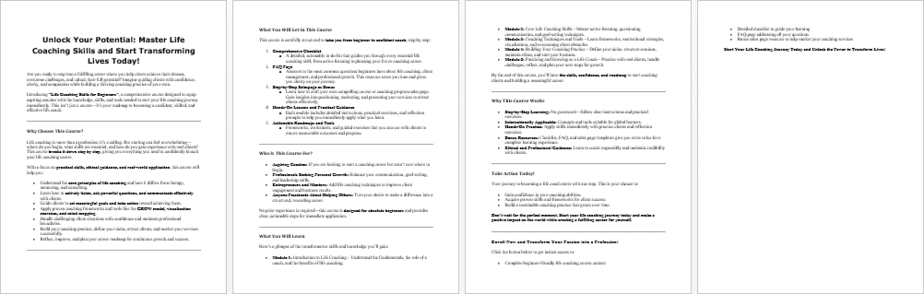
Package Details:
Word Count: 32 567 Words
Number of Pages: 155
Life Coaching Skills for Beginners – Bonus Content
Checklist
Word Count: 528 words
FAQs
Word Count: 842 words
Salespage Content
Word Count: 853 words
Total Word Count: 34 500 Words
Your PLR License Terms
PERMISSIONS: What Can You Do With These Materials?
Sell the content basically as it is (with some minor tweaks to make it “yours”).
If you are going to claim copyright to anything created with this content, then you must substantially change at 75% of the content to distinguish yourself from other licensees.
Break up the content into small portions to sell as individual reports for $10-$20 each.
Bundle the content with other existing content to create larger products for $47-$97 each.
Setup your own membership site with the content and generate monthly residual payments!
Take the content and convert it into a multiple-week “eclass” that you charge $297-$497 to access!
Use the content to create a “physical” product that you sell for premium prices!
Convert it to audios, videos, membership site content and more.
Excerpt and / or edit portions of the content to give away for free as blog posts, reports, etc. to use as lead magnets, incentives and more!
Create your own original product from it, set it up at a site and “flip” the site for megabucks!
RESTRICTIONS: What Can’t You Do With These Materials?
To protect the value of these products, you may not pass on the rights to your customers. This means that your customers may not have PLR rights or reprint / resell rights passed on to them.
You may not pass on any kind of licensing (PLR, reprint / resell, etc.) to ANY offer created from ANY PORTION OF this content that would allow additional people to sell or give away any portion of the content contained in this package.
You may not offer 100% commission to affiliates selling your version / copy of this product. The maximum affiliate commission you may pay out for offers created that include parts of this content is 75%.
You are not permitted to give the complete materials away in their current state for free – they must be sold. They must be excerpted and / or edited to be given away, unless otherwise noted. Example: You ARE permitted to excerpt portions of content for blog posts, lead magnets, etc.
You may not add this content to any part of an existing customer order that would not require them to make an additional purchase. (IE You cannot add it to a package, membership site, etc. that customers have ALREADY paid for.)
Share Now!
Latest Products

Free Sales Funnel Builder

Related Products
Popular & Trending



Featured Products