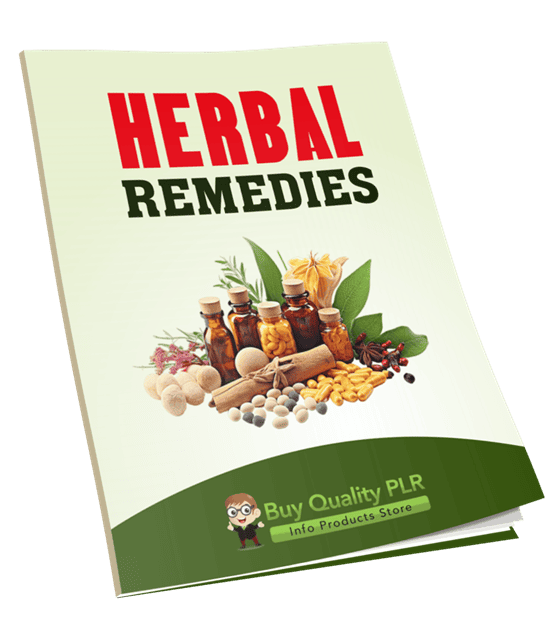
Herbal Remedies PLR Course 20k Words
in Healing PLR , Health PLR , Holistic Healing and Alternative Medicine PLR , PLR eCourses , PLR List Building Reports , Premium PLR , Premium PLR Reports , Premium White Label Brandable PLR Coaching Courses , Private Label Rights ProductsChoose Your Desired Option(s)
has been added to your cart!
have been added to your cart!
#herbalremedies #plrcourse #naturalhealing #holistichealth #wellnessmarketing #healthandwellness #plrcontent #alternativemedicine #healthyliving
20,000+ Words of High-Quality Content
Herbal Remedies – A Beginner’s Journey to Natural Healing
The natural health market continues to grow year after year.
More people are searching for:
- Gentle, plant-based wellness solutions
- Natural immune support
- Herbal teas and tinctures
- DIY skin care remedies
- Alternatives that complement modern medicine
If you want to tap into a powerful, evergreen niche with a loyal and passionate audience, the Herbal Remedies PLR Course is a smart addition to your product line at Buy Quality PLR.
This is not a short report or surface-level overview.
It’s a structured, beginner-friendly, 20,000-word course designed to guide readers step-by-step through the foundations of herbal healing — safely and confidently.
Fully editable.
Ready to brand.
Packed with practical value.
Introducing the…
Herbal Remedies PLR Course 20k Words
Why the Herbal Niche Is So Profitable
Interest in herbal remedies spans multiple audiences:
- Natural health enthusiasts
- Homesteaders
- Moms seeking gentle family remedies
- Holistic wellness followers
- DIY skincare lovers
- Preparedness communities
- Herbal hobbyists
People want:
- Simpler living
- Fewer chemicals
- Closer connection to nature
- Skills they can use for life
This course gives them exactly that.
And it gives you a flexible digital asset you can package in dozens of profitable ways.
What Makes This Course So Appealing?
Unlike overwhelming herbal encyclopedias, this course:
✔ Is beginner-friendly
✔ Focuses on safety and responsibility
✔ Offers practical, step-by-step instructions
✔ Encourages ethical harvesting
✔ Blends tradition with modern awareness
✔ Promotes realistic, sustainable habits
It gently guides learners from curiosity to confidence.
Inside the Herbal Remedies PLR Course
This course is organized into five thoughtfully structured modules, creating a natural learning progression.
Let’s explore what your customers will receive.
🧭 Module 1: Getting Started with Herbal Remedies
Before someone starts making tinctures or syrups, they need a strong foundation.
This module builds understanding and confidence.
Step 1: What Are Herbal Remedies?
Learners are introduced to:
- The basic principles of herbal medicine
- How plants support the body’s natural processes
- The difference between herbal traditions and pharmaceuticals
- The concept of holistic wellness
This section explains everything in clear, non-technical language.
It removes intimidation and makes herbalism approachable.
Step 2: Benefits of Herbal Healing
This lesson explores how herbs may support:
- Immune health
- Digestive comfort
- Relaxation and stress management
- Skin wellness
- Seasonal support
The tone is balanced and educational — not exaggerated.
Step 3: Safety First – Understanding Herbal Dos & Don’ts
Safety is essential in any wellness niche.
This section covers:
- Proper dosage awareness
- Potential interactions
- Who should consult a healthcare professional
- Responsible usage guidelines
Including safety builds trust and credibility for your brand.
Step 4: Your Herbal Starter Kit
Beginners are given a practical checklist of must-have herbs such as:
- Peppermint
- Chamomile
- Ginger
- Lavender
- Lemon balm
- Elderberry
They also learn where to source herbs:
- Grocery stores
- Farmers markets
- Online retailers
- Home gardens
This removes overwhelm and encourages action.
🌱 Module 2: Understanding and Identifying Herbs
Confidence grows when learners can recognize plants and understand their parts.
Step 1: Identifying Common Medicinal Herbs
This lesson teaches:
- Visual characteristics
- Aroma recognition
- Basic habitat clues
- Beginner-friendly identification tips
It focuses on accessible, common herbs — not rare botanicals.
Step 2: Reading Nature’s Clues – Leaves, Flowers & Roots
Learners discover:
- Why leaves are often used in teas
- When roots are preferred
- How flowers contribute gentle properties
- Which parts are best for different preparations
This deepens understanding without overwhelming complexity.
Step 3: Harvesting Herbs the Right Way
Ethical and sustainable practices are emphasized.
Topics include:
- Proper timing for harvest
- Avoiding overharvesting
- Respecting wild plant populations
- Garden harvesting tips
This builds responsible herbalists.
Step 4: Drying & Storing Herbs
Practical guidance on:
- Air-drying techniques
- Proper storage containers
- Avoiding moisture damage
- Extending shelf life
Simple instructions make this accessible to beginners.
🍵 Module 3: Making Herbal Preparations at Home
Now the course becomes hands-on.
This module is where learners create their own remedies.
Step 1: Herbal Teas (Infusions)
Clear instructions on:
- Hot infusions
- Cold infusions
- Steeping times
- Blending herbs
- When teas are appropriate
Examples include teas for digestion, sleep, and seasonal support.
Step 2: Tinctures & Extracts
Step-by-step guidance on:
- Alcohol-based tinctures
- Glycerin extracts
- Ratio measurements
- Steeping timelines
- Proper labeling
Tinctures add perceived sophistication and value.
Step 3: Herbal Oils & Salves
Learners create:
- Infused oils
- Healing balms
- Skin-soothing salves
Ideal for:
- Dry skin
- Minor irritations
- Gentle topical care
DIY skincare is a huge sub-niche on its own.
Step 4: Herbal Syrups
Instructions for creating:
- Elderberry syrup
- Ginger syrup
- Honey-based blends
Seasonal wellness support is always in demand.
🫖 Module 4: Everyday Herbal Remedies for Common Ailments
This is where practicality shines.
Learners discover go-to herbs for everyday support.
Step 1: Herbs for Immune Support
Focuses on well-known herbs such as:
- Echinacea
- Elderflower
- Ginger
Explains general immune-supportive traditions in a balanced way.
Step 2: Herbs for Digestive Wellness
Includes:
- Peppermint
- Fennel
- Chamomile
- Ginger
Covers bloating, mild nausea, and digestive comfort.
Digestive support is one of the most searched herbal topics online.
Step 3: Herbs for Stress & Sleep
Covers calming herbs like:
- Lavender
- Lemon balm
- Chamomile
Offers gentle bedtime tea suggestions and relaxation rituals.
Step 4: Herbs for Skin & Hair
Includes:
- Herbal rinses
- Face steams
- Natural masks
- Infused oils
This bridges into the natural beauty niche.
🌼 Module 5: Creating Your Herbal Lifestyle
This final module helps learners turn knowledge into long-term habit.
Step 1: Building a Daily Herbal Routine
Examples include:
- Morning herbal tea
- Evening calming tincture
- Weekly herbal bath ritual
Consistency creates confidence.
Step 2: Growing Your Own Herb Garden
Even beginners can grow:
- Basil
- Mint
- Lemon balm
- Parsley
- Calendula
Includes windowsill and small-space tips.
Home gardening expands your product’s appeal dramatically.
Step 3: Herbal Journaling
Encourages tracking:
- Remedies used
- Observations
- Blends created
- Seasonal patterns
Journaling builds long-term engagement.
Step 4: Sharing Herbal Wisdom
Ideas include:
- Gifting homemade salves
- Hosting herbal tea nights
- Introducing family to gentle remedies
Community creates loyalty.
What’s Included in This PLR Package
✔ 20,000+ word complete course
✔ Herbal Remedies Checklist (576 words)
✔ Herbal Remedies FAQs (764 words)
✔ Ready-made Salespage (626 words)
Everything is structured, polished, and easy to customize.
Profitable Ways to Use This Course
This license gives you enormous flexibility.
Here are powerful monetization strategies:
1. Sell as a Digital Herbal Course
Package as:
- A downloadable PDF
- A members-only herbal academy
- An email series
Price: $27 – $97+
2. Create a Premium Herbal Workshop
Turn it into a 6-week online class.
Add:
- Live demonstrations
- Q&A sessions
- Printable recipe sheets
Charge $297–$497.
3. Break It Into Mini Products
Sell focused guides such as:
- Beginner Herbal Teas Guide ($17)
- DIY Herbal Skincare Manual ($27)
- Immune Support Herbs Report ($19)
Entry-level offers convert well.
4. Launch a Membership Site
Release:
- One module per month
- Seasonal remedy guides
- Bonus recipes
Generate recurring income.
5. Bundle With Other Natural Living PLR
Combine with:
- Homesteading content
- Essential oils guides
- Natural cleaning products
- Organic gardening courses
Sell bundles for $47–$97.
6. Create Physical Products
Convert into:
- Printed herbal recipe books
- Spiral-bound journals
- Herbal planners
- DIY kits with instructions
Physical products increase perceived authority.
7. Use as Lead Magnets
Excerpt:
- “5 Beginner Herbs to Start With”
- “How to Make a Simple Herbal Tea”
- “Basic Herbal Safety Tips”
Grow your email list fast.
8. Build and Flip a Niche Website
Create:
- A herbal living blog
- Affiliate partnerships
- Digital product funnel
Then sell the site for a lump sum.
License Terms Summary
You CAN:
✔ Sell the content (with minor edits).
✔ Substantially change 75%+ to claim copyright.
✔ Break into smaller products.
✔ Bundle with other content.
✔ Create memberships.
✔ Convert to video/audio/print.
✔ Use excerpts as lead magnets.
✔ Build and flip a site.
You CANNOT:
✘ Pass PLR rights to customers.
✘ Grant resell or redistribution rights.
✘ Offer 100% affiliate commissions (max 75%).
✘ Give away the complete product as-is.
✘ Add it to existing paid products without requiring a new purchase.
These restrictions protect your investment’s long-term value.
Why Buy From Buy Quality PLR?
Because quality determines credibility.
This course is:
- Clear and beginner-friendly
- Structured and logical
- Practical and hands-on
- Responsible and safety-aware
- Warm in tone
- Easy to customize
It helps your customers feel confident — not confused.
And confident customers trust your brand.
The Opportunity Is Growing
Natural wellness is not a trend — it’s a movement.
People want:
- Skills
- Simplicity
- Self-reliance
- Connection to nature
The Herbal Remedies PLR Course gives you a beautifully structured foundation to serve this market — while building a profitable digital asset portfolio.
Add it to your catalog.
Brand it your way.
Launch with confidence.
And grow your wellness product line with a course that feels timeless, practical, and deeply valuable.
has been added to your cart!
have been added to your cart!
Here A Sample of the Herbal Remedies PLR Course
Welcome to your herbal healing adventure! This course is designed to gently guide you through the world of herbal remedies. Whether you’re looking to boost your immunity, support your family naturally, or simply get closer to nature’s medicine cabinet, you’re in the right place.
🧭 Module 1: Getting Started with Herbal Remedies
Let’s lay a strong foundation before diving into herbal blends and teas. This module is all about understanding what herbalism is and how to approach it safely.
Step 1: What Are Herbal Remedies?
Learn the basics of herbal medicine, how it works, and how it differs from modern pharmaceuticals
Course Description:
This first lesson introduces learners to the foundational concept of herbal remedies. As international course creators, it’s essential to present a clear, well-researched, and culturally sensitive overview of what herbal medicine is. In this step, we will break down what constitutes an herbal remedy, how it has evolved across civilizations, and how it functions within the human body. We’ll also explore the key distinctions between herbal medicine and modern pharmaceuticals to help learners begin thinking critically and holistically about health and healing.
Learning Objectives:
By the end of this step, learners will be able to:
- Define what herbal remedies are
- Understand the historical and cultural significance of herbal medicine
- Identify how herbal remedies interact with the human body
- Differentiate between herbal and pharmaceutical treatments
- Begin thinking about how herbs may support well-being as part of a lifestyle
Instructional Flow (Step-by-Step):
1. Define Herbal Remedies
Instruction:
Begin by offering a clear and simple definition.
Explanation:
Herbal remedies are natural treatments made from parts of plants, such as leaves, flowers, roots, bark, seeds, or stems, used for healing or preventive purposes. These remedies can take many forms—teas, tinctures, oils, salves, powders, capsules, and syrups—and are often used to support the body’s natural ability to maintain health.
Activity:
Ask learners to look around their home and list any products that include herbal ingredients—this might include teas, skincare products, or supplements.
Discussion Prompt:
What herbs have you already used (even unknowingly), and for what purpose?
2. Explore the History and Global Traditions
Instruction:
Present a brief overview of how herbal medicine has been used across different cultures and time periods.
Explanation:
Herbal medicine is not new. It’s one of the oldest forms of healthcare known to humanity. Various civilizations developed their own systems of herbal healing:
- Traditional Chinese Medicine (TCM): Emphasizes energy (Qi) balance, with herbs like ginseng and astragalus.
- Ayurveda (India): Focuses on body types (doshas) and uses herbs like turmeric, ashwagandha, and tulsi.
- Native American Traditions: Utilized herbs like echinacea and yarrow for immunity and wounds.
- European Herbalism: Includes Western folk medicine and medieval plant-based healing traditions using herbs such as chamomile, lavender, and peppermint.
- African, Middle Eastern, and Indigenous systems: Each region has unique botanical knowledge passed down through generations.
Activity:
Provide learners with a downloadable chart comparing herbs used for similar issues across three different cultures.
Assignment:
Ask learners to research one cultural tradition of herbal medicine and write 200 words about it.
3. Understand How Herbal Remedies Work in the Body
Instruction:
Break down the mechanism of action of herbs in a straightforward, non-technical way.
Explanation:
Herbs contain active compounds—called phytochemicals—that influence the body’s systems. For example:
- Anti-inflammatory herbs like turmeric help reduce inflammation.
- Adaptogens like ashwagandha help the body adapt to stress.
- Digestive herbs like ginger stimulate digestive juices and soothe nausea.
Unlike synthetic drugs that often target a single function or symptom, herbs may work in a more holistic and synergistic way, supporting overall balance in the body rather than just suppressing symptoms.
Important Note:
Herbs typically work more gently and gradually than pharmaceuticals. Consistency and patience are important.
Activity:
Provide case study examples (anonymized and generalized) showing how herbs have been used to support chronic stress, indigestion, or sleep issues.
4. Herbal Medicine vs. Modern Pharmaceuticals
Instruction:
Use a side-by-side comparison to help learners clearly understand the distinctions.
Comparison Table (Instructor Tool):
| Feature | Herbal Remedies | Modern Pharmaceuticals |
| Source | Whole plant or plant parts | Chemically synthesized or isolated compounds |
| Action | Broad and supportive | Targeted and symptom-specific |
| Onset | Slower and gradual | Fast-acting |
| Side Effects | Generally fewer and milder | Often more intense and may require monitoring |
| Accessibility | Widely available (some homegrown) | Regulated, prescription-based |
| Tradition | Used in cultural and traditional medicine | Based on modern clinical research |
| Regulation | Varies by country (loose to moderate) | Strict regulatory standards |
Explanation:
Pharmaceuticals are often designed to suppress symptoms rapidly. While this can be lifesaving, it may not always address the root cause. Herbal remedies support the body’s systems, encouraging the body to heal itself, though more slowly. It’s important to note that both systems have their place, and the most effective healing may come from integrating the best of both worlds.
Activity:
Ask learners to reflect on a time when they used a pharmaceutical drug and whether they would consider using an herbal remedy instead next time—why or why not?
Discussion Prompt:
Is there a place in modern life for both herbs and conventional medicine? Invite open, respectful conversation.
Key Takeaways:
- Herbal remedies are plant-based treatments used to support health and healing.
- Every culture on Earth has relied on plants for wellness at some point in history.
- Herbs work by supporting body systems with gentle, natural compounds.
- Herbal medicine is holistic, whereas modern medicine tends to be specific and fast-acting.
- Respect and safety are critical—natural does not always mean risk-free.
Downloadables for Students:
- Printable PDF: “Herbal Remedies at a Glance”
- Herbal Traditions Around the World Chart
- Comparison Table: Herbs vs Pharmaceuticals
- Personal Reflection Journal Template (Word or PDF)
Instructor Tips:
- Be culturally inclusive: Avoid assuming a single herbal tradition as “default.”
- Use clear language, and explain terms like “phytochemicals” and “adaptogens.”
- Provide visual aids and voice-over if offering this as a video-based course.
- Encourage learners to ask questions and share personal stories if running a live class.
Step 2: Benefits of Herbal Healing
Discover the wide-ranging benefits—from boosting immunity to soothing stress—herbs can bring to your life.
Course Description:
In this step, we dive into the transformative power of herbal healing and its wide-reaching impact on physical, emotional, and even spiritual well-being. This lesson will empower learners to see herbal remedies not just as alternative treatments, but as holistic health tools that promote long-term wellness. From building a stronger immune system to calming the nervous system and supporting the body’s natural rhythms, herbs have been used across generations and cultures with proven results. This module helps learners recognize those benefits with practical, evidence-informed insight, designed to be understandable and engaging for an international audience.
Learning Objectives:
By the end of this step, learners will:
- Understand the full spectrum of benefits herbal medicine offers
- Recognize key categories of herbal support (immune, digestive, emotional, etc.)
- Identify herbs known for specific wellness goals
- Learn how herbal healing contributes to preventive health
- Develop confidence in beginning to explore herbal support in daily life
Instructional Flow (Step-by-Step):
1. The Big Picture: How Herbal Healing Supports Whole-Body Wellness
Instruction:
Start with a macro-level understanding of what herbal healing really means in today’s context.
Explanation:
Herbal healing is not simply about treating illness—it’s about creating balance, enhancing vitality, and supporting the body’s innate intelligence to heal and adapt. Herbs can support long-term wellness by gently encouraging balance in key systems: immune, endocrine, digestive, circulatory, nervous, and respiratory.
Unlike many fast-acting drugs, herbal healing takes a whole-body approach. It acknowledges that symptoms are often signals of deeper imbalance. For example, frequent headaches might be due to stress, dehydration, poor sleep, or digestive stagnation—all of which can be helped with the right herbs and lifestyle changes.
Case Example:
A person dealing with frequent fatigue may turn to herbal adaptogens (like ashwagandha or Rhodiola) that support adrenal function and resilience rather than simply taking stimulants like caffeine.
Activity:
Invite learners to reflect: What does “healing” mean to you—symptom relief or system support? Have learners journal their response and share (if in a live or group setting).
2. Strengthening Immunity and Resilience with Herbal Allies
Instruction:
Introduce herbs that fortify the immune system and enhance the body’s ability to defend itself against illness.
Explanation:
A strong immune system is the foundation of health. Herbs can offer preventive care, not just reactive treatment. Here are a few commonly used immune-supporting herbs across cultures:
| Herb | Function | Tradition |
| Elderberry | Antiviral, helps shorten colds/flu | Western herbalism |
| Echinacea | Activates immune response | Native American, Western |
| Tulsi (Holy Basil) | Adaptogen, antimicrobial, immune tonic | Ayurveda |
| Astragalus Root | Strengthens immunity, especially in chronic cases | Traditional Chinese Medicine |
| Garlic | Antibacterial, antifungal, boosts immunity | Global traditions |
Important Note:
Some herbs are better for daily prevention (like astragalus), while others are best taken at the first sign of illness (like echinacea).
Visual Tool:
Provide a downloadable chart titled “Herbs for Immune Strength: Daily and Acute Use.”
Discussion Prompt:
Have learners discuss or write about immune challenges they commonly face (e.g., seasonal colds, slow recovery, inflammation), and what natural supports they’ve tried.
3. Soothing the Nervous System and Supporting Mental Clarity
Instruction:
Guide learners into understanding how herbs can bring calm, clarity, and emotional balance.
Explanation:
Modern life brings daily stress, over-stimulation, and emotional fatigue. Many herbs have a calming, grounding effect on the nervous system. These nervines and adaptogens help us relax, sleep better, and manage stress with more resilience.
Key calming herbs include:
| Herb | Effect | Use Suggestion |
| Chamomile | Gentle calming, aids sleep | Tea in the evening |
| Lavender | Soothes anxiety, improves sleep | Aromatherapy or tea |
| Lemon Balm | Mood lifting, anxiety relief | Fresh or dried tea |
| Ashwagandha | Reduces cortisol, builds stamina | Capsules or decoction |
| Passionflower | Calms a racing mind | Bedtime tea or tincture |
Important Concept:
Stress-related illness is one of the top contributors to disease worldwide. By calming the nervous system naturally, herbs can play a preventive and restorative role in mental wellness.
Interactive Activity:
Have learners create a “calm kit” by listing 3 herbs they would like to try for managing stress, and why.
Optional Extension:
Offer an audio meditation or herbal tea recipe PDF for calming the body after a stressful day.
4. Supporting Digestion, Energy, and Everyday Vitality
Instruction:
Help learners explore how herbs can improve digestion, energy, and day-to-day functionality.
Explanation:
Digestion is considered the cornerstone of health in many traditional systems like Ayurveda and TCM. If you’re not digesting properly, you’re not absorbing nutrients, and your energy will suffer.
Digestive herbs work in various ways:
- Bitters stimulate digestive juices (e.g., dandelion root, gentian)
- Carminatives reduce gas and bloating (e.g., fennel, peppermint)
- Tonics strengthen digestion over time (e.g., ginger, turmeric)
For energy, adaptogens (like Rhodiola, Maca, or Ginseng) can gently improve stamina and mental clarity without the crash of caffeine.
Downloadable Tool:
Provide a chart titled “Herbal Helpers for Digestion & Energy” showing when to take each herb (before meals, morning tonic, bedtime, etc.).
Mini Quiz:
Which of the following herbs is a carminative? (Options: a) Echinacea b) Fennel c) Lavender d) Astragalus)
Answer:
b) Fennel
Key Takeaways:
- Herbal healing supports the whole person—body, mind, and spirit.
- Herbs offer preventive care, not just treatment for illness.
- Immune herbs help build natural defenses.
- Nervine herbs calm the mind and restore emotional balance.
- Digestive herbs support energy, absorption, and daily well-being.
- The right herbal allies can bring long-term balance when used with consistency and respect.
Downloadables for Students:
- PDF: “Benefits of Herbal Healing: A Global Guide”
- Herbal Immune Chart (Daily vs. Acute Use)
- Nervous System Soothing Guide
- Herbal Digestive Aid Quick-Reference Chart
- Reflective Worksheet: My Personal Herbal Healing Goals
Instructor Tips:
- Use relatable metaphors (e.g., comparing herbs to gentle teachers rather than aggressive problem-solvers).
- Balance science with tradition—include citations where appropriate for credibility.
- Encourage learners to always consider the context of their body and lifestyle before trying herbs.
- Reiterate that natural doesn’t mean automatically safe—consultation and education are key.
Step 3: Safety First! Understanding Herbal Dos & Don’ts
Explore how to use herbs responsibly, including proper dosages, potential interactions, and knowing when to consult a healthcare provider.
Course Description:
Herbal medicine offers powerful benefits, but like any form of health care, it requires knowledge, caution, and respect. In this lesson, we focus on safe herbal practice. Learners will explore the essential guidelines for using herbs responsibly, including how to determine the right dosage, how to store herbs properly, how to identify potential herb-drug interactions, and when to seek professional medical advice. This step is designed to help learners avoid common mistakes and approach herbal healing with clarity and care.
Whether your learners are curious newcomers or beginning herbal practitioners, this lesson sets a global standard for responsible use and is aligned with internationally accepted herbal safety principles.
Learning Objectives:
By the end of this step, learners will:
- Understand the importance of accurate dosage and individual sensitivity
- Identify common herb-drug interactions and contraindications
- Learn safe preparation and storage methods
- Recognize when it is necessary to consult a qualified health practitioner
- Apply these safety principles to real-life herbal use cases
Instructional Flow (Step-by-Step):
1. Understanding Dosage: The Right Amount Makes All the Difference
Instruction:
Begin by explaining how herbal dosage works, how it differs from pharmaceuticals, and why individual context matters.
Explanation:
Herbs are natural but not inherently risk-free. Each plant has active compounds that can affect the body in different ways depending on:
- The person’s age, weight, and overall health
- The form of the herb (fresh, dried, tincture, capsule, tea, etc.)
- The frequency and length of use
Examples of Dosage Forms:
| Form | Typical Dosage Range |
| Herbal Tea | 1–3 cups/day, depending on herb |
| Tincture | 20–60 drops 2–3x/day |
| Capsules/Tablets | Follow product label |
| Topical Use | Apply as directed (salves/oils) |
Important Point:
Start with a low dose, especially if the herb is new to you, and increase gradually while observing for any reactions.
Activity:
Present a sample herb (e.g., chamomile) and have learners explore its dosage for children, adults, and pregnant women using a safety chart or herbal reference database.
2. Potential Interactions: What Happens When Herbs and Medications Mix?
Instruction:
Educate learners about how herbs may interact with over-the-counter and prescription medications.
Explanation:
Some herbs can interfere with medications by:
- Increasing their potency
- Reducing their effectiveness
- Altering how they are absorbed or metabolized
Common Interaction Examples:
| Herb | Potential Interaction |
| St. John’s Wort | Reduces effectiveness of birth control, antidepressants, and HIV meds |
| Ginkgo biloba | May thin the blood—caution with blood thinners |
| Licorice root | May raise blood pressure—caution in hypertension |
| Kava | May increase sedation—avoid with CNS depressants |
International Note:
Always consider regional medication availability and healthcare system variations when teaching globally. Recommend using well-known herbal safety references like the “Herb-Drug Interaction Handbook” or databases maintained by international health agencies.
Discussion Prompt:
Ask learners to consider if they or someone they know is on medication. What precautions would they take before trying an herb?
3. Knowing When to Consult a Professional: Herbalism is Complementary, Not a Substitute
Instruction:
Help learners understand when they must seek professional guidance rather than self-diagnosing or self-treating with herbs.
Explanation:
Herbs are not replacements for emergency medical care, surgery, or chronic disease management. There are times when herbs should not be used without guidance, including:
- During pregnancy or breastfeeding
- In children under 12 or seniors over 65
- In cases of chronic illness (e.g., diabetes, cardiovascular disease)
- Alongside chemotherapy or radiation
- In surgical preparation and recovery
Role of the Herbal Practitioner:
Encourage learners to build relationships with licensed or certified herbalists, naturopaths, or integrative physicians, depending on their country’s system.
Visual Tool:
Provide a printable checklist:
“When to Pause and Consult a Healthcare Provider”
Includes red flags like sudden severe symptoms, allergic reactions, or suspected interactions.
Mini Case Study:
Maria, a 34-year-old woman with epilepsy, wants to try valerian root for sleep. Ask learners: What should she do first? (Answer: Consult her neurologist or integrative physician, as valerian can interact with seizure medications.)
4. Proper Storage, Sourcing, and Labeling: Safety Starts at Home
Instruction:
Show learners how to properly store herbs, how to choose quality sources, and why labeling matters.
Explanation:
Herbs can degrade over time, lose potency, or even grow mold if stored incorrectly. Improper labeling or sourcing can also lead to accidental misuse.
Storage Guidelines:
- Keep dried herbs in airtight containers in a cool, dark place
- Use herbs within 6–12 months for optimal freshness
- Store tinctures and oils away from heat and light
- Label all homemade remedies with date, contents, and dosage
Choosing Safe Sources:
- Buy from reputable herbal suppliers that test for purity
- Avoid buying herbs from unknown sources online or from street vendors unless certified
- Look for certifications (USDA Organic, EU Organic, GMP, ISO standards)
Safety Reminder:
Mislabeled or adulterated herbs can be dangerous. For example, some unregulated herbal weight loss teas contain undisclosed pharmaceutical stimulants.
Practical Exercise:
Ask learners to inspect any herbs they have at home and identify:
- Is it labeled correctly?
- Do they know when it was purchased?
- Is it past its safe shelf life?
Bonus Tool:
Offer a downloadable template for labeling herbal jars and tinctures.
Key Takeaways:
- Herbs must be used with the same respect and caution as pharmaceuticals.
- Dosage varies based on age, health condition, and form of the herb.
- Some herbs interact with medications—always research or consult.
- Professional consultation is essential in complex health scenarios.
- Safe storage, quality sourcing, and clear labeling prevent misuse.
Downloadables for Learners:
- Herbal Dosage Reference Chart by Form & Age Group
- Printable “Herbal Interactions Quick Guide”
- Safety Checklist: When to Consult a Professional
- Storage & Labeling Best Practices PDF
- Herbal Jar Label Template
Instructor Tips:
- Emphasize real-world scenarios to bring home the importance of safety.
- Use internationally recognized herbal safety resources (e.g., World Health Organization, National Center for Complementary and Integrative Health, European Medicines Agency).
- Encourage questions and cautious curiosity—learners should feel empowered, not fearful.
- Reinforce that safety is the foundation of successful herbal practice.
We’re also giving these extra bonuses
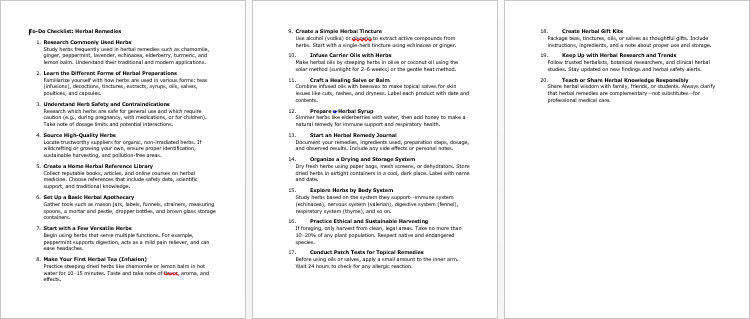
Herbal Remedies – Checklist
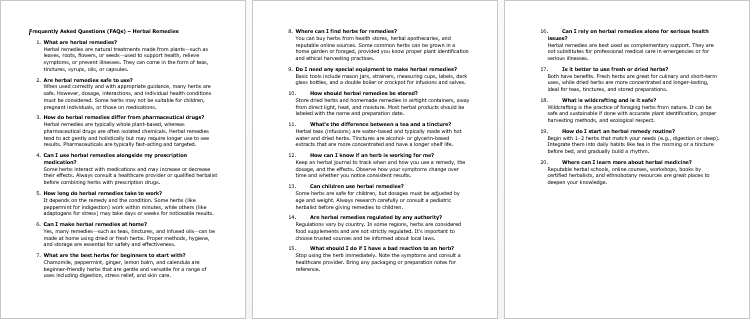
Herbal Remedies – FAQs
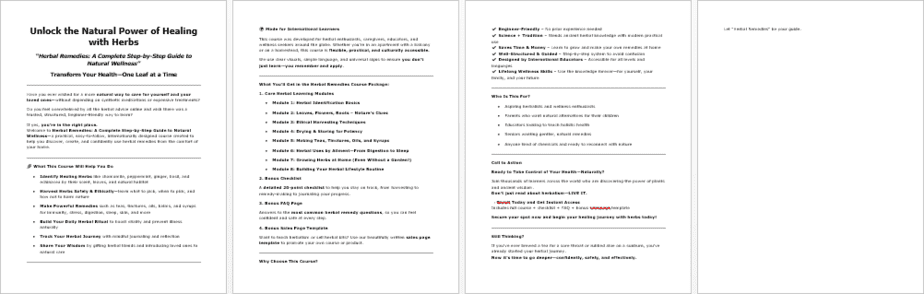
Herbal Remedies – Salespage Content
Package Details:
Word Count: 18 916 Words
Number of Pages: 115
Herbal Remedies – Bonus Content
Checklist
Word Count: 576 words
FAQs
Word Count: 764 words
Salespage Content
Word Count: 626 words
Total Word Count: 20 882 Words
Your PLR License Terms
PERMISSIONS: What Can You Do With These Materials?
Sell the content basically as it is (with some minor tweaks to make it “yours”).
If you are going to claim copyright to anything created with this content, then you must substantially change at 75% of the content to distinguish yourself from other licensees.
Break up the content into small portions to sell as individual reports for $10-$20 each.
Bundle the content with other existing content to create larger products for $47-$97 each.
Setup your own membership site with the content and generate monthly residual payments!
Take the content and convert it into a multiple-week “eclass” that you charge $297-$497 to access!
Use the content to create a “physical” product that you sell for premium prices!
Convert it to audios, videos, membership site content and more.
Excerpt and / or edit portions of the content to give away for free as blog posts, reports, etc. to use as lead magnets, incentives and more!
Create your own original product from it, set it up at a site and “flip” the site for megabucks!
RESTRICTIONS: What Can’t You Do With These Materials?
To protect the value of these products, you may not pass on the rights to your customers. This means that your customers may not have PLR rights or reprint / resell rights passed on to them.
You may not pass on any kind of licensing (PLR, reprint / resell, etc.) to ANY offer created from ANY PORTION OF this content that would allow additional people to sell or give away any portion of the content contained in this package.
You may not offer 100% commission to affiliates selling your version / copy of this product. The maximum affiliate commission you may pay out for offers created that include parts of this content is 75%.
You are not permitted to give the complete materials away in their current state for free – they must be sold. They must be excerpted and / or edited to be given away, unless otherwise noted. Example: You ARE permitted to excerpt portions of content for blog posts, lead magnets, etc.
You may not add this content to any part of an existing customer order that would not require them to make an additional purchase. (IE You cannot add it to a package, membership site, etc. that customers have ALREADY paid for.)
Share Now!
Latest Products

Free Sales Funnel Builder

Related Products
Popular & Trending

Featured Products