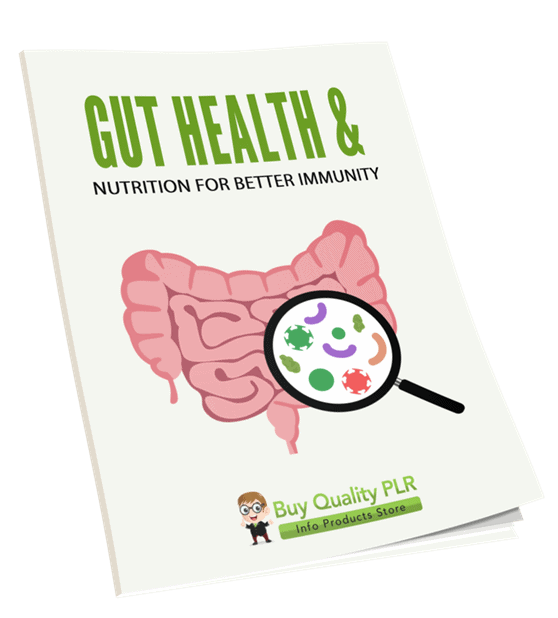
Gut Health & Nutrition for Better Immunity PLR Course 33k Words
in Digestive Health PLR , Health PLR , Nutrition PLR , PLR eCourses , PLR List Building Reports , Premium PLR , Premium PLR Reports , Premium White Label Brandable PLR Coaching Courses , Private Label Rights ProductsChoose Your Desired Option(s)
has been added to your cart!
have been added to your cart!
#guthealth #betterimmunity #plrcourse #healthandwellness #nutritiontips #wellnessmarketing #plrcontent #healthyliving #immunityboost
33,000 Words of High-Demand, Evergreen Health Content You Can Brand, Sell, and Profit From
If you’re looking for a powerful PLR product in the booming health and wellness niche, this is the one your audience has been waiting for.
Gut Health & Nutrition for Better Immunity PLR Course is a complete, professionally structured 33,000-word training program that teaches learners how to strengthen their immune system naturally—by improving gut health through nutrition and lifestyle habits.
This is not surface-level blog content.
This is a fully developed, multi-module course that:
- Explains the science in simple language
- Provides actionable steps
- Includes meal planning guidance
- Covers supplements responsibly
- Teaches sustainable habit-building
- And delivers real, practical value
And as a PLR buyer, you can:
Sell it.
Rebrand it.
Repackage it.
Bundle it.
Turn it into high-ticket offers.
Build recurring revenue streams.
Welcome to one of the strongest wellness PLR opportunities available at Buy Quality PLR.
Introducing the…
Gut Health & Nutrition for Better Immunity PLR Course 33k Words
Why Gut Health Is a Massive Market Opportunity
Gut health is no longer a niche topic.
It’s mainstream.
People are actively searching for solutions related to:
- Bloating
- Digestive discomfort
- Fatigue
- Skin issues
- Brain fog
- Low immunity
- Inflammation
- Food sensitivities
They are realizing that the gut is not just about digestion—it’s deeply connected to immune strength, mood, energy, and overall wellness.
That means:
- Health coaches need structured programs.
- Wellness bloggers need premium products.
- Fitness trainers want immunity content.
- Supplement sellers want education funnels.
- Nutritionists want ready-made frameworks.
- Membership site owners want evergreen material.
This PLR course gives you a complete, ready-to-monetize solution.
What’s Included in This PLR Package
This isn’t just a manuscript. It’s a complete content system.
You receive:
- ✅ Gut Health & Nutrition for Better Immunity Course (33,000 Words)
- ✅ Checklist (350 Words)
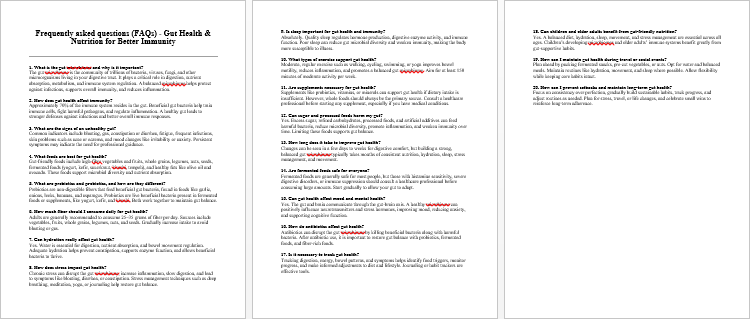
- ✅ FAQs (852 Words)
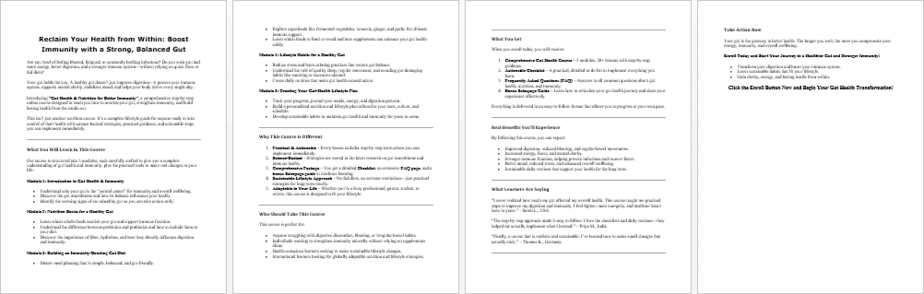
- ✅ Sales Page (870 Words)
All content is structured into 5 detailed modules with step-by-step lessons.
This saves you months of writing and research.
Inside the Course: Module Breakdown
Let’s walk through what makes this product so valuable.
Module 1: Introduction to Gut Health & Immunity
This module builds the foundation and explains why gut health matters more than most people realize.
Lesson 1: Why Gut Health Matters
Learners discover how the gut acts as a control center for immunity, energy, and overall well-being. It explains how digestive balance affects everything from mood to immune defense.
Lesson 2: Meet Your Gut Microbiome
A simple, easy-to-understand explanation of the gut microbiome:
- What it is
- How it works
- Why balance matters
- What happens when it’s disrupted
This lesson turns complicated science into practical knowledge.
Lesson 3: Gut–Immunity Connection
Explains the direct relationship between gut bacteria and immune response. Learners understand why strengthening digestion strengthens immunity.
Lesson 4: Signs of an Unhealthy Gut
Covers common red flags such as:
- Bloating
- Fatigue
- Skin breakouts
- Frequent colds
- Digestive irregularity
This section alone creates strong engagement and urgency.
Module 2: Nutrition Basics for a Healthy Gut
Now we move into practical action.
Lesson 1: The Role of Whole Foods
Teaches why natural, minimally processed foods support gut diversity and balance.
Clear, practical explanations make it beginner-friendly.
Lesson 2: Prebiotics vs. Probiotics
Breaks down:
- The difference between the two
- Food sources
- How to incorporate them daily
- Why both are necessary
This is highly marketable content because consumers constantly search for probiotic information.
Lesson 3: Fiber – Your Gut’s Favorite Fuel
Explains:
- Soluble vs. insoluble fiber
- How fiber feeds beneficial bacteria
- How to gradually increase intake safely
Lesson 4: Hydration & Gut Health
Shows how water supports digestion, nutrient absorption, and toxin elimination.
Simple advice. High practical value.
Module 3: Building an Immunity-Boosting Gut Diet
This module is where transformation happens.
Lesson 1: Gut-Friendly Meal Planning
Step-by-step guidance for:
- Balanced plates
- Smart grocery shopping
- Simple weekly meal prep
- Building consistency
Perfect for turning into printable planners or workbooks.
Lesson 2: Superfoods for Gut & Immunity
Covers powerful foods like:
- Fermented vegetables
- Garlic
- Turmeric
- Ginger
This content is extremely attractive in marketing copy.
Lesson 3: Foods to Limit or Avoid
Explains how:
- Excess sugar
- Ultra-processed foods
- Artificial additives
- Excess alcohol
Can disrupt gut balance.
Educational—not extreme.
Lesson 4: Supplements for Support
Covers:
- Probiotics
- Vitamins
- Minerals
With responsible guidance on when and how to use them.
Module 4: Lifestyle Habits for a Healthy Gut
Nutrition is only part of the story.
This module addresses the lifestyle side.
Lesson 1: Stress & Gut Health
Explains the gut–brain connection and how stress impacts digestion.
Includes calming practice suggestions.
Lesson 2: The Importance of Sleep
Shows how quality sleep supports immune repair and gut balance.
Lesson 3: Movement & Gut Health
Teaches how exercise improves digestion and reduces inflammation.
Lesson 4: Avoiding Gut-Damaging Habits
Discusses:
- Smoking
- Excess alcohol
- Antibiotic overuse
Balanced and educational.
Module 5: Creating Your Gut-Health Lifestyle Plan
This final module ties everything together.
Lesson 1: Tracking Your Gut Health Progress
Encourages journaling:
- Symptoms
- Energy levels
- Food reactions
Highly practical.
Lesson 2: Building Your Personalized Nutrition Plan
Teaches readers how to adapt recommendations to:
- Culture
- Preferences
- Budget
- Lifestyle
Lesson 3: Sustainable Daily Routines
Focuses on long-term consistency instead of short-term dieting.
Lesson 4: Long-Term Gut & Immunity Success
Prevention strategies and habit reinforcement.
Who This PLR Course Is Perfect For
This product fits multiple profitable niches:
- Health coaches
- Nutrition bloggers
- Fitness trainers
- Holistic wellness brands
- Supplement sellers
- Meal planning businesses
- Online course creators
- Natural health influencers
- Membership site owners
It’s evergreen.
People will always care about immunity and digestive health.
Ways You Can Use and Profit From This Course
Now let’s talk about monetization opportunities.
This is where this product shines.
1. Sell It As-Is With Branding
Add:
- Your logo
- Custom cover
- Light edits
Sell as:
- A digital course ($27–$97)
- An ebook ($17–$47)
- A premium PDF guide
Fast implementation. Immediate profit.
2. Break It Into Mini Products ($10–$20 Each)
Turn modules into:
- “The Beginner’s Guide to Gut Health”
- “Prebiotics vs Probiotics Explained”
- “7-Day Gut Reset Plan”
- “Superfoods for Strong Immunity”
Multiple income streams from one product.
3. Create a High-Ticket Eclass ($297–$497)
Convert it into:
- A 5-week guided program
- Weekly video lessons
- Live coaching calls
- Downloadable worksheets
Health programs command premium pricing.
4. Build a Membership Site
Offer:
- Monthly gut-health lessons
- Recipe updates
- Seasonal immunity guides
- Community discussions
Recurring revenue model.
5. Bundle With Other PLR Health Products
Combine with:
- Weight loss PLR
- Detox guides
- Stress management courses
Create a $47–$97 mega wellness bundle.
6. Convert to Audio or Video
Turn lessons into:
- Podcast episodes
- YouTube scripts
- Guided audio programs
- Video course modules
Repurpose across platforms.
7. Use as Lead Magnets
Excerpt:
- The checklist
- A lesson on probiotics
- A superfoods guide
Grow your email list.
Sell premium offers later.
8. Create Physical Products
Turn into:
- A printed cookbook-style guide
- A gut-health planner
- A branded journal
Physical products increase perceived value.
9. Build and Flip a Health Website
Use this course as the core product.
Add:
- Blog content
- Affiliate links
- Email funnels
- Premium upsells
Scale traffic and sell the site for profit.
Clear Licensing – What You Can and Cannot Do
We protect the value of this content while giving you powerful monetization flexibility.
✅ You CAN:
- Sell it with minor tweaks.
- Repackage into smaller reports.
- Bundle into larger offers.
- Create courses, memberships, and physical products.
- Convert into audio or video.
- Use excerpts as lead magnets.
- Claim copyright if you modify at least 75%.
❌ You CANNOT:
- Pass PLR or resale rights to customers.
- Allow others to resell this content.
- Offer more than 75% affiliate commission.
- Give away the complete product as-is for free.
- Add it to existing purchases without requiring a new transaction.
These rules protect you and maintain market value.
Why Buy From Buy Quality PLR?
Not all PLR is equal.
With Buy Quality PLR, you get:
- Structured course flow
- Professional organization
- Practical, actionable lessons
- Evergreen niche topics
- Clean formatting
- Immediate usability
This is content designed to sell.
Imagine the Possibilities
Imagine offering your audience:
- A complete gut-health transformation course.
- A scientifically grounded immunity guide.
- A practical nutrition framework.
- A structured lifestyle improvement plan.
- A premium health program under your brand.
You’re not just buying content.
You’re buying leverage.
You’re buying speed.
You’re buying opportunity.
Ready to Add a High-Demand Health PLR Product to Your Store?
The Gut Health & Nutrition for Better Immunity PLR Course (33,000 Words) gives you a powerful entry point into one of the most profitable niches online.
Health.
Immunity.
Nutrition.
Longevity.
Add it to your store at Buy Quality PLR and give your customers the tools to build thriving health brands—while you build consistent revenue.
If you’d like next, I can create:
- A high-converting launch email sequence
- Affiliate promo swipe copy
- A VSL script
- A funnel strategy
- A short marketplace listing version
- Or upsell/downsell copy
Just tell me what you want to build next.
has been added to your cart!
have been added to your cart!
Here A Sample of the Gut Health & Nutrition for Better Immunity PLR Course
Module 1: Introduction to Gut Health & Immunity
Lesson 1: Why Gut Health Matters
For international course creators — friendly, step-by-step instructor guide and lesson content you can deliver live or record. This lesson explains how the gut functions as a control center for immunity and whole-body health, and shows you exactly how to teach that idea so learners worldwide grasp it clearly and confidently.
Learning objectives (what learners will be able to do by the end of this lesson)
✓ Explain, in plain language, how the gut contributes to immune function.
✓ Describe three concrete mechanisms by which gut health supports immunity.
✓ Identify common signs that gut function may be impaired and link them to immune consequences.
✓ Apply one or two simple, evidence-informed dietary or lifestyle changes that support gut health.
Lesson length and flow (recommended)
Total time: 60–75 minutes (live session)
Structure → 1) Hook & objectives (5 min) 2) Core teaching (25–30 min) 3) Interactive activity (15–20 min) 4) Knowledge check & summary (10–15 min)
Instructor script and step-by-step delivery
1) Hook & set expectations (0–5 min)
Say something like:
“Today you’ll see why the gut is more than digestion — it’s a command post for immunity. By the end of this hour you’ll have clear language, analogies, and 3 classroom activities to help learners connect gut function to their daily decisions.”
Display the four learning objectives (above). Use a global-friendly icon set (arrows →, checkmarks ✓) and keep the language simple and translatable.
2) Core teaching — explain the gut as a control center (5–35 min)
Break this into five short segments. For each segment present 1 slide, 1 visual, and 1 short verbal script (30–90 seconds).
a) Anatomy at a glance (5 min)
Slide title: “Where the gut meets immunity”
Speaker notes: Briefly name the main parts (mouth → stomach → small intestine → large intestine) and introduce the idea of the gut wall as the frontline. Emphasize the gut-associated lymphoid tissue (GALT) as a key immune tissue — present it as “the immune classroom inside the gut.” Keep technical terms minimal and provide parenthetical plain translations (e.g., “GALT — immune cells gathered along the gut lining”).
b) Barrier function: the physical and chemical fence (5–7 min)
Slide title: “Barrier: keeping the wrong things out”
Script: Explain the mucosal lining, tight junctions between cells, mucus, and antimicrobial peptides. Use the simple analogy: the gut barrier is a border checkpoint — it lets in what’s safe (nutrients) and keeps out what’s harmful (pathogens). Make the connection: when the barrier weakens, immune activity increases and the body may respond with inflammation — which can lower resilience to infections.
c) The microbiome: our microbial ecosystem (8–10 min)
Slide title: “Microbiome: allies and signals”
Script: Describe microbiota as communities of bacteria, yeasts, and other microbes that live in the gut. Explain three practical roles: digestion of complex fibers, production of immune-modulating metabolites (e.g., short-chain fatty acids), and ‘training’ the immune system to tell friend from foe. Use a clear metaphor: microbiome = the classroom tutors that teach immune cells how to behave. Emphasize variability across populations and diets — this helps international learners connect to local food systems.
d) Signaling pathways: gut → immune system → whole body (5–7 min)
Slide title: “Signals that link gut and immunity”
Script: Explain that the gut sends chemical signals (metabolites, cytokines) and neural signals (via the vagus nerve) that shape immune responses in distant tissues. Provide one simple, non-technical example: metabolites produced when fiber is fermented can reduce inflammation in other organs.
e) Practical consequences: what impaired gut health looks like (5 min)
Slide title: “Symptoms, signs and impact”
Script: List common, non-specific signs (bloating, irregular bowel motions, frequent minor infections, prolonged fatigue, skin flares). Stress that these do not equal disease diagnosis — they are prompts to look deeper, and that improving gut support often improves resilience.
3) Interactive activity (15–20 min)
Activity: Case brief + small group discussion (works online or in-person).
Give each group a short, culturally neutral case: e.g., “A 35-year-old teacher with recurring colds, frequent bloating after meals, and low energy.” Ask groups to: 1) identify gut-related signs, 2) propose 2 practical course-friendly interventions (dietary or behavioral), and 3) list how they would explain the gut-immunity link to a learner with minimal science background.
Facilitation tips: allow 10 minutes discussion, 5 minutes for group reports. Use a timed slide and share a one-sentence feedback for each group.
4) Knowledge check and wrap (10–15 min)
Use a brief multiple-choice or short answer quiz with 4–6 questions that directly map to the learning objectives (examples below). Finish with a concise summary: restate the gut’s three key roles for immunity — barrier, microbial partners, and signaling — and invite learners to reflect on one change they can apply in their context.
Sample quiz items
- Which gut function helps prevent unwanted microbes from entering the body? (Barrier function)
- True or False: The microbiome can influence immune responses in other organs. (True)
- Name one typical sign that may suggest impaired gut function. (Sample answer: bloating; frequent minor infections; fatigue)
Teaching materials & visual suggestions
• Slide set (8–10 slides): keep text minimal; use large sans-serif fonts and clear icons.
• Visuals: simplified diagram of gut + immune cells; infographic showing microbiota producing metabolites → immune effect.
• Handout: printable one-page summary with the three core roles and 3 practical tips. Use SI units where relevant (e.g., fiber intake in grams/day) and leave space for local adaptation.
• Captioned video clip (2–3 min) illustrating fermentation of fiber in the colon—optional.
Internationalisation & cultural sensitivity (important)
• Use globally understood units: grams (g), milliliters (mL), degrees Celsius (°C) when necessary. Avoid region-specific formats for dates or currencies.
• Give dietary examples from multiple cuisines — e.g., fermented foods: kimchi, dosa/curd, sauerkraut, injera — and explain they are culturally contextual examples of probiotic foods. Emphasize local accessibility over specific brands.
• Be mindful of religious and dietary restrictions (halal/kosher, vegetarian/vegan). When suggesting food examples, offer alternatives.
• Language: keep sentences short for easier translation. Provide a glossary slide with simple definitions of technical terms.
Accessibility & inclusion
• Provide captions and a transcript for any recorded lesson.
• Use high-contrast slide colors and at least 18–24 pt font for main text.
• Offer audio descriptions for visuals or a text alternative (alt text).
• Allow multiple participation modes in activities (chat, audio, written).
Assessment ideas for course designers
Formative assessments: quick polls, one-minute papers (learners write the main point they’ll remember), and the short quiz above.
Summative assessment (module-level): a short reflective assignment where learners explain the gut-immunity connection in their own words and propose a culturally appropriate action plan for 7 days.
Rubric suggestion (3 criteria):
- Clarity of explanation (0–4 pts)
- Evidence of linking gut mechanisms to immunity (0–4 pts)
- Practicality and cultural appropriateness of the action plan (0–4 pts)
Common misconceptions to address
• “All bacteria are bad.” — Clarify that many microbes are beneficial and essential.
• “Fermented = always probiotic.” — Explain that not all fermented foods contain live strains or the same beneficial species; preparation matters.
• “If I feel fine, my gut is healthy.” — Remind learners that resilience and immune readiness are nuanced; absence of obvious symptoms is not a complete measure.
Sample facilitator language (short scripts you can adapt)
“When we say ‘gut as control center,’ think of three jobs: it protects (barrier), it educates (microbiome trains immunity), and it communicates (signals to the rest of the body). Keep this triad in mind as we move forward.”
“Ask learners to name one fermented food in their local diet — this creates immediate relevance and cross-cultural exchange.”
Closing (summary & reflection)
Conclude by summarizing the three core roles (barrier, microbiome, signaling) and asking participants to write one sentence: “One thing I will explain differently about the gut after this lesson is…” Collect these responses as a quick formative check.
This lesson is intentionally practical and modular: you can scale the timing, swap the case studies for regionally adapted scenarios, and localize dietary examples while preserving the scientific backbone. Use simple metaphors, consistent visuals, and short, translatable language to ensure learners across countries can grasp how gut health underpins better immunity.
Lesson 2 — Meet Your Gut Microbiome
For international course creators — a friendly, step-by-step instructor guide and lesson content you can deliver live or record. This lesson explains what the gut microbiome is, how it functions, and why balance and diversity are essential. The script, activities, and visuals are written so you can adapt them across cultures, diets, and languages.
Learning objectives (what learners will be able to do by the end of this lesson)
✓ Define the gut microbiome in plain language.
✓ Describe three core functions the microbiome performs for digestion, metabolism, and immunity.
✓ Explain why microbial balance and diversity matter, and name common factors that shift the microbiome.
✓ Share two culturally-appropriate examples of foods or practices that support a healthy microbiome.
Estimated timing and lesson flow
Total time: 60–75 minutes
Structure → 1) Warm-up & objectives (5 min) → 2) Core teaching (30–35 min) → 3) Micro-activities (15–20 min) → 4) Reflection & quick quiz (5–10 min)
Instructor script and step-by-step delivery
1) Warm-up & set expectations (0–5 min)
Open with a simple, relatable line:
“Think of your gut as a bustling city — full of residents who help run the place. Today we’ll meet those residents, learn what they do, and how to keep the city healthy.”
Display the four learning objectives and invite one quick volunteer to name a fermented food from their culture. This immediately grounds the lesson in real-world experience.
2) Core teaching — what the microbiome is and how it works (5–35 min)
Break this into five short, focused segments. Use one slide per segment with minimal text and clear visuals.
a) Simple definition (3–5 min)
Slide title: “What is the gut microbiome?”
Script: “The gut microbiome is the collection of microbes — bacteria, yeasts, viruses and other tiny organisms — that live in the digestive tract. Most of them are found in the colon, and together they form a living ecosystem that helps our body function.”
Keep language accessible; in parentheses add a short translation-friendly phrase: (microbiome = the community of tiny helpers inside your gut).
b) Who lives there? (5–7 min)
Slide title: “Residents of the gut city”
Script: Briefly list major groups (beneficial bacteria, opportunistic microbes, yeasts, bacteriophages) and explain that many species coexist. Introduce the idea of “good” vs “bad” as an oversimplification—focus instead on balance and context.
c) Core roles of the microbiome (10–12 min)
Slide title: “What the microbiome does”
Present three core functions, each with a short example the audience can recognize:
→ Digestion and energy extraction — microbes break down complex fibers and resistant starch into short-chain fatty acids (SCFAs) that the body uses for energy. Example: whole grains, legumes and tubers feed these microbes.
→ Immune education and defense — microbes interact with gut immune cells, helping the immune system learn what’s harmless and what’s a threat. This training reduces overreaction and supports balanced immune responses.
→ Metabolic and mood signaling — microbes produce molecules that influence blood sugar, fat storage, and even brain signaling via the gut–brain axis. Example: some microbial metabolites affect sleep, mood or inflammation.
Use simple metaphors: microbes = tutors, janitors, and signal-senders in the gut city.
d) Balance and diversity explained (5–7 min)
Slide title: “Balance is key”
Script: Define diversity: number of different microbial species and evenness of their populations. Explain why diversity generally equals resilience — a diverse community can adapt to dietary changes, resist invasion by pathogens, and maintain function. Show a quick graphic: diverse ecosystem vs monoculture (one species dominating).
e) Factors that shape the microbiome (5–7 min)
Slide title: “What changes the microbiome?”
List the main, evidence-based influencers with examples that work globally: diet (high fiber vs high sugar), medications (especially antibiotics), birth mode (vaginal vs C-section), infant feeding (breastmilk vs formula), age, travel, environment (urban vs rural), stress and sleep. Emphasize relative impact: diet and antibiotics are among the most changeable by individuals.
3) Micro-activities (15–20 min)
These bring the content to life and make it teachable in different cultural settings.
Activity A — Microbiome mapping (10–12 min)
Format: small groups (3–5 people).
Task: Each group lists 5 local foods or practices that they believe support gut microbes (for example: fermented beverages, staple whole grains, legumes, seasonal fruits, traditional sourdough bread). Then groups map each food to at least one microbiome function (digestion, immune support, signaling).
Facilitation tip: encourage variety—aim for foods from different cultural regions in the room. Allow 7 minutes discussion and 3–5 minutes for one short group report.
Activity B — Quick role play (5–8 min)
Format: pairs or quick volunteer.
Task: One person plays “learner” who asks “Why should I care about microbes?” The other explains using a simple analogy (e.g., city/tutors). This helps teachers practice an accessible explanation in natural language.
4) Reflection & quick quiz (5–10 min)
Use a short formative quiz (3–5 questions) and a one-sentence reflection.
Sample quiz items
- Name one core function of the gut microbiome.
- True/False: Antibiotics can change your microbiome. (True)
- Why is microbial diversity beneficial? (Short answer)
Ask learners to write one sentence: “One way I will explain the microbiome to my students is…” Collect a few responses live or in chat.
Teaching materials & visual suggestions
• Slide deck (8–12 slides) with simple diagrams: ecosystem metaphor, diversity graphic, factors shaping microbiome.
• One-page handout: plain language definition, three core roles, and five global food examples that support microbes. Use metric units where relevant.
• Short captioned video (1–2 minutes) showing fermentation in action (optional).
• Glossary slide: SCFAs, diversity, dysbiosis, colonization — give plain translations.
Internationalisation & cultural sensitivity
• Use global-friendly units (grams, mL, °C).
• Give food examples from multiple regions: kimchi, curd/yogurt, dosa, injera, sauerkraut, fermented fish or maize preparations—present them as local examples of fermented foods rather than prescriptive items.
• Offer vegetarian, vegan, halal, kosher and allergen-friendly alternatives.
• Avoid brand names; prefer “local fermented vegetable” or “traditional sourdough.”
• Keep sentences short for easier translation; use a glossary for technical terms.
Accessibility & inclusion
• Provide captions and transcripts for recorded content.
• Use at least 18–24 pt font and high-contrast colors on slides.
• Include alt text for images and simple text descriptions for charts.
• Allow multiple ways to participate in activities (audio, chat, written).
Assessment ideas for course designers
Formative: quick polls (“Which factor affects microbiome most right now in your life?”), one-minute papers, and the micro-quiz above.
Summative: a short assignment where learners create a culturally tailored “microbiome support” meal plan for 3 days and write a 300–400 word explanation of how each choice supports microbial functions.
Scoring rubric (suggested)
- Accuracy of microbiome description (0–4 pts)
- Appropriateness of food choices to local context (0–4 pts)
- Clear link between food/practice and microbiome function (0–4 pts)
Common misconceptions to address
• “All bacteria are bad.” — Clarify that many microbes are beneficial and necessary.
• “One probiotic brand fixes everything.” — Explain that responses are individual; diversity and diet matter more than a single supplement.
• “More probiotics always equals better.” — Stress that context and strains matter; excessive supplementation is not always helpful.
• “If I feel fine, my microbiome is perfect.” — Remind learners that resilience and balance are nuanced; metrics aren’t captured by feelings alone.
Sample facilitator language (adaptable)
“When you describe the microbiome, use the city metaphor — it helps learners picture many different residents, each with jobs. Say: ‘Some microbes digest food, some train your immune system, and others send signals to the brain.’”
“When learners mention specific local foods, nod and incorporate them—this increases relevance and retention.”
Final teaching notes
• Keep explanations concrete and avoid excessive jargon.
• Use multiple examples and local foods to show practical relevance.
• Reinforce the message that balance and diversity are more important than identifying one “perfect” food.
• Encourage curiosity: invite learners to observe their own diet and local practices, and to share findings during future lessons.
This lesson is intentionally practical, modular and culturally adaptable. It gives course creators a clear script, visual suggestions and activities they can use immediately to help learners everywhere understand what the gut microbiome is, how it works, and why maintaining a balanced, diverse microbial community supports overall health.
Lesson 3 — Gut–Immunity Connection
For international course creators — a friendly, step-by-step instructor guide and lesson text you can deliver live or record. This lesson helps learners discover the direct, practical link between the digestive system and a stronger, more balanced immune system. The language is plain, globally adaptable, and ready to drop into slide decks, handouts, or recorded lectures.
Learning objectives (what learners will be able to do by the end of this lesson)
✓ Explain how the gut acts as an immune organ, using plain language.
✓ Describe three physiological pathways that connect gut function to immune outcomes.
✓ Identify everyday factors that strengthen or weaken gut-driven immunity.
✓ Teach two simple, evidence-informed actions learners can use to support gut–immune health.
Timing and lesson flow (recommended)
Total time: 60–75 minutes
Structure → 1) Hook & objectives (5 min) → 2) Core teaching (30–35 min) → 3) Interactive practice (15–20 min) → 4) Reflection & short quiz (5–10 min)
1) Hook & set expectations (0–5 min)
Open with a simple, relatable question: “Have you ever noticed that when your digestion is off, you also feel more tired or catch more colds? That’s not coincidence — your gut and immune system are in constant conversation.”
Display the learning objectives and set the tone: clear, non-technical, and culturally flexible. Invite one quick voice or chat response naming something that affects digestion in their daily life (food, stress, travel).
2) Core teaching — the gut as an immune organ (5–35 min)
Break the core content into five teachable segments. Each segment should be one slide and 3–8 minutes of talk plus one illustrative visual.
a) Big picture: why the gut is central to immunity (3–5 min)
Slide title: “Why the gut matters for immunity”
Script: Explain that a large portion of the body’s immune cells live in and around the gut. The gut is the first point of contact for most food, microbes and environmental particles, so it plays a crucial role in distinguishing harmless from harmful exposures. Use the simple analogy: the gut is a border control that inspects what enters the body.
b) The barrier: frontline defense (6–8 min)
Slide title: “Barrier — the physical and chemical frontier”
Core points to teach:
• The gut lining is a single-cell thick surface that acts as a physical barrier.
• Mucus, stomach acid, digestive enzymes and antimicrobial peptides reduce pathogen survival.
• Secretory IgA (an antibody produced at mucosal surfaces) helps neutralize pathogens before they cause trouble.
Plain language: When the barrier is intact, the immune system can stay calm; when it is weakened, more foreign material can cross the gut lining and trigger immune responses, sometimes leading to inflammation. Show a clear diagram of the gut wall with labels: mucus, epithelial cells, immune cells beneath the lining.
c) Microbial education: the microbiome trains immunity (8–10 min)
Slide title: “Microbes teach immune tolerance and defence”
Core teaching:
• Friendly microbes produce metabolites and signals that shape immune cell development.
• These signals help the immune system learn what is harmless (food, resident microbes) and what is dangerous (pathogens).
• Short-chain fatty acids (SCFAs) produced by microbial fermentation of fiber support regulatory immune cells that limit excessive inflammation.
Keep the language accessible: microbes act like teachers and bodyguards — they help the immune system learn and also keep harmful microbes from gaining a foothold.
d) Signaling beyond the gut: systemic links (6–8 min)
Slide title: “Gut signals travel far”
Teach the major pathways briefly:
→ Metabolites: Microbial metabolites (for example SCFAs) enter circulation and reduce inflammation in distant tissues.
→ Cytokines: Immune cells in the gut release signaling molecules that influence immune tone throughout the body.
→ Neural pathways: The vagus nerve and other neural routes allow two-way communication between gut and brain, which can modify immune responses.
Give real-world examples: changes in diet can alter microbial output within days, which can influence respiratory or skin immunity — this is called the gut–lung and gut–skin axis.
e) Practical consequences: what this means for resilience (3–5 min)
Slide title: “From gut health to immune resilience”
Summarize the practical takeaways: a healthy gut barrier, a diverse microbiome, and balanced signaling help the immune system respond when needed and avoid overreaction. Conversely, repeated disruptions (poor diet, unnecessary antibiotics, chronic stress, poor sleep) can tilt the system toward inflammation and reduce resilience.
3) Interactive practice (15–20 min)
Use activities that are culturally neutral and scalable.
Activity A — “Signal mapping” (10–12 min)
Format: small groups (3–5 people).
Task: Give each group a scenario card (sample cases below). Ask them to: 1) identify which gut–immune pathways are likely involved, and 2) propose two practical, teachable actions to support gut-driven immunity in that case. Allow 8 minutes discussion, 3–4 minutes for group feedback.
Sample scenarios:
• A 45-year-old office worker with frequent bloating and two colds in three months.
• A young adult returning from travel who had a short course of antibiotics.
• A parent juggling shift work, poor sleep and irregular meals.
Facilitation tip: encourage local examples for diet and lifestyle (e.g., a rice-based high-fiber option in one region, cassava/plantain in another).
Activity B — Teachback role play (5–8 min)
Format: pairs.
Task: One person acts as the teacher and has 90 seconds to explain the gut–immunity connection to a learner with no science background. The partner gives one piece of feedback: what was clear and one place to simplify further. Swap roles if time allows.
4) Reflection and quick assessment (5–10 min)
• Short quiz (3–4 items) that maps to objectives. Example items:
- Name one mechanism by which the gut influences distant organs.
- True/False: Secretory IgA is part of the gut’s immune defense. (True)
• Reflection prompt: In one sentence, learners write how they would describe the gut–immune link to a family member.
Collect a few responses and offer succinct corrective feedback.
Teaching materials & visual suggestions
• Slide set (10–12 slides): include simple diagrams of the gut wall, microbiome actions, and a flowchart of signaling pathways.
• One-page handout: 3–4 key messages in plain language and two practical tips (dietary and behavioral). Use SI units where applicable (for example, fiber goals in grams).
• Classroom props: simple city-border or firewall metaphors printed on cards.
• Optional: short captioned animation (1–2 minutes) showing a microbe producing SCFAs that travel to other organs.
Cultural adaptation and internationalization
• Use metric units (grams, mL, °C) and avoid region-specific formatting.
• Offer local food illustrations as examples of fiber and fermented foods rather than prescriptive lists. For example: whole grains, legumes, root vegetables, fermented vegetables, traditional sourdough or sour porridge.
• Respect dietary, religious and economic constraints — suggest affordable, local options for microbial support rather than imported items.
• Use clear, short sentences to ease translation and subtitling.
Accessibility & inclusion
• Provide captions and full transcripts for recorded lessons.
• Use high-contrast slides and at least 18–24 pt font.
• Provide alt text descriptions for images and diagrams.
• Allow learners multiple ways to participate: oral, chat, written.
Assessment ideas for course designers
Formative assessments: quick polls, 90-second teachbacks, one-minute papers.
Summative assignment suggestion: learners create a 300–500 word plain-language explainer or an infographic (single page) that shows three pathways linking gut health to immunity and offers two culturally appropriate actions people can take.
Suggested rubric (9 points total):
- Accuracy of mechanisms (0–4)
- Clarity and accessibility of language (0–3)
- Practicality and cultural fit of suggested actions (0–2)
Common misconceptions to address
• “Gut problems only cause stomach symptoms.” — Clarify that gut disturbances can influence energy, mood, skin and infection susceptibility.
• “A probiotic pill fixes everything.” — Explain that some strains help in specific situations, but overall diet and lifestyle are primary drivers.
• “If I take antibiotics once, my immune system is ruined.” — Antibiotics can disturb microbes, but many people recover; emphasis should be on judicious use and restoration when needed.
• “All inflammation is bad.” — Explain that inflammation is a normal immune tool; chronic, low-grade inflammation is the type we want to reduce.
Sample facilitator language (adaptable)
“When I say the gut acts as a border control, I mean it inspects what enters your body and decides whether to let it through without a fuss or raise the alarm.”
“A simple way to explain the microbiome’s role is: ‘Some microbes help digest food, some train your immune system, and some make molecules that travel in the blood and calm inflammation.’”
Wrap-up and reflection
Close by restating three concise messages:
- The gut is a frontline immune environment (barrier + immune cells).
- Microbes teach and modulate immune reactions.
- Signals from the gut reach distant organs and influence overall resilience.
Ask learners to write one sentence: “One thing I will explain differently about gut–immune links after this lesson is…” Collect responses as a final formative check.
This lesson gives course creators a compact, evidence-based, and culturally adaptable script to teach the direct connection between gut function and immunity. Use simple metaphors, local food examples, and active practice to help learners worldwide translate biology into everyday choices that support balanced immunity.
We’re also giving these extra bonuses
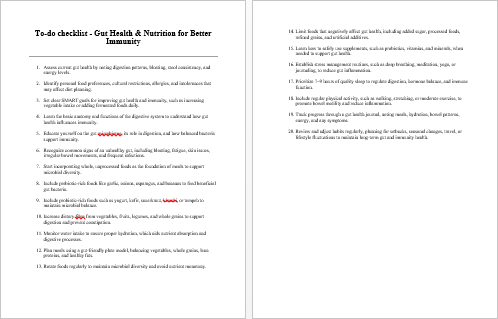
Gut Health & Nutrition for Better Immunity – Checklist
Gut Health & Nutrition for Better Immunity – FAQs
Gut Health & Nutrition for Better Immunity – Salespage Content
Package Details:
Word Count: 31 874 Words
Number of Pages: 127
Gut Health & Nutrition for Better Immunity – Bonus Content
Checklist
Word Count: 350 words
FAQs
Word Count: 852 words
Salespage Content
Word Count: 870 words
Total Word Count: 33 946 Words
Your PLR License Terms
PERMISSIONS: What Can You Do With These Materials?
Sell the content basically as it is (with some minor tweaks to make it “yours”).
If you are going to claim copyright to anything created with this content, then you must substantially change at 75% of the content to distinguish yourself from other licensees.
Break up the content into small portions to sell as individual reports for $10-$20 each.
Bundle the content with other existing content to create larger products for $47-$97 each.
Setup your own membership site with the content and generate monthly residual payments!
Take the content and convert it into a multiple-week “eclass” that you charge $297-$497 to access!
Use the content to create a “physical” product that you sell for premium prices!
Convert it to audios, videos, membership site content and more.
Excerpt and / or edit portions of the content to give away for free as blog posts, reports, etc. to use as lead magnets, incentives and more!
Create your own original product from it, set it up at a site and “flip” the site for megabucks!
RESTRICTIONS: What Can’t You Do With These Materials?
To protect the value of these products, you may not pass on the rights to your customers. This means that your customers may not have PLR rights or reprint / resell rights passed on to them.
You may not pass on any kind of licensing (PLR, reprint / resell, etc.) to ANY offer created from ANY PORTION OF this content that would allow additional people to sell or give away any portion of the content contained in this package.
You may not offer 100% commission to affiliates selling your version / copy of this product. The maximum affiliate commission you may pay out for offers created that include parts of this content is 75%.
You are not permitted to give the complete materials away in their current state for free – they must be sold. They must be excerpted and / or edited to be given away, unless otherwise noted. Example: You ARE permitted to excerpt portions of content for blog posts, lead magnets, etc.
You may not add this content to any part of an existing customer order that would not require them to make an additional purchase. (IE You cannot add it to a package, membership site, etc. that customers have ALREADY paid for.)
Share Now!
Latest Products



Free Sales Funnel Builder

Related Products
Popular & Trending

Featured Products