
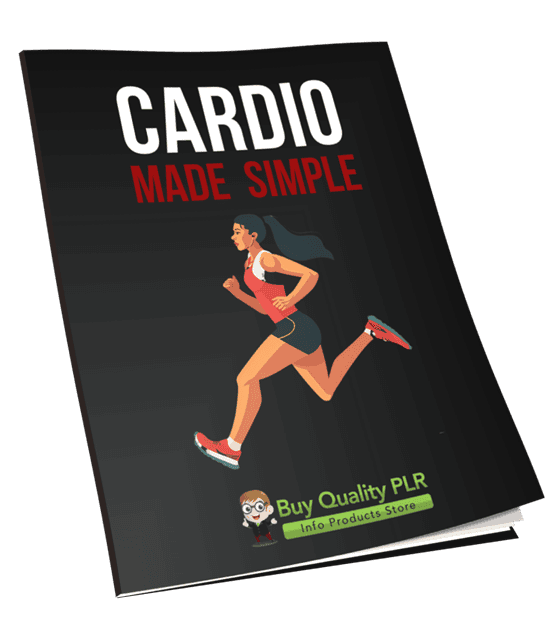
Cardio Made Simple PLR Course 34k Words
in Cardio PLR , Fitness PLR , Fitness PLR Ebooks , MRR eBooks , PLR Checklists , PLR eBooks , PLR eCourses , PLR List Building Reports , Premium PLR , Premium PLR eBooks , Premium PLR Reports , Premium White Label Brandable PLR Coaching Courses , Private Label Rights Products , Workout PLR , Workout PLR EbooksChoose Your Desired Option(s)
has been added to your cart!
have been added to your cart!
#cardiomadesimple #fitnessmarketing #hearthealth #workouttips #healthandwellness #plrcontent #fitnesstraining #plrcourse
A Complete, Beginner-Friendly Cardio Training Program You Can Brand, Sell, and Profit From
Turn Cardio Confusion Into Clarity — and Create a Profitable Fitness Product
Cardio is one of the most talked-about areas in fitness—yet also one of the most confusing for beginners. People don’t know how much cardio to do, what type works best, or how to stay motivated long term.
That’s exactly why Cardio Made Simple PLR Course is such a powerful opportunity.
This is a complete, easy-to-follow, beginner-friendly cardio program that breaks everything down step by step — without intimidating jargon, extreme workout plans, or unrealistic expectations. And because it comes with full Private Label Rights, you can brand it as your own and sell it for 100% profit.
If you’re looking to enter the health and fitness niche — or expand your existing product line — this course gives you a done-for-you foundation that saves months of work.
Why Cardio Made Simple Is a High-Demand PLR Product
✅ Cardio appeals to all fitness levels
✅ No equipment required for many workouts
✅ Fits weight loss, heart health, energy, and lifestyle niches
✅ Evergreen content that never goes out of style
✅ Ideal for beginners who feel overwhelmed
Fitness beginners don’t want intensity — they want clarity, confidence, and results. This course delivers exactly that.
Introducing the…
Cardio Made Simple PLR Course 34k Words
Course Overview
Cardio Made Simple was written in a friendly, motivational, and non-intimidating style. It guides readers from “I hate cardio” to “I understand cardio and actually enjoy it.”
The course is divided into 5 structured modules, each designed to build understanding, confidence, and consistency.
Module Breakdown
🔹 Module 1: Understanding Cardio and Its Benefits
Build a strong foundation and eliminate confusion
- Lesson 1: What Is Cardio?
Explains cardiovascular exercise in simple terms and why it matters for heart and lung health. - Lesson 2: Benefits of Cardio
Covers fat loss, improved energy, stress reduction, better sleep, and longevity. - Lesson 3: Types of Cardio Workouts
Introduces running, walking, cycling, swimming, HIIT, dancing, and low-impact options. - Lesson 4: Setting Realistic Goals
Teaches achievable goal-setting based on lifestyle, not extremes.
✅ Result: Readers finally understand cardio without feeling overwhelmed.
🔹 Module 2: Getting Started with Cardio
Help beginners take their first confident steps
- Lesson 1: Choosing the Right Cardio
Match workouts to personal preferences and schedules. - Lesson 2: Preparing Your Body
Warm-ups, mobility, and injury prevention basics. - Lesson 3: Understanding Intensity Levels
Heart rate zones, effort scale, and knowing your limits. - Lesson 4: Building a Beginner Routine
A simple structure anyone can stick to.
✅ Result: Readers start cardio safely and consistently.
🔹 Module 3: Cardio Techniques and Tips
Improve performance, comfort, and consistency
- Lesson 1: Mastering Proper Form
Reduce strain and avoid common mistakes. - Lesson 2: Breathing Techniques
Learn to breathe efficiently and last longer. - Lesson 3: Tracking Your Progress
Distance, time, steps, heart rate, and fitness tracking. - Lesson 4: Overcoming Common Challenges
Beat boredom, plateaus, fatigue, and low motivation.
✅ Result: Readers build confidence and stay consistent.
🔹 Module 4: Advanced Cardio Strategies
Upgrade results without burnout
- Lesson 1: Introduction to HIIT
How high-intensity training works in short sessions. - Lesson 2: Endurance Training
Learn to go longer without exhaustion. - Lesson 3: Mixing Cardio Styles
Prevent boredom and maximize results. - Lesson 4: Using Technology
Fitness apps, trackers, and wearables.
✅ Result: Readers progress naturally and sustainably.
🔹 Module 5: Maintaining Motivation and Lifestyle Integration
Make cardio a lifelong habit
- Lesson 1: Making Cardio Fun
Music, outdoor workouts, classes, and variety. - Lesson 2: Creating a Long-Term Plan
Steps to make cardio part of daily life. - Lesson 3: Nutrition for Cardio Success
Fueling workouts and improving recovery. - Lesson 4: Celebrating Progress and Staying Consistent
Milestones, rewards, and mindset strategies.
✅ Result: Cardio becomes enjoyable, not a chore.
What’s Included in This PLR Package
When you purchase Cardio Made Simple PLR, you receive:
✔ 32,645-word full training course
✔ Printable Cardio Checklist (506 words)
✔ Comprehensive FAQ section (804 words)
✔ Ready-made sales page (836 words)
✔ Full Private Label Rights license
Everything is editable, brandable, and ready for resale.
Who This Course Is Perfect For
- Fitness bloggers and coaches
- Beginners-focused fitness brands
- Weight loss program creators
- Health and wellness membership sites
- PLR sellers and resellers
- YouTube and social media fitness creators
- Email marketers in the wellness niche
Ways to Use & Profit From Cardio Made Simple
Here are high-converting monetization ideas that align perfectly with the PLR license:
💰 Direct Product Sales
- Sell as a digital course for $47–$97
- Bundle with meal plans or habit trackers for higher pricing
🎥 Video or eClass Conversion
- Turn modules into weekly video lessons
- Charge $297–$497 for guided coaching
📦 Mini Products
- Break modules into short guides and sell for $10–$20 each
🔄 Membership Sites
- Add as part of a fitness or lifestyle membership
- Generate monthly recurring revenue
📧 Lead Generation
- Use edited excerpts as blog posts or free lead magnets
🏋️ Coaching & Challenges
- Use as a 30-day cardio challenge framework
- Offer accountability groups or 1-on-1 coaching
📈 Website Flip Opportunity
- Build a cardio-focused site using this course
- Sell the site with content and product included
PLR License Summary
✅ You ARE Allowed To:
- Rebrand and sell as your own product
- Edit, rewrite, or adapt content
- Convert to video, audio, or print
- Use for paid memberships or bundles
- Create lead magnets from excerpts
❌ You Are NOT Allowed To:
- Pass PLR or resale rights to customers
- Give away the full product for free
- Offer 100% affiliate commissions
- Add to existing paid products without a new purchase
Why Cardio Made Simple Is a Smart PLR Investment
✔ Beginner-friendly and non-intimidating
✔ Massive evergreen demand
✔ Covers fitness, wellness, and lifestyle niches
✔ Requires no personal fitness authority to sell
✔ Complete product ecosystem included
✔ Easy to customize and brand
This is the kind of PLR product buyers actually complete and recommend — making it exceptionally valuable.
Final Thoughts
Cardio Made Simple PLR Course is more than just content — it’s a ready-made fitness solution that helps people move better, feel better, and stay consistent.
For you, it’s an opportunity to:
- Launch a fitness product fast
- Build authority in a proven niche
- Create sustainable digital income
All without writing 30,000+ words from scratch.
✅ Start Selling Cardio Made Simple Today
Add your branding, upload the files, and turn a timeless fitness topic into a reliable income stream.
Buy Quality PLR gives you the foundation — now it’s your turn to profit 💪
has been added to your cart!
have been added to your cart!
Here A Sample of the Cardio Made Simple PLR Course
Welcome to Cardio Made Simple! This course is designed to help you understand, enjoy, and master cardiovascular exercise without feeling overwhelmed. Whether you’re a beginner or just looking to refresh your fitness routine, this course will guide you step by step toward a healthier, stronger, and more energetic you. Let’s make cardio simple, fun, and effective!
Module 1: Understanding Cardio and Its Benefits
Lesson 1: What is Cardio?
Welcome to the first lesson of Cardio Made Simple. In this lesson, we will explore the very foundation of cardiovascular exercise, commonly known as cardio. Understanding cardio is crucial before embarking on any fitness routine, as it forms the cornerstone of heart health, lung efficiency, and overall physical well-being. By the end of this lesson, you will have a comprehensive understanding of what cardio is, how it works, and why it is essential for maintaining a healthy body.
Step 1: Understanding the Term “Cardio”
The term “cardio” is derived from the Greek word “kardia,” which means heart. In fitness and health terminology, cardio refers to exercises that primarily focus on improving the efficiency of your cardiovascular system—the heart, lungs, and blood vessels. Cardiovascular exercise is any activity that increases your heart rate and keeps it elevated for a sustained period.
From a physiological standpoint, cardio involves repetitive movements that engage large muscle groups such as your legs, arms, and core. Common examples include walking, running, cycling, swimming, dancing, rowing, and even jumping rope. While these activities may differ in style and intensity, their central purpose is to strengthen the cardiovascular system by challenging the heart and lungs to work harder than at rest.
Understanding the term “cardio” at this fundamental level is important because it forms the basis for all discussions about cardiovascular exercise. When you grasp the mechanics behind cardio, you can approach training with purpose and clarity, rather than simply following exercises without understanding their benefits.
Step 2: How Cardio Works in Your Body
To understand why cardio is essential, we need to explore what happens in your body during cardiovascular exercise. Cardio impacts several physiological systems simultaneously:
- Heart Function
When you perform cardio exercises, your heart beats faster to pump more blood throughout your body. This increased circulation delivers oxygen and nutrients to muscles and organs while removing waste products such as carbon dioxide and lactic acid. Over time, consistent cardio strengthens the heart muscle, improving its efficiency so that it pumps more blood per beat, even at rest. - Lung Efficiency
Cardio exercise also challenges the respiratory system. Your lungs increase oxygen intake and carbon dioxide removal during activity. Regular cardio training improves lung capacity and respiratory efficiency, meaning you can sustain activity for longer periods without fatigue. - Blood Vessel Health
Cardiovascular exercise promotes flexibility and health of the arteries and veins. Improved blood flow reduces the risk of arterial stiffness, high blood pressure, and other cardiovascular diseases. Your circulatory system becomes more adaptable, allowing oxygen-rich blood to reach tissues more effectively. - Muscular Engagement
Cardio involves repeated, rhythmic movements that engage large muscle groups. For example, when running or cycling, your leg muscles contract continuously to propel your body forward. This sustained engagement improves muscular endurance, strength, and tone over time. - Metabolic Benefits
Cardio exercises increase energy expenditure, stimulate metabolism, and improve insulin sensitivity. This means your body becomes more efficient at burning calories, regulating blood sugar, and maintaining a healthy weight.
Understanding how cardio works on a physiological level will help you appreciate why it is such a vital component of a holistic fitness routine. It is not merely about “sweating” or “burning calories”; it is about enhancing the efficiency of your heart, lungs, and metabolic system in a sustainable, long-term way.
Step 3: Different Types of Cardio Exercise
Cardio is not limited to one activity. There are multiple forms of cardiovascular exercise, and understanding the differences will help you select the right approach for your fitness goals, lifestyle, and preferences. Cardio can be categorized into the following main types:
- Steady-State Cardio
This is the classic form of cardiovascular training, where you maintain a consistent pace for a sustained period, typically 20 to 60 minutes. Examples include jogging, swimming, and cycling at a moderate intensity. Steady-state cardio is excellent for building endurance, improving heart health, and supporting fat metabolism. - High-Intensity Interval Training (HIIT)
HIIT involves short bursts of intense exercise followed by brief periods of rest or low-intensity activity. For example, sprinting for 30 seconds followed by walking for 60 seconds. HIIT is highly effective for improving cardiovascular capacity, boosting metabolism, and burning fat in a shorter time frame compared to traditional steady-state cardio. - Circuit Training
Circuit training combines cardiovascular movements with strength exercises. For instance, you may perform a series of exercises such as jumping jacks, push-ups, and squats consecutively with minimal rest. This method engages multiple systems at once, providing both aerobic and anaerobic benefits. - Low-Impact Cardio
Activities like brisk walking, elliptical training, and swimming are considered low-impact cardio. These exercises are gentle on the joints and ideal for beginners, older adults, or anyone recovering from injury. They still offer significant cardiovascular benefits without excessive strain. - Functional Cardio
This includes movements that mimic daily activities, such as dancing, hiking, or sports like tennis. Functional cardio improves endurance, coordination, balance, and agility while still supporting heart and lung health.
By understanding the variety of cardio options, learners can choose activities they enjoy, which is a key factor in sustaining a long-term fitness routine. Enjoyment leads to consistency, and consistency leads to results.
Step 4: Why Cardio is Essential
Cardio is widely recommended by health professionals and fitness experts around the world because it offers numerous physical, mental, and long-term health benefits. Let’s explore the reasons cardio is essential in detail:
- Heart Health
The heart is a muscle, and like any other muscle in the body, it benefits from regular exercise. Cardio strengthens the heart, improves circulation, and reduces the risk of cardiovascular diseases such as heart attacks, strokes, and high blood pressure. - Weight Management
Regular cardiovascular exercise burns calories, which helps in maintaining or reducing body weight. Combined with a balanced diet, cardio is a powerful tool for healthy weight management and body composition improvement. - Mental Health
Cardio has profound effects on mental well-being. Exercise stimulates the release of endorphins, serotonin, and dopamine, chemicals that promote feelings of happiness and reduce stress, anxiety, and depression. Engaging in regular cardio can boost your mood, improve focus, and enhance cognitive function. - Longevity and Disease Prevention
Numerous studies show that regular cardio exercise increases life expectancy and lowers the risk of chronic illnesses, including diabetes, obesity, metabolic syndrome, and certain types of cancer. It also strengthens the immune system, helping your body fight infections more effectively. - Improved Energy and Stamina
Consistent cardio training improves overall stamina and energy levels. Daily activities become easier, from climbing stairs to carrying groceries, because your body becomes more efficient at utilizing oxygen and energy. - Better Sleep Quality
Cardiovascular exercise helps regulate sleep patterns by reducing stress and promoting relaxation. People who engage in regular cardio often report deeper, more restorative sleep.
Step 5: Common Myths About Cardio
Before we move forward, it is important to address some common misconceptions about cardio. Understanding the truth behind these myths ensures that learners approach cardio with realistic expectations:
- Myth: Cardio is Only for Weight Loss
While cardio helps burn calories, its benefits extend far beyond weight management. Cardio improves heart health, lung capacity, mood, endurance, and long-term wellness. - Myth: Longer Cardio is Always Better
Quality matters more than duration. Effective cardio can be achieved with shorter, focused sessions, especially with interval training, without spending hours on the treadmill. - Myth: Cardio Makes You Bulky
Cardiovascular exercise primarily improves endurance and leanness. It does not significantly increase muscle bulk, especially in the way weightlifting does. - Myth: You Need to Be Fit to Start Cardio
Cardio is adaptable to all fitness levels. Beginners can start with low-impact, short-duration exercises and gradually increase intensity and duration as fitness improves.
By debunking these myths, learners are more likely to approach cardio with confidence and realistic expectations, reducing fear or hesitation associated with starting a new exercise routine.
Step 6: Step-by-Step Approach to Understanding Cardio
To truly understand cardio and make it a part of your lifestyle, follow these practical steps:
- Learn the Fundamentals
Begin with understanding what cardio is, how it affects your body, and why it is important. Reflect on your current fitness level and identify areas where cardio can benefit you most. - Observe Your Body
Pay attention to how your heart rate responds to activity. Notice breathing patterns, muscle fatigue, and energy levels during different forms of cardio. Awareness is key to safe and effective training. - Experiment with Different Types
Try a variety of cardio exercises to find what you enjoy. Whether it is running, swimming, dancing, or cycling, the best cardio is the one you will stick with consistently. - Track and Reflect
Keep a simple log of your cardio sessions, noting duration, intensity, and how you felt. Reflection helps in understanding your progress and identifying improvements. - Set Realistic Goals
Based on your understanding of cardio and its benefits, set small, achievable goals. This could be completing a 20-minute walk daily, jogging three times a week, or mastering a short HIIT routine.
Conclusion
Cardio is much more than just exercise. It is a vital component of a healthy lifestyle that strengthens the heart, improves lung capacity, enhances metabolism, and supports mental well-being. By understanding the mechanisms, types, and benefits of cardiovascular exercise, learners are better equipped to incorporate cardio into their daily routines safely and effectively.
Remember, cardio is adaptable and scalable. Regardless of age, fitness level, or lifestyle, there is a form of cardiovascular exercise for everyone. Starting with a foundational understanding will ensure you approach your fitness journey with confidence, knowledge, and a clear sense of purpose.
By the end of this lesson, you should be able to:
- Define what cardio is and explain its primary function.
- Describe how cardio affects the heart, lungs, muscles, and metabolism.
- Identify different types of cardio exercises and their purposes.
- Understand the physical and mental benefits of consistent cardiovascular exercise.
- Recognize common myths and misconceptions about cardio.
- Begin observing, experimenting, and tracking cardio activities safely and effectively.
With this knowledge, you are now ready to move on to exploring the specific benefits of cardio and how it can transform your health and lifestyle, which will be covered in the next lesson.
Lesson 2: Benefits of Cardio
Welcome to the second lesson of Cardio Made Simple. In the previous lesson, we explored what cardio is and how it works in the body. Now, it is time to focus on why cardiovascular exercise is so essential. Understanding the benefits of cardio provides motivation and clarity, helping learners appreciate why investing time in cardiovascular training can lead to long-lasting health improvements.
Cardio is not simply about burning calories or losing weight; it influences almost every system in your body. From boosting energy levels to enhancing mental health, cardiovascular exercise offers numerous advantages that improve quality of life. This lesson will provide a step-by-step exploration of the benefits of cardio, with practical insights on how each benefit manifests and how learners can leverage it in their own routines.
Step 1: Cardiovascular Exercise and Heart Health
The most obvious and critical benefit of cardio is its positive impact on heart health. Cardiovascular disease remains one of the leading causes of mortality worldwide, making heart care essential for longevity.
- Strengthening the Heart Muscle
During cardio, the heart works harder to pump blood throughout the body. This increased demand strengthens the heart muscle, much like lifting weights strengthens skeletal muscles. A stronger heart pumps more blood per beat, improving efficiency and reducing strain over time. - Lowering Blood Pressure
Regular cardiovascular exercise helps maintain healthy blood pressure by improving the elasticity of arteries and veins. Flexible blood vessels allow blood to flow more freely, which reduces resistance and keeps blood pressure in a healthy range. - Improving Cholesterol Levels
Cardio positively affects cholesterol by increasing high-density lipoprotein (HDL) levels, commonly known as “good cholesterol,” and reducing low-density lipoprotein (LDL), or “bad cholesterol.” Balanced cholesterol levels lower the risk of plaque buildup in arteries, reducing the chances of heart attack and stroke. - Reducing Risk of Cardiovascular Disease
Engaging in consistent cardiovascular exercise significantly lowers the risk of coronary artery disease, heart attacks, and stroke. By improving circulation, strengthening the heart, and optimizing blood chemistry, cardio helps create a resilient cardiovascular system.
By understanding how cardio strengthens and protects the heart, learners can see that the time invested in regular exercise is an investment in longevity and quality of life.
Step 2: Boosting Energy Levels
One of the most immediately noticeable benefits of cardio is an increase in energy. Many people assume that exercise might be tiring, but regular cardiovascular activity actually enhances stamina and daily vitality.
- Enhanced Oxygen Delivery
During cardio, your heart and lungs work together to supply oxygen to the muscles and organs. Over time, the body becomes more efficient at transporting and utilizing oxygen, reducing fatigue during both exercise and daily activities. - Improved Mitochondrial Function
Mitochondria, the “powerhouses” of cells, generate energy for the body. Regular cardio stimulates mitochondrial growth and efficiency, which translates to increased energy production at a cellular level. This means that over time, tasks such as climbing stairs, walking long distances, or even concentrating at work feel easier. - Enhanced Endurance
Cardio builds endurance by training the body to sustain moderate to high-intensity activity for longer periods. As stamina improves, daily activities require less effort, leading to an overall sense of increased energy and vitality. - Reduction of Fatigue
Studies consistently show that individuals who engage in regular cardiovascular exercise report feeling less fatigued throughout the day. The combination of improved oxygenation, enhanced circulation, and better sleep quality contributes to sustained energy levels.
By the end of this step, learners should understand that cardio is not a drain on energy but a tool for enhancing overall vitality and improving performance in both physical and mental tasks.
Step 3: Calorie Burn and Weight Management
Cardio is highly effective for burning calories and supporting weight management, but it is important to understand how this works and how to use it effectively.
- Calorie Expenditure During Activity
Cardiovascular exercise increases energy expenditure by engaging large muscle groups and maintaining elevated heart rate over time. Activities like running, cycling, or swimming burn significantly more calories than sedentary behaviors, contributing to weight loss or maintenance. - Boosting Metabolism
Cardio also stimulates metabolic activity, both during and after exercise. High-intensity cardio, such as interval training, increases post-exercise oxygen consumption, meaning the body continues to burn calories at an elevated rate even after the workout ends. - Targeting Fat Stores
Sustained moderate-intensity cardio primarily uses fat as a fuel source. Regular cardio sessions improve the body’s ability to mobilize and utilize stored fat, which can help reduce excess body fat and improve body composition over time. - Sustainable Weight Management
Cardio is a long-term strategy rather than a quick fix. By consistently incorporating cardiovascular exercise, learners can maintain a healthy weight, reduce visceral fat around organs, and support metabolic health.
It is crucial to note that combining cardio with a balanced diet and resistance training maximizes the benefits of calorie burn and body composition improvements. Learners should understand that cardio alone is not the only factor but an essential component of a healthy lifestyle.
Step 4: Mental Health and Stress Reduction
Cardio is not only physical—it has profound effects on the mind. Engaging in regular cardiovascular exercise reduces stress, improves mood, and enhances cognitive function.
- Release of Endorphins
Exercise triggers the release of endorphins, which are natural chemicals in the brain that create feelings of happiness and relaxation. This phenomenon, often referred to as the “runner’s high,” helps combat feelings of anxiety or depression. - Reduction of Cortisol Levels
Cardiovascular activity also helps regulate stress hormones such as cortisol. Regular cardio helps balance hormone levels, reducing chronic stress and its negative effects on the body, such as high blood pressure, fatigue, and immune suppression. - Improved Sleep Quality
Cardio has been shown to improve both the quality and duration of sleep. Better sleep enhances mental clarity, mood regulation, and overall energy levels, creating a positive feedback loop that supports both mental and physical health. - Enhanced Cognitive Function
Studies suggest that regular cardiovascular exercise increases blood flow to the brain, supporting memory, learning, and overall cognitive function. Cardio may also reduce the risk of cognitive decline with aging, making it a valuable tool for long-term brain health.
By understanding the mental health benefits of cardio, learners recognize that exercise is not solely a physical endeavor but a holistic practice that improves both body and mind.
Step 5: Longevity and Disease Prevention
One of the most compelling reasons to include cardio in a fitness routine is its impact on longevity and disease prevention.
- Extended Life Expectancy
Research consistently demonstrates that individuals who engage in regular cardiovascular exercise have a lower risk of premature death. Even moderate activity, such as brisk walking, has been shown to significantly improve life expectancy. - Prevention of Chronic Diseases
Cardio helps prevent numerous chronic conditions, including type 2 diabetes, obesity, hypertension, and certain types of cancer. By improving circulation, metabolism, and immune function, cardio provides a protective effect against many health risks. - Enhanced Immune Function
Moderate cardiovascular exercise stimulates the immune system, improving the body’s ability to fight infections and recover from illness. Regular cardio creates a more resilient body that responds effectively to daily stressors. - Bone and Joint Health
Weight-bearing cardio activities, such as walking or jogging, help maintain bone density and joint function. This is particularly important for aging populations, as it reduces the risk of osteoporosis and supports mobility over the long term.
By understanding the connection between cardio, longevity, and disease prevention, learners can appreciate that each session is an investment in their future health.
Step 6: Step-by-Step Approach to Leveraging the Benefits of Cardio
To ensure learners maximize the benefits of cardio, it is important to approach exercise systematically:
- Start with Baseline Assessment
Understand your current fitness level, heart rate, and endurance. This helps tailor cardio sessions to your capacity and ensures safe progression. - Select Appropriate Cardio Activities
Choose exercises that are enjoyable, feasible, and aligned with your goals. Enjoyment increases consistency, which is critical for long-term benefits. - Incorporate Variety
Mix different types of cardio, such as steady-state, HIIT, and functional cardio, to challenge different systems, prevent boredom, and enhance overall fitness. - Monitor Intensity and Duration
Use tools like heart rate zones or perceived exertion to ensure you are exercising at the right intensity to achieve the desired benefits without overtraining. - Track Progress
Maintain a log of workouts, energy levels, and mood improvements. Tracking progress provides motivation, accountability, and insight into which approaches are most effective. - Combine with Other Healthy Habits
Complement cardio with balanced nutrition, strength training, and adequate rest to amplify benefits such as energy, fat loss, mental clarity, and longevity.
Conclusion
Cardio is one of the most effective and versatile forms of exercise, offering benefits that span physical health, mental well-being, and long-term longevity. By engaging in regular cardiovascular exercise, learners can:
- Strengthen the heart and improve circulation.
- Boost energy and endurance for daily activities.
- Burn calories and manage weight effectively.
- Reduce stress, enhance mood, and improve cognitive function.
- Prevent chronic diseases and extend life expectancy.
Understanding the full spectrum of cardio benefits empowers learners to approach exercise with motivation, knowledge, and a clear sense of purpose. Consistency, variety, and enjoyment are key to unlocking these advantages and creating a sustainable cardio routine.
Cardio is not just an activity; it is a lifestyle investment that rewards both the body and mind. By integrating regular cardiovascular exercise into daily life, learners can experience tangible improvements in energy, health, and overall quality of life, while laying the foundation for long-term vitality.
Lesson 3: Types of Cardio Workouts
Welcome to the third lesson of Cardio Made Simple. Now that you understand what cardio is and why it is important, it is time to explore the variety of cardiovascular workouts available. One of the reasons cardio is so versatile is the sheer number of ways it can be performed. Different types of cardio engage your body in distinct ways, offer unique benefits, and can be adapted to your fitness level, preferences, and lifestyle.
In this lesson, we will explore major forms of cardio, including running, cycling, high-intensity interval training (HIIT), swimming, and dancing. By understanding each type, learners can select the form of cardio they enjoy most, which is crucial for long-term consistency and success.
Step 1: Running
Running is one of the most accessible and widely practiced forms of cardio. It requires minimal equipment—primarily a good pair of running shoes—and can be performed almost anywhere, from parks to city streets to treadmills.
- How Running Works
Running engages large muscle groups in the legs, such as the quadriceps, hamstrings, calves, and glutes. The repetitive, rhythmic motion elevates the heart rate, strengthens the cardiovascular system, and improves lung capacity. Running also involves core stabilization, which contributes to overall balance and posture. - Benefits of Running
Running improves cardiovascular endurance, strengthens bones and joints, enhances mental health through endorphin release, and promotes calorie burn for weight management. Long-distance running can improve aerobic capacity, while sprinting focuses on anaerobic strength and explosive power. - Variations of Running
- Steady-State Running: Maintaining a consistent pace over a longer distance, which improves endurance.
- Interval Running: Alternating periods of sprinting with recovery walking or jogging, ideal for high-intensity cardio.
- Trail Running: Running on uneven terrain to engage additional stabilizing muscles and add variety.
- Treadmill Running: Offers controlled conditions and is ideal for beginners or inclement weather.
- Tips for Effective Running
- Start with manageable distances and gradually increase intensity.
- Maintain proper posture: upright torso, relaxed shoulders, and forward-looking gaze.
- Focus on breathing rhythmically to optimize oxygen intake.
- Invest in quality footwear to reduce the risk of joint strain.
Running is an excellent foundation for cardio training because it combines accessibility, intensity, and measurable progress. It is suitable for beginners and advanced athletes alike.
Step 2: Cycling
Cycling is another highly effective form of cardio that can be performed outdoors on a bike or indoors on a stationary cycle. It provides a low-impact alternative to running, making it ideal for individuals with joint concerns or those seeking variety in their cardio routine.
- How Cycling Works
Cycling primarily targets the quadriceps, hamstrings, glutes, and calves. The pedaling motion engages these muscles continuously while the heart rate remains elevated, improving cardiovascular efficiency. Cycling also promotes joint mobility, particularly in the knees and hips. - Benefits of Cycling
Cycling improves cardiovascular endurance, burns calories efficiently, and strengthens the lower body. It is low-impact, reducing the risk of joint injury. Outdoor cycling additionally exposes the body to fresh air and sunlight, which supports mental well-being. - Variations of Cycling
- Road Cycling: Long-distance cycling on paved roads for endurance and stamina.
- Mountain Biking: Off-road cycling for added resistance, balance, and core engagement.
- Stationary Cycling: Indoor cycling classes or home workouts for controlled intensity.
- Spin Classes: Structured indoor sessions with variable resistance, incorporating interval and hill training.
- Tips for Effective Cycling
- Adjust the seat and handlebars to ensure proper posture and avoid strain.
- Use proper footwear for better pedal efficiency.
- Focus on cadence (pedal revolutions per minute) to maintain an optimal heart rate.
- Gradually increase duration and resistance to improve endurance and strength.
Cycling is versatile, enjoyable, and adaptable to different fitness levels, making it an excellent addition to any cardio routine.
Step 3: High-Intensity Interval Training (HIIT)
High-Intensity Interval Training, commonly known as HIIT, is a powerful cardio method that alternates short bursts of intense activity with brief recovery periods. HIIT has gained popularity due to its efficiency, effectiveness, and ability to deliver significant results in a shorter timeframe.
- How HIIT Works
HIIT combines anaerobic and aerobic elements, forcing the heart to work at near-maximal capacity during intense bursts, followed by recovery periods that allow partial regeneration. This fluctuation trains the cardiovascular system to adapt to varying intensities. - Benefits of HIIT
HIIT increases calorie burn during and after the workout through excess post-exercise oxygen consumption (EPOC). It improves cardiovascular efficiency, enhances muscular endurance, boosts metabolism, and can significantly reduce body fat in a time-efficient manner. - Variations of HIIT
- Bodyweight HIIT: Uses exercises like jumping jacks, burpees, mountain climbers, and squats.
- Equipment-Based HIIT: Incorporates treadmills, stationary bikes, rowing machines, or resistance bands.
- Tabata Training: A form of HIIT with 20 seconds of maximum effort followed by 10 seconds of rest, repeated for four minutes.
- Circuit HIIT: Combines cardio and strength exercises in a high-intensity sequence for full-body conditioning.
- Tips for Effective HIIT
- Warm up properly to prevent injury during high-intensity movements.
- Focus on form over speed to maximize results and reduce the risk of strain.
- Adjust intervals and intensity based on your fitness level.
- Include rest and recovery days in your schedule to avoid overtraining.
HIIT is ideal for learners with limited time who still want substantial cardio benefits. Its adaptability ensures it can be tailored for beginners, intermediate participants, or advanced athletes.
Step 4: Swimming
Swimming is a full-body, low-impact cardiovascular exercise that engages multiple muscle groups simultaneously while providing resistance through water. It is suitable for all ages and fitness levels and is particularly beneficial for those seeking a joint-friendly form of cardio.
- How Swimming Works
Swimming involves rhythmic, continuous movements of the arms and legs against water resistance. This not only elevates the heart rate but also challenges the lungs, improving oxygen utilization and respiratory efficiency. Swimming also engages core muscles for stabilization. - Benefits of Swimming
Swimming improves cardiovascular endurance, builds muscular strength, enhances flexibility, and promotes mental relaxation. The buoyancy of water reduces impact on joints, making it ideal for rehabilitation or individuals with musculoskeletal concerns. - Variations of Swimming
- Freestyle (Front Crawl): Fast, efficient stroke that improves speed and endurance.
- Breaststroke: Moderate intensity, focusing on chest, arm, and leg coordination.
- Backstroke: Engages back muscles and improves posture while maintaining cardiovascular intensity.
- Butterfly: High-intensity stroke that strengthens the upper body and core.
- Tips for Effective Swimming
- Focus on breathing rhythm and stroke efficiency.
- Alternate strokes to prevent fatigue and engage different muscle groups.
- Incorporate swimming drills or laps to monitor progress and challenge endurance.
- Use swimming accessories such as fins or paddles to enhance resistance and improve technique.
Swimming is highly effective for full-body conditioning, cardiovascular health, and endurance training, all while minimizing joint stress.
Step 5: Dancing
Dancing is a dynamic and enjoyable form of cardio that combines rhythm, coordination, and aerobic activity. Unlike traditional forms of exercise, dance emphasizes creativity, expression, and social interaction, making it a highly motivating and sustainable workout option.
- How Dancing Works
Dancing elevates the heart rate through continuous, rhythmic movements of large muscle groups. Depending on the style, it can range from moderate-intensity movements to vigorous aerobic routines. Dance also enhances balance, coordination, flexibility, and core stability. - Benefits of Dancing
Dance improves cardiovascular endurance, burns calories, strengthens muscles, reduces stress, and enhances mental agility. Additionally, social forms of dance can provide emotional benefits through connection and enjoyment. - Variations of Dance Cardio
- Zumba: Aerobic dance inspired by Latin music, combining simple choreographed steps.
- Hip-Hop: High-energy, rhythm-focused dance that engages multiple muscle groups.
- Salsa or Ballroom: Partner-based dancing that improves coordination, balance, and stamina.
- Dance Fitness Classes: Structured cardio sessions incorporating choreography and interval training.
- Tips for Effective Dance Cardio
- Choose dance styles that match your fitness level and personal preference.
- Maintain proper posture and alignment to prevent injury.
- Focus on continuous movement to sustain heart rate and maximize cardiovascular benefits.
- Use music to enhance motivation and enjoyment, making exercise feel effortless.
Dance is an excellent option for learners seeking a fun, engaging, and socially interactive form of cardio. Its combination of aerobic conditioning and enjoyment promotes long-term adherence to a fitness routine.
Step 6: Choosing the Right Cardio for You
With so many forms of cardio available, it is important to select the activities that align with your goals, preferences, and lifestyle. Consider the following when choosing cardio workouts:
- Personal Preference
The best cardio is the one you enjoy. Consistency is key, and enjoyment promotes long-term adherence. - Fitness Level
Beginners may prefer low-impact options such as walking, swimming, or cycling, while intermediate or advanced participants can incorporate running, HIIT, or vigorous dance sessions. - Goals
- Weight management: Running, cycling, and HIIT are highly effective.
- Endurance improvement: Steady-state running, swimming, and cycling provide sustained cardiovascular stress.
- Mental well-being: Dance, swimming, and group classes offer enjoyment and stress reduction.
- Accessibility
Consider available resources, equipment, and space. Outdoor running, bodyweight HIIT, or dance videos at home may be more convenient than accessing a pool or gym.
By understanding the benefits, requirements, and variations of each cardio type, learners can create a personalized plan that maximizes results while remaining sustainable and enjoyable.
Conclusion
Cardiovascular exercise is versatile and adaptable. Running, cycling, HIIT, swimming, and dancing each offer unique benefits that strengthen the heart, improve lung capacity, burn calories, reduce stress, and enhance overall health. By exploring different forms, learners can identify which types of cardio they enjoy most, ensuring consistent engagement and long-term success.
Choosing the right cardio is a personal journey. It requires balancing enjoyment, accessibility, and fitness goals. The key to maximizing results is variety, consistency, and progressive challenge. By integrating the cardio types discussed in this lesson, learners can build a well-rounded routine that supports heart health, endurance, mental well-being, and overall vitality.
Lesson 4: Setting Realistic Goals
Welcome to the fourth and final lesson of Module 1 in Cardio Made Simple. In the previous lessons, you learned what cardio is, the benefits it provides, and the various types of cardiovascular workouts available. Now, it is time to focus on one of the most critical aspects of long-term success in cardio: setting realistic and achievable goals.
Setting goals is not merely a motivational tool; it is a practical framework that helps learners structure their workouts, track progress, and achieve measurable results. Without clear goals, cardio routines may become inconsistent, ineffective, or overwhelming. In this lesson, we will explore the importance of goal setting, how to assess your fitness level, and how to create personalized, realistic cardio goals that align with your lifestyle and objectives.
Step 1: Understanding the Importance of Goal Setting in Cardio
Goal setting is essential in cardio training for several reasons:
- Provides Direction and Focus
Clear goals give your cardio routine purpose. Instead of exercising without a plan, you are guided by measurable targets, such as running a specific distance, completing a certain number of sessions per week, or improving heart rate performance. - Enhances Motivation
Goals provide a tangible endpoint to work toward, which increases motivation and commitment. When learners know what they are striving for, it becomes easier to maintain consistency, even on days when energy or enthusiasm is low. - Facilitates Progress Tracking
Measurable goals allow you to monitor improvement over time. Whether it is increased endurance, reduced recovery time, or enhanced speed, tracking progress reinforces achievement and helps identify areas that need adjustment. - Reduces Risk of Overtraining or Burnout
Without goals, learners may either overcommit or underperform. Structured goals ensure that workouts are appropriately challenging, sustainable, and aligned with personal fitness levels.
By understanding why goal setting is essential, learners can approach cardio with intentionality rather than performing random exercises without direction.
Step 2: Assessing Your Fitness Level
Before setting goals, it is crucial to assess your current fitness level. Understanding your baseline ensures that goals are realistic, achievable, and safe.
- Cardiovascular Endurance Assessment
Measure how long you can perform cardio without fatigue. For beginners, this might be a 10–15 minute brisk walk or light jog, while more advanced individuals may run or cycle for longer durations. Record your starting distance, duration, and heart rate. - Heart Rate Monitoring
Determine your resting heart rate and maximum heart rate. The resting heart rate indicates overall cardiovascular efficiency, while the maximum heart rate helps you set appropriate intensity levels for workouts. The commonly used formula for estimating maximum heart rate is 220 minus your age. - Muscular Strength and Flexibility
While cardio primarily targets the heart and lungs, overall fitness affects performance. Assess leg strength, core stability, and flexibility, as these influence endurance and the ability to perform various types of cardio safely. - Lifestyle and Schedule Considerations
Evaluate how much time you can realistically dedicate to cardio each week. Consider work commitments, family responsibilities, and other fitness activities to determine feasible session frequency and duration.
By objectively assessing your fitness level and lifestyle, you can create a foundation for setting practical and sustainable goals.
Step 3: Defining Different Types of Cardio Goals
Cardio goals can be categorized into several types, depending on the desired outcomes. Understanding the categories helps learners set focused and meaningful objectives.
- Performance Goals
Performance goals focus on improving physical capabilities, such as running a specific distance, completing a cycling route, or increasing pace during swimming. Examples include:- Running 5 kilometers without stopping.
- Cycling 20 kilometers in 60 minutes.
- Completing 10 consecutive rounds of HIIT exercises.
- Health and Wellness Goals
These goals prioritize improvements in cardiovascular health, stress reduction, and overall well-being rather than specific performance metrics. Examples include:- Lowering resting heart rate over three months.
- Engaging in 30 minutes of cardio five days a week to reduce stress.
- Improving sleep quality through regular cardiovascular activity.
- Weight and Body Composition Goals
Cardio can support calorie burn and fat loss as part of a broader fitness plan. Goals in this category focus on sustainable weight management rather than rapid changes. Examples include:- Burning an additional 200 calories per cardio session.
- Reducing body fat percentage by 2–3 percent over eight weeks.
- Completing a weekly schedule of three 45-minute cardio sessions.
- Habit and Consistency Goals
For beginners or those returning to exercise, the focus may be on establishing regular cardio habits rather than specific performance outcomes. Examples include:- Completing cardio workouts three times per week consistently for a month.
- Walking 10,000 steps daily for four weeks.
- Incorporating a 15-minute morning cardio routine into daily life.
Understanding the type of goal you want to achieve helps in tailoring cardio sessions, tracking progress, and maintaining motivation.
Step 4: Using the SMART Goal Framework
One of the most effective methods for setting realistic cardio goals is the SMART framework. SMART stands for Specific, Measurable, Achievable, Relevant, and Time-bound. This approach ensures that goals are clear, actionable, and realistic.
- Specific
Goals should be precise and clearly defined. Instead of saying, “I want to get fit,” specify what fitness means in practical terms. For example: “I want to run 3 kilometers without stopping by the end of eight weeks.” - Measurable
A measurable goal allows you to track progress objectively. Metrics could include distance, duration, heart rate, calories burned, or session frequency. Measurable goals help learners evaluate whether they are on track and celebrate milestones. - Achievable
Goals must be realistic based on current fitness levels, available time, and resources. Setting overly ambitious targets can lead to frustration or injury, while achievable goals foster motivation and confidence. - Relevant
Goals should align with personal interests, lifestyle, and long-term health objectives. For example, a cycling enthusiast may set a goal of completing a 30-kilometer ride rather than focusing on swimming laps. Relevance ensures sustained engagement. - Time-bound
Assigning a timeframe to goals creates a sense of urgency and accountability. Deadlines help structure progress and allow for adjustments if needed. For example: “I will walk 10,000 steps daily for the next six weeks.”
Using the SMART framework transforms vague intentions into actionable plans, providing clarity, direction, and motivation for learners of all levels.
Step 5: Creating Short-Term and Long-Term Goals
Effective goal setting involves a combination of short-term and long-term objectives. Short-term goals provide immediate targets and motivation, while long-term goals guide overall progress.
- Short-Term Goals
Short-term goals are typically achievable within days or weeks. They focus on building consistency, developing habits, or achieving incremental performance improvements. Examples include:- Completing three 20-minute cardio sessions this week.
- Increasing running distance by 500 meters over two weeks.
- Incorporating a 10-minute warm-up and cool-down in every session.
- Long-Term Goals
Long-term goals span several months or even a year. They reflect the ultimate outcome learners want to achieve and are often more ambitious. Examples include:- Running a 10-kilometer race in three months.
- Reducing resting heart rate by 10 beats per minute within six months.
- Achieving sustainable weight loss of 5 kilograms through regular cardio and nutrition.
- Integrating Goals
Short-term goals should serve as stepping stones toward long-term objectives. Achieving small milestones builds confidence, reinforces habits, and creates a sense of accomplishment that fuels continued effort.
By balancing short-term and long-term goals, learners maintain motivation while steadily progressing toward significant, meaningful outcomes.
Step 6: Adjusting Goals Based on Progress
Goal setting is not static; it is an adaptive process that requires regular evaluation and adjustment. Progress should be monitored, and goals should be modified if necessary to ensure continued challenge and sustainability.
- Tracking Progress
Maintain a log of cardio sessions, noting duration, intensity, distance, calories burned, or other relevant metrics. Tracking provides insight into progress, highlights achievements, and identifies areas that require improvement. - Reassessing Goals
Periodically review goals to ensure they remain realistic and aligned with current fitness levels and lifestyle changes. For example, if a beginner completes a 3-kilometer run easily, the goal can be adjusted to 4 kilometers. - Celebrating Achievements
Recognizing and celebrating progress reinforces positive behavior, boosts confidence, and motivates continued effort. Rewards can be as simple as acknowledging milestones, sharing progress with a community, or treating oneself to a non-food reward. - Modifying for Life Circumstances
Life events, injuries, or schedule changes may require goal adjustments. Flexibility ensures that cardio routines remain sustainable and prevents discouragement. Adapt goals to fit your current reality rather than abandoning them altogether.
Adaptive goal setting is essential for long-term success, as it ensures that cardio remains challenging, achievable, and aligned with evolving capabilities and circumstances.
Step 7: Practical Examples of Realistic Cardio Goals
To illustrate goal setting, here are practical examples of SMART goals for different types of learners:
- Beginner
- Short-Term: Walk briskly for 20 minutes, three times a week, for the next four weeks.
- Long-Term: Complete a 5-kilometer walk/jog without stopping within eight weeks.
- Intermediate
- Short-Term: Run 2 kilometers at a moderate pace, four times a week, for the next month.
- Long-Term: Participate in a 10-kilometer community run within three months.
- Advanced
- Short-Term: Complete a 30-minute HIIT session, five times a week, for the next six weeks.
- Long-Term: Improve 5-kilometer running speed by 10 percent within three months.
These examples demonstrate how to set goals that are specific, measurable, achievable, relevant, and time-bound, ensuring clarity, motivation, and progress.
Step 8: Step-by-Step Approach to Setting Your Own Cardio Goals
Here is a practical framework for learners to create personalized, realistic cardio goals:
- Step 1: Assess Your Current Fitness Level
Determine endurance, strength, heart rate, and flexibility to understand your starting point. - Step 2: Identify Your Priorities
Decide whether your focus is weight management, cardiovascular health, endurance, or mental well-being. - Step 3: Choose the Type of Cardio
Select activities you enjoy and that align with your goals, whether running, cycling, swimming, HIIT, or dance. - Step 4: Use the SMART Framework
Write goals that are Specific, Measurable, Achievable, Relevant, and Time-bound. - Step 5: Set Short-Term and Long-Term Goals
Combine immediate, achievable targets with overarching objectives to maintain motivation and structure. - Step 6: Track Progress
Maintain logs of workouts, distance, duration, intensity, or heart rate to monitor improvement. - Step 7: Adjust Goals as Needed
Reassess and modify goals based on progress, feedback, or lifestyle changes. - Step 8: Celebrate Achievements
Acknowledge milestones to reinforce motivation and commitment.
By following this step-by-step approach, learners create a structured and realistic cardio plan that is sustainable, motivating, and aligned with their lifestyle and fitness level.
Conclusion
Setting realistic goals is an essential skill for anyone pursuing cardiovascular fitness. Goals provide direction, enhance motivation, enable progress tracking, and reduce the risk of overtraining or burnout. By assessing fitness levels, understanding different types of goals, applying the SMART framework, and creating short-term and long-term objectives, learners can develop a personalized cardio plan that is both achievable and sustainable.
Goal setting is not a one-time activity; it is an ongoing process of evaluation, adaptation, and celebration. By regularly reassessing and refining goals, learners ensure that their cardio routine remains challenging, rewarding, and aligned with their evolving abilities and lifestyle.
Through careful and intentional goal setting, cardio becomes more than exercise; it becomes a structured, empowering journey that improves heart health, endurance, energy, mental well-being, and overall quality of life.
By the end of this lesson, learners should be able to:
- Understand the importance of goal setting in cardio.
- Assess their current fitness level and lifestyle considerations.
- Identify and categorize different types of cardio goals.
- Apply the SMART framework to create specific, measurable, achievable, relevant, and time-bound goals.
- Set short-term and long-term goals to maintain motivation and track progress.
- Adjust and refine goals based on progress and life circumstances.
With these skills, learners are equipped to approach cardiovascular exercise with clarity, confidence, and purpose, paving the way for consistent progress and long-term success.
We’re also giving these extra bonuses
Cardio Made Simple – Checklist

Cardio Made Simple – FAQs

Cardio Made Simple – Salespage Content

Package Details:
Word Count: 32 645 Words
Number of Pages: 131
Cardio Made Simple – Bonus Content
Checklist
Word Count: 506 words
FAQs
Word Count: 804 words
Salespage Content
Word Count: 836 words
Total Word Count: 34 791 Words
Your PLR License Terms
PERMISSIONS: What Can You Do With These Materials?
Sell the content basically as it is (with some minor tweaks to make it “yours”).
If you are going to claim copyright to anything created with this content, then you must substantially change at 75% of the content to distinguish yourself from other licensees.
Break up the content into small portions to sell as individual reports for $10-$20 each.
Bundle the content with other existing content to create larger products for $47-$97 each.
Setup your own membership site with the content and generate monthly residual payments!
Take the content and convert it into a multiple-week “eclass” that you charge $297-$497 to access!
Use the content to create a “physical” product that you sell for premium prices!
Convert it to audios, videos, membership site content and more.
Excerpt and / or edit portions of the content to give away for free as blog posts, reports, etc. to use as lead magnets, incentives and more!
Create your own original product from it, set it up at a site and “flip” the site for megabucks!
RESTRICTIONS: What Can’t You Do With These Materials?
To protect the value of these products, you may not pass on the rights to your customers. This means that your customers may not have PLR rights or reprint / resell rights passed on to them.
You may not pass on any kind of licensing (PLR, reprint / resell, etc.) to ANY offer created from ANY PORTION OF this content that would allow additional people to sell or give away any portion of the content contained in this package.
You may not offer 100% commission to affiliates selling your version / copy of this product. The maximum affiliate commission you may pay out for offers created that include parts of this content is 75%.
You are not permitted to give the complete materials away in their current state for free – they must be sold. They must be excerpted and / or edited to be given away, unless otherwise noted. Example: You ARE permitted to excerpt portions of content for blog posts, lead magnets, etc.
You may not add this content to any part of an existing customer order that would not require them to make an additional purchase. (IE You cannot add it to a package, membership site, etc. that customers have ALREADY paid for.)
Share Now!
Latest Products


Free Sales Funnel Builder

Related Products
Popular & Trending

Featured Products