
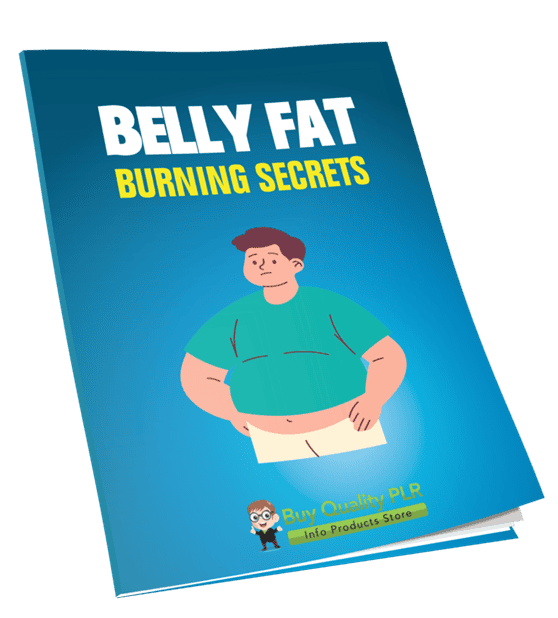
Belly Fat Burning Secrets PLR Course 27k Words
in Belly Fat PLR , Health PLR , Health PLR eBooks , PLR Checklists , PLR eBooks , PLR eCourses , PLR List Building Reports , Premium PLR , Premium PLR eBooks , Premium PLR Reports , Premium White Label Brandable PLR Coaching Courses , Private Label Rights Products , Weight Loss PLR , Weight Loss PLR EbooksChoose Your Desired Option(s)
has been added to your cart!
have been added to your cart!
#bellyfatburning #fatlosssecrets #weightlossplr #healthandwellnessplr #fitness #burnbellyfat #healthyliving #wellnesscontent #plrcourse #fitnesstips
A Premium, Done-for-You Fat Loss & Muscle-Building Program You Can Sell as Your Own Today
If you’re looking for a high-demand, evergreen PLR course that sells effortlessly…
If you want to offer your audience something valuable, actionable, and results-driven…
If you’re ready to finally add a serious profit-generating digital product to your catalog…
Then you’ve just found it.
Belly Fat Burning Secrets PLR Course is a complete, fully developed training program designed to help everyday people burn stubborn belly fat, build lean muscle, understand their metabolism, and transform their lifestyles from the inside out.
This isn’t a recycled fad diet or another cookie-cutter workout PDF.
This is a comprehensive, 25,000+ word transformational course built with real science, practical steps, and sustainable strategies your audience can rely on for life.
And best of all—you get full Private Label Rights, so you can customize it, brand it, sell it, or repurpose it in countless ways.
🔥 Why This Course Sells So Easily (And Will Keep Selling Forever)
The “belly fat” niche is one of the most profitable markets online—because it solves a problem almost everyone has struggled with at some point in their lives.
People are frustrated.
They want real answers.
They want simplicity.
They want results.
And they are willing to pay for a step-by-step plan that finally cuts through the noise.
This course gives them exactly that.
It combines practical fitness guidance, metabolic science, simple nutrition strategies, powerful lifestyle changes, and easy-to-follow routines into a structured blueprint that anyone can understand and implement.
It’s the perfect balance of depth + simplicity—making it sell extremely well as a course, ebook, coaching program, or challenge.
Introducing the…
Belly Fat Burning Secrets PLR Course 27k Words
🔥 What Makes This Course Different From Every Other Fat Loss PLR Out There?
Most PLR fitness content is:
❌ Too generic
❌ Too shallow
❌ Outdated
❌ Hard to sell
❌ Not structured like a real training program
But this course is built like a premium coaching-level transformation system.
Inside, you’ll find:
➡ A clear, logical progression from beginner to advanced understanding
➡ Real educational value—not fluff
➡ Scientifically accurate explanations written in beginner-friendly language
➡ Practical steps that work in real life
➡ Action items, rituals, and strategies people can start TODAY
➡ Guidance on nutrition, workouts, mindset, habits, sleep, stress, and lifestyle
➡ A complete system that produces real change
You’re not just selling information—you’re selling a complete solution.
🔥 A Deeply Transformative Learning Experience (Professionally Organized for Maximum Results)
The Belly Fat Burning Secrets PLR Course is divided into 5 strategic modules.
Each module contains 4 in-depth lessons designed to build understanding, confidence, and action-taking—without overwhelming the learner.
MODULE 1: Understanding the Belly Fat & Muscle-Building Connection
This opening module creates the “aha moment” people have been missing for years.
It explains why belly fat behaves differently, how metabolism truly works, why cardio isn’t always the solution, and how building muscle changes everything.
By the end, learners understand the truth behind fat loss and are mentally prepared to follow a real transformation plan.
MODULE 2: Fuel to Burn – Nutrition That Builds Muscle & Burns Fat
This module shifts the learner’s relationship with food completely.
They discover why they don’t need to starve to lose weight, how to use macros strategically, why protein is essential, and how meal timing affects performance and recovery.
Eating for fat loss becomes EASY—not restrictive, confusing, or frustrating.
MODULE 3: Training Blueprint – Build Muscle & Burn Fat Fast
This is where the real transformation happens.
Learners discover smart, time-efficient training strategies such as full-body resistance training, HIIT, ideal weekly splits, and the mind-muscle connection that maximizes fat burn.
It becomes clear that burning belly fat isn’t about doing crunches all day—it’s about training smarter.
MODULE 4: Lifestyle Habits for Long-Term Results
This module reveals the “silent saboteurs” most people overlook—stress, sleep, hormones, daily movement, routines, and consistency.
It empowers learners to take control of their environment and habits so their results become predictable and maintainable.
MODULE 5: Your Transformation Plan – Putting It All Together
This final module turns theory into action.
Learners build a personalized plan, set realistic goals, track progress correctly, break through plateaus, and maintain results for life.
When they reach the end, they don’t just know what to do—they know exactly how, when, and why to do it.
🔥 What Customers Will Achieve After Completing This Course
By the end of the program, your buyers will:
✔ Understand how belly fat works and how to burn it efficiently
✔ Build lean muscle that accelerates metabolism
✔ Know exactly what to eat and when to eat it
✔ Follow smart, effective training methods
✔ Improve sleep, energy, hormones, and daily habits
✔ Build a sustainable lifestyle—not a temporary fix
✔ Break plateaus and progress confidently
✔ Maintain their results long-term
This is the kind of course that makes people say:
“This finally makes sense. I can actually do this.”
And that means…
They trust you.
They buy from you again.
They recommend you to others.
They join your membership.
They buy your upsells.
🔥 What’s Included in the Belly Fat Burning Secrets PLR Package
You don’t just get the main course.
You also get:
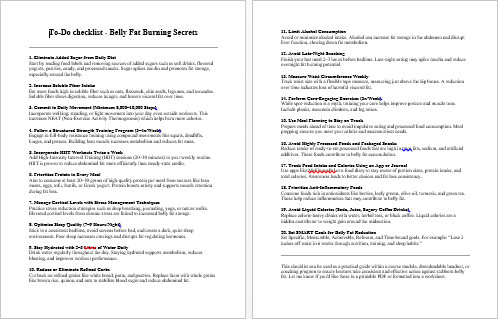
✔ Belly Fat Burning Secrets Checklist (686 Words)
A clean, organized overview customers can print or follow digitally—perfect as a bonus or quick-start guide.
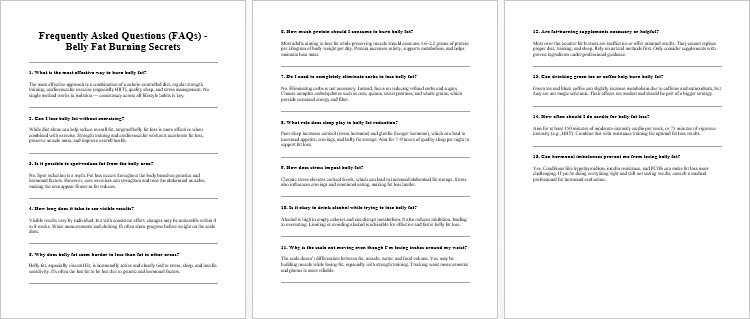
✔ Belly Fat Burning Secrets FAQs (647 Words)
Your customers will love the clarity and reassurance of a fully answered Q&A section.
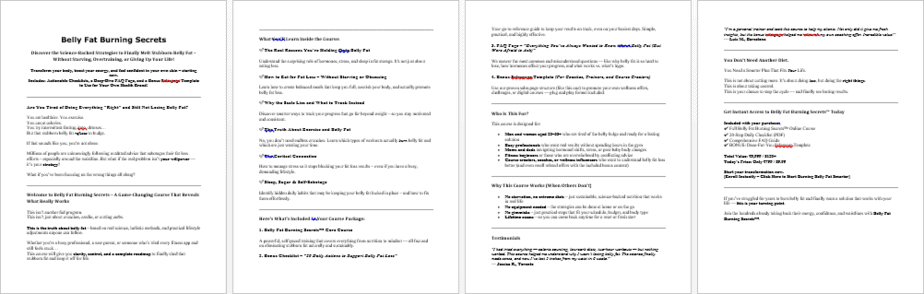
✔ Belly Fat Burning Secrets Sales Page (928 Words)
A ready-made sales page you can customize or repurpose instantly.
Total Content Included: 25,022+ Words
Everything is fully editable. Fully brandable. 100% yours.
🔥 How You Can Monetize This PLR Course (Endless Possibilities)
Here’s how you can profit from this done-for-you content immediately:
1. Sell It as a Premium Course
Charge $27, $47, $97, or even more when paired with video.
2. Turn It into a Video Training Series
Just read the script on camera or voiceover—instant high-ticket product.
3. Use It to Build a Paid Membership Site
Add it as a module inside a health, fitness, or self-improvement membership.
4. Break It Into Multiple Smaller Products
Sell each module as a standalone ebook or “micro course.”
5. Use It as a Challenge Framework
Run a 21-day or 30-day belly fat challenge.
6. Convert It Into a Coaching Program
Use it as your teaching curriculum and charge $297–$997+.
7. Create YouTube, TikTok, or Instagram Content
Turn lessons into scripts and attract more traffic.
8. Publish It as a Kindle Book
Turn the course into a bestselling Amazon KDP book.
9. Use It as Lead Magnets
Grow your email list with extracted mini-guides.
10. Bundle It with Keto, Weight Loss, or Fitness PLR
Create a high-value mega bundle that sells like crazy.
This product practically prints money if you use it well.
🔥 Your PLR License: What You Can & Cannot Do
You CAN:
✔ Sell the course as your own
✔ Add your name or brand
✔ Rewrite, edit, repurpose
✔ Turn it into audio/video
✔ Use it in memberships
✔ Break into smaller products
✔ Use parts as blog posts or lead magnets
✔ Use it to build your email list
✔ Create physical or digital products
✔ Create spin-off ebooks or guides
You CANNOT:
✘ Pass PLR rights to customers
✘ Give it away unedited for free
✘ Sell resell rights or master resell rights
✘ Offer 100% commissions
✘ Add it to previous customer orders for free
These rules maintain the value of your investment and protect all sellers.
🔥 Now Is the Time to Add a High-Value Fitness Course to Your Catalog
The fitness market never slows down.
People will always want to lose belly fat.
People will always invest in fat loss solutions that are clear, simple, and effective.
This PLR course gives you:
✔ A premium, structured, ready-to-sell digital product
✔ Thousands of words of high-quality, research-based training
✔ A niche with unlimited traffic and endless demand
✔ A reputation boost as a trusted authority
✔ An asset you can monetize in dozens of ways
This is your opportunity to offer transformation—not just information.
has been added to your cart!
have been added to your cart!
Here A Sample of Belly Fat Burning Secrets PLR Course
Welcome to “Belly Fat Burning Secrets”, your ultimate guide to shredding stubborn belly fat while sculpting lean muscle. Whether you’re just getting started or you’ve hit a plateau, this course is your blueprint for a stronger, leaner body. We’ll combine practical training, smart nutrition, and muscle-building strategies that work – without starving or spending hours in the gym.
MODULE 1: Understanding the Belly Fat & Muscle-Building Connection
Let’s start by learning what’s really happening inside your body and how to work smarter, not harder.
Lesson 1: Why Belly Fat is So Stubborn
Learn the science of belly fat and why it clings to your midsection more than anywhere else.
Introduction
Most people who begin a fitness journey start with one goal in mind: to lose belly fat. It’s the most common area of concern for both men and women across all age groups and regions. Despite a good diet and regular workouts, many find belly fat especially resistant. The natural question arises: Why is belly fat so stubborn, and what makes it different from fat stored in other parts of the body?
In this lesson, you’ll learn the scientific, hormonal, and lifestyle-related reasons that contribute to belly fat’s persistence, and how to approach it strategically — not just through calorie cutting, but through smart, science-backed methods.
1. Types of Fat: Subcutaneous vs. Visceral Fat
Before tackling why belly fat is stubborn, it’s important to understand the two primary types of fat that accumulate in the abdominal region:
A. Subcutaneous Fat
- This is the fat located just beneath the skin.
- It’s the type of fat you can pinch around your waist.
- While subcutaneous fat is visible and contributes to physical appearance, it’s not as dangerous as visceral fat in terms of health.
B. Visceral Fat
- This fat is stored deep within the abdominal cavity, surrounding vital organs like the liver, pancreas, and intestines.
- Visceral fat is metabolically active, meaning it can release fatty acids and hormones that affect your body’s metabolism.
- High levels of visceral fat are linked to chronic diseases such as Type 2 diabetes, cardiovascular disease, and certain cancers.
Understanding the location and behavior of these fats is essential because strategies that work for subcutaneous fat may not be as effective for visceral fat — and vice versa.
2. Belly Fat and Evolution: A Biological Perspective
From an evolutionary standpoint, belly fat is a survival mechanism. Our ancestors needed energy stores to survive periods of famine or physical hardship. The body is designed to:
- Store fat in the abdominal area because it’s close to the organs, making energy delivery more efficient in times of crisis.
- Preserve belly fat as a last-resort energy source.
So when you try to lose fat, your body resists giving up belly fat due to its biological significance. This is why you may see weight loss in your face, arms, or legs before you notice any significant change in your midsection.
3. Hormonal Impact: Why Hormones Make Belly Fat Harder to Lose
Hormones play a critical role in where fat is stored and how easily it can be burned. The belly area is particularly sensitive to a few specific hormones:
A. Cortisol (Stress Hormone)
- Chronic stress causes your body to release cortisol, which is linked to abdominal fat storage.
- Cortisol signals your body to store more fat in the belly to protect vital organs.
- High cortisol levels also increase appetite and cravings, especially for sugary and fatty foods.
B. Insulin
- Insulin is responsible for regulating blood sugar levels.
- When you consume a lot of refined carbs or sugars, insulin spikes, leading to increased fat storage — particularly in the abdominal region.
- Over time, high insulin levels can lead to insulin resistance, making it harder to burn fat.
C. Estrogen and Testosterone
- In both men and women, imbalances in sex hormones can shift fat storage toward the belly.
- Men with lower testosterone tend to accumulate more abdominal fat.
- Women, especially after menopause, may see an increase in visceral fat due to a drop in estrogen levels.
Understanding the hormonal aspect allows you to make targeted changes to reduce stress, balance blood sugar, and support hormone health — all crucial to addressing belly fat.
4. Belly Fat Cells Are Biologically Different
Not all fat cells are created equal. Research has shown that abdominal fat cells differ in a few key ways from those in other parts of your body:
A. Higher Density of Alpha-2 Receptors
- Fat cells have two types of receptors: beta-2 receptors (which accelerate fat breakdown) and alpha-2 receptors (which inhibit fat breakdown).
- Belly fat cells have a higher ratio of alpha-2 receptors, making them less responsive to fat-burning signals.
- This is one reason why fat in the belly tends to be more resistant to dieting and exercise.
B. Increased Inflammatory Response
- Visceral fat, in particular, releases pro-inflammatory cytokines that can promote inflammation in the body.
- Chronic inflammation makes fat loss harder and also disrupts hormone function.
These biological differences are why you can’t just “spot reduce” belly fat. It requires a systemic approach that lowers inflammation, balances hormones, and improves metabolic health.
5. Lifestyle Habits That Make Belly Fat Worse
Your daily habits often unknowingly contribute to the persistence of belly fat. Here’s how:
A. Poor Sleep
- Lack of sleep increases cortisol and decreases leptin (a hormone that controls appetite).
- Studies have linked short sleep durations with higher levels of visceral fat.
B. Sedentary Lifestyle
- Sitting for long periods decreases your metabolic rate.
- Physical inactivity contributes to insulin resistance and increased fat storage in the belly.
C. Nutritional Deficiencies
- Diets lacking in fiber, protein, and essential micronutrients slow down fat metabolism.
- A nutrient-poor diet increases cravings and overeating, especially processed foods.
D. Alcohol Consumption
- Excessive alcohol contributes to what’s commonly known as a “beer belly.”
- It’s metabolized differently and often gets stored directly in the abdomen.
These factors, though seemingly minor, compound over time and lead to fat buildup around the midsection. Acknowledging them allows you to begin creating better routines that support fat loss, rather than hinder it.
6. The Myth of Spot Reduction
One of the biggest misconceptions about belly fat is that it can be targeted through specific exercises, such as crunches, sit-ups, or planks. This is a myth.
Here’s the truth:
- You can’t control where your body loses fat first.
- Fat loss happens in a whole-body fashion through a calorie deficit, metabolic adaptation, and consistent movement.
- Abdominal exercises strengthen the muscles underneath the fat, but do not directly burn fat in that area.
The best way to reduce belly fat is through a combination of full-body resistance training, nutrition, and hormonal balance — not isolated exercises.
7. Genetics and Belly Fat Storage
While lifestyle and diet play major roles, your genetics also influence where your body tends to store fat. Some people naturally accumulate more fat in their thighs or hips, while others tend to store fat in the abdomen.
This doesn’t mean you’re doomed by your DNA — but it does mean that your timeline and response to fat loss may be different from others.
- Focus on progress, not comparison.
- Tailor your training and nutrition to your unique biology, rather than copying what works for someone else.
8. The Psychological Factor: Motivation, Shame, and Body Image
Belly fat carries a psychological weight, especially in cultures and industries where flat stomachs are equated with attractiveness or discipline. This often leads to:
- Frustration when results don’t come fast.
- Unrealistic expectations fueled by social media and marketing.
- Body image issues that can result in unhealthy dieting behaviors or overtraining.
The key is to shift your mindset from trying to achieve a perfect body to focusing on health, strength, and longevity. When the focus is internal — better energy, improved sleep, stronger lifts — the external results naturally follow.
Conclusion: Why Knowing This Science Empowers You
Now that you understand why belly fat is so stubborn, you’re in a much stronger position. You’re no longer operating from frustration or confusion, but from knowledge and strategy. Here are the key takeaways:
- Belly fat is a biological survival tool, not your enemy.
- It’s hormonally influenced, especially by cortisol and insulin.
- Belly fat cells are structurally resistant to breakdown.
- Lifestyle choices like sleep, movement, and stress have a direct impact.
- There is no such thing as spot reduction — but there is a way to systemically lower body fat through intentional training, smart nutrition, and consistency.
In upcoming lessons, we’ll dive deeper into how to fuel your body correctly and how to train in a way that ignites fat loss while building lean, powerful muscle. But for now, simply acknowledge that your body is not broken — it’s just responding to the signals you’re giving it. And now, you’ll learn how to send it the right ones.
Let’s keep building your body the smart way. One lesson at a time.
Lesson 2: How Muscle Mass Affects Fat Loss
Discover how building muscle increases your metabolism, making fat loss faster and easier.
Introduction
Fat loss is often misunderstood as a simple equation of “eat less, move more.” While this might work short-term, lasting fat loss requires a smarter, deeper approach. One of the most overlooked yet powerful strategies in the fat loss process is increasing muscle mass.
Most people still associate muscle building with bulky bodybuilders or extreme gym routines. But in truth, adding lean muscle is one of the most effective ways to lose body fat, especially stubborn belly fat. In this lesson, we’ll explore how muscle mass affects metabolism, fat-burning efficiency, and body composition — and why it should be a core focus of any sustainable fat loss program.
1. Understanding Muscle Mass and Metabolism
To understand how muscle affects fat loss, you must first understand metabolism. Metabolism is the sum of all the chemical processes your body uses to produce energy. The faster or more active your metabolism, the more calories you burn, even at rest.
Muscle is metabolically active tissue. This means it requires energy (calories) to maintain, even when you’re not using it. Fat tissue, by comparison, is relatively inactive.
Key Insight:
- 1 kilogram of muscle burns approximately 13-15 kilocalories per day at rest.
- 1 kilogram of fat burns only about 4-5 kilocalories per day at rest.
Though this may seem small per kilogram, the cumulative effect of gaining lean muscle across the body is significant — especially over time. More muscle means your body is a fat-burning machine, even while sitting, sleeping, or working at a desk.
2. Basal Metabolic Rate (BMR): Your Calorie-Burning Foundation
Your Basal Metabolic Rate (BMR) is the number of calories your body burns at rest to keep you alive — to power your organs, regulate temperature, and maintain essential functions. BMR accounts for 60-75% of your total daily calorie expenditure.
Muscle mass directly increases BMR. Therefore, the more muscle you carry, the more calories you burn, without doing anything extra.
Example:
Let’s compare two individuals:
- Person A weighs 70 kg with 20% body fat.
- Person B weighs 70 kg with 12% body fat (more muscle).
Though both weigh the same, Person B will burn significantly more calories at rest because they carry more muscle and less fat. This metabolic advantage makes fat loss faster and easier for people with more lean muscle mass.
3. The Thermic Effect of Activity (TEA): Muscle and Workout Efficiency
The Thermic Effect of Activity (TEA) refers to calories burned during exercise and movement. Strength training, resistance exercises, and functional training help build muscle — and the more muscle you have, the more efficient your workouts become.
When you engage in resistance training:
- You damage muscle fibers slightly, causing your body to initiate repair.
- This repair process uses energy and requires protein synthesis, which increases calorie expenditure for up to 24-48 hours post-workout.
- This process is known as Excess Post-exercise Oxygen Consumption (EPOC) or the “afterburn effect.”
In simple terms, building muscle through training extends your calorie burn far beyond the workout itself — unlike steady-state cardio, which burns calories only during the session.
4. Muscle Mass Improves Insulin Sensitivity
Insulin is a hormone that regulates blood sugar levels and signals your body to store nutrients. When insulin sensitivity is high, your body uses nutrients — especially carbohydrates — more efficiently, directing them into muscle cells for energy and repair rather than storing them as fat.
More muscle mass means:
- More storage space for glucose in the form of muscle glycogen.
- Improved blood sugar control, lowering the risk of insulin resistance.
- A reduced likelihood of fat storage, especially around the belly.
In contrast, individuals with low muscle mass are more prone to insulin resistance, which is associated with belly fat, metabolic syndrome, and Type 2 diabetes.
By building muscle, you’re giving your body a better chance at managing calories and nutrients — leading to fewer fat deposits and better body composition.
5. Muscle Mass Protects Against Weight Regain
Have you ever experienced yo-yo dieting? You lose weight with intense cardio or calorie restriction, only to regain it weeks or months later. This is a common trap — but muscle can break the cycle.
Here’s why:
- When you lose weight without strength training, your body tends to lose both fat and muscle.
- Less muscle = lower metabolism.
- When you return to normal eating, your body now burns fewer calories than before — leading to fat regain, often more than you lost.
On the other hand, when you focus on building or preserving muscle while losing fat, your metabolism stays high or even improves. This makes it easier to maintain results and prevents rebound weight gain.
In short, muscle gives your body metabolic flexibility — the ability to handle increased food intake without automatically storing fat.
6. Muscle Mass Improves Body Composition (Not Just Weight)
Most people focus on weight loss. But what they really want is fat loss — and the difference is crucial.
If you only chase the number on the scale, you might:
- Lose fat and muscle (which is not ideal).
- Appear “skinny fat” — thin but soft, with low muscle tone.
- Experience weakened posture, joint instability, and low energy.
Muscle, on the other hand, shapes your body.
- It tightens your waistline, even if the scale doesn’t move.
- It creates visible definition in arms, legs, shoulders, and core.
- It supports a stronger, more athletic, and confident posture.
By focusing on muscle mass, you improve your body composition — the ratio of muscle to fat — rather than just lowering your body weight.
7. Age-Related Muscle Loss (Sarcopenia) and Fat Gain
Starting in your 30s, you naturally begin to lose muscle mass each decade — a process known as sarcopenia. This loss is accelerated by inactivity, poor nutrition, and hormonal changes.
As muscle declines:
- Metabolism slows.
- Fat gain, especially around the midsection, increases.
- Strength and mobility suffer.
- Risk of chronic diseases rises.
Muscle-building efforts are not just for athletes or bodybuilders — they are essential for aging gracefully, staying lean, and maintaining independence.
By actively building and maintaining muscle, you reverse age-related fat gain, support bone health, and stay metabolically active for life.
8. Building Muscle is a Long-Term Investment in Fat Loss
Fat loss is often treated as a temporary project — a diet plan or challenge that lasts a few weeks. But building muscle shifts your mindset toward long-term health and performance.
Muscle doesn’t just burn calories — it:
- Enhances your mental clarity.
- Reduces your injury risk.
- Supports your immune system.
- Improves mobility and coordination.
Every workout you complete, every set you push through, is not just burning calories — it’s building an engine that will help you burn more, move better, and age stronger.
9. How to Strategically Build Muscle for Fat Loss
While the scientific case for muscle building is clear, practical application matters. Here’s how to approach it:
A. Prioritize Strength Training
- Focus on compound movements like squats, deadlifts, presses, and rows.
- These exercises recruit multiple muscles and burn more calories.
B. Train 3-4 Times Per Week
- Full-body or upper/lower splits allow for sufficient volume and recovery.
- Don’t neglect progressive overload — gradually increasing resistance over time.
C. Consume Enough Protein
- Aim for around 1.6 to 2.2 grams per kilogram of body weight per day.
- Protein supports muscle repair and growth, especially in a calorie deficit.
D. Sleep and Recovery
- Rest is when the body repairs and builds muscle.
- Aim for 7-9 hours of quality sleep per night.
E. Consistency Over Intensity
- Regular, steady effort beats extreme, unsustainable training.
- Focus on building strength and sticking to the process long-term.
Conclusion: Muscle is the Metabolic Key to Fat Loss
Muscle is not just for athletes or fitness models — it’s a biological advantage anyone can and should pursue. Whether your goal is to lose fat, improve energy, enhance performance, or age with strength, muscle is your ally.
By building muscle, you:
- Burn more calories at rest.
- Improve hormonal balance.
- Reduce belly fat.
- Maintain your results.
- Create a lean, strong, functional body.
When you shift your focus from just losing weight to building muscle, you unlock a faster, easier, and far more sustainable path to fat loss. In the next lessons, we’ll explore how to design your training and nutrition plans to build muscle efficiently — even if you’re starting from scratch.
This isn’t just about looking better. It’s about reclaiming control over your body, your health, and your future.
Lesson 3: The Real Truth About Cardio vs. Strength
Understand the differences between cardio and strength training, and which burns fat more effectively (hint: it’s not what most people think!).
Introduction
When it comes to fat loss, one of the most hotly debated topics in the fitness world is the question: “What’s better for burning fat — cardio or strength training?”
Most people instinctively turn to cardio when they want to lose weight. After all, you sweat more, your heart races, and the calorie counters on machines show large numbers. But while cardio can certainly play a role in fat loss, it’s not the most efficient or sustainable solution, especially if you’re aiming to transform your body long term.
In this lesson, we’ll break down what cardio and strength training actually do inside your body, how they affect fat loss, metabolism, and body composition, and most importantly — which one delivers long-term, real results.
1. What Is Cardio Training?
Cardio (short for cardiovascular) training refers to any form of exercise that elevates your heart rate and keeps it elevated for a sustained period of time.
Common Types of Cardio Include:
- Running or jogging
- Cycling
- Swimming
- Rowing
- Jump rope
- Brisk walking
- Group aerobic classes
Main Benefits of Cardio:
- Improves heart and lung health
- Increases stamina and endurance
- Can help manage stress and mood
- Burns calories during the activity
- Enhances blood flow and oxygen delivery
Cardio primarily uses aerobic energy systems, relying on oxygen to convert carbs and fat into usable energy.
2. What Is Strength Training?
Strength training, also known as resistance training or weight training, involves working your muscles against a force or resistance — this can be body weight, free weights, resistance bands, or machines.
Common Forms of Strength Training:
- Weightlifting (barbells, dumbbells, kettlebells)
- Bodyweight exercises (push-ups, squats, pull-ups)
- Resistance bands
- Powerlifting or Olympic lifting
- Functional strength circuits
Main Benefits of Strength Training:
- Builds lean muscle mass
- Increases metabolic rate
- Enhances muscle tone and body composition
- Supports bone density and joint health
- Boosts strength, mobility, and posture
- Burns calories during and after the workout
Unlike cardio, strength training primarily uses anaerobic energy systems — meaning it relies on stored muscle energy (ATP, glycogen) rather than oxygen.
3. Calorie Burn: Cardio vs. Strength
Many people look at exercise through a simple lens: which burns the most calories during the session? If we go purely by the numbers, cardio often comes out on top — but there’s more to the story.
A. Calorie Burn During Exercise:
- Cardio sessions (running, cycling, etc.) typically burn more calories per minute than strength training.
- A 30-minute jog might burn 300-400 kcal, depending on intensity and body weight.
- A 30-minute strength session might burn 150-250 kcal, depending on intensity and rest periods.
This seems like a clear win for cardio — but this is only one part of the total fat-loss equation.
B. Calorie Burn After Exercise (EPOC):
- Strength training triggers a higher EPOC (Excess Post-Exercise Oxygen Consumption), also known as the “afterburn” effect.
- Your body continues to burn calories for up to 24-48 hours after a tough strength session as it repairs and rebuilds muscle tissue.
- Cardio, especially steady-state cardio, has minimal afterburn once the session is over.
So while cardio may win in total immediate calorie burn, strength training wins in total metabolic impact, especially over time.
4. Fat Loss vs. Weight Loss: The Key Distinction
Many people focus on weight loss, but this often leads to disappointment when they lose weight but still look soft or lack muscle tone.
What’s the difference?
- Weight loss includes loss of water, muscle, and fat.
- Fat loss specifically targets unwanted body fat while maintaining lean tissue.
Cardio can help you lose weight quickly, but often at the cost of muscle loss — especially when combined with a low-calorie diet. Strength training preserves and builds lean muscle, which is crucial if your goal is to reduce belly fat and build a strong, lean physique.
If your body composition is the goal (lower fat percentage, more definition), strength training should be prioritized.
5. How Muscle Impacts Fat Loss (Recap and Reinforcement)
As covered in the previous lesson, muscle is metabolically active tissue. The more muscle you have:
- The higher your Basal Metabolic Rate (BMR)
- The more calories you burn at rest
- The better your nutrient partitioning (you store less fat from food)
- The easier it is to maintain fat loss over time
Cardio, while excellent for heart health and stamina, doesn’t build significant muscle. In fact, excessive cardio can lead to muscle loss, especially when done in a calorie deficit.
Strength training is what allows you to re-shape your body, not just shrink it.
6. The Myth of “Toning” Through Cardio
Many people — especially women — worry that lifting weights will make them bulky. They prefer to “tone” through cardio or light weights with high reps.
This is a myth.
- “Toning” is simply fat loss combined with muscle visibility.
- You cannot tone a muscle without having muscle in the first place.
- Without resistance training, there’s nothing to tone beneath the surface.
True body transformation requires building muscle and then reducing the fat covering it. That’s how you get visible arms, defined legs, and a tight core.
Strength training is the only method that builds this kind of muscle structure.
7. Hormonal and Metabolic Effects
Exercise influences your hormonal environment, and different forms of exercise produce different hormonal responses.
Cardio:
- Long-duration, steady-state cardio can increase cortisol, the stress hormone.
- Elevated cortisol over time can promote belly fat storage, especially if not balanced with recovery or nutrition.
- Little impact on testosterone, growth hormone, or other anabolic (muscle-building) hormones.
Strength Training:
- Increases testosterone, growth hormone, and insulin sensitivity — all of which support fat burning and muscle growth.
- Decreases cortisol over time (after a temporary post-workout spike).
- Improves hormonal balance for both men and women, including metabolism-regulating hormones like leptin and adiponectin.
For long-term fat loss, a favorable hormonal profile is crucial — and strength training creates that.
8. Which One Is More Sustainable?
Sustainability is a major factor in any training program. You can have the most effective workout in theory, but if it doesn’t fit your lifestyle or you can’t maintain it, the results won’t last.
Cardio Sustainability:
- Great for beginners.
- Easy to overdo — especially with high-impact or repetitive movements (running, spinning).
- Can become monotonous or time-consuming.
- Higher risk of plateaus, as the body adapts quickly.
Strength Training Sustainability:
- Time-efficient (3-4 days/week of 45–60 minutes).
- More variety — hundreds of movement options.
- Progression is built-in through increased resistance, reps, or intensity.
- Less impact on joints with proper form.
People who include strength training in their routine tend to stick with fitness longer, because they see and feel progress in strength, posture, energy, and appearance.
9. The Ideal Approach: Combine Both (But Prioritize Strength)
While this lesson emphasizes the fat-burning benefits of strength training, both cardio and strength have value when used correctly.
The ideal strategy is to:
- Prioritize strength training 3–4 times per week to build and maintain muscle.
- Incorporate cardio (especially HIIT or brisk walking) 1–3 times per week for heart health, recovery, and added energy expenditure.
- Use cardio as a supplement, not the foundation of your fat-loss program.
This balanced approach supports both metabolic health and muscular development, leading to long-term fat loss and body transformation.
Conclusion: Strength Is the Secret Weapon for Fat Loss
The mainstream narrative still pushes cardio as the “go-to” solution for fat loss — but the real transformation happens when strength training becomes the foundation of your fitness routine.
Here’s what you’ve learned:
- Cardio burns more calories during the session, but strength training burns more over time.
- Strength training helps you retain muscle, leading to better body composition.
- Muscle raises your resting metabolism, making it easier to lose fat.
- Strength training creates lasting hormonal and metabolic change.
- The most effective fat-loss programs combine both, with strength at the core.
This lesson is not just about choosing one over the other — it’s about understanding how each tool works, and then designing a smart, science-based routine that supports your goals.
For true body transformation, muscle is not optional. It’s essential.
Lesson 4: Creating a Fat-Burning Blueprint
Start building your personalized strategy based on your body type, lifestyle, and fitness level.
Welcome to Lesson 4 of Module 1 in your journey through Belly Fat Burning Secrets: Body Building Blueprint. Now that you’ve learned why belly fat is stubborn, how muscle mass boosts fat loss, and the real truth about cardio versus strength training, it’s time to get personal.
This lesson is all about creating your fat-burning blueprint—a customized, actionable plan that aligns with your individual goals, body type, lifestyle, and current fitness level. We’re not handing out cookie-cutter routines here. You’re going to craft a strategy that works for you, not against you.
Let’s walk through this, step by step.
Step 1: Know Your Body Type (Somatotype)
Understanding your body type—or somatotype—is essential to tailoring a fitness and nutrition program that helps you burn fat and build muscle efficiently. The three primary body types are:
- Ectomorph: Naturally lean, fast metabolism, difficulty gaining weight/muscle.
- Mesomorph: Naturally muscular, athletic build, gains muscle easily and loses fat quickly.
- Endomorph: Naturally broader or rounder, gains fat easily, finds fat loss more challenging.
Action Steps:
- Look in the mirror or take progress photos.
- Ask yourself: Do I gain fat easily? Do I lose weight quickly? Do I build muscle easily?
- Use this self-assessment to define your dominant body type.
Note: Most people are a combination of types. Don’t box yourself into one category—just use it as a guiding framework.
Step 2: Identify Your Lifestyle & Schedule
Your daily routine will either support your fat-burning blueprint or sabotage it. So we need to be honest and realistic here.
- Are you a full-time worker with limited time for workouts?
- Do you sit for most of the day?
- Are you already somewhat active (e.g., walking, cycling, etc.)?
Lifestyle Categories:
- Sedentary: Desk job, little to no physical activity during the day.
- Moderately Active: Some movement—walking, occasional workouts.
- Highly Active: Physically demanding job, regular training.
Action Steps:
- Map out your typical week: When do you wake up? Work? Eat? Rest?
- Identify 3–5 time slots in your week where you can dedicate 30–60 minutes to exercise.
- Plan meals and grocery trips around your busiest and least flexible days.
This clarity gives your fat-burning blueprint structure and reduces the chance of skipping workouts or grabbing convenience foods.
Step 3: Determine Your Fitness Level
No matter where you are in your fitness journey—beginner, intermediate, or advanced—your fat-burning blueprint must match your capabilities. Doing too much too soon can lead to burnout or injury.
Self-Assessment Test:
Use these benchmarks to gauge your fitness level:
- Push-Ups (1 minute):
- Beginner: 5–10
- Intermediate: 10–20
- Advanced: 20+
- Squats (Bodyweight) (1 minute):
- Beginner: 10–15
- Intermediate: 15–30
- Advanced: 30+
- Plank Hold (timed):
- Beginner: 15–30 seconds
- Intermediate: 30–60 seconds
- Advanced: 60+ seconds
- Cardio Endurance (Brisk Walk or Jog):
- Beginner: Out of breath in under 5 minutes
- Intermediate: Comfortable 15–20 mins
- Advanced: Can go 30+ minutes at moderate pace
Action Steps:
- Test yourself using the markers above.
- Mark your current level and track your performance monthly.
- Adjust your workouts based on these results to avoid under-training or over-training.
Step 4: Set Specific Fat-Burning Goals
Without clearly defined goals, your motivation may fizzle out. Your blueprint must include specific, measurable, realistic, and time-bound goals (also known as SMART goals).
Examples:
- “Lose 2 inches off my waist in 6 weeks.”
- “Build enough strength to do 20 full push-ups in 4 weeks.”
- “Burn 5 kg of fat in 8 weeks while maintaining muscle.”
Action Steps:
- Set 1 short-term goal (next 4–6 weeks).
- Set 1 long-term goal (3–6 months).
- Write these goals down and keep them somewhere visible (e.g., phone wallpaper, fridge, mirror).
Step 5: Build Your Personalized Workout Plan
Your workout plan should blend strength training, cardio, and core-focused movements. Based on your body type, fitness level, and time availability, choose a weekly schedule you can maintain.
General Weekly Blueprint:
For Beginners:
- Monday: Full-Body Strength Training (Bodyweight)
- Tuesday: 20–30 min Brisk Walk or Jog
- Wednesday: Rest or Yoga
- Thursday: Upper Body + Core
- Friday: Cardio Intervals (Jump rope, cycling, HIIT)
- Saturday: Lower Body + Core
- Sunday: Rest
For Intermediates:
- Monday: Push Day (Chest/Shoulders/Triceps)
- Tuesday: Cardio Intervals
- Wednesday: Pull Day (Back/Biceps) + Core
- Thursday: Rest or Active Recovery
- Friday: Leg Day (Glutes/Quads/Hamstrings)
- Saturday: Cardio + Core
- Sunday: Rest
For Advanced:
- Use a 5–6 day training split combining heavy lifts, supersets, HIIT cardio, and core.
Action Steps:
- Choose a weekly structure based on your level.
- Include progressive overload—add reps, sets, or weight each week.
- Record your workouts to track progress.
Step 6: Align Your Nutrition to Burn Fat and Build Muscle
Training without a matching nutrition plan is like trying to drive without fuel. Your body needs the right macronutrient balance:
- Protein: For muscle repair and growth.
- Carbohydrates: For energy, especially before workouts.
- Fats: For hormone health and sustained energy.
Basic Macronutrient Targets:
- Protein: 1.6–2.2g per kg of body weight per day.
- Carbs: Varies (higher on training days, moderate on rest days).
- Fats: 20–30% of total calorie intake.
Food Quality Matters:
- Lean proteins: Chicken, fish, eggs, legumes, tofu.
- Smart carbs: Oats, brown rice, sweet potatoes, fruits.
- Healthy fats: Avocados, nuts, olive oil, seeds.
Action Steps:
- Track your meals for 3–5 days using a food log or app (e.g., MyFitnessPal).
- Identify gaps in your macronutrient intake.
- Begin meal prepping for consistency and time-saving.
Step 7: Incorporate Recovery & Stress Management
A true fat-burning strategy isn’t complete without recovery. Overtraining or constant stress spikes cortisol—a hormone that contributes to stubborn belly fat.
Include:
- Sleep: Aim for 7–9 hours per night.
- Active Recovery: Light walks, stretching, foam rolling.
- Stress Reduction: Deep breathing, meditation, journaling.
Action Steps:
- Set a consistent bedtime and limit screens 1 hour before sleep.
- Add 1–2 recovery-focused sessions weekly (e.g., yoga, stretching).
- Schedule time daily—even 10 minutes—for mental recovery.
Step 8: Track Progress and Reassess
Your blueprint is a living plan—it evolves as your body changes. What works in Week 1 may not be effective in Week 6 if you’ve made progress. That’s why tracking is key.
What to Track:
- Weight (weekly)
- Waist circumference (biweekly)
- Strength levels (reps, sets, weights used)
- Energy levels and mood
- Progress photos (monthly)
Action Steps:
- Pick one day per week (same time, same conditions) to track your weight and measurements.
- Reflect every 4 weeks and adjust workouts or nutrition based on results.
- Celebrate non-scale victories—clothes fitting better, more energy, better sleep.
Final Thoughts
Building your personalized fat-burning blueprint isn’t about finding the “perfect” plan—it’s about finding what works for you. Every element we’ve covered—from understanding your body type to aligning workouts, nutrition, and recovery—is designed to create synergy in your fat-loss and muscle-building process.
What you’re doing here is not temporary. This is a sustainable, adaptable strategy that will evolve with you and serve you for years to come.
Stay consistent. Track your progress. Trust the process. Your body is capable of more than you know—and your blueprint is your roadmap to unleashing that potential.
We’re also giving these extra bonuses
Belly Fat Burning Secrets – Checklist
Belly Fat Burning Secrets – FAQs
Belly Fat Burning Secrets – Salespage Content
Package Details:
Word Count: 25 022 Words
Number of Pages: 122
Belly Fat Burning Secrets – Bonus Content
Checklist
Word Count: 686 words
FAQs
Word Count: 647 words
Salespage Content
Word Count: 928 words
Total Word Count: 27 283 Words
Your PLR License Terms
PERMISSIONS: What Can You Do With These Materials?
Sell the content basically as it is (with some minor tweaks to make it “yours”).
If you are going to claim copyright to anything created with this content, then you must substantially change at 75% of the content to distinguish yourself from other licensees.
Break up the content into small portions to sell as individual reports for $10-$20 each.
Bundle the content with other existing content to create larger products for $47-$97 each.
Setup your own membership site with the content and generate monthly residual payments!
Take the content and convert it into a multiple-week “eclass” that you charge $297-$497 to access!
Use the content to create a “physical” product that you sell for premium prices!
Convert it to audios, videos, membership site content and more.
Excerpt and / or edit portions of the content to give away for free as blog posts, reports, etc. to use as lead magnets, incentives and more!
Create your own original product from it, set it up at a site and “flip” the site for megabucks!
RESTRICTIONS: What Can’t You Do With These Materials?
To protect the value of these products, you may not pass on the rights to your customers. This means that your customers may not have PLR rights or reprint / resell rights passed on to them.
You may not pass on any kind of licensing (PLR, reprint / resell, etc.) to ANY offer created from ANY PORTION OF this content that would allow additional people to sell or give away any portion of the content contained in this package.
You may not offer 100% commission to affiliates selling your version / copy of this product. The maximum affiliate commission you may pay out for offers created that include parts of this content is 75%.
You are not permitted to give the complete materials away in their current state for free – they must be sold. They must be excerpted and / or edited to be given away, unless otherwise noted. Example: You ARE permitted to excerpt portions of content for blog posts, lead magnets, etc.
You may not add this content to any part of an existing customer order that would not require them to make an additional purchase. (IE You cannot add it to a package, membership site, etc. that customers have ALREADY paid for.)
Share Now!
Latest Products



Free Sales Funnel Builder

Related Products
Popular & Trending

Featured Products