
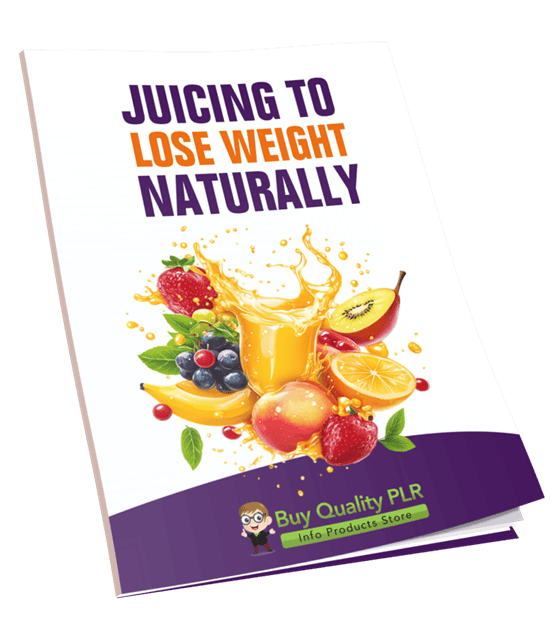
Juicing to Lose Weight Naturally PLR Course 32k Words
in Juicing PLR , PLR eCourses , PLR List Building Reports , Premium PLR , Premium PLR Reports , Premium White Label Brandable PLR Coaching Courses , Private Label Rights Products , Weight Loss PLRChoose Your Desired Option(s)
has been added to your cart!
have been added to your cart!
#juicingforweightloss #plrcourse #healthyliving #naturalweightloss #nutritiontips #wellnessmarketing #plrcontent #cleaneating #healthandwellness
Juicing to Lose Weight Naturally PLR Course – 32,000 Words
Transform Your Body, Boost Energy, and Lose Weight Naturally with Juicing
Are you tired of fad diets, endless calorie counting, and workouts that don’t seem to stick?
The Juicing to Lose Weight Naturally PLR Course gives your audience a step-by-step system to jumpstart weight loss, detox their body, and build long-term healthy habits—all through delicious, nutrient-packed juices.
With 32,000 words of ready-to-use content, this PLR course is perfect for health coaches, wellness bloggers, dietitians, and PLR resellers wanting to deliver high-value, actionable content in the weight loss and wellness niche.
Whether your audience is new to juicing or wants to supercharge their weight loss journey, this course provides practical guidance, recipes, and a complete 7-day challenge that guarantees results.
Introducing the…
Juicing to Lose Weight Naturally
Why Juicing is the Ultimate Weight Loss Tool
Juicing isn’t just a trend—it’s a scientifically supported method for rapid detoxification and fat loss. Here’s why it works:
- Reduces calorie intake naturally: Fresh juices fill you with nutrients while cutting unnecessary calories.
- Boosts metabolism: Certain ingredients accelerate fat-burning and increase energy levels.
- Controls cravings: Juicing helps curb sugar and processed food cravings naturally.
- Detoxifies the body: Juices flush out toxins, improve digestion, and promote overall wellness.
With this course, learners gain everything they need to complete a 7-day juice challenge, plus long-term strategies to maintain results and build a healthy lifestyle.
What’s Inside the Course
The course is divided into five comprehensive modules, each with four lessons, designed to teach the science, strategy, and practical steps for juicing successfully.
Module 1: Getting Started with Juicing for Weight Loss
Goal: Build a solid foundation and get learners ready for the 7-day juicing challenge.
- Lesson 1: Why Juicing Works for Weight Loss
Learn how fresh juices provide essential nutrients, reduce calorie intake, and boost metabolism naturally. - Lesson 2: Juicing vs. Smoothies – What’s the Difference?
Discover why juicing is ideal for rapid cleansing and effective weight loss, compared to smoothies. - Lesson 3: Tools You’ll Need for Success
Explore juicers, blenders, and essential kitchen tools that make juicing simple and enjoyable. - Lesson 4: Prepping Your Mind and Kitchen
Learn how to stock fresh fruits, vegetables, and herbs while setting realistic goals for your 7-day challenge.
Module 2: The Science of Juicing & Weight Loss
Goal: Explain the biology behind juicing and why it accelerates natural weight loss.
- Lesson 1: How Juicing Detoxifies Your Body
Understand how juices flush toxins and improve digestion, supporting a leaner, healthier body. - Lesson 2: Metabolism and Energy Boost from Juicing
Learn how specific juices boost metabolism, increase energy, and enhance daily performance. - Lesson 3: Understanding Hunger and Cravings
Discover how juicing helps reduce sugar cravings and overconsumption of processed foods. - Lesson 4: Balancing Nutrients in Your Juices
Combine fruits, vegetables, and herbs strategically to create fat-burning, energizing drinks.
Module 3: The 7-Day Juicing to Lose Weight Challenge
Goal: Guide learners through the core 7-day plan with easy-to-follow steps.
- Lesson 1: Preparing for the Challenge (Day 0)
Adjust your diet, eat the right foods, and set yourself up for success before starting the challenge. - Lesson 2: Day 1 to Day 3 – The Kickstart Phase
Follow simple juice recipes designed to detoxify the body, reduce bloating, and begin fat loss. - Lesson 3: Day 4 to Day 6 – The Transformation Phase
Enjoy fat-burning juices that increase energy, support metabolism, and accelerate weight loss. - Lesson 4: Day 7 – The Reset & Reflection Day
Complete the challenge strong, track your results, and learn how to transition back to solid foods safely.
Module 4: Beyond the 7 Days – Maintaining Results
Goal: Help learners sustain weight loss and adopt long-term healthy habits.
- Lesson 1: How to Reintroduce Solid Foods
Step-by-step guide for transitioning from juices to a healthy diet without weight rebound. - Lesson 2: Healthy Eating Habits After Juicing
Learn daily habits to maintain natural weight loss and improve overall health. - Lesson 3: Weekly Juice Integration Plan
Incorporate juices into your regular meals for ongoing benefits and energy. - Lesson 4: Handling Plateaus and Staying Motivated
Overcome common weight-loss plateaus and keep momentum with simple, practical strategies.
Module 5: Advanced Tips & Juicing Lifestyle
Goal: Provide extra strategies, advanced tips, and long-term juicing habits.
- Lesson 1: Superfoods and Herbs for Juicing
Learn about fat-burning boosters like ginger, turmeric, spinach, kale, and green tea. - Lesson 2: Budget-Friendly Juicing Hacks
Discover ways to juice without overspending—smart shopping, storage, and seasonal produce tips. - Lesson 3: Common Mistakes to Avoid
Prevent beginner errors that reduce results, like imbalanced ingredients or over-juicing. - Lesson 4: Building Your Own Custom Juice Recipes
Step-by-step guidance to create personalized, nutrient-rich, fat-burning juices.
Bonus Materials
To maximize results and make this course easy to sell, it includes:
- Checklist – 546 Words: Step-by-step guide for completing the 7-day challenge successfully.
- FAQs – 870 Words: Answers to common questions about juicing, weight loss, and challenge logistics.
- Salespage – 780 Words: Ready-to-use, conversion-focused sales copy for your website or email marketing campaigns.
Who Can Benefit from This PLR Course
- Health Coaches and Nutritionists: Offer clients a structured, results-driven 7-day juice plan.
- Bloggers and Influencers: Sell or give away as a lead magnet in the weight-loss niche.
- Wellness Educators: Create e-classes, workshops, or online programs.
- PLR Resellers: Monetize a ready-made, in-demand product with minimal setup.
- Individuals: Follow the course to kickstart their own weight-loss journey safely and naturally.
This PLR course is highly flexible—it can be rebranded, split into mini-guides, or bundled with other products to create multiple income streams.
How to Use and Profit from This Course
- Sell the Full Course: Offer it as a digital product for $197–$497.
- Break Into Mini-Reports: Sell individual modules or lessons for $10–$20 each.
- Create Bundles: Combine with other wellness or weight-loss PLR content for $47–$97.
- Launch a Multi-Week E-Class: Use modules as a 1–2 week challenge program for $297–$497.
- Membership Site Content: Offer recurring monthly content with ongoing juice challenges.
- Physical Products: Convert content into printables, recipe books, or journals.
- Lead Magnets and Email Campaigns: Use excerpts as free downloads to grow your list.
- Flip a Website: Build a juice or wellness site using this course and sell it as a complete package.
Licensing Terms
Permissions – What You Can Do:
- Sell as-is or with minor edits.
- Claim copyright if 75%+ of the content is rewritten.
- Break content into smaller guides or membership site content.
- Bundle with other products or digital courses.
- Use excerpts for marketing, blogs, or lead magnets.
Restrictions – What You Cannot Do:
- Pass PLR or resale rights to your customers.
- Offer 100% affiliate commissions (maximum 75%).
- Give away the full course for free.
- Include in existing orders without requiring an additional purchase.
Why Buy This PLR Course from Buy Quality PLR?
- Professionally written 32,000-word course ready to sell or teach.
- Structured modules and lessons for step-by-step learning.
- Evergreen health and weight-loss niche with high demand.
- Includes checklist, FAQs, and sales page for easy promotion.
- Save months of content creation and research.
- Monetize immediately in multiple formats: digital, membership, e-class, or physical products.
Bottom Line
The Juicing to Lose Weight Naturally PLR Course is a turnkey solution for anyone in health, wellness, and personal development:
- Teach clients or audiences how to lose weight safely and naturally.
- Offer a 7-day challenge that delivers fast, visible results.
- Create recurring revenue with membership sites, workshops, or bundles.
- Profit from ready-to-use, high-value content without starting from scratch.
Give your audience a tool to transform their body, improve digestion, boost energy, and create lasting healthy habits—all while creating a profitable product for yourself.
has been added to your cart!
have been added to your cart!
Here A Sample of the Juicing to Lose Weight Naturally PLR Course
Module 1: Getting Started with Juicing for Weight Loss
This module sets the foundation, helps learners understand the basics, and gets them ready for the challenge.
Lesson 1: Why Juicing Works for Weight Loss
Introduction
Welcome to your very first lesson in this course, “Juicing to Lose Weight Naturally.” This session is all about building a solid foundation. Before we get into recipes, grocery lists, or challenges, we need to pause and understand why juicing works so well for weight loss.
Think of it this way: If you don’t understand the “why,” it’s easy to quit halfway. But when you know the science, the reasoning, and the real benefits behind juicing, you’ll feel motivated to commit to the full journey.
So, in this lesson, we will carefully explore:
- What happens inside your body when you drink fresh juice.
- Why juicing helps in reducing calorie intake without starving.
- How juices boost your metabolism and energy levels.
- Why juicing can reduce cravings and promote fat loss naturally.
By the end, you’ll see clearly that juicing isn’t just a trend — it’s a proven, natural way to kickstart weight loss and transform your health.
Step 1: Understanding the Concept of Juicing
Let’s start simple. What exactly is juicing?
Juicing is the process of extracting liquid from fresh fruits and vegetables. This liquid is packed with vitamins, minerals, enzymes, and antioxidants — all the nutrients your body needs — without the fiber-heavy bulk of the whole fruit or vegetable.
Now, you might be wondering, “Isn’t fiber important?” Yes, fiber is important. But when it comes to weight loss through juicing, the idea is to give your digestive system a short rest while still feeding your body with powerful nutrition. When you drink juice, the nutrients are absorbed directly into your bloodstream within minutes. That’s why you feel an almost immediate boost of energy.
It’s like giving your body a shortcut: No heavy digestion required, no long wait time. Just pure nutrition delivered instantly.
Step 2: Nutrient Density vs. Empty Calories
Here’s one of the main reasons juicing works so well for weight loss:
Most people gain weight because of empty calories. Processed foods, sugary drinks, fried snacks — these fill your stomach but give you very little in terms of vitamins or minerals. Your body stays “hungry” at the cellular level because it’s not truly nourished. So you keep eating more and more.
Fresh juices, on the other hand, are nutrient dense. That means a single glass of green juice made with spinach, cucumber, celery, and apple provides your body with more vitamins and minerals than an entire fast-food meal.
When your body receives proper nutrition, your cravings reduce. You naturally eat less junk. And the best part? You don’t feel deprived. You feel light, energized, and satisfied.
So, juicing helps break the cycle of overeating by feeding your cells exactly what they need.
Step 3: Lowering Calorie Intake Without Starving
One of the greatest fears in weight loss is starvation. Nobody likes to feel hungry all the time. Diets that force you to count every bite or cut your meals drastically often fail because they are not sustainable.
Juicing provides a smarter solution.
Let’s compare:
- A large cheeseburger can contain over 600 calories but very little nutrition.
- A tall glass of fresh carrot-apple-ginger juice may only contain about 150–200 calories, yet it delivers antioxidants, beta-carotene, vitamin C, and digestive enzymes.
By replacing one heavy meal with a glass of juice, you reduce your calorie intake dramatically while still nourishing your body. This allows for a calorie deficit — which is essential for weight loss — without feeling deprived or drained.
So, juicing is not about starving yourself. It’s about making every calorie count.
Step 4: Boosting Metabolism Naturally
Let’s talk about metabolism.
Metabolism is the process by which your body converts food into energy. The faster your metabolism, the more calories you burn — even while resting.
Certain fruits and vegetables used in juicing naturally speed up your metabolism. For example:
- Lemon and grapefruit are rich in compounds that support fat breakdown.
- Ginger improves digestion and increases calorie burning.
- Green leafy vegetables provide chlorophyll, which helps oxygenate the blood and improve cellular function.
- Chili or cayenne pepper (when added lightly) can also increase thermogenesis — your body’s fat-burning process.
When you regularly drink juices rich in these ingredients, your metabolism gets a boost. This means your body starts using stored fat for energy instead of holding on to it.
Step 5: Cleansing and Detoxifying the Body
Weight loss is not just about burning fat. It’s also about removing what’s weighing you down on the inside.
Modern diets, pollution, and processed foods overload our bodies with toxins. These toxins often get stored in fat cells. That’s why detoxifying is a crucial step in weight loss.
Juices act like a gentle internal cleanser. Ingredients like cucumber, celery, parsley, and lemon help flush out excess sodium, reduce bloating, and cleanse the liver. A healthy liver means better fat metabolism.
When your body is clean from within, losing weight becomes easier, faster, and more natural.
Step 6: Reducing Cravings and Emotional Eating
Here’s a surprising benefit of juicing that many people don’t realize: It helps control cravings.
Most cravings come from two sources:
- Nutrient deficiencies — when your body lacks minerals like magnesium or potassium, you may crave sugar or salty snacks.
- Emotional triggers — stress, boredom, or fatigue often push people toward comfort foods.
Juicing addresses both.
- Because juices are nutrient-rich, your body doesn’t send out false hunger signals.
- The natural energy boost from fresh juices reduces emotional lows, so you’re less likely to reach for processed snacks.
For example, instead of grabbing a candy bar at 3 PM, drinking a green juice with cucumber, spinach, apple, and lemon can stabilize blood sugar and keep you satisfied.
Step 7: Supporting Digestive Health
Healthy digestion is at the heart of weight loss. If your gut isn’t working properly, your body cannot absorb nutrients, and metabolism slows down.
Juices help in several ways:
- Enzymes in raw produce improve digestion and nutrient absorption.
- Hydration from water-rich fruits and vegetables supports bowel regularity.
- Anti-inflammatory properties from ingredients like turmeric or ginger calm the gut.
When digestion is smooth, bloating decreases, nutrient absorption increases, and weight loss feels effortless.
Step 8: Energy and Motivation to Stay Active
Another hidden advantage of juicing is the natural energy boost.
Unlike caffeine or sugar spikes that lead to crashes, juices provide steady, clean energy. The quick absorption of vitamins and natural sugars keeps you active without feeling sluggish.
This extra energy means you’re more likely to take a walk, do a short workout, or simply stay more productive throughout the day. And movement, even light movement, contributes to calorie burning and faster weight loss.
Step 9: A Psychological Boost – Seeing Quick Results
Let’s not forget the mental side of weight loss. Many people give up because results come too slowly. Juicing, however, often delivers visible changes within days.
- Reduced bloating within the first 48 hours.
- Brighter skin after a few days of consistent juicing.
- Slight weight drop by the end of the first week.
These quick wins build motivation and confidence. When you feel and see changes, you’re more encouraged to continue.
Step 10: Why Juicing Works When Other Diets Fail
So why does juicing succeed where many diets fail?
- It’s simple. No complicated rules or calorie charts.
- It’s natural. You’re giving your body real, whole foods in liquid form.
- It’s flexible. You can juice once a day or do a 7-day reset.
- It’s satisfying. You don’t feel starved; instead, you feel nourished.
This combination of simplicity, nourishment, and flexibility makes juicing a sustainable method for natural weight loss.
Recap of Key Points
Let’s quickly summarize why juicing works so well for weight loss:
- Juicing provides nutrient-dense calories that nourish the body.
- It reduces overall calorie intake without causing hunger.
- Juices boost metabolism and energy, supporting fat burning.
- Fresh juices detoxify and cleanse the body, especially the liver.
- Juicing reduces cravings and emotional eating.
- It improves digestion and nutrient absorption.
- It gives visible, motivating results in a short time.
Closing Thoughts
Juicing is not a fad. It is a timeless health practice that has been used across cultures for centuries. When applied correctly, it becomes a natural and powerful tool for weight loss.
By now, you should feel confident about why juicing works, not just as a short-term fix but as a long-term habit for better health and a slimmer, more energized body.
Remember: Every glass of juice you drink is a step toward nourishing your body, cleansing your system, and moving closer to your natural weight.
Lesson 2: Juicing vs. Smoothies – What’s the Difference?
Introduction
When people first hear about juicing, they often confuse it with smoothies. Both are drinks made from fruits and vegetables, both can be healthy, and both are popular in wellness communities. But the truth is, juicing and smoothies are not the same.
In this lesson, we will break down the key differences between juicing and smoothies so that you clearly understand how each works, and why juicing is especially effective for rapid cleansing and weight management.
Think of this as comparing two tools in your health toolkit. Both are useful, but they serve different purposes. By the end of this lesson, you’ll be able to confidently explain to anyone the difference between a juice and a smoothie, and why juice is the star of a weight-loss challenge.
Step 1: Defining Juicing and Smoothies
Let’s begin with clear definitions.
- Juicing is the process of extracting liquid from fresh fruits and vegetables. It removes most of the fiber and pulp, leaving behind a nutrient-rich liquid filled with vitamins, minerals, and enzymes.
- Smoothies, on the other hand, are made by blending whole fruits and vegetables, including the fiber. Nothing is removed. The result is a thicker drink that contains all parts of the plant.
So, in simple terms:
- Juicing = liquid nutrition without fiber.
- Smoothie = blended whole food with fiber.
This difference in fiber content is the foundation of why they impact the body differently.
Step 2: Texture and Digestibility
The first noticeable difference is texture.
- A juice is light, thin, and smooth. It goes down like water or tea.
- A smoothie is thick, creamy, and more filling, almost like a liquid meal.
From a digestion perspective:
- Juices are absorbed by the body very quickly. Because the fiber is removed, the nutrients go straight into your bloodstream within 15 to 20 minutes. This gives you an immediate boost of energy.
- Smoothies take longer to digest because of the fiber. They are processed like a regular meal, which means the energy release is slower.
This is why juicing is ideal for cleansing and quick absorption, while smoothies are better when you want a filling snack or meal replacement.
Step 3: Nutrient Density and Bioavailability
One of the biggest benefits of juicing is the sheer concentration of nutrients.
Imagine this: To make one glass of green juice, you might use 2 cucumbers, 4 celery sticks, 1 apple, a handful of spinach, and a slice of lemon. When juiced, all those vegetables and fruits shrink down into a single glass of liquid nutrition.
If you tried to blend all of that into a smoothie, it would turn into a giant jug, too big for most people to finish in one sitting. Juicing condenses nutrients into a manageable serving.
Even more importantly, because juices are fiber-free, the vitamins and minerals are more bioavailable — meaning your body absorbs them faster and more efficiently.
Smoothies still deliver nutrition, but absorption is slower due to the fiber content.
Step 4: Calories and Satiety
Now let’s talk about calories, an important factor for weight management.
- Juices are generally lower in calories because the fiber and bulk are removed. A green juice made of cucumber, celery, and lemon may have less than 150 calories.
- Smoothies tend to be higher in calories, especially when made with bananas, nut butters, milk, or yogurt. A smoothie can easily cross 300–500 calories depending on ingredients.
This means juices are ideal for reducing calorie intake while still feeding your body nutrients. Smoothies, on the other hand, are filling and can serve as a meal.
From a weight-loss perspective, juicing creates a calorie deficit more easily, making it especially powerful for a 7-day cleanse.
Step 5: Impact on the Digestive System
Here’s another major difference.
- Juicing gives your digestive system a break. Since the fiber is removed, your body doesn’t have to work hard to break down food. This allows energy to be directed toward detoxification and healing.
- Smoothies require full digestion. The fiber slows down absorption, so your stomach and intestines remain engaged in the digestion process.
This is why juicing is recommended for rapid cleansing — it’s like giving your digestive system a short holiday, while still nourishing your body.
Smoothies, however, are excellent for maintaining regular digestion and gut health because they provide dietary fiber.
Step 6: Cleansing vs. Sustaining
To put it simply:
- Juices cleanse. They flush toxins, hydrate the body, and support detoxification.
- Smoothies sustain. They fill you up, provide fiber, and work well as balanced meals.
That’s why juicing is more effective during short-term challenges like a 7-day reset, while smoothies are more suitable for daily maintenance once the cleanse is complete.
Step 7: Energy Levels and Metabolism
Another noticeable difference is how you feel after drinking each.
- After a juice, most people report a surge of clean energy. This is because nutrients hit the bloodstream quickly, providing an instant lift without heaviness.
- After a smoothie, you feel fuller and more grounded. Energy is steady but not as immediate, since the body is still busy digesting.
For metabolism, juices have an edge during weight loss challenges because they are low-calorie yet high in metabolism-boosting nutrients like chlorophyll, vitamin C, and antioxidants. Smoothies are excellent for long-term metabolism support, especially when combined with protein and healthy fats.
Step 8: Practical Considerations
It’s also important to consider the practical side.
- Juicing requires a juicer. It can be a little more time-consuming and involves cleaning the machine after use. The yield is a smaller quantity of liquid, but very concentrated.
- Smoothies require only a blender. They are faster to make and easier to clean up. The portion is larger and more filling.
From a convenience perspective, smoothies win. But when it comes to targeted weight loss and cleansing, juices take the lead.
Step 9: Cost and Ingredients
- Juicing usually requires more produce because you’re extracting liquid and discarding pulp. For example, making one glass of juice might use up more cucumbers or apples than a smoothie. This can make juicing slightly more expensive.
- Smoothies use the whole fruit or vegetable, so you need less produce for the same volume. They also allow for extras like oats, protein powders, or nut butters, which can stretch ingredients further.
However, remember this: While juicing might require more ingredients, the payoff is a highly concentrated dose of vitamins and minerals — which is exactly what supports weight loss during a short challenge.
Step 10: Why Juicing Wins for Rapid Weight Loss
Both drinks are valuable, but let’s circle back to the main focus of this course: weight loss through juicing.
Juicing is particularly effective for rapid weight management because:
- It reduces calorie intake while keeping the body nourished.
- It provides quick nutrient absorption that boosts energy and metabolism.
- It allows the digestive system to rest and focus on detoxification.
- It reduces bloating and water retention quickly.
- It delivers visible results in just a few days, keeping motivation high.
Smoothies are better for long-term healthy eating, but when your goal is to drop weight naturally and reset your system, juicing is the faster, more efficient tool.
Step 11: Common Misunderstandings
Many beginners mistakenly think juicing and smoothies are interchangeable. Let’s clear that up:
- If you want to detox, reset, or lose weight quickly, juicing is the right path.
- If you want a filling snack or meal replacement, smoothies are your choice.
- Juicing is not about replacing every meal forever — it’s about giving your body a focused, nutrient-rich reset.
Another misunderstanding is that juicing makes you lose “muscle” or “energy.” In reality, if done correctly with a balance of fruits, vegetables, and even small amounts of protein-boosting ingredients like spirulina, juicing provides energy and helps preserve lean muscle while burning fat.
Step 12: A Balanced Approach
It’s worth mentioning that both juicing and smoothies can coexist in a healthy lifestyle. You don’t have to choose one forever.
- During a 7-day challenge, focus on juicing for rapid results.
- After the challenge, smoothies can help maintain your progress by providing fiber and balanced meals.
This way, you enjoy the best of both worlds: cleansing through juices, and sustaining through smoothies.
Recap of Key Points
Let’s summarize what we’ve covered in this lesson:
- Juicing removes fiber, giving concentrated nutrients in liquid form.
- Smoothies keep fiber, resulting in thicker, filling drinks.
- Juices are absorbed quickly, providing instant energy and cleansing.
- Smoothies digest more slowly, offering sustained energy and satiety.
- Juices are lower in calories, ideal for rapid weight loss.
- Smoothies are higher in calories, better for meal replacement.
- Juicing requires more produce but delivers concentrated nutrients.
- Smoothies are easier and cheaper but not as effective for detox.
- For weight loss and cleansing, juicing has a clear advantage.
- For long-term maintenance, smoothies are a great companion.
Closing Thoughts
Juicing and smoothies are not competitors — they are partners in your health journey. Each has a role, and understanding the difference helps you choose wisely.
When it comes to rapid weight loss and natural cleansing, juicing shines. Its ability to flood your body with nutrients, cut calories, and give your digestion a rest makes it the ultimate tool for short-term transformation.
Smoothies, on the other hand, are perfect for long-term balance, helping you maintain weight loss and enjoy fiber-rich, satisfying meals.
So, now that you know the difference, you can appreciate why this course focuses on juicing as the foundation of your 7-Day Challenge.
Lesson 3: Tools You’ll Need for Success
Introduction
Before diving into the 7-Day Juicing Challenge, it’s important to set yourself up for success. One of the most overlooked aspects of juicing is not the recipes, not the fruits or vegetables, but the tools you use.
Think of it like this: If you were learning to paint, you would need the right brushes, paints, and canvas. The tools don’t just make the process easier; they influence the quality of the final result. The same principle applies to juicing.
In this lesson, we will walk through:
- The different types of juicers and their pros and cons.
- The role of blenders in juicing and when to use them.
- Essential kitchen tools that simplify preparation.
- Storage solutions for keeping your juices fresh.
- Practical tips for saving time and energy in the juicing process.
By the end, you’ll know exactly what equipment works best for you, your lifestyle, and your budget.
Step 1: The Role of the Juicer
The juicer is the heart of any juicing practice. Without it, you can’t extract liquid nutrition from fruits and vegetables effectively. But not all juicers are created equal.
There are several types of juicers available on the market, each with different strengths and weaknesses. Choosing the right one depends on your goals, how often you plan to juice, and the types of produce you want to use.
Let’s explore the main categories.
Step 2: Centrifugal Juicers
Centrifugal juicers are the most common and widely available.
How they work: They use a fast-spinning blade to shred produce and separate juice from pulp using centrifugal force.
Advantages:
- Generally more affordable than other types.
- Quick and easy to use, making them ideal for beginners.
- Perfect for hard fruits and vegetables like apples, carrots, and cucumbers.
- Widely available in most stores around the world.
Disadvantages:
- Not very efficient with leafy greens such as spinach or kale.
- The fast spinning creates heat, which may reduce some nutrient content.
- Juice tends to separate faster and has a shorter shelf life.
Best for: People new to juicing who want something affordable and easy for basic fruit and vegetable juices.
Step 3: Masticating Juicers (Slow Juicers)
Masticating juicers are also called slow or cold-press juicers.
How they work: They use a slow, grinding or chewing motion to press juice from produce.
Advantages:
- Retains more nutrients because there is little heat involved.
- Extracts more juice, especially from leafy greens and herbs.
- Produces juice that can last longer when refrigerated.
- Quieter than centrifugal juicers.
Disadvantages:
- Slower than centrifugal juicers.
- Usually more expensive.
- Cleaning can take more time due to more parts.
Best for: People committed to juicing regularly, especially those who want nutrient-dense green juices.
Step 4: Twin-Gear Juicers (Triturating Juicers)
Twin-gear juicers are the premium choice.
How they work: They use two interlocking gears to crush and press produce very slowly and efficiently.
Advantages:
- Extracts the maximum juice and nutrients, even from leafy greens and wheatgrass.
- Produces juice with the longest shelf life.
- Handles a wide variety of ingredients, including nuts for nut milk.
Disadvantages:
- Very expensive compared to other types.
- Bulky and heavy, not easy to move or store.
- Slower and requires more effort to clean.
Best for: Dedicated juicing enthusiasts who see juicing as a lifestyle and want the highest quality juice.
Step 5: Citrus Juicers
Citrus juicers are a special category designed just for oranges, lemons, limes, and grapefruits.
How they work: They press or ream juice from citrus fruits.
Advantages:
- Affordable and simple.
- Perfect for people who drink a lot of citrus juice.
- Easy to clean and maintain.
Disadvantages:
- Limited to citrus fruits.
- Not useful for vegetables or other fruits.
Best for: Adding a quick boost of citrus to juices or for people who enjoy fresh orange juice daily.
Step 6: The Role of Blenders
You might be wondering, “If this is a course about juicing, why mention blenders?” The reason is simple: blenders can still play a supportive role.
Blenders are not juicers. They don’t separate juice from pulp, but they are excellent for making smoothies or blending fibrous fruits before straining them manually.
When to use a blender:
- To prepare smoothies as a complement to juicing.
- When you want to create hybrid drinks (juice plus fiber).
- When you don’t yet own a juicer and want to start experimenting.
- To pre-blend tough ingredients like pineapple or mango before straining.
Tip: If you’re using a blender to mimic juicing, pour the blended mixture through a fine mesh strainer or nut milk bag to separate juice from pulp.
Step 7: Essential Kitchen Tools
Beyond the juicer or blender, a few simple tools can make juicing much easier and more enjoyable.
1. Cutting Board and Sharp Knife
You’ll need a sturdy cutting board and a reliable knife to chop fruits and vegetables. A sharp knife makes prep faster and safer.
2. Peeler
Not all fruits and vegetables need peeling, but for citrus, ginger, or produce with tough skins, a peeler is very useful.
3. Strainer or Nut Milk Bag
Even if you have a juicer, sometimes a strainer can help remove excess pulp. If using a blender, a nut milk bag is essential for separating juice.
4. Measuring Cups and Spoons
Helpful for following recipes accurately, especially when adding herbs, spices, or lemon juice in exact amounts.
5. Large Mixing Bowl
When juicing large batches, collect the juice in a bowl before pouring it into bottles. This reduces spills and keeps flavors consistent.
6. Glass Bottles or Mason Jars
For storing juices, glass is best. It keeps juices fresh longer and doesn’t leach chemicals like some plastics.
7. Funnel
A funnel makes it easier to pour juice into bottles without wasting a drop.
8. Cleaning Brush
Most juicers come with a brush, but having an extra one helps. Cleaning immediately after juicing is the easiest way to maintain your equipment.
Step 8: Storage and Freshness
Juicing works best when juices are consumed fresh, but sometimes you may need to store them. Having proper containers makes a big difference.
- Use airtight glass bottles to prevent oxidation.
- Fill bottles to the top to minimize air contact.
- Store in the refrigerator immediately.
- For slow-juiced juices (from masticating or twin-gear juicers), you can keep them for up to 72 hours. For centrifugal juices, it’s best to drink within 24 hours.
These practices ensure you get the most nutrients from your hard work.
Step 9: Budget Considerations
Many people hesitate to start juicing because they think it’s expensive. But you don’t need the most expensive machine to begin.
Here’s how to think about it:
- If you’re just starting, a centrifugal juicer is affordable and practical.
- If you’re serious about long-term juicing, a masticating juicer is worth the investment.
- If you’re passionate about maximum nutrition and plan to juice daily, a twin-gear juicer might be ideal.
Remember, the best tool is the one you’ll actually use. A high-end machine sitting in the cupboard is less valuable than a simple juicer used every day.
Step 10: Time-Saving Tips
Having the right tools also helps you save time. Here are some practical steps:
- Wash and prep produce in bulk, then store in sealed bags or containers.
- Line the pulp container of your juicer with a bag for easier cleanup.
- Clean your juicer immediately after use to avoid dried pulp sticking.
- Keep knives sharp and tools organized in one place for faster prep.
These small habits make juicing more enjoyable and sustainable.
Step 11: Making Juicing Fun
Juicing doesn’t have to feel like a chore. With the right tools, it becomes a fun and rewarding experience. Think of your juicer as your partner in health. When you hear the sound of fresh juice pouring into a glass, it should feel satisfying — a reward for taking care of your body.
The more efficient your tools, the less stress you’ll feel, and the more likely you are to stick with your juicing routine.
Recap of Key Points
Let’s summarize the essentials from this lesson:
- Centrifugal juicers are affordable and fast but less efficient for leafy greens.
- Masticating juicers are slower but extract more juice and retain nutrients.
- Twin-gear juicers are the most efficient but also the most expensive.
- Citrus juicers are perfect for fresh orange or lemon juice.
- Blenders are not juicers but can play a supporting role.
- Essential tools include knives, cutting boards, peelers, strainers, jars, funnels, and cleaning brushes.
- Glass storage containers keep juices fresh longer.
- Your budget and lifestyle should guide your choice of tools.
- Good habits like prepping produce and cleaning immediately save time.
- The right tools make juicing simple, enjoyable, and sustainable.
Closing Thoughts
Juicing is not just about what you drink, but also how easily you can prepare it. With the right tools, the entire process becomes smoother, more enjoyable, and more effective. Whether you’re starting small with a basic centrifugal juicer or investing in a high-end twin-gear model, what matters most is creating a setup that works for you.
By equipping yourself with the right juicer, supportive tools, and storage solutions, you are building the foundation for a successful juicing journey.
Every great transformation starts with preparation. And in the case of juicing, preparation begins with the right tools.
We’re also giving these extra bonuses
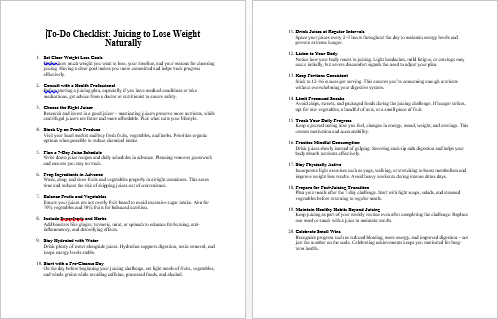
Juicing to Lose Weight Naturally – Checklist
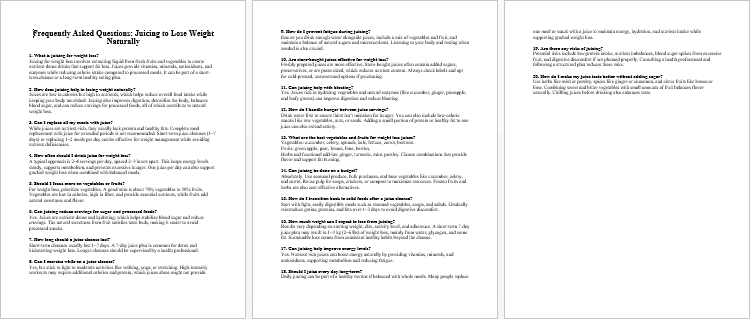
Juicing to Lose Weight Naturally – FAQs
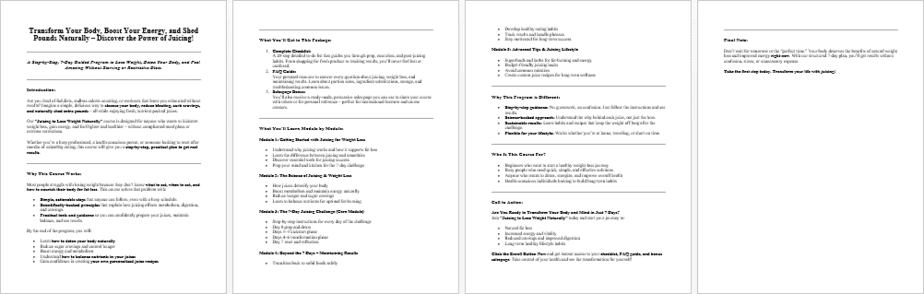
Juicing to Lose Weight Naturally – Salespage Content
Package Details:
Word Count: 30 087 Words
Number of Pages: 106
Juicing to Lose Weight Naturally – Bonus Content
Checklist
Word Count: 546 words
FAQs
Word Count: 870 words
Salespage Content
Word Count: 780 words
Total Word Count: 32 283 Words
Your PLR License Terms
PERMISSIONS: What Can You Do With These Materials?
Sell the content basically as it is (with some minor tweaks to make it “yours”).
If you are going to claim copyright to anything created with this content, then you must substantially change at 75% of the content to distinguish yourself from other licensees.
Break up the content into small portions to sell as individual reports for $10-$20 each.
Bundle the content with other existing content to create larger products for $47-$97 each.
Setup your own membership site with the content and generate monthly residual payments!
Take the content and convert it into a multiple-week “eclass” that you charge $297-$497 to access!
Use the content to create a “physical” product that you sell for premium prices!
Convert it to audios, videos, membership site content and more.
Excerpt and / or edit portions of the content to give away for free as blog posts, reports, etc. to use as lead magnets, incentives and more!
Create your own original product from it, set it up at a site and “flip” the site for megabucks!
RESTRICTIONS: What Can’t You Do With These Materials?
To protect the value of these products, you may not pass on the rights to your customers. This means that your customers may not have PLR rights or reprint / resell rights passed on to them.
You may not pass on any kind of licensing (PLR, reprint / resell, etc.) to ANY offer created from ANY PORTION OF this content that would allow additional people to sell or give away any portion of the content contained in this package.
You may not offer 100% commission to affiliates selling your version / copy of this product. The maximum affiliate commission you may pay out for offers created that include parts of this content is 75%.
You are not permitted to give the complete materials away in their current state for free – they must be sold. They must be excerpted and / or edited to be given away, unless otherwise noted. Example: You ARE permitted to excerpt portions of content for blog posts, lead magnets, etc.
You may not add this content to any part of an existing customer order that would not require them to make an additional purchase. (IE You cannot add it to a package, membership site, etc. that customers have ALREADY paid for.)
Share Now!
Latest Products





Free Sales Funnel Builder

Related Products

Popular & Trending

Featured Products