
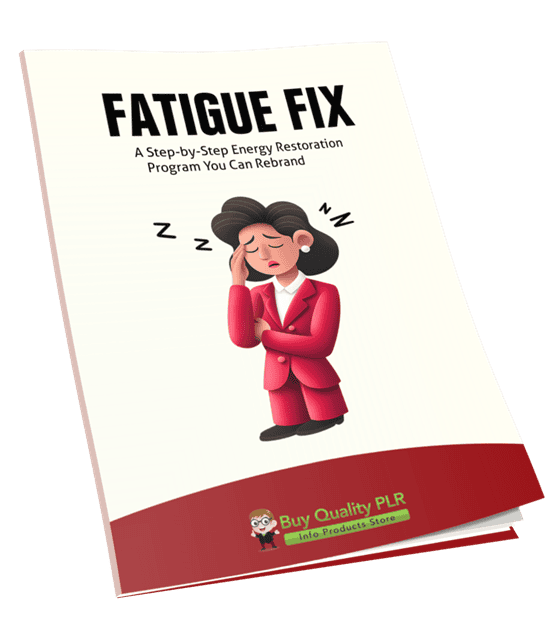
Fatigue Fix PLR Course 34k Words
in Health PLR , Natural Health PLR , PLR Checklists , PLR eCourses , PLR List Building Reports , Premium PLR , Premium PLR Reports , Premium White Label Brandable PLR Coaching Courses , Private Label Rights Products , Self Help PLR , Self Improvement PLR , Wellness PLRChoose Your Desired Option(s)
has been added to your cart!
have been added to your cart!
#fatiguefix #plrcourse #energyboost #wellnessmarketing #healthandwellness #beatfatigue #plrcontent #naturalhealth
A Step-by-Step Energy Restoration Program You Can Rebrand, Sell, or Monetize Instantly
Fatigue has quietly become one of the most common modern complaints. People are exhausted, mentally drained, unfocused, and running on caffeine instead of real energy. Yet most solutions offered online are temporary quick fixes rather than sustainable strategies.
The Fatigue Fix PLR Course was created to solve this problem the right way.
This comprehensive, step-by-step training program helps learners understand the root causes of fatigue and provides practical tools to restore energy naturally. Instead of masking symptoms, it guides users toward long-term vitality through nutrition, sleep, movement, and mindset improvements.
For PLR buyers, this course represents a high-demand wellness product that can be branded, sold, taught, or transformed into coaching programs, memberships, or premium health offers.
Introducing the…
Fatigue Fix PLR Course 34k Words
What This Course Is Designed to Do
The goal of Fatigue Fix is simple:
To help individuals identify the true causes of their fatigue and build a personalized, sustainable energy plan that works for their lifestyle.
Rather than offering generic advice, the course focuses on:
- Identifying individual fatigue triggers
- Improving nutrition for sustained energy
- Optimizing sleep and recovery
- Using movement strategically
- Managing stress and mental energy
- Creating sustainable daily routines
It provides a complete blueprint for long-term energy improvement.
Course Overview: Fatigue Fix
This structured program walks learners step by step through understanding, correcting, and preventing fatigue.
By the end of the course, learners will:
- Understand why they feel tired
- Identify their personal energy drains
- Improve sleep quality
- Fuel their body correctly
- Build sustainable energy habits
- Create a personalized daily energy routine
Module Breakdown
Module 1: Understanding Your Fatigue
Goal: Discover what fatigue really is and why it happens.
Lesson 1: What Is Fatigue Really?
Explains the difference between normal tiredness and chronic fatigue, helping learners recognize when fatigue is a signal rather than just a bad day.
Lesson 2: Common Causes of Fatigue
Covers poor sleep, nutritional gaps, stress overload, lifestyle habits, and hidden energy leaks.
Lesson 3: Energy Assessment
Guides learners through evaluating daily energy patterns and identifying personal triggers.
Lesson 4: The Mind-Body Connection
Explores how stress, emotional strain, and negative thought patterns impact physical energy.
This module creates awareness—the first step toward meaningful change.
Module 2: Nutrition for Energy
Goal: Fuel the body correctly to boost energy naturally.
Lesson 1: Foods That Energize vs Foods That Drain
Teaches how certain foods stabilize blood sugar and improve endurance, while others cause crashes.
Lesson 2: Hydration and Its Role in Fatigue
Explains the connection between dehydration and low energy levels.
Lesson 3: Smart Meal Timing
Shows how eating patterns affect energy throughout the day.
Lesson 4: Supplements That Support Energy
Provides guidance on safe, supportive supplements for energy improvement.
This module replaces guesswork with practical nutritional strategies.
Module 3: Sleep and Recovery
Goal: Optimize sleep and recovery for sustainable vitality.
Lesson 1: Understanding Sleep Cycles
Explains how sleep stages influence restoration and daily performance.
Lesson 2: Creating a Sleep-Friendly Environment
Offers practical steps to turn the bedroom into a true recovery space.
Lesson 3: Nighttime Habits That Affect Sleep
Highlights daily habits that either sabotage or enhance sleep quality.
Lesson 4: Power Naps and Recovery Techniques
Teaches effective short recovery practices without disrupting nighttime sleep.
This module transforms sleep from a passive activity into a strategic energy tool.
Module 4: Movement and Energy
Goal: Use physical activity to increase energy, not deplete it.
Lesson 1: The Right Kind of Exercise for Fatigue
Identifies exercises that boost vitality versus those that may cause burnout.
Lesson 2: Energy-Boosting Stretching and Mobility
Simple routines to release tension and restore energy.
Lesson 3: Desk and Daily Movement Hacks
Easy movement strategies for those with sedentary lifestyles.
Lesson 4: Building an Energizing Routine
A balanced, realistic movement plan for consistent energy.
This module shows that movement, when used correctly, is an energy amplifier.
Module 5: Mindset and Lifestyle Energy Boosters
Goal: Strengthen mental energy and create lasting habits.
Lesson 1: Stress Management for Energy
Teaches techniques to reduce mental overload and conserve energy.
Lesson 2: Time Management and Energy Prioritization
Aligning tasks with natural energy peaks for maximum productivity.
Lesson 3: Daily Energy Rituals
Morning, afternoon, and evening routines for stable energy.
Lesson 4: Tracking Progress and Staying Motivated
Monitoring improvement without obsession.
This module ensures long-term sustainability rather than temporary improvement.
What Makes Fatigue Fix a Powerful PLR Product
Fatigue is a widespread issue affecting professionals, parents, students, and entrepreneurs. That makes this course:
- Evergreen
- Highly relatable
- Broad in target market appeal
- Ideal for wellness, productivity, and self-improvement niches
It addresses a universal pain point with practical, non-extreme solutions.
Additional High-Value Content Included
This PLR package includes supportive materials that increase product value.
Fatigue Fix Checklist – 502 Words
A practical action checklist to help learners implement the course step by step.
Fatigue Fix FAQs – 931 Words
A detailed FAQ section that builds trust and answers common energy-related questions.
Fatigue Fix Sales Page – 1,236 Words
A professionally written sales page buyers can rebrand or customize for their own launch.
Who This PLR Course Is Ideal For
This course is perfect for:
- Health and wellness coaches
- Productivity mentors
- Life coaches
- Fitness trainers
- Wellness bloggers
- Membership site owners
- Personal development brands
It can be positioned as a wellness program, productivity course, or holistic lifestyle reset.
How to Use and Profit from the Fatigue Fix PLR Course
This course offers multiple monetization opportunities.
Sell It as a Standalone Online Course
Rebrand and sell it as a complete energy restoration program.
Turn It Into a Multi-Week eClass
Deliver content weekly and charge $297–$497 for guided access.
Add It to a Membership Site
Use it as cornerstone content for recurring monthly revenue.
Create a Coaching Program
Use the course as the foundation for 1-on-1 or group coaching packages.
Break It Into Smaller Products
Sell individual modules or reports priced $10–$20.
Convert It Into Video or Audio Training
Increase perceived value and price point with multimedia formats.
Bundle It with Other Health Products
Create packages priced $47–$97.
Build a Wellness Brand Around It
Launch a niche site focused on energy, productivity, and vitality—and scale it as a sellable asset.
License Terms – What Buyers Are Allowed to Do
Permissions
Buyers may:
- Sell the content with minor edits
- Claim copyright if 75% of the content is substantially modified
- Break content into smaller paid products
- Bundle it with other content for higher-value offers
- Create membership sites with recurring income
- Convert it into multi-week eClasses priced $297–$497
- Turn it into audio, video, or physical products
- Use excerpts as blog posts or lead magnets
- Build a branded product or website and flip it
License Restrictions – What Buyers Cannot Do
To protect the product’s value:
- PLR or resale rights may not be passed on
- Licensing rights may not be transferred
- Affiliate commissions may not exceed 75%
- The full content may not be given away in its current form
- It may not be added to existing paid products without a new purchase
Why Buy This PLR Course from Buy Quality PLR
Buy Quality PLR delivers high-quality, business-ready PLR products designed for real monetization opportunities.
The Fatigue Fix PLR Course offers:
- Evergreen demand in health and productivity niches
- Practical, sustainable solutions
- Broad audience appeal
- Strong resale and repurposing potential
- Immediate usability
It saves months of content creation while opening the door to profitable wellness offers.
Get Instant Access Today
The Fatigue Fix PLR Course is available for instant download.
This is a complete, done-for-you energy restoration program that can be rebranded, sold, taught, or transformed into premium coaching and wellness products immediately.
Add this powerful PLR course to your Buy Quality PLR library today and start turning energy transformation education into a profitable digital asset.
has been added to your cart!
have been added to your cart!
Here A Sample of the Fatigue Fix PLR Course
Welcome to Fatigue Fix! This course is designed to help you understand why you feel tired, identify the root causes of fatigue, and give you practical tools to regain energy, focus, and vitality. By the end of this course, you’ll have a personalized plan to fight fatigue naturally and sustainably.
Module 1: Understanding Your Fatigue
Goal: Discover what fatigue really is and why it happens to you.
Lesson 1: What Is Fatigue Really?
Objective: Learn the difference between normal tiredness and chronic fatigue.
Introduction to Fatigue
When you hear the word fatigue, it’s common to think simply of being tired after a long day. However, fatigue is much more than occasional tiredness. Fatigue is a complex condition that can affect your physical, mental, and emotional well-being. In this lesson, we will explore the nuances of fatigue, how it differs from normal tiredness, and why understanding this difference is critical for your health, performance, and overall quality of life.
Fatigue is an experience that everyone encounters, but not all fatigue is created equal. There is a clear distinction between the everyday tiredness that comes from lack of sleep, strenuous activity, or mental exertion, and chronic fatigue, which can signal deeper underlying issues. As course creators aiming to educate an international audience, it is essential to understand and convey these differences clearly.
Step 1: Recognize Normal Tiredness
Normal tiredness is a physiological response to exertion or a temporary lack of rest. It is your body’s natural mechanism to signal that it needs recovery. Recognizing normal tiredness involves observing a few key characteristics:
- Temporary Nature – Normal fatigue usually resolves after rest, sleep, or a short break. If you work hard and then sleep well, you typically wake up feeling refreshed.
- Predictable Pattern – Everyday fatigue follows a logical pattern. It occurs after physical activity, a long day at work, or mental exertion, and tends to peak at certain predictable times, such as late afternoon or evening.
- Improvement with Rest – Taking time to rest, sleeping for the night, or engaging in light activities like walking or stretching often restores energy levels.
- Minimal Impact on Daily Life – Normal tiredness may make you sluggish temporarily, but it does not significantly interfere with your ability to work, engage socially, or maintain productivity.
Understanding normal fatigue is important because it sets the baseline for recognizing when fatigue becomes problematic. International audiences may have different cultural interpretations of tiredness, but the physiological signals are universal. Highlighting these markers ensures that learners from diverse backgrounds can identify what normal tiredness feels like in their own bodies.
Step 2: Understand Chronic Fatigue
Chronic fatigue, by contrast, is more persistent, less predictable, and often resistant to conventional rest. It can significantly affect physical performance, mental clarity, emotional stability, and overall quality of life. Chronic fatigue is not simply feeling tired after a hard day; it is a prolonged condition that may last weeks, months, or even years if left unaddressed.
Some key signs of chronic fatigue include:
- Persistent Low Energy – You may feel exhausted despite having slept adequately. Morning fatigue is common, and naps or breaks provide minimal relief.
- Cognitive Impairment – Chronic fatigue often comes with difficulties in concentration, memory lapses, and slower mental processing. You may find it challenging to complete tasks that require focus or decision-making.
- Physical Weakness – Even small physical tasks can feel overwhelming. Ordinary activities, such as climbing stairs or carrying groceries, may become exhausting.
- Emotional Disturbances – Chronic fatigue can contribute to irritability, anxiety, or low mood, creating a cycle that further diminishes energy.
- Unpredictable Patterns – Unlike normal fatigue, chronic fatigue may strike at random, making it difficult to plan your day effectively. Energy levels can fluctuate dramatically without an obvious trigger.
It is crucial to emphasize to learners that chronic fatigue is a symptom, not a disease itself. It signals that something in the body or mind may be out of balance, and it deserves careful attention.
Step 3: Identify the Types of Fatigue
Fatigue can manifest in multiple dimensions, and recognizing these types is essential for addressing the root cause. This lesson focuses on three primary forms of fatigue:
- Physical Fatigue
- This type occurs when muscles or bodily systems are overused or depleted. Physical fatigue is common after intense exercise, prolonged standing, heavy lifting, or repetitive movements. Indicators include muscle soreness, reduced strength, slower reflexes, and feeling physically drained even after minor exertion.
- Mental Fatigue
- Mental fatigue arises from prolonged cognitive activity, stress, or decision overload. It is characterized by difficulty concentrating, poor memory, decision fatigue, and an overall feeling of mental sluggishness. Mental fatigue is particularly relevant for professionals, students, and creative individuals who engage in intensive problem-solving or planning tasks.
- Emotional Fatigue
- Emotional fatigue, also called emotional exhaustion, occurs when psychological stressors overwhelm your ability to cope. Situations like prolonged anxiety, high-pressure environments, or interpersonal conflicts can trigger this type of fatigue. Signs include irritability, low motivation, a sense of detachment, and reduced emotional resilience.
By understanding these three dimensions, learners can better assess their own fatigue patterns and communicate their experiences clearly. This multi-dimensional approach is particularly useful for international audiences who may experience fatigue differently due to cultural, occupational, or environmental factors.
Step 4: Explore the Root Causes of Fatigue
Fatigue does not occur randomly; it is usually the result of one or more contributing factors. Recognizing these causes is essential for effective management and long-term energy restoration. Common root causes include:
- Sleep Disruption – Poor quality sleep, inconsistent sleep schedules, or sleep disorders such as insomnia or sleep apnea can cause chronic fatigue. International learners may encounter differences in sleep hygiene practices, so it is important to explore universal principles like maintaining regular sleep schedules and optimizing the sleep environment.
- Nutritional Deficiencies – Low energy can result from inadequate nutrient intake. Deficiencies in iron, vitamin B12, magnesium, and other essential nutrients can reduce energy production at the cellular level.
- Sedentary Lifestyle – Lack of movement can paradoxically increase fatigue by reducing cardiovascular efficiency, muscle tone, and circulation.
- Chronic Stress – Prolonged stress triggers hormonal imbalances, including elevated cortisol levels, which can drain energy reserves.
- Medical Conditions – Fatigue can be a symptom of underlying health issues such as thyroid disorders, diabetes, infections, autoimmune conditions, or heart problems. Identifying when medical consultation is necessary is vital for safe fatigue management.
- Mental and Emotional Factors – Anxiety, depression, and emotional strain can produce significant fatigue, even when physical activity is limited.
Learners should be guided to reflect on their personal experiences and identify which factors may contribute to their own fatigue. This self-awareness forms the foundation for targeted interventions in later modules.
Step 5: Assess Your Own Fatigue
To truly understand fatigue, learners must actively evaluate their own patterns. This involves a structured self-assessment:
- Daily Energy Logs – Track energy levels throughout the day, noting periods of peak alertness and low energy. Include activities, meals, sleep quality, and emotional states.
- Symptom Journal – Record physical, mental, and emotional symptoms related to fatigue. Look for patterns over days or weeks.
- Identify Triggers and Relief Factors – Note what worsens fatigue (e.g., certain foods, stress, screen time) and what helps restore energy (e.g., naps, walks, nutrition).
- Reflect on Lifestyle Habits – Evaluate sleep hygiene, diet, exercise routines, stress management strategies, and workload.
This step empowers learners to take ownership of their energy levels and equips them with concrete data for the next stages of the course. It also encourages an international audience to consider cultural and environmental factors that may influence fatigue, such as work schedules, commuting patterns, and dietary norms.
Step 6: Reframe Fatigue as Feedback
A crucial mindset shift in this lesson is understanding fatigue not as a weakness but as feedback. Fatigue signals that your body or mind requires attention, adjustment, or support. Viewing fatigue through this lens transforms it from a frustrating obstacle into an opportunity for growth, health optimization, and self-awareness.
Encourage learners to ask themselves:
- What is my body trying to tell me?
- Which areas of my life could be adjusted to restore balance?
- How can I respond to fatigue proactively rather than reactively?
This reframing is especially valuable for international learners who may come from cultures where overwork or high productivity is glorified. Recognizing fatigue as feedback encourages healthier approaches to energy management, productivity, and personal well-being.
Step 7: Key Takeaways for Lesson 1
By the end of this lesson, learners should be able to:
- Differentiate between normal tiredness and chronic fatigue.
- Recognize the physical, mental, and emotional dimensions of fatigue.
- Identify potential root causes, including lifestyle, nutritional, emotional, and medical factors.
- Conduct a personal fatigue assessment using daily logs, symptom journals, and self-reflection.
- Reframe fatigue as a valuable signal that guides energy restoration strategies.
Conclusion
Understanding fatigue is the essential first step in regaining energy, focus, and vitality. By recognizing the difference between normal tiredness and chronic fatigue, identifying its multiple dimensions, and exploring the root causes, learners gain a strong foundation for the practical strategies presented in later modules.
International course creators will benefit from presenting this content in a way that is universally relatable, emphasizes personal reflection, and empowers learners to take control of their energy levels. This lesson sets the stage for Module 2, where nutrition, sleep, movement, and mindset techniques will provide actionable solutions to combat fatigue effectively.
This concludes the full, step-by-step instructions and detailed lesson description for Module 1, Lesson 1: What Is Fatigue Really? The goal is to ensure learners gain a deep understanding of fatigue and feel equipped to take actionable steps toward managing it.
Lesson 2: Common Causes of Fatigue
Objective: Identify key factors like poor sleep, nutrition, stress, and lifestyle habits.
Introduction to Causes of Fatigue
Fatigue is rarely caused by a single factor. Most often, it is the result of a combination of influences, including lifestyle, nutrition, mental and emotional stress, medical conditions, and environmental factors. For course creators targeting an international audience, it is important to explain fatigue in a universal context, highlighting that while daily routines may vary culturally, the underlying physiological and psychological mechanisms of fatigue are consistent worldwide.
In this lesson, we will systematically examine the most common causes of fatigue, explain why they disrupt energy levels, and guide learners to recognize which factors are relevant in their own lives. By understanding the causes of fatigue, learners can take informed steps to regain energy and improve overall well-being.
Step 1: Sleep-Related Causes
Sleep is the foundation of energy. Without adequate quality sleep, the body’s physical and mental systems cannot recharge. Understanding the impact of sleep on fatigue is essential.
- Insufficient Sleep Duration
- The recommended sleep duration for adults is generally 7 to 9 hours per night. Sleep shorter than this regularly can accumulate into what is called “sleep debt,” leading to persistent fatigue. International learners may experience variations in sleep culture, such as siestas, polyphasic sleep patterns, or extended work hours, but the physiological need for restorative sleep remains constant.
- Poor Sleep Quality
- Even when the quantity of sleep is adequate, poor sleep quality can cause fatigue. Factors affecting sleep quality include frequent awakenings, loud or disruptive environments, uncomfortable bedding, or irregular sleep schedules. Poor quality sleep prevents the body from progressing through critical restorative stages, including deep sleep and rapid eye movement (REM) sleep.
- Sleep Disorders
- Conditions such as insomnia, sleep apnea, restless leg syndrome, or circadian rhythm disorders are major contributors to chronic fatigue. Sleep apnea, for example, interrupts breathing repeatedly during sleep, reducing oxygen supply to the body and brain, and leaving individuals feeling unrefreshed upon waking. Recognizing these conditions early is critical, as medical evaluation and treatment are often required.
- Irregular Sleep Patterns
- Shift work, frequent travel across time zones, or inconsistent bedtime routines can disrupt the circadian rhythm, the body’s natural internal clock. Disruption in circadian rhythms not only causes fatigue but can also impair cognitive function, mood regulation, and immune system efficiency.
By identifying the specific sleep-related causes of fatigue, learners can take the first step toward targeted interventions, such as sleep hygiene optimization, creating consistent bedtime routines, or seeking professional help for sleep disorders.
Step 2: Nutrition-Related Causes
Food is fuel, and what we eat directly impacts our energy levels. Poor nutrition, unbalanced diets, or irregular eating patterns are major contributors to fatigue. Understanding these nutritional influences helps learners make intentional choices that support sustained energy.
- Inadequate Caloric Intake
- Consuming too few calories can deprive the body of the energy needed for essential functions, leaving learners feeling drained. While intermittent fasting or calorie-controlled diets are popular globally, it is important to ensure that caloric intake meets basic energy requirements.
- Macronutrient Imbalances
- Diets lacking adequate protein, healthy fats, or complex carbohydrates can cause fluctuating blood sugar levels, leading to fatigue. For example, skipping protein can reduce muscle repair and neurotransmitter production, while excessive refined carbohydrates can cause energy spikes followed by crashes.
- Micronutrient Deficiencies
- Vitamins and minerals play critical roles in energy production at the cellular level. Common deficiencies that lead to fatigue include iron, vitamin B12, vitamin D, magnesium, and potassium. Iron deficiency, in particular, can cause anemia, resulting in persistent tiredness, weakness, and reduced mental clarity.
- Dehydration
- Even mild dehydration reduces blood volume, decreases oxygen delivery to tissues, and impairs cognitive function. Many international learners may underestimate the importance of water, especially in hot climates or during prolonged physical activity. Encouraging regular hydration as part of daily routine is essential for energy maintenance.
- Excessive Caffeine or Sugar Intake
- While caffeine can temporarily boost alertness, excessive consumption can disrupt sleep and cause energy crashes. Similarly, sugar-rich diets lead to quick energy spikes followed by sudden drops, which can mimic the feeling of fatigue. Learning to balance these elements is key to long-term energy management.
By examining the nutritional causes of fatigue, learners gain insight into how small adjustments in diet, hydration, and supplementation can produce significant improvements in energy levels.
Step 3: Stress and Emotional Causes
Stress is one of the most overlooked contributors to fatigue. Both mental and emotional stress can profoundly affect energy, often more than physical exertion.
- Chronic Psychological Stress
- Continuous stress activates the hypothalamic-pituitary-adrenal (HPA) axis, elevating cortisol levels. While cortisol initially increases alertness, prolonged high levels lead to energy depletion, poor sleep, immune suppression, and mental fatigue.
- Emotional Strain
- Anxiety, worry, depression, or unresolved emotional conflicts create a constant drain on the body. Emotional fatigue often manifests as physical exhaustion, brain fog, and difficulty maintaining motivation. Learners should be encouraged to recognize emotional triggers and explore supportive practices such as journaling, therapy, or mindfulness.
- Decision Fatigue
- Modern lifestyles demand constant choices, from professional decisions to daily routines. Excessive decision-making can deplete cognitive resources, leaving individuals mentally exhausted even in the absence of physical exertion. International learners in high-stress careers or complex cultural environments may experience this frequently.
- Poor Work-Life Balance
- Overworking without sufficient recovery time leads to cumulative fatigue. Balancing responsibilities with leisure, social connections, and restorative activities is crucial for energy management.
Understanding the role of stress and emotional fatigue empowers learners to implement mental health strategies, stress management techniques, and lifestyle adjustments that can restore energy effectively.
Step 4: Lifestyle-Related Causes
Everyday habits and routines play a significant role in maintaining or depleting energy. Certain lifestyle patterns are surprisingly common causes of fatigue.
- Sedentary Behavior
- Sitting for long periods without movement reduces blood flow, oxygen delivery, and energy production at the cellular level. Even small breaks for light movement or stretching throughout the day can prevent energy depletion.
- Overtraining or Excessive Physical Activity
- While exercise generally boosts energy, excessive or unbalanced physical activity without adequate rest can lead to fatigue, muscle soreness, and reduced immune function. International learners engaged in fitness trends or competitive sports should monitor intensity and recovery carefully.
- Environmental Factors
- Factors such as poor air quality, noise, lighting, temperature extremes, or high-altitude living can significantly affect energy levels. Recognizing and modifying environmental contributors can be a simple yet effective strategy for reducing fatigue.
- Substance Use
- Alcohol, recreational drugs, and nicotine interfere with sleep quality, metabolism, and brain function. Even moderate consumption can contribute to ongoing fatigue, particularly when combined with other lifestyle stressors.
- Technology Overload
- Excessive screen time, blue light exposure, and constant notifications disrupt sleep and mental clarity. Managing technology use, especially before bedtime, is essential for maintaining sustainable energy levels.
By identifying lifestyle causes, learners are empowered to implement small but impactful changes, such as increasing physical activity, improving environmental conditions, moderating technology use, and balancing work and leisure.
Step 5: Medical and Health-Related Causes
While lifestyle and behavioral factors are primary contributors to fatigue, underlying medical conditions can also play a major role. Awareness of these conditions ensures learners do not overlook potentially serious health issues.
- Chronic Illnesses
- Conditions such as diabetes, thyroid disorders, cardiovascular disease, autoimmune diseases, and chronic infections can manifest as persistent fatigue. Fatigue may be one of the earliest signs of these conditions, requiring medical evaluation and management.
- Hormonal Imbalances
- Hormones regulate energy metabolism, mood, and sleep. Imbalances in thyroid hormones, adrenal function, or sex hormones can contribute to prolonged fatigue. Recognition and professional assessment of hormonal factors are crucial for sustainable energy restoration.
- Medication Side Effects
- Many medications, including antihistamines, blood pressure medications, antidepressants, and sedatives, can cause fatigue as a side effect. Learners should be encouraged to review medications with healthcare providers if fatigue persists.
- Immune System Challenges
- Chronic infections, inflammation, or autoimmune conditions can trigger systemic fatigue. Understanding the role of immune system function in energy production helps learners recognize when medical intervention is necessary.
Addressing medical causes ensures a comprehensive approach to fatigue, reinforcing that energy restoration often requires both lifestyle adjustments and professional guidance.
Step 6: Self-Assessment of Fatigue Causes
Understanding potential causes is only valuable if learners apply the knowledge to their own lives. A structured self-assessment allows for identification of specific contributors to individual fatigue.
- Evaluate Sleep Patterns – Track bedtime, wake time, and sleep quality for at least one week. Identify any irregularities or sleep disruptions.
- Analyze Nutritional Habits – Record meals, snacks, caffeine, sugar intake, and hydration levels. Highlight patterns that may contribute to energy crashes.
- Identify Stress Sources – List major stressors, emotional triggers, and periods of decision overload. Note how these factors affect energy throughout the day.
- Examine Lifestyle Factors – Consider physical activity, sedentary behavior, environmental influences, substance use, and technology habits.
- Review Health Status – Reflect on existing medical conditions, medications, and symptoms that may indicate underlying health issues.
By systematically reviewing these areas, learners gain insight into the factors most relevant to their fatigue, forming the basis for targeted interventions in later modules.
Step 7: Key Takeaways for Lesson 2
By the end of this lesson, learners should be able to:
- Identify sleep-related causes of fatigue, including insufficient sleep, poor quality, and irregular patterns.
- Recognize nutritional contributors to fatigue, such as imbalanced diets, dehydration, and micronutrient deficiencies.
- Understand how mental, emotional, and stress-related factors influence energy levels.
- Assess lifestyle habits that may deplete energy, including sedentary behavior, overtraining, environmental factors, and technology overload.
- Appreciate the role of medical and health-related conditions in persistent fatigue.
- Conduct a self-assessment to identify which factors are most relevant in their own lives.
Conclusion
Fatigue is rarely caused by a single factor; it is often a combination of sleep disruption, nutritional deficiencies, stress, lifestyle habits, and underlying medical issues. Understanding the common causes of fatigue equips learners with the knowledge to identify specific areas requiring attention in their own lives.
For international course creators, this lesson emphasizes universal principles while allowing for cultural, environmental, and occupational differences. By the end of this lesson, learners will have a clear picture of the multiple contributors to fatigue and be ready to take the next steps toward energy restoration through nutrition, sleep optimization, and lifestyle interventions in subsequent modules.
This concludes the Lesson 2: Common Causes of Fatigue, providing learners with a comprehensive understanding of the key factors that contribute to low energy and persistent tiredness.
Lesson 3: Energy Assessment
Objective: Evaluate your daily energy patterns and spot energy leaks.
Introduction to Energy Assessment
Understanding fatigue requires more than knowing its causes; it requires careful observation of your own energy patterns. Many people experience fatigue but are unaware of when it occurs, what triggers it, and how it fluctuates throughout the day. Learning to assess your energy levels systematically allows you to identify patterns, discover hidden energy leaks, and make informed adjustments to regain vitality.
For international course creators, this lesson provides a universal framework for learners across cultures, environments, and lifestyles. Energy assessment is not tied to any specific diet, work schedule, or climate—it is about awareness, tracking, and reflection.
In this lesson, we will guide learners step by step on how to evaluate their energy levels, recognize patterns, and pinpoint specific factors that drain their energy.
Step 1: Understanding the Concept of Energy Patterns
Energy is not constant. It naturally rises and falls throughout the day, influenced by sleep, nutrition, activity, mental workload, stress, and other factors. Recognizing these fluctuations is the foundation of effective energy management.
- Circadian Rhythms – Your body follows a 24-hour internal clock that regulates sleep, hormone production, metabolism, and energy levels. Most people experience peaks and dips in alertness throughout the day. Understanding circadian rhythms helps learners identify when they are naturally more energetic and when rest or low-intensity activities are needed.
- Energy Peaks – Energy peaks are periods when you feel alert, motivated, and physically capable. These peaks are the ideal times for high-concentration tasks, decision-making, and demanding physical activity.
- Energy Dips – Energy dips are times when alertness drops, focus wanes, or fatigue is noticeable. These dips often occur mid-morning, after lunch, or late afternoon, depending on individual patterns. Recognizing these dips allows learners to plan restorative breaks and avoid forcing productivity when energy is low.
- Energy Leaks – Energy leaks are activities, habits, or environmental factors that reduce energy unnecessarily. Examples include excessive screen time, poor posture, prolonged stress, unhealthy snacks, or multitasking. Identifying these leaks is crucial for reclaiming energy.
By understanding energy patterns, learners can begin to observe their daily rhythm and determine when and why fatigue occurs.
Step 2: Keeping an Energy Log
The first practical step in energy assessment is maintaining an energy log. This is a simple yet powerful tool that provides objective data about your daily energy fluctuations.
- Choose Your Tracking Method – Learners can use a notebook, spreadsheet, or digital app to record energy levels. The method is less important than consistency. The goal is to capture accurate, real-time observations.
- Record Energy Levels Regularly – Assign energy scores at consistent intervals throughout the day, such as every two hours. Use a simple scale from 1 to 10, where 1 represents extreme fatigue and 10 represents peak energy.
- Include Contextual Details – Along with energy scores, record relevant information including:
- Sleep quality and duration from the previous night
- Meals and snacks consumed, including timing and portion size
- Physical activity, including type, intensity, and duration
- Work tasks or mental workload
- Emotional state or stress levels
- Environmental factors, such as lighting, noise, or temperature
- Be Honest and Consistent – Accuracy is key. Encourage learners to resist the temptation to overestimate energy levels or ignore negative influences. Honest tracking allows patterns to emerge and reveals true energy leaks.
Over a period of one to two weeks, this energy log will provide a comprehensive picture of daily fluctuations, triggers, and opportunities for intervention.
Step 3: Identifying Patterns in Energy Levels
Once energy logs are maintained, the next step is to analyze the data to identify patterns. This involves looking for recurring trends, peak times, dips, and correlations with lifestyle factors.
- Daily Patterns – Examine how energy levels rise and fall over the course of each day. Notice consistent periods of high energy and low energy. For example, some learners may find mid-morning and early evening as energy peaks, while late afternoon may be a dip.
- Weekly Patterns – Look for trends across multiple days. Fatigue may be higher on specific days, such as Mondays or after intensive work periods. Identifying weekly patterns allows learners to adjust schedules, prioritize tasks, and plan restorative activities.
- Correlations with Habits – Cross-reference energy levels with meals, sleep, physical activity, and stress. For instance, a sugary lunch may correlate with a mid-afternoon energy crash, or inadequate sleep may consistently reduce morning energy.
- Emotional and Mental Patterns – Assess whether emotional stress, meetings, deadlines, or complex tasks coincide with energy dips. Recognizing mental and emotional triggers is essential for managing cognitive fatigue.
Through pattern recognition, learners can move from subjective feelings of tiredness to objective insights, which is critical for actionable energy management.
Step 4: Spotting Energy Leaks
Energy leaks are behaviors, habits, or conditions that sap energy without producing meaningful benefits. Identifying these leaks is one of the most practical outcomes of energy assessment.
- Physical Energy Leaks – Poor posture, extended periods of sitting, lack of movement, or repetitive strain can reduce physical energy. Simple changes, such as stretching, short walks, or ergonomic adjustments, can reclaim significant energy.
- Nutritional Energy Leaks – Skipping meals, relying on high-sugar snacks, irregular eating patterns, or dehydration often cause energy dips. Identifying these leaks enables learners to optimize meal timing, portion balance, and hydration.
- Mental Energy Leaks – Multitasking, constant notifications, excessive decision-making, or working in distracting environments can deplete mental energy. Reducing cognitive clutter, prioritizing high-value tasks, and structuring focus periods improves mental stamina.
- Emotional Energy Leaks – Interpersonal conflicts, unresolved stress, negative self-talk, or anxiety consume emotional energy. Developing coping strategies, practicing mindfulness, and setting boundaries are essential for emotional energy management.
- Environmental Energy Leaks – Poor lighting, uncomfortable temperature, excessive noise, or chaotic workspaces can undermine energy. Identifying and optimizing environmental conditions provides a straightforward path to higher daily energy.
By spotting energy leaks, learners can directly target areas for improvement, reclaim energy, and reduce fatigue without major lifestyle overhauls.
Step 5: Self-Reflection and Analysis
Beyond quantitative tracking, qualitative self-reflection is critical. This step allows learners to understand not just what drains energy, but why.
- Daily Reflection – At the end of each day, review energy levels, note patterns, and reflect on what activities or habits improved or reduced energy. Questions to guide reflection include:
- What times of day did I feel most alert?
- What tasks or activities coincided with energy dips?
- Did my meals, sleep, or physical activity affect my energy?
- Were there emotional or stress triggers influencing my vitality?
- Weekly Summary – Summarize findings over the course of a week or two. Identify recurring energy leaks, successful energy-boosting habits, and areas needing improvement.
- Actionable Insights – From the self-reflection, learners should list at least three actionable steps to reduce energy leaks or enhance energy peaks. For example, adjusting meal timing, scheduling focused work during peak energy, or taking micro-breaks during low-energy periods.
Self-reflection encourages accountability and reinforces the link between awareness and action, empowering learners to take control of their energy management.
Step 6: Integrating Energy Assessment into Daily Life
Energy assessment is not a one-time activity; it is most effective when integrated into daily routines.
- Establish Regular Tracking – Encourage learners to maintain an energy log for at least two to four weeks initially. This builds awareness and reveals patterns that may otherwise go unnoticed.
- Incorporate Micro-Assessments – Teach learners to perform brief, in-the-moment energy checks throughout the day. Pausing for a minute to rate energy and note contributing factors builds real-time awareness and helps prevent energy crashes.
- Plan Around Energy Peaks and Dips – Use energy patterns to schedule demanding tasks during peak periods and restorative activities during dips. This approach optimizes productivity while reducing fatigue.
- Adjust and Experiment – Encourage learners to make small, experimental adjustments to meals, sleep, movement, and environment. Track how these changes affect energy levels, fostering a personalized approach to fatigue management.
- Regular Review – Set weekly reviews to evaluate progress, adjust strategies, and continue refining energy management practices. Over time, learners develop an intuitive understanding of their body’s energy needs and patterns.
Step 7: Key Takeaways for Lesson 3
By the end of this lesson, learners should be able to:
- Understand the concept of energy patterns and fluctuations throughout the day.
- Maintain a detailed energy log, including scores, habits, and contextual factors.
- Identify recurring patterns, peak periods, energy dips, and correlations with lifestyle factors.
- Recognize physical, nutritional, mental, emotional, and environmental energy leaks.
- Conduct self-reflection to derive actionable insights for energy management.
- Integrate energy assessment into daily routines to make informed adjustments and reduce fatigue.
Conclusion
Energy assessment is a powerful tool for anyone seeking to manage fatigue and restore vitality. By tracking energy levels, identifying patterns, and spotting energy leaks, learners gain objective insights into how their daily habits, environment, and routines influence their well-being.
For international course creators, teaching energy assessment provides learners with a universally applicable skill, regardless of culture, geography, or occupation. Learners who consistently track and analyze their energy develop self-awareness, discover personalized strategies for fatigue reduction, and lay the groundwork for the practical interventions covered in subsequent modules.
Through structured observation, thoughtful reflection, and informed action, energy assessment transforms fatigue from a vague, uncontrollable experience into a manageable and actionable process.
This concludes the Lesson 3: Energy Assessment, providing a comprehensive, step-by-step framework for evaluating daily energy patterns and identifying energy drains for learners worldwide.
Lesson 4: The Mind-Body Connection
Objective: Understand how stress, thoughts, and emotions impact your energy levels.
Introduction to the Mind-Body Connection
Fatigue is often perceived as purely physical—a result of poor sleep, lack of exercise, or inadequate nutrition. While these factors are important, the mental and emotional components of fatigue are equally significant. The mind and body are intricately linked, and the way you think, feel, and respond to stress directly influences your energy levels.
For international learners, understanding the mind-body connection provides a universal framework. Regardless of cultural background, occupation, or geographic location, human physiology responds similarly to mental and emotional stimuli. Stress, negative thoughts, and unprocessed emotions create physiological changes that drain energy, weaken immunity, and reduce cognitive performance.
In this lesson, we will explore how thoughts, emotions, and stress interact with the body, how these factors manifest as fatigue, and practical strategies to restore balance and energy.
Step 1: Understanding How Stress Affects Energy
Stress is one of the primary drivers of mind-body fatigue. Stress triggers a cascade of physiological responses, primarily through the activation of the hypothalamic-pituitary-adrenal (HPA) axis and the sympathetic nervous system.
- Acute Stress
- Short-term stress can be beneficial. It triggers the “fight or flight” response, increasing alertness, heart rate, and energy temporarily. This response is adaptive and helps in challenging situations.
- For example, meeting a tight deadline or preparing for an important presentation may temporarily boost energy.
- Chronic Stress
- Long-term or unrelieved stress has the opposite effect. Persistent activation of the HPA axis elevates cortisol levels, which, over time, depletes energy, impairs sleep, reduces immune function, and increases the risk of chronic fatigue.
- Chronic stress may result from work pressure, family responsibilities, financial concerns, or ongoing emotional challenges.
- Physical Manifestations of Stress
- Fatigue from stress is often accompanied by muscle tension, headaches, digestive disturbances, rapid heartbeat, or shallow breathing. Recognizing these signs allows learners to identify when mental stress is affecting physical energy.
- Cognitive Effects of Stress
- Stress impairs concentration, decision-making, and memory, creating a feedback loop that increases mental fatigue and overall exhaustion.
By understanding the physiological and cognitive impacts of stress, learners can begin to see fatigue as a signal rather than a random occurrence. It is the body’s way of signaling that balance is needed.
Step 2: How Thoughts Influence Energy Levels
Your thoughts play a powerful role in shaping your energy. Negative thought patterns, mental clutter, and internal narratives can drain energy as effectively as physical exertion.
- Cognitive Load
- Constant thinking, worrying, or overanalyzing consumes mental energy. International learners in demanding environments, whether academic, professional, or domestic, often experience high cognitive loads. Mental fatigue from excessive thinking manifests as sluggishness, irritability, and reduced focus.
- Negative Self-Talk
- Criticism, self-doubt, or pessimism increases stress hormone production and reduces motivation. For example, repeatedly thinking “I cannot handle this” or “I am too tired to succeed” reinforces fatigue. Replacing negative thoughts with constructive ones supports energy restoration.
- Ruminating on the Past or Worrying About the Future
- Dwelling on past mistakes or worrying about future events traps the mind in cycles that generate stress and consume energy unnecessarily. This mental drain often shows up as physical fatigue, brain fog, or lack of motivation.
- Positive and Focused Thinking
- Conversely, positive, focused, and solution-oriented thinking reduces stress, conserves energy, and promotes motivation. Training the mind to focus on actionable solutions rather than problems fosters mental clarity and resilience.
Recognizing how thoughts influence energy helps learners take control of mental patterns, ultimately reducing fatigue and increasing vitality.
Step 3: The Role of Emotions in Fatigue
Emotions are a significant yet often overlooked factor in energy management. Emotional experiences trigger physiological changes that directly affect energy levels.
- Emotional Stress
- Emotions such as anxiety, fear, anger, or sadness create stress responses in the body, including increased cortisol, elevated heart rate, and muscle tension. Persistent emotional stress produces chronic fatigue over time.
- Emotional Suppression
- Avoiding or suppressing emotions may temporarily reduce discomfort but increases internal tension. Suppressed emotions often manifest as fatigue, tension, or psychosomatic symptoms such as headaches, back pain, or gastrointestinal issues.
- Emotional Resilience
- Developing emotional resilience allows learners to respond to challenges without excessive energy depletion. Practices such as mindfulness, emotional awareness, and constructive emotional expression help maintain balanced energy levels.
- Positive Emotions
- Experiencing joy, gratitude, satisfaction, and connection enhances energy, improves immune function, and promotes overall well-being. Even brief positive emotional experiences can counteract fatigue and improve alertness.
By understanding the role of emotions in energy levels, learners can incorporate strategies to process emotions effectively, reduce unnecessary fatigue, and foster a balanced, sustainable energy state.
Step 4: Recognizing Mind-Body Fatigue Symptoms
Understanding the mind-body connection requires awareness of the symptoms that link mental and emotional states with physical fatigue. Learners should be trained to identify these signs in themselves.
- Physical Symptoms
- Muscle tension, headaches, stomach discomfort, shallow breathing, rapid heartbeat, and low stamina are common physical indicators of mental and emotional fatigue.
- Cognitive Symptoms
- Difficulty concentrating, forgetfulness, indecision, and slower mental processing are signs that mental energy has been depleted.
- Emotional Symptoms
- Irritability, anxiety, mood swings, low motivation, or feeling emotionally drained signal that emotional energy reserves are low.
- Behavioral Symptoms
- Increased reliance on stimulants, avoidance of tasks, procrastination, or social withdrawal often result from mind-body fatigue.
Teaching learners to recognize these symptoms allows early intervention and prevents long-term energy depletion.
Step 5: Practical Strategies to Optimize the Mind-Body Connection
Understanding the mind-body connection is only valuable if learners apply practical strategies to restore and maintain energy.
- Stress Management Techniques
- Breathing exercises, meditation, yoga, and progressive muscle relaxation reduce cortisol levels and promote energy restoration. Even a few minutes of focused breathing can significantly reduce mental fatigue.
- Cognitive Reframing
- Encourage learners to challenge negative thoughts and replace them with constructive, solution-focused thinking. Cognitive reframing reduces unnecessary energy drain and promotes mental clarity.
- Emotional Processing
- Techniques such as journaling, talking with trusted individuals, or guided reflection help process emotions effectively, reducing emotional fatigue.
- Mindful Awareness
- Practicing mindfulness encourages learners to observe thoughts and emotions without judgment. Mindfulness allows for greater energy conservation by reducing reactivity to stressors.
- Structured Breaks and Recovery
- Incorporating intentional breaks, short walks, or periods of rest during high-stress activities prevents cognitive and emotional depletion. Learning to pause and recharge is critical for sustainable energy.
- Positive Emotional Practices
- Gratitude exercises, social connection, engaging hobbies, and moments of joy stimulate energy and support resilience. Even brief positive experiences counterbalance stress-related fatigue.
- Lifestyle Alignment
- Aligning work, rest, and recreational activities with natural energy peaks ensures that mental, emotional, and physical resources are used efficiently. Scheduling demanding tasks during peak energy times and restorative activities during dips maximizes productivity and minimizes fatigue.
Step 6: Self-Assessment of Mind-Body Fatigue
To personalize energy management, learners should assess how stress, thoughts, and emotions impact their own energy.
- Track Emotional States
- Maintain a journal or digital log to note emotional states throughout the day, recording associated energy levels.
- Identify Triggers
- Highlight situations, tasks, or interactions that consistently reduce energy. Determine whether the trigger is mental, emotional, or both.
- Observe Thought Patterns
- Record negative, repetitive, or worry-driven thoughts and assess their impact on energy.
- Reflect on Physical Symptoms
- Note tension, headaches, sleep disturbances, or fatigue that occur alongside mental and emotional stress.
- Analyze Correlations
- Cross-reference emotional, cognitive, and physical observations to identify patterns. For example, a stressful meeting may correlate with mental fatigue, emotional tension, and physical symptoms such as headache or tight shoulders.
Self-assessment builds awareness and empowers learners to take control of the mind-body connection, creating actionable strategies to reduce fatigue.
Step 7: Key Takeaways for Lesson 4
By the end of this lesson, learners should be able to:
- Understand how stress activates physiological and psychological responses that influence energy levels.
- Recognize the impact of thoughts, including negative self-talk, rumination, and cognitive overload, on fatigue.
- Identify emotional factors, both positive and negative, that affect energy and overall vitality.
- Observe and interpret mind-body fatigue symptoms, including physical, cognitive, emotional, and behavioral indicators.
- Apply practical strategies such as stress management, cognitive reframing, emotional processing, and mindfulness to conserve and restore energy.
- Conduct a personalized self-assessment to understand how stress, thoughts, and emotions uniquely influence their energy patterns.
Conclusion
The mind-body connection is central to understanding and managing fatigue. Stress, thoughts, and emotions interact with physiological processes, influencing energy levels and overall well-being. By becoming aware of these interactions, learners gain insight into the sources of fatigue that extend beyond sleep, nutrition, and physical activity.
For international course creators, this lesson provides universally applicable concepts, empowering learners from diverse cultures, professions, and lifestyles to understand how mental and emotional factors impact their energy. With awareness, self-assessment, and practical strategies, learners can optimize the mind-body connection, reduce fatigue, and develop sustainable energy habits.
Recognizing that fatigue is not just a physical issue but a complex mind-body phenomenon is the final step in Module 1, preparing learners to apply actionable solutions in the next modules, including nutrition, sleep, movement, and lifestyle strategies.
This concludes the Lesson 4: The Mind-Body Connection, providing a comprehensive, step-by-step framework for understanding how mental and emotional factors influence energy and contribute to fatigue for learners worldwide.
We’re also giving these extra bonuses
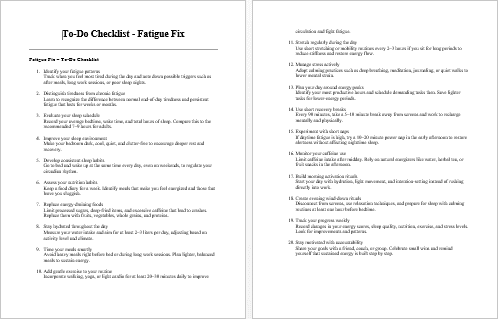
Fatigue Fix – Checklist
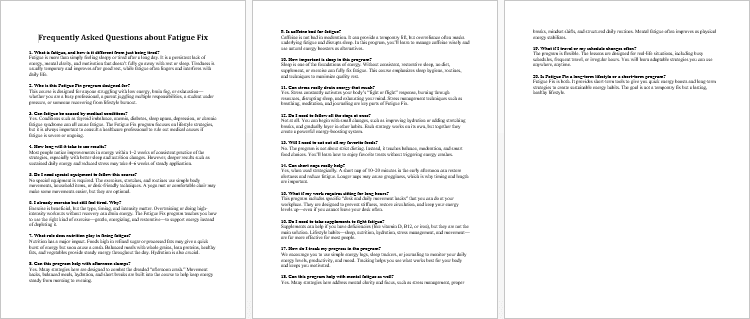
Fatigue Fix – FAQs
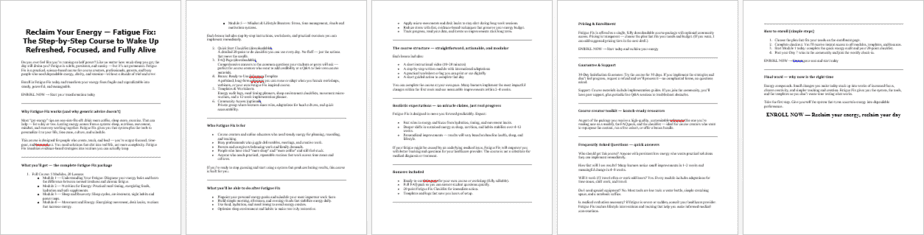
Fatigue Fix – Salespage Content
Package Details:
Word Count: 31 382 Words
Number of Pages: 132
Fatigue Fix – Bonus Content
Checklist
Word Count: 502 words
FAQs
Word Count: 931 words
Salespage Content
Word Count: 1236 words
Total Word Count: 34 051 Words
Your PLR License Terms
PERMISSIONS: What Can You Do With These Materials?
Sell the content basically as it is (with some minor tweaks to make it “yours”).
If you are going to claim copyright to anything created with this content, then you must substantially change at 75% of the content to distinguish yourself from other licensees.
Break up the content into small portions to sell as individual reports for $10-$20 each.
Bundle the content with other existing content to create larger products for $47-$97 each.
Setup your own membership site with the content and generate monthly residual payments!
Take the content and convert it into a multiple-week “eclass” that you charge $297-$497 to access!
Use the content to create a “physical” product that you sell for premium prices!
Convert it to audios, videos, membership site content and more.
Excerpt and / or edit portions of the content to give away for free as blog posts, reports, etc. to use as lead magnets, incentives and more!
Create your own original product from it, set it up at a site and “flip” the site for megabucks!
RESTRICTIONS: What Can’t You Do With These Materials?
To protect the value of these products, you may not pass on the rights to your customers. This means that your customers may not have PLR rights or reprint / resell rights passed on to them.
You may not pass on any kind of licensing (PLR, reprint / resell, etc.) to ANY offer created from ANY PORTION OF this content that would allow additional people to sell or give away any portion of the content contained in this package.
You may not offer 100% commission to affiliates selling your version / copy of this product. The maximum affiliate commission you may pay out for offers created that include parts of this content is 75%.
You are not permitted to give the complete materials away in their current state for free – they must be sold. They must be excerpted and / or edited to be given away, unless otherwise noted. Example: You ARE permitted to excerpt portions of content for blog posts, lead magnets, etc.
You may not add this content to any part of an existing customer order that would not require them to make an additional purchase. (IE You cannot add it to a package, membership site, etc. that customers have ALREADY paid for.)
Share Now!
Latest Products





Free Sales Funnel Builder

Related Products

Popular & Trending



Featured Products